Last updated 2026-07-25
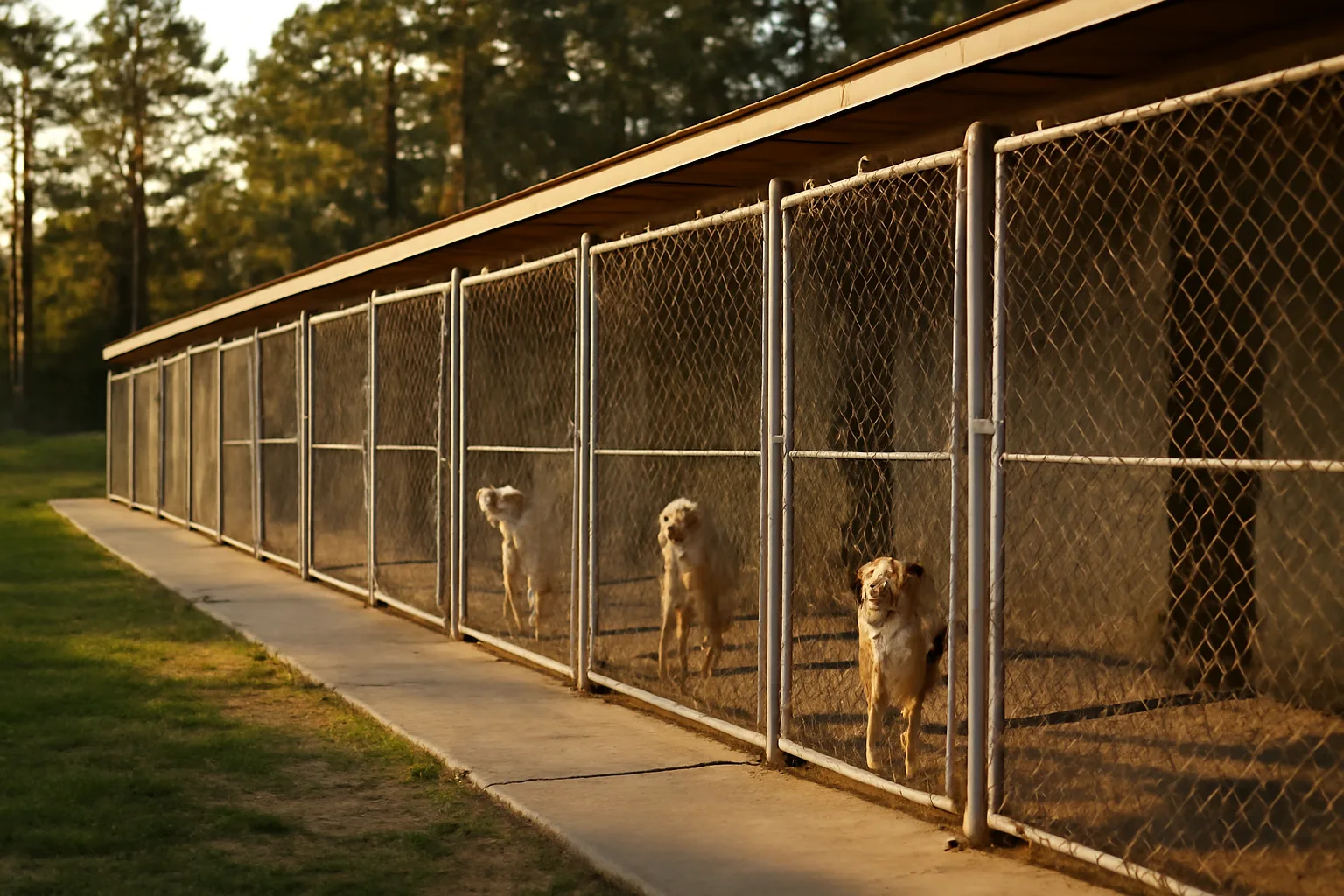
TL;DR
North Carolina does not issue one statewide 'kennel license.' Instead, county health departments regulate kennels under local ordinances tied to G.S. 130A-192, cities/counties add zoning and business permits, and breeders who sell wholesale or ship interstate may need a USDA APHIS license under 9 CFR Part 2. Check your specific county first.
Does North Carolina require a statewide kennel license?
No. North Carolina doesn't have a single state agency that issues a "kennel license" the way some states do. Instead, kennel and boarding facility regulation happens at the county level, layered under a state law that sets the floor. The key statute is G.S. 130A-192, which requires counties to license or register commercial kennels, pet shops, animal shelters, and boarding facilities that keep animals for compensation, and ties that licensing to rabies control and animal welfare inspection [1]. The statute gives local health departments authority to inspect, but it leaves the actual permit fees, application forms, and renewal cycles up to each county. That means the real answer to "how do I get a kennel license in NC" is: it depends entirely on which county you're in. Wake County's rules look different from Mecklenburg's, which look different from a rural county in the mountains or the coastal plain. Some counties fold kennel licensing into their animal control department; others handle it through environmental health. A few small counties have almost no separate kennel ordinance at all and rely mostly on state rabies law plus general nuisance rules. Before you sign a lease or buy equipment, call your county health department or animal services division directly and ask three questions: do they license commercial kennels, what's the fee, and what inspection do they require before opening. Get the answer in writing if you can, because verbal guidance from a front-desk staffer sometimes doesn't match what the inspector actually enforces.
How do you get a kennel license at the county level in NC?
Most NC counties that regulate kennels follow a similar sequence, even though the specific fees and forms differ. Here's the general path, with the caveat that your county's actual checklist is the only one that counts. First, confirm zoning allows a kennel or boarding facility at your address. Many counties treat kennels as a conditional or special use in residential and even some agricultural zones, which means a zoning hearing or board of adjustment review before you can apply for the operating license itself. Second, apply for the county kennel or animal facility permit through the health department or animal control office, which usually requires a site plan, proof of rabies vaccination protocols for animals on premises, and a facility inspection covering things like cage size, sanitation, ventilation, and fire exits. Third, register your business with the NC Secretary of State if you're forming an LLC or corporation, and get any required local business privilege license (many NC cities dropped privilege license requirements after 2015 state law changes, but some still charge occupational fees). County rabies control ordinances, authorized under G.S. 130A-185, often get bundled into the same inspection that covers kennel licensing, since rabies vector control is the state's biggest public health interest in commercial animal facilities [2]. Expect the inspector to check that you have a plan for isolating sick or aggressive animals, adequate outdoor exercise space, and records showing vaccination status for boarded and resident dogs. If your facility will also handle grooming, daycare, or training in the same building, ask specifically whether that changes your license category. Some counties license "kennels" and "pet care facilities" under different code sections with different fee schedules.
What zoning approval do you need before applying for a kennel license?
Zoning is usually the harder hurdle, not the license application itself. Counties and cities in NC almost always restrict where a commercial kennel, boarding facility, or dog daycare can operate, and the process to get approved runs through the local board of adjustment or planning board, not the health department. Start at your county or city planning/zoning office and ask for the specific use classification, since "kennel" often gets defined by a threshold number of dogs (commonly somewhere between 3 and 6 adult dogs, though the exact cutoff is set locally and varies a lot). Below that number you may just be a residential pet owner; above it, you're a commercial kennel subject to conditional use permitting, setback requirements from property lines, and sometimes a public hearing where neighbors can object. If a hearing is required, expect the board to ask about noise mitigation (sound barriers, indoor-only overnight hours), odor and waste management, hours of operation, and parking for drop-off traffic. Boards weigh these more heavily in areas near residential neighborhoods. Bringing a site plan, a noise/odor management plan, and any letters of support from neighbors measurably improves your odds, though no board can guarantee approval and every jurisdiction runs its own process. This is the stage where a lot of new operators get tripped up, not because the state licensing is hard, but because they didn't check zoning first and signed a lease on a property that simply doesn't allow kennels. If you're comparing options for dog boarding or dog kennels facilities, do the zoning call before the real estate call, every time.
How much does dog boarding cost to run as a business in NC?
This question gets asked two ways: what do boarding facilities charge customers, and what does it cost an operator to get licensed and open. Both matter here. On the customer side, boarding rates in North Carolina generally run $25 to $50 per night for a standard kennel run, with upscale "suite" or cage-free boarding at daycare-style facilities running higher, often $45 to $80 per night in metro areas like Raleigh, Charlotte, or Asheville. These are market rates set by supply and demand locally, not anything regulated by the state, so treat any number here as a planning estimate, not a rule. On the operator cost side, your startup licensing and compliance costs typically stack up from several sources: the county kennel/animal facility permit fee (commonly in the low hundreds of dollars annually, though this varies by county and by facility size), any zoning application or conditional use permit fee (which can run from under $100 to several hundred dollars depending on the jurisdiction and whether a public hearing is required), business registration with the NC Secretary of State if you're forming an LLC (currently a $125 filing fee for Articles of Organization), and facility build-out costs that dwarf the licensing fees themselves (fencing, kennel runs, ventilation, drainage). If you're also considering a doggy day care model instead of or alongside overnight boarding, budget separately, since some counties classify daycare-only operations (no overnight stays) differently from kennels, sometimes with a lighter inspection standard.
How do you register a dog in North Carolina?
Registering an individual pet dog in NC is separate from licensing a kennel business, and it's simpler. State law requires rabies vaccination for dogs and cats over four months old, and county rabies control ordinances typically require a rabies tag or registration once that vaccination happens [2]. In practice, "registering" a dog in most NC counties means: get the rabies vaccine from a licensed vet, receive a rabies certificate and tag, and in some counties, pay an annual or multi-year county dog license fee tied to that rabies tag. Not every county charges a separate license fee; some just require proof of current rabies vaccination and don't issue a separate tag-based license. Mecklenburg County, for example, requires pet registration through Animal Care and Control alongside rabies vaccination, while other, smaller counties handle it purely through the vet's rabies certificate. If you're boarding other people's dogs commercially, you'll want every animal on your property, including your own, to have current rabies documentation on file, since that's one of the first things a county health inspector checks during a kennel license inspection.
How do you get a dog license in NC as a pet owner (not a kennel)?
If you just own one or two dogs and aren't running a kennel, your process is: vaccinate for rabies at a licensed vet, get the rabies certificate, then check whether your specific county or municipality requires a separate dog license or tag beyond that. Some NC counties require annual renewal; others issue multi-year tags tied to the rabies vaccine's duration (1-year or 3-year vaccine protocols are both used depending on the product and your vet's protocol). Call your county animal control office or check its website for the current fee schedule, since license fees for individual pet owners (often $5 to $15 per year where charged, though this is a county-set number, not a state one) are unrelated to commercial kennel licensing fees and use a completely different application. If you're moving to NC from another state, bring your prior rabies certificate. Most counties will accept an out-of-state rabies certificate as proof as long as it's current, and you generally just need to re-register locally rather than re-vaccinate immediately.
How do you get papers for a dog, and is that the same as a kennel license?
This is a different question entirely, and a lot of new breeders confuse the two. "Papers" for a dog means registration with a breed registry, most commonly the American Kennel Club (AKC), which documents pedigree and lineage. It has nothing to do with your county kennel license or any state agency. To get AKC papers for a puppy, the litter's parents generally need to already be AKC-registered, the breeder submits a litter registration application (with a per-puppy fee currently in the range of roughly $25 to $40 depending on timing and whether it's done online, per AKC's published registration fee schedule), and each puppy buyer then completes individual registration [3]. If the dam or sire isn't already AKC-registered, you may need to go through AKC's Purebred Alternative Listing (PAL) program or another registry entirely, which is a longer and more document-heavy process. None of this substitutes for your county kennel license or, if you cross federal thresholds, your USDA license. A dog can have full AKC papers and you can still be operating illegally if you don't have the local zoning approval and county kennel permit your jurisdiction requires. Conversely, you can be fully licensed at the county and state level and still choose not to register litters with any breed registry at all, if you're selling as pet-quality dogs without papers. The two systems are unrelated.
How do you become a dog breeder in NC, legally?
Start with the same zoning check as any kennel operator: confirm your property is zoned for a breeding operation and check whether your county caps the number of intact adult dogs allowed before you need a commercial kennel permit. Many counties treat a breeding operation past a certain dog count the same as any other commercial kennel under G.S. 130A-192 [1]. Next, understand the federal threshold. If you sell puppies at wholesale (to pet stores, brokers, or research facilities) or if you sell dogs sight unseen to buyers you never physically meet in person, and you keep more than 4 breeding females, you likely need a USDA APHIS Animal Welfare Act license as a "Class A" dealer/breeder. USDA's own guidance states that breeders who have more than four female dogs that are used for breeding and are sold sight unseen (i.e., not met in person prior to sale) generally require licensing, though breeders who sell directly to the public in face-to-face transactions at their own premises are typically exempt from federal licensing under the retail pet store exemption in the Animal Welfare Act regulations [4] [5]. If you only sell retail, in person, direct to the buyer, you likely stay outside USDA jurisdiction regardless of litter volume, but you're still fully subject to your county's kennel and zoning rules and to NC's animal welfare statutes. Also check NC's specific pet breeder/dealer requirements if you plan on wholesaling; some states layer their own state-level breeder license on top of the federal one, though North Carolina's current approach relies primarily on county-level kennel regulation rather than a separate statewide breeder license [1]. Finally, budget for a vet relationship, more than a license. Inspectors, whether county or USDA, want to see a documented herd health and vaccination protocol, whelping records, and a plan for what happens to dogs that don't sell or that age out of breeding.
What USDA APHIS thresholds apply to NC breeders and boarding operators?
The federal Animal Welfare Act, enforced by USDA's Animal and Plant Health Inspection Service (APHIS), sets thresholds that apply regardless of state, and NC breeders and larger boarding/daycare operators both need to check them. For breeders, the key trigger is selling dogs sight unseen (without the buyer meeting the dog in person before purchase) combined with maintaining more than 4 breeding females. USDA APHIS states that a person must be licensed if they are "breeding for sale, at wholesale, dogs...for use as pets, and who maintain more than four breeding female dogs" and who transact sight-unseen sales [4]. Below that threshold, or if you sell exclusively face-to-face at retail, you're generally exempt as a retail pet store under the AWA regulations at 9 CFR Part 2 [5]. For boarding and daycare operators, USDA licensing generally doesn't apply the same way, since APHIS jurisdiction under the AWA is aimed at breeders, dealers, exhibitors, and research facilities, not standard pet boarding kennels serving individual pet owners. If your boarding facility also brokers or sells animals, or if you board animals as part of a wholesale dealer operation, check with your regional APHIS office, since mixed-use facilities sometimes trigger licensing that a pure boarding-only operation wouldn't. Either way, an APHIS license, if you need one, is separate from and additional to your NC county kennel license and any zoning approval. Getting one doesn't excuse you from the other two, and inspectors from each level (county, state, federal) can and do show up independently.
What facility standards should you expect at a kennel inspection in NC?
County inspectors and, where applicable, USDA APHIS inspectors, generally check similar categories, even though the specific numeric standards differ between county ordinances and federal regulation. Expect review of: primary enclosure size (enough for the dog to stand, turn around, and lie down comfortably, with USDA's own minimum space formula based on the dog's length under 9 CFR 3.6 for licensed facilities) , sanitation and waste removal schedule, temperature control (USDA's regulations require indoor housing facilities to maintain temperatures no lower than 50°F for dogs not acclimated to cold, under 9 CFR 3.2, for federally licensed facilities) , secure fencing and perimeter containment, fire safety and emergency evacuation planning, and recordkeeping for vaccination and health status of every animal on premises. County-only kennels (not USDA licensed) aren't bound by the federal 9 CFR numeric standards, but many county ordinances borrow language from them anyway, since it's a well-documented starting point. Ask your county inspector directly whether they use their own written standard or default to referencing USDA's numbers informally. If you're building out a new facility, oversize your enclosures and ventilation relative to whatever the minimum legal standard is. Inspectors, and customers, notice the difference between a kennel that just barely passes and one that's clearly built with the dogs' comfort in mind, and it matters for your online reviews as much as your license renewal.
How long does the whole NC kennel licensing process usually take?
There's no single statewide timeline because there's no single statewide process, but a realistic range based on how county zoning and permitting typically runs: if zoning is already permissive for your address (kennel is an allowed use outright, no conditional use hearing needed), you might get a county kennel permit issued in 2 to 6 weeks after a clean inspection. If you need a conditional use permit or a board of adjustment hearing, add 2 to 4 months minimum, since public hearings require advance notice periods and boards often meet monthly, not weekly. If you're also pursuing a USDA APHIS license because you cross the sight-unseen wholesale breeding threshold, add more time. APHIS licensing includes a pre-license inspection and application review, and processing timelines vary based on APHIS's regional office workload; check current processing guidance directly with your APHIS Animal Care regional office rather than assuming a fixed number of weeks. The single biggest time-saver: call your county zoning office and county health/animal control office before you sign a lease, not after. A property that looks perfect but sits in the wrong zoning district can add months to your timeline, or kill the plan entirely.
Where do brand and packet tools fit into this process?
None of this replaces talking to your actual county zoning office and county health department, and nothing here is legal advice. But if you'd rather not spend three weeks tracking down which county department handles what, a packet that organizes the checklist, zoning-hearing prep documents, and facility standard references into one place saves real time. KennelPermit's $149 one-time Kennel License & Zoning Packet is built for exactly this: a structured starting point for your county application and zoning hearing prep, not a substitute for your county's own forms or for professional legal or zoning consulting help if your situation is contested or complex. If you're comparing facility types before you even get to the licensing paperwork, see how pet boarding differs operationally from dog hotels near me style boutique models, or check how larger franchise operations like Dogtopia structure their daycare and boarding split, since your own facility's classification (kennel vs. daycare vs. hybrid) affects which county code section applies to you.
Frequently asked questions
How much does dog boarding cost in North Carolina?
Standard kennel boarding typically runs $25 to $50 per night in NC, with upscale cage-free or suite-style boarding running $45 to $80 per night in metro markets like Charlotte or Raleigh. These are market rates, not state-set fees, so check local competitors directly for current pricing in your specific area.
How do I register a dog in NC?
Get a rabies vaccination from a licensed vet (required for dogs over four months old under state rabies law), receive the rabies certificate and tag, then check if your county requires a separate dog license registration beyond that. Some counties charge an additional annual fee tied to the rabies tag; others don't.
How do you get a dog license in NC?
Vaccinate for rabies, get your certificate from the vet, and check your county animal control office for its specific license/tag process and fee, commonly $5 to $15 per year where a separate fee applies. This is unrelated to a commercial kennel business license.
How do you get papers for a dog?
"Papers" means breed registry registration, most commonly with the AKC, which requires the litter's parents to already be registered and a litter registration fee (roughly $25 to $40 per puppy depending on timing). It's entirely separate from your county kennel license or any state licensing requirement.
How can I get papers for my dog if the parents aren't registered?
Look into AKC's Purebred Alternative Listing (PAL) program, which allows registration of purebred dogs without papers under certain conditions, or check the requirements of another breed registry your dog's breed uses. There's no way to get standard AKC papers retroactively without documenting the parentage somehow.
How do I become a dog breeder in North Carolina?
Confirm your property's zoning allows breeding at your intended dog count, get any required county kennel permit, and check whether you cross the USDA APHIS threshold (more than 4 breeding females plus sight-unseen wholesale sales). Retail, face-to-face sellers usually stay outside federal licensing but remain subject to county rules.
Does North Carolina have a statewide kennel license?
No. NC regulates kennels through county health departments and local ordinances under G.S. 130A-192, not a single state license. Requirements, fees, and inspection standards vary by county, so you need to contact your specific county government directly.
What's the USDA threshold for needing a breeder license?
USDA APHIS generally requires licensing for breeders with more than 4 breeding female dogs who sell sight unseen (buyer never meets the dog in person before purchase). Retail sellers who transact face-to-face at their own premises are typically exempt under the Animal Welfare Act's retail pet store exemption.
Do I need a kennel license just to have a lot of dogs at home?
It depends on your county's threshold, which is usually a specific number of adult dogs (commonly somewhere in the 3-to-6 range) that triggers commercial kennel classification. Below that number you're typically treated as a residential owner; above it, county zoning and health rules for commercial kennels apply.
How long does zoning approval take for a kennel in NC?
If kennels are an already-permitted use at your address, weeks. If you need a conditional use permit or board of adjustment hearing, plan on 2 to 4 months minimum, since public hearings require advance notice and boards often meet only monthly.
Is a USDA license the same as a county kennel license?
No, they're completely separate systems. A USDA APHIS license (needed only if you cross specific wholesale/sight-unseen breeding thresholds) doesn't replace your county kennel permit or required zoning approval, and having one doesn't exempt you from the other.
How much does an LLC filing cost for a kennel business in NC?
The NC Secretary of State currently charges $125 to file Articles of Organization for an LLC. This is separate from any county kennel permit fee or zoning application fee, which vary by jurisdiction.
Sources
- North Carolina General Assembly, G.S. 130A-192: NC law requires county-level licensing/regulation of commercial kennels, pet shops, shelters, and boarding facilities tied to rabies control
- North Carolina General Assembly, G.S. 130A-185: NC rabies vaccination requirements for dogs and cats and county rabies control authority
- USDA APHIS, Animal Welfare Act Regulations, 9 CFR Part 2: Retail pet store exemption for face-to-face sellers under the Animal Welfare Act
- USDA APHIS, 9 CFR 3.6 Primary Enclosures for Dogs: USDA minimum enclosure space formula based on dog length for federally licensed facilities
- USDA APHIS, 9 CFR 3.2 Indoor Housing Facilities: USDA minimum temperature requirement of 50°F for dogs not acclimated to cold in licensed facilities