Last updated 2026-07-25
TL;DR
Baltimore County requires a Household Pet License for most dog owners and a separate Kennel License once you keep more dogs than the county's household limit or run a commercial boarding, daycare, or breeding operation. You'll need zoning approval (often a special exception) from the Office of Zoning Review plus a permit through Baltimore County Animal Services before you can legally operate.
What is a Baltimore County kennel license and who needs one?
A Baltimore County kennel license is a separate permit required whenever you keep dogs beyond the number allowed as ordinary household pets, or when you run any business that boards, breeds, sells, or trains dogs for a fee. Baltimore County Code treats "kennel" as a defined land use and licensing category, distinct from the individual dog licenses every pet owner needs. Under the county's animal control code, a private kennel generally means a property keeping more than a set number of dogs (commonly four or more, though you should confirm the current threshold with Baltimore County Animal Services since local caps get amended). A commercial kennel covers boarding facilities, daycares, grooming shops that board overnight, and breeding operations that sell puppies. Baltimore County Animal Services administers licensing under Baltimore County Code, Article 12, Title 4 [1]. If you're a hobby owner with three dogs and no business, you likely just need three individual dog licenses. The moment you cross into boarding other people's dogs, running a daycare, or breeding beyond a hobby litter or two, you're in kennel territory and need both a zoning determination and a kennel license before you open. Anyone planning dog boarding or doggy day care in Baltimore County should treat zoning as the first gate, not licensing. The county will not issue a kennel license for a use that zoning hasn't already cleared.
How do I get a kennel license in Baltimore County?
You apply through Baltimore County Animal Services after securing zoning clearance and, for commercial operators, after passing a facility inspection. The general sequence is: confirm zoning use is allowed (or apply for a special exception), get any required building/health inspections, then submit the kennel license application with fees to Animal Services. Start with the Baltimore County Department of Permits, Approvals and Inspections and the Office of Zoning Review to confirm whether your property's zoning classification (residential, agricultural, or commercial) permits a kennel outright, permits it with conditions, or requires a special exception hearing before the Zoning Commissioner. Baltimore County's zoning regulations are found in the Baltimore County Zoning Regulations (BCZR), and kennels are addressed as a specific use category with distance and lot-size conditions in agricultural and resource conservation zones [2]. Once zoning is settled, Animal Services handles the kennel license itself, along with rabies vaccination proof for every dog on site and, for commercial kennels, a facility inspection covering sanitation, ventilation, and enclosure construction. Renewal is typically annual, tied to the county's fiscal or calendar licensing cycle; confirm the exact renewal date and any late fee with Animal Services since these details change year to year. Budget real time for this. A special exception hearing alone can take two to four months from filing to decision in many Maryland counties, and that's before construction or inspection scheduling. Do not sign a lease or make a deposit on a facility assuming zoning will be a formality.
What does Baltimore County zoning require for a kennel or boarding facility?
Most commercial kennels in Baltimore County need a special exception from the Zoning Commissioner unless the property sits in a zone where kennels are a permitted use by right. Special exception cases typically require a public hearing, notice to adjoining property owners, and testimony on noise, traffic, odor, and compatibility with the surrounding neighborhood. The BCZR sets minimum lot size and setback conditions for kennels in agricultural and rural zones, and commercial zones (like BL or BM) may allow kennels or animal boarding as a permitted or conditional use depending on the specific zoning classification assigned to your parcel [2]. Because zoning maps and use tables get amended, you should pull your property's actual zoning designation from the county's online zoning map before assuming anything. Expect the hearing examiner or Zoning Commissioner to weigh things like distance from residential dwellings, sound attenuation (fencing, indoor-only exercise areas), parking capacity for drop-off traffic, and hours of operation. Neighbors show up to these hearings. Bring a real plan: how dogs are exercised, how barking is controlled, how waste is handled, and how many dogs will be on site at peak capacity. If you're weighing a stand-alone kennel building against a dog hotel-style indoor facility, indoor-only operations with sound-dampened construction tend to fare better at hearings because the noise and odor objections carry less weight. That's a design choice worth making before you file, not after a denial.
How much does a Baltimore County kennel license cost?
Kennel license fees in Baltimore County are set by the county's animal control fee schedule and vary by kennel size and whether dogs are spayed/neutered; individual dog license fees are typically lower for altered animals. Because Animal Services updates fee schedules periodically, treat any number here as a starting estimate and confirm the current fee schedule directly with the department before budgeting. Beyond the license fee itself, plan for: a zoning application fee (often several hundred dollars for a special exception, plus advertising and posting costs for the public hearing), any required site plan or engineering drawings, a business license if you're a for-profit entity, and inspection fees tied to occupancy or health approval. The real cost driver usually isn't the license fee, it's the path to zoning approval. A special exception with an attorney, a site plan, and a hearing can run into the thousands of dollars in soft costs before you pay a single licensing fee. Factor that into your opening budget alongside build-out costs for kennel runs, drainage, and ventilation.
How much does dog boarding cost (and how does licensing affect pricing)?
Dog boarding in the U.S. typically runs $30 to $85 per night for standard kennel or home-boarding stays, with luxury "dog hotel" suites in some markets exceeding $100 per night; daycare day rates commonly fall between $20 and $45 [3]. Baltimore County pricing tends to track regional averages for the Baltimore-Washington corridor, often landing in the $35 to $60 per night range for standard boarding depending on dog size and add-ons like play time or grooming. Licensing and zoning costs get baked into what you charge. A facility that spent tens of thousands of dollars on a special exception, sound-dampened construction, and commercial-grade HVAC has to recover that somewhere, usually through nightly rates or add-on services rather than volume alone, since most residential-zoned kennels also face a capacity cap from the zoning approval itself. If you're benchmarking your planned rates, look at what nearby pet boarding operators and franchise locations like Dogtopia charge in the same zip codes, then adjust for your facility's capacity limit and staffing model. A 20-dog cap approved through a special exception changes your unit economics completely versus an unlimited commercial permit.
How do you register a dog in Baltimore County?
Every dog four months or older in Baltimore County must have a current rabies vaccination and an individual dog license, separate from any kennel license, renewed annually. Registration happens through Baltimore County Animal Services, either online, by mail, or in person, and requires proof of current rabies vaccination from a licensed veterinarian [3]. The process is straightforward for a household pet: get the rabies shot, bring or upload the certificate, pay the license fee (which is typically discounted for spayed or neutered dogs), and Animal Services issues a tag. That tag has to be renewed annually and is separate from whatever county your dog was purchased or bred in. For kennel operators, every dog housed on site, whether owned, boarded, or bred, generally needs to be accounted for under the facility's records even if boarded dogs are individually licensed in their owners' home jurisdictions. Keep vaccination and license records current and on file; inspectors will ask for them.
How to get a dog license and how is that different from a kennel license?
A dog license covers one pet owned by one household; a kennel license covers a facility or property that keeps dogs beyond the household threshold or operates as a business. You need the individual dog license regardless of whether you also need a kennel license; the kennel license is additional, not a substitute. To get a standard dog license in Baltimore County, you provide proof of rabies vaccination, pay the annual fee, and register the dog's basic information (breed, color, sex, spay/neuter status) with Animal Services. This applies to every dog owner in the county, whether you have one dog or none of your business is animal-related. The kennel license is a property- or business-level authorization tied to zoning approval and, for commercial operators, a facility inspection. If you're opening a boarding or daycare business, you'll be dealing with both: individual licenses for any dogs you personally own, and a kennel license for the facility itself. Confusing the two is the single most common mistake first-time operators make when they call Animal Services expecting one license to cover everything.
How do you get papers for a dog, and does that relate to licensing?
"Papers" usually means AKC or another registry's proof of pedigree, which is a separate, private process from any government license and has nothing to do with Baltimore County's kennel or dog licensing requirements. Getting papers for a dog means registering the litter and individual puppies with a breed registry like the American Kennel Club, which requires the litter's parents to already be registered and the breeder to submit a litter registration application. None of that satisfies a county or state licensing requirement. A dog can have full AKC papers and still need a rabies vaccination and a county dog license to live legally in Baltimore County, and a breeder with fully papered litters still needs to comply with zoning and, if selling enough dogs, USDA licensing (covered below). If you're asking "how do I get papers for my dog" because you want to breed and sell puppies commercially, treat registry paperwork and government licensing as two completely separate tracks running in parallel. AKC registration proves lineage to buyers. County licensing and USDA registration prove you're legally allowed to operate. You need both if you're running a real breeding business, not one or the other.
How do you become a dog breeder in Baltimore County, and when do USDA rules kick in?
Becoming a breeder in Baltimore County starts with the same zoning check as any kennel use: confirm whether your property's zoning allows a kennel or breeding operation, and get a special exception if it doesn't. Once your property is cleared, you'll need a county kennel license if you keep enough breeding dogs to exceed the household pet threshold. Separately, federal law requires a USDA license if you sell dogs at wholesale or to pet stores, brokers, or research facilities, and, as of the 2013 USDA retail pet store rule, if you sell more than a small number of dogs directly to the public sight-unseen (online or by phone) each year without the buyer physically visiting your facility. Federal regulations define a "dealer" required to hold a Class A or Class B license under the Animal Welfare Act, and the retail pet store exemption generally does not apply if you have more than four breeding females and sell puppies without the buyer seeing the animal and its living conditions in person before purchase, per the definitions in 9 CFR 1.1 and the retail exemption at 9 CFR 2.1(a)(3) [4] [5]. Breeders who sell only in person, from their own home, to buyers who physically visit, are typically exempt from USDA licensing under the retail exemption, but Maryland state law layers on its own requirements. Maryland's Agriculture Article requires the Department of Agriculture to regulate certain commercial kennel operations, and those rules are enforced alongside county licensing, not instead of it [6]. If you're crossing into USDA territory, plan for a facility inspection covering the Animal Welfare Act's structural standards (9 CFR Part 3), including enclosure size formulas tied to the dog's body length, temperature and ventilation minimums, and record-keeping for every animal acquired, bred, or sold [7]. This is a materially higher bar than most county kennel inspections, and retrofitting an existing facility to meet it after the fact is expensive. Design for USDA compliance from day one if there's any chance you'll cross the threshold within a few years.
What inspections and facility standards apply to Baltimore County kennels?
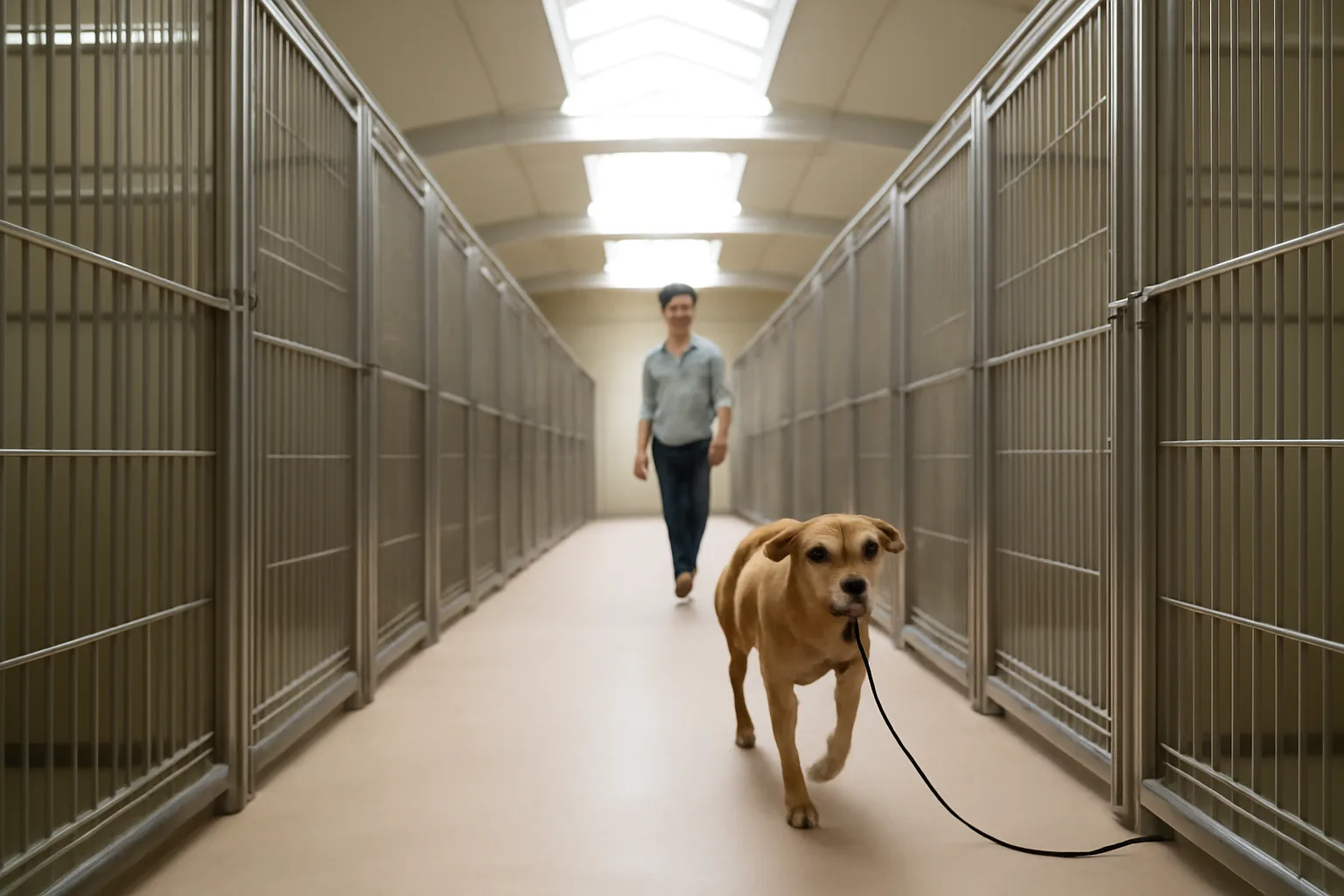
Commercial kennels in Baltimore County are subject to facility inspections by Animal Services covering sanitation, enclosure size, ventilation, and safe containment before a kennel license is issued and periodically after. Expect inspectors to check that runs are cleaned on a regular schedule, that waste disposal doesn't create a nuisance, that dogs have access to shelter from weather and adequate temperature control, and that fencing or containment prevents escape. If your facility also falls under USDA jurisdiction (commercial breeding above the retail exemption threshold, or wholesale sales), you're additionally subject to APHIS inspections under the Animal Welfare Act, which are more frequent and more detailed than typical county checks, covering specific enclosure dimensions, record-keeping, and veterinary care protocols spelled out in 9 CFR Part 3 [7]. Maryland's state-level kennel regulations add another layer for breeders, including requirements around veterinary care and recordkeeping that apply regardless of county rules [6]. Operators sometimes assume that passing a county inspection means they're covered everywhere; it doesn't. County, state, and federal inspection regimes are independent, and you can be compliant with one and in violation of another. For a broader look at what facility standards actually cover across jurisdictions, see our overview on dog kennels and what inspectors typically check regardless of which agency shows up.
How long does the whole process take, from zoning to opening day?
For a property where kennel use is already permitted by right, you might get a kennel license issued within a few weeks of passing inspection. For a property needing a special exception, realistic timelines run three to six months once you include filing, notice periods, the hearing itself, and any appeal window. A rough timeline: 2 to 4 weeks to confirm zoning classification and determine if a special exception is needed; 60 to 120 days for special exception filing, notice, and hearing (this varies significantly by hearing examiner caseload); 2 to 6 weeks for construction or facility modifications to meet inspection standards; 1 to 3 weeks for the final Animal Services inspection and license issuance. Add time if a neighbor appeals a zoning decision, which can add months. The operators who move fastest are the ones who confirm zoning before they sign a lease or buy a property. Committing to a location before zoning is confirmed is the single most expensive mistake we see in this space, because a denied special exception can mean walking away from a lease deposit, build-out costs, or a purchase contract. This is exactly the gap our $149 Kennel License & Zoning Packet is built to close: a structured way to pull together what your specific county and state actually require before you commit money to a property, so you're not guessing at the zoning classification or the special exception odds after the fact.
Frequently asked questions
How much does dog boarding cost in the Baltimore area?
Standard boarding in the Baltimore-Washington corridor typically runs $35 to $60 per night depending on dog size and amenities, with national averages around $30 to $85 per night and luxury suites sometimes exceeding $100 [3]. Daycare day rates are usually lower, commonly $20 to $45 per day. Rates rise with facility capacity limits and construction costs tied to zoning approval.
How do I register a dog in Baltimore County?
Get your dog's rabies vaccination from a licensed veterinarian, then register the dog with Baltimore County Animal Services online, by mail, or in person, providing the vaccination certificate and paying the annual license fee (discounted for spayed/neutered dogs) [4]. This individual dog license is required for every dog four months or older and is separate from any kennel license.
How do you get a dog papers?
Registry "papers" (like AKC registration) come from the breed registry, not the government. You register a litter with the registry using the parents' existing registration numbers, then register individual puppies. Papers prove pedigree to buyers; they have no bearing on county dog licenses, kennel licenses, or USDA breeder registration, which are separate legal requirements.
How do you register a dog if you just moved to Baltimore County?
Bring your dog's current rabies vaccination certificate (from any state) to Baltimore County Animal Services, or complete registration online, and pay the annual license fee. If your rabies vaccination is still valid under your prior state's schedule, most counties accept it; you'll just need proof from the issuing veterinarian.
How do I become a dog breeder legally?
Confirm your property's zoning allows breeding or kennel use (get a special exception if not), obtain a county kennel license once you exceed the household dog limit, register with Maryland's Department of Agriculture if you exceed the state's breeder threshold, and get a USDA license if you sell wholesale, to brokers, or sight-unseen beyond the retail exemption limits [5][6][7].
How do I get a dog license in Baltimore County?
Provide proof of current rabies vaccination and submit an application with Baltimore County Animal Services, either online, by mail, or in person, along with the annual license fee. Fees are typically lower for spayed/neutered dogs. This is required for every dog owner, separate from any kennel license needed for boarding, daycare, or breeding operations.
How do I get papers for a dog I already own without them?
If the breeder never registered the litter, you generally cannot retroactively get full registry papers unless the breeder or registry allows late litter registration with proof of parentage (sometimes requiring DNA testing). Contact the breed registry directly; this is unrelated to any county or state licensing process.
Does Baltimore County require a special exception for every kennel?
Not necessarily. Whether you need a special exception depends on your property's specific zoning classification under the Baltimore County Zoning Regulations; some commercial zones permit kennels by right, while agricultural and residential zones typically require a special exception hearing before the Zoning Commissioner [2]. Check your parcel's zoning designation before assuming either way.
What's the difference between a household pet limit and a kennel license?
Baltimore County caps the number of dogs a household can keep without a kennel license (commonly around four, though you should confirm the current number with Animal Services). Exceed that number, or run any commercial dog operation, and you need a kennel license plus zoning approval regardless of how many dogs you actually have.
When does a breeder need a USDA license instead of just a county license?
You generally need a USDA license if you sell dogs wholesale, to brokers or pet stores, or directly to buyers who never see the dog or its living space in person before purchase, and you have more than four breeding females, per the Animal Welfare Act's dealer definition and the retail pet store exemption at 9 CFR 2.1(a)(3) [5][6]. County and state licenses apply regardless.
How long does it take to get a kennel license approved in Baltimore County?
If zoning already permits kennel use, a few weeks after passing inspection. If you need a special exception, plan on three to six months total once you include filing, public notice, the hearing, and construction or inspection scheduling. Neighbor appeals can extend that further.
Do I need both a county kennel license and a Maryland state license?
Often yes. Baltimore County licensing covers zoning and local animal control; Maryland's Department of Agriculture enforces separate state-level requirements for commercial breeders and kennels above certain thresholds [7]. Operating legally usually means holding county, state, and possibly federal (USDA) licenses simultaneously, not choosing just one.
Sources
- Baltimore County Code, Article 12 (Animal Control): Baltimore County Animal Services administers dog and kennel licensing under Article 12 of the county code
- Baltimore County Zoning Regulations (BCZR): Kennel uses are subject to specific zoning classifications, special exception requirements, and setback/lot conditions
- Baltimore County Animal Services, dog licensing information: Individual dog licensing requires proof of rabies vaccination and annual renewal through county Animal Services
- USDA APHIS, Animal Welfare Act definitions, 9 CFR 1.1: USDA dealer licensing (Class A/Class B) applies to breeders selling wholesale, to brokers, or sight-unseen above the retail exemption threshold
- USDA APHIS, Retail pet store exemption, 9 CFR 2.1(a)(3): The retail pet store exemption defines when direct, sight-unseen sales require USDA licensing despite the retail exemption
- Maryland Agriculture Article, Title 24 (Kennels): Maryland requires state-level kennel/breeder regulation administered by the Department of Agriculture in addition to county rules
- USDA APHIS, 9 CFR Part 3 (Animal Welfare Act standards): Federal facility standards for enclosure size, ventilation, and recordkeeping apply to USDA-licensed breeding operations