Last updated 2026-07-25
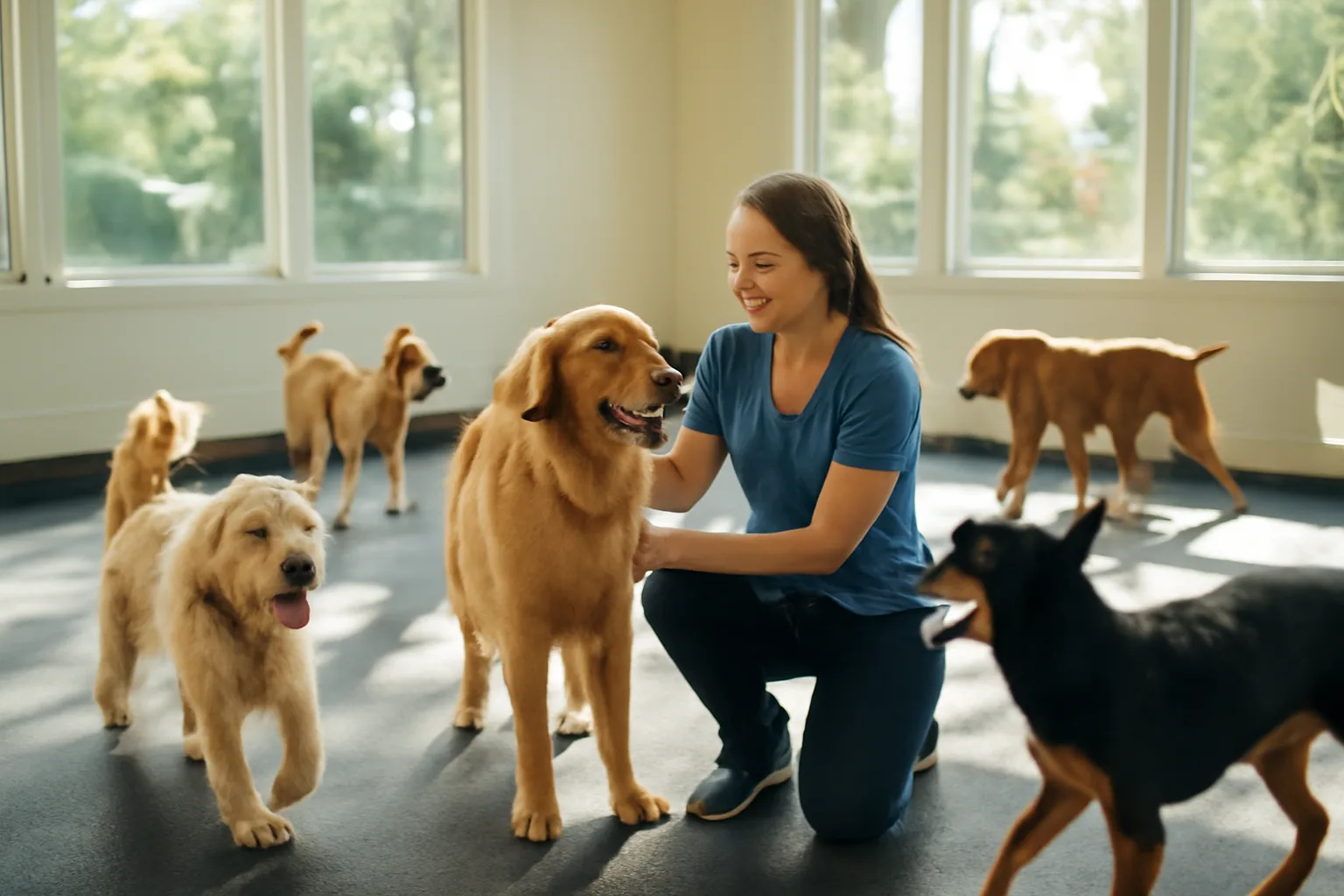
TL;DR
Dog daycare requirements vary by state and county, but most operators need a business license, a zoning permit or conditional use permit, a state kennel/pet care facility license if the state has one, and to pass a local health or fire inspection. USDA licensing only kicks in for wholesale breeding or certain interstate sales, not typical daycare or boarding.
What are the basic dog daycare requirements to open a facility?
Every dog daycare needs to clear three separate hurdles before the first dog walks in: local zoning approval, a business license, and (in many states) a state-level kennel or animal facility license. Miss any one of these and you're operating illegally even if the other two are squared away. Zoning comes first because it decides whether you can even put a daycare at your chosen address. Most municipalities classify dog daycare as a commercial use, sometimes lumped in with kennels, sometimes carved out as its own category with noise and odor conditions attached. You'll want to check your county or city zoning code before signing a lease, not after. Some jurisdictions require a conditional use permit (CUP) even in commercial zones because of noise complaints tied to barking. State licensing is the second layer, and it's inconsistent across the country. States like California require a kennel license through county animal control in many jurisdictions, while others regulate boarding and daycare only through local health departments. There's no single national daycare license; you're dealing with a patchwork, and that patchwork is exactly why so many first-time operators get surprised mid-buildout. Third is the practical stuff: fire marshal sign-off on occupancy, a health department inspection if you offer any food service or grooming, and often proof of adequate parking and drainage for waste. None of this is optional and none of it moves fast. Budget 60 to 120 days minimum for permitting in most counties, longer if a zoning hearing is required.
Do you need a special license to run a dog daycare?
In most states, yes, but the license is usually a general kennel, pet care facility, or animal boarding license rather than a daycare-specific one. States that license commercial animal facilities typically fold daycare, boarding, and grooming under one umbrella permit issued by a state department of agriculture or a county health/animal control office. Check your state department of agriculture's licensing page directly rather than guessing. Pennsylvania, for example, regulates kennels through its Dog Law statute, which sets tiered kennel classes and license fees based on how many dogs a facility keeps [1]. Other states have no state-level kennel license at all and push the whole thing down to county or city ordinance, meaning your requirements could look completely different one county over. A good rule of thumb: if dogs stay overnight (boarding) you're more likely to trip a state kennel license requirement. If it's daytime-only daycare with no overnight stays, some states treat that as a lighter-touch business license situation, though local zoning and health rules still apply. Never assume daycare-only means license-free; call the state agriculture department and your county clerk before you build anything out.
How much does dog boarding cost, and how does that affect what I should charge?
Dog boarding in the U.S. typically runs $25 to $85 per night depending on region, dog size, and whether it's a basic kennel stay or a suite-style setup. Daycare-only stays tend to run lower, often $20 to $45 per day, since there's no overnight staffing or larger enclosure needed. Pricing varies more by metro area than by facility type. A basic kennel stay in a rural county might run $25 to $35 a night, while a boutique boarding suite in a major city can hit $75 to $100 a night with add-ons like webcam access, extra playtime, or private rooms. There's no federal price survey tracking this consistently, so treat these as market ranges pulled from typical published rate sheets rather than a single authoritative number. If you're building a pro forma for a new facility, work backward from local competitor pricing, not from a national average. Call five competitors within a 15-mile radius and get their actual nightly and daily rates before you set yours. Your zoning packet and lender pitch will both want that comparison data anyway. For a broader breakdown of what drives boarding costs region by region, see dog boarding and pet boarding.
How is dog daycare different from boarding for licensing purposes?
Daycare means dogs come and go the same day; boarding means dogs stay overnight. That distinction matters a lot for licensing because overnight care usually triggers stricter rules around staffing, fire safety, and animal welfare oversight. Many state kennel statutes are written around the idea of confinement, meaning any facility that houses dogs overnight, even occasionally, gets treated as a kennel regardless of what you call your business. A "daycare" that also offers weekend boarding for regulars is, in the eyes of most state agriculture departments, a kennel. That reclassification can mean a higher license fee tier, mandatory night staff or check-in schedules, and additional fire code requirements for occupied overnight structures. If you're only ever doing same-day drop-off and pickup with zero overnight stays, some counties will let you operate under a lighter commercial pet care license instead of a full kennel license. But confirm this in writing with your local health department or animal control office before you advertise "no boarding." Verbal assurances from a front-desk clerk don't hold up if an inspector shows up later and finds a dog sleeping in a crate at 9pm.
What zoning approvals does a dog daycare need?
Zoning approval for dog daycare almost always requires the parcel to sit in a commercial, industrial, or agricultural zone, since residential zoning nearly universally prohibits commercial animal boarding. Beyond the base zoning district, expect conditions tied to noise, hours of operation, outdoor run placement, and buffer distance from residential property lines. Some counties require a conditional use permit (CUP) or special use permit even in a zone that technically allows kennels, specifically because of noise complaint history with dog facilities. That means a public hearing, notice to neighbors within a set radius (often 300 to 500 feet), and a planning commission or zoning board vote. This process alone commonly takes 60 to 90 days from application to decision, and that's if there's no continuance. Outdoor exercise yards draw the most scrutiny. Boards frequently attach conditions capping outdoor play hours (say, 7am to 7pm), requiring sound barriers or fencing, and limiting the number of dogs outside at once. If your site plan doesn't address this upfront, expect the board to table your application and ask for a revised plan, which adds another meeting cycle. Before you sign a lease, pull your county zoning ordinance's definition section and search for "kennel," "animal boarding," or "animal daycare." Definitions differ enough between counties that a use permitted by-right in one jurisdiction requires a full CUP hearing 20 miles away.
How to register a dog and how do you get a dog license (as an owner, not a facility)?
Registering or licensing a pet dog is a separate process from facility licensing, and it's handled at the county or city level almost everywhere in the U.S. You typically need proof of rabies vaccination, the dog's basic info (breed, age, sex, spay/neuter status), and a small annual or biennial fee, often $10 to $25 for spayed/neutered dogs and higher for intact dogs. Most counties run this through animal control or the county clerk's office, and many now offer online registration portals. The rabies vaccination requirement is usually tied to state public health law, more than local preference, so you'll need a current certificate from a licensed veterinarian to register in most jurisdictions. If you're a daycare or boarding operator, you'll want every dog on your premises to have current license and vaccination records on file, both because state kennel regulations often require it and because it protects you liability-wise if a dog gets loose or is involved in an incident. Many state kennel license applications specifically ask facilities to attest that they verify vaccination records for every boarded or daycare dog.
How do you get papers for a dog, and does that matter for daycare or breeding?
"Papers" usually means registration with a breed registry like the American Kennel Club (AKC), which documents a dog's pedigree and confirms purebred status. Getting papers requires the breeder to register the litter with the AKC (or another registry) and then transfer registration to the buyer, generally within the first weeks after purchase. For daycare and boarding purposes, papers don't matter at all. No state or county kennel license requires proof of registry papers for a dog to be boarded or attend daycare. What does matter is proof of rabies vaccination and, in some states, a local dog license, both of which are entirely separate from AKC-style pedigree papers. If you're the one breeding dogs and need to register a litter, the AKC process starts with registering the litter online or by mail, then providing individual registration to each puppy buyer. The AKC charges per-litter and per-dog registration fees that change periodically, so check the current fee schedule directly on akc.org rather than relying on older published numbers. Breeders selling puppies sight-unseen to buyers, or selling through certain wholesale/retail channels, may also trigger USDA licensing requirements separate from AKC registration, covered in the next section.
How to become a dog breeder and when does USDA licensing kick in?
Becoming a legal dog breeder means clearing state and local breeder licensing (if your state has it), plus figuring out whether you cross the federal USDA threshold that requires an APHIS license. These are two completely different systems and a lot of new breeders conflate them. On the federal side, USDA's Animal Welfare Act licensing generally applies to breeders who sell dogs sight unseen (meaning the buyer never physically sees the animal or the facility before purchase, common in online or shipped sales) and who maintain more than four breeding females, with some exemptions. The Animal Welfare Act's licensing regulations, at 9 CFR 2.1, define who must obtain a license, and USDA's implementing rule exempts "retail pet stores" and certain small-scale breeders selling face-to-face from the license requirement [2]. Once you exceed that threshold or sell through a broker/wholesaler rather than face-to-face, USDA licensing as a "Class A" (breeder) or "Class B" (broker/dealer) dealer generally applies. On the state side, many states have their own commercial breeder licensing laws separate from USDA, often triggered by a lower threshold, like having more than a set number of intact females or producing more than a set number of litters per year. These state rules exist independent of federal thresholds, so you can be exempt from USDA licensing and still need a state breeder license. If you're planning to cross either threshold, start with your state department of agriculture's breeder licensing page and review the federal licensing rule at 9 CFR 2.1 before you plan your first litter. Facility standards for federally licensed breeders (space, sanitation, veterinary care) come from the Animal Welfare Act regulations at 9 CFR Parts 1 to 3 [3], and inspectors do show up unannounced once you're licensed.
What facility standards does a licensed dog daycare or kennel need to meet?
Facility standards for dog daycare and boarding usually cover four things: enclosure size and construction, sanitation and drainage, ventilation and temperature control, and staff-to-dog supervision ratios. These come from a mix of state kennel regulations, local health codes, and, for federally licensed breeders, the Animal Welfare Act. For USDA-licensed breeding facilities, minimum enclosure size is calculated by a formula tied to the dog's length: enclosure floor space must equal at least the mathematical square of the sum of the dog's length (nose to base of tail) plus 6 inches, divided into square feet, per 9 CFR 3.6(c) [3]. That's the federal floor, and it applies to licensed breeders, not to typical boarding/daycare operations, which fall outside USDA's jurisdiction unless they're also breeding at scale. State-level kennel regulations vary widely on specifics like required aisle width, drainage slope, and ventilation air-exchange rates. Pennsylvania's Dog Law, for instance, sets its own primary enclosure and sanitation standards for licensed kennels under state statute [1]. If your state has no detailed kennel facility code, your county health department's food and lodging or animal control division often fills the gap with its own inspection checklist. Realistic planning numbers from industry practice (not a single binding federal standard for daycare): most daycare operators plan for roughly 75 to 100 square feet of play space per dog in group settings, and staff ratios commonly run one handler per 10 to 15 dogs in active play groups, though neither of these is a fixed nationwide law. Insurance carriers and some state licenses do set their own ratio requirements. Check your state's specific regulation and your liability insurer's requirements before finalizing your floor plan.
What inspections should a dog daycare expect before and after opening?
Expect at least three inspections before opening: a fire marshal occupancy inspection, a building/zoning final inspection, and, in states with kennel licensing, a state or county animal control facility inspection. After opening, most licensed facilities get annual or biennial re-inspections, plus the possibility of unannounced complaint-driven visits. Fire inspections check occupancy limits, exit signage, extinguisher placement, and, in facilities with overnight boarding, often specific requirements around staff presence or monitoring systems during unstaffed overnight hours. This is a common point where boarding facilities get tripped up. Not daycares, since daycares by definition don't have dogs there overnight. State kennel inspections, where they exist, typically check sanitation, enclosure condition, ventilation, record-keeping (vaccination records, incident logs), and staff-to-animal ratios against whatever the state's written kennel regulation requires. USDA-licensed breeding operations get inspected by APHIS under the compliance framework set out in 9 CFR Part 2, Subpart C, which governs inspection and investigation of licensees, generally at least once a year for compliant facilities, with more frequent visits for facilities with prior violations [3]. Keep a physical (and digital) binder on-site with your license, insurance certificate, vaccination logs, and any prior inspection reports. Inspectors move faster and write fewer follow-up citations when records are easy to produce on the spot.
How much does it cost to open a dog daycare, beyond licensing fees?
Licensing and permit fees are usually the smallest line item in opening a dog daycare. State kennel license fees typically run somewhere in the range of $50 to a few hundred dollars annually depending on the state and number of dogs, but build-out costs dwarf that. Build-out costs depend heavily on whether you're leasing raw commercial/industrial space (cheaper shell, more build-out) or converting an existing pet-related space (less build-out, higher rent). Drainage systems, rubber flooring, kennel runs, HVAC upgrades for odor and humidity control, and fencing for outdoor play yards are the big-ticket items, and none of these show up on a state license fee schedule. A realistic planning approach: get your zoning and use-permit questions answered first, because a zoning denial after you've paid for architectural drawings and a build-out estimate is the single most expensive mistake new operators make. Some operators use a packaged zoning and licensing prep resource, like the $149 Kennel License & Zoning Packet, to organize the state, county, and city-level requirements into one checklist before committing to a lease, since the requirements are genuinely scattered across three or four different agencies and easy to miss piece by piece.
Do you need special insurance and staff certifications for dog daycare?
Most states don't mandate specific staff certifications for dog daycare employees, but general liability insurance covering animal bailment (care, custody, and control of animals in your possession) is close to universal in practice, and many commercial leases require it as a condition of the lease itself. Some states or counties do require proof of insurance as part of the kennel license application itself. Pet first aid/CPR certification isn't federally or, in most states, legally required, but it's become a de facto industry standard, and several major daycare franchise brands require it of staff as internal policy rather than law. Insurance carriers sometimes offer premium discounts for facilities with certified staff, which is worth asking about when you shop coverage. If you're comparing franchise models against independent operation, franchises like Dogtopia typically build staff training and certification requirements into their operating manual, which can simplify your own policy-writing but doesn't replace your state licensing obligations. Independent operators building their own version of a doggy day care need to write these policies from scratch, usually with input from their insurance broker and a state kennel regulation checklist.
Frequently asked questions
How much does dog boarding cost?
Dog boarding typically runs $25 to $85 per night in the U.S., depending on region and facility type. Basic kennel stays in rural areas often run $25 to $35, while boutique suite-style boarding in major metros can run $75 to $100 a night with add-ons. Daycare-only stays run lower, often $20 to $45 per day, since there's no overnight staffing involved.
How to register a dog?
Register a dog through your county or city animal control office or clerk, usually requiring proof of current rabies vaccination from a licensed veterinarian, basic dog info, and a small fee (often $10 to $25 annually for spayed/neutered dogs). Many counties now offer this online. This is separate from AKC-style pedigree registration.
How much is dog boarding?
Dog boarding generally costs $25 to $85 per night depending on your metro area, the dog's size, and whether it's a basic kennel run or a private suite. There's no single national average; call local competitors directly to get accurate current pricing for your area since rates vary a lot by region.
How do you get a dog papers?
Getting a dog "papers" means the breeder registers the litter with a breed registry like the AKC and transfers individual registration to the buyer, usually within the first weeks after purchase. This documents pedigree, not health or legality. Papers aren't required for daycare, boarding, or general pet ownership; that only needs a rabies certificate and, often, a local dog license.
How do you register a dog?
Registering a dog as a pet owner means going through your county or city's animal control or clerk's office, providing proof of rabies vaccination, and paying a licensing fee. Registering a dog with a breed registry like the AKC is a completely different process, done by the breeder at the litter level, then transferred to the buyer.
How to become a dog breeder?
Becoming a dog breeder starts with checking your state department of agriculture's breeder licensing requirements and confirming whether you'll cross the USDA/APHIS threshold. USDA licensing generally applies once you have more than four breeding females and sell sight unseen; below that, most breeders selling face-to-face are federally exempt but may still need a state license.
How to get a dog license?
Get a dog license through your county or city animal control office, typically by providing proof of current rabies vaccination and paying an annual or biennial fee, often $10 to $25 for altered dogs. Some counties allow online applications. This local pet license is separate from any state kennel/facility license a daycare or breeder needs.
How to get papers for a dog?
Papers for a dog come from the breeder registering the litter with a breed registry (commonly the AKC) and transferring individual dog registration to you as the buyer. If your dog wasn't registered as a puppy by the breeder, retroactive registration is difficult and sometimes impossible depending on the registry's rules; check the specific registry's policy directly.
How to get papers for my dog?
If your breeder didn't register the litter, contact the registry (like AKC) directly to ask about limited registration options or DNA-based parentage verification programs, since policies vary by registry and by whether the parents were already registered. Without breeder cooperation and registered parents on file, full papers usually aren't obtainable after the fact.
How can I get papers for my dog?
You generally need your breeder to have registered the litter with a recognized registry at or near the time of sale. If that didn't happen, some registries offer alternate paths (parentage DNA verification, for example), but there's no universal process; check the specific breed registry's current policy since it differs by organization.
Does a dog daycare need a USDA license?
No. Typical dog daycare and boarding operations fall outside USDA/APHIS licensing jurisdiction, which targets breeders, dealers, and certain exhibitors under the Animal Welfare Act. USDA licensing only becomes relevant to a daycare business if that business is also breeding and selling dogs at a scale that crosses the federal threshold.
What's the difference between a kennel license and a daycare business license?
A kennel license is typically a state or county license specifically regulating animal boarding facilities, covering sanitation, enclosure standards, and staffing. A general business license just lets you legally operate a business in that city or county and doesn't address animal care standards at all. Most daycare/boarding operators need both, plus zoning approval.
Can I run a dog daycare out of my house?
Almost always no, at least not legally at any real scale, since residential zoning in most municipalities prohibits commercial animal boarding uses. Some jurisdictions allow small-scale home-based pet sitting under specific limits (number of dogs, no overnight stays), but a true commercial daycare needs commercial or industrial zoning approval.
Sources
- Pennsylvania Dog Law, 3 Pa.C.S. Chapter 4 (Dog Law), kennel licensing and classes: Pennsylvania regulates kennels under its Dog Law statute with tiered kennel classes and license fees based on how many dogs a facility keeps, plus its own enclosure and sanitation standards
- eCFR, 9 CFR 2.1 (Animal Welfare Act licensing requirements): USDA licensing requirements and the retail pet store / small-scale breeder exemption are defined in 9 CFR 2.1
- eCFR, Title 9 Chapter I Subchapter A Parts 1-3 (Animal Welfare Act regulations): Minimum enclosure space and facility standards for USDA-licensed breeders are defined in 9 CFR Parts 1-3, including the space formula in 3.6 and inspection procedures in Part 2 Subpart C
- eCFR, 9 CFR 3.6(c) (primary enclosures for dogs, space requirements): Enclosure floor space for licensed breeders is calculated from the dog's length plus 6 inches, squared, per 9 CFR 3.6(c)
- eCFR, 9 CFR Part 2, Subpart C (inspection and investigation of licensees): USDA-licensed breeding operations are subject to inspection under the framework in 9 CFR Part 2, Subpart C