Last updated 2026-07-25
TL;DR
Dog registration online usually means one of three things: a county/city dog license (often $10 to $30 a year, renewable on a state portal or by mail), AKC litter/individual registration (papers, roughly $25 to $40 per dog), or a state kennel/breeder license if you sell puppies commercially. Boarding runs about $25 to $85 a night depending on region and amenities.
What does "dog registration online" actually mean?
People type this phrase looking for three completely different things, and mixing them up wastes time. The first is a municipal dog license, the tag and paperwork your city or county requires just to own a dog, usually tied to rabies vaccination. The second is breed registration, what most people call "papers," issued by a kennel club like the American Kennel Club (AKC) to document a dog's pedigree. The third is a commercial breeder or kennel license, a state or federal requirement that kicks in once you're selling puppies as a business rather than owning a pet. If you just adopted a dog and your city says you need to "register" it, you want option one: a local dog license. If you want proof your purebred puppy is eligible for AKC events or has a documented lineage, you want option two. If you're planning to breed and sell dogs, especially across state lines or above a certain volume, you may need option three, and that one has federal teeth attached to it. This article walks through all three, plus the boarding cost questions people often ask alongside them.
How to register a dog (local license, step by step)
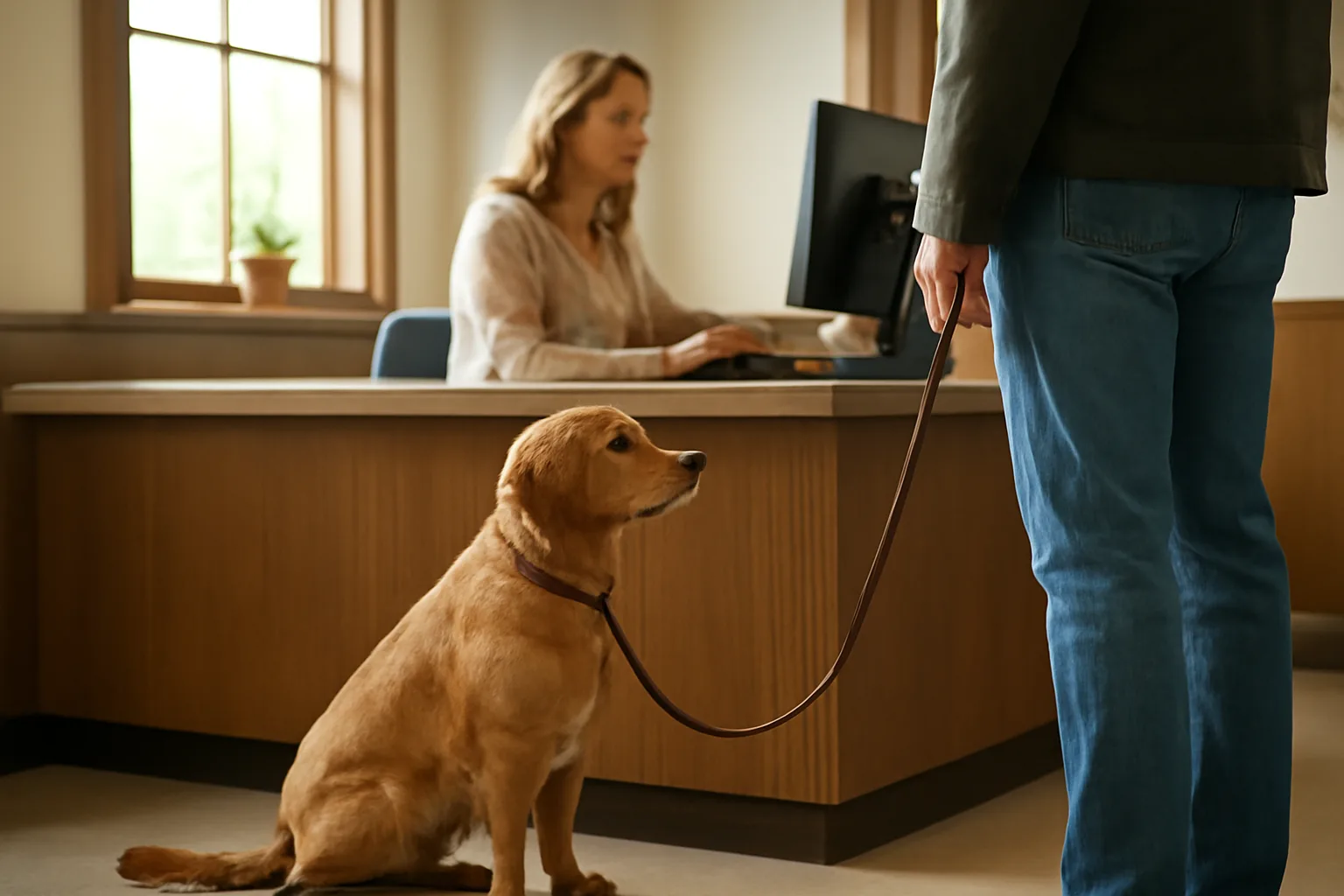
Most local dog licensing follows the same basic pattern, even though the exact fee and portal differ by county. Step one is proof of a current rabies vaccination from a licensed veterinarian. Step two is usually spay/neuter status, since many counties charge a lower fee for altered dogs. Step three is the application itself, which you can typically complete online through your county clerk, animal control, or treasurer's office website, by mail, or in person. A typical timeline: rabies shot at the vet (get the certificate, more than a receipt), then apply within 30 days of acquiring the dog or moving into the jurisdiction, which is a common window written into local codes. Licenses usually run one year and need annual or triennial renewal, often tied to your rabies vaccine schedule if your vet offers a three-year rabies vaccine. Costs vary a lot by place. Many counties charge a lower fee for altered (spayed/neutered) dogs and a noticeably higher one for intact dogs, a spread specifically designed to push owners toward spay/neuter. Some smaller counties charge flat fees closer to $10 to $15 regardless of altered status, while larger urban counties can run $20 to $75 depending on altered status. There's no national standard fee, so check your specific county or city treasurer's page rather than assuming a number. If you're a boarding or daycare operator, you'll also want to know your local rules on this because many facilities require proof of current dog license alongside vaccination records at intake, more than for kennel licensing purposes but as a liability screen.
How do you register a dog if you just moved or adopted?
Same process, just triggered by a new event. Most jurisdictions require registration within 10 to 30 days of acquiring a dog or establishing residency, and shelters or breeders often hand you a rabies certificate at pickup that starts that clock. Bring (or upload) the rabies certificate, a spay/neuter certificate if applicable, and sometimes a microchip number. Some cities require dog licensing through a specific health department or agriculture department portal rather than a general county site, and the license there is renewable every year with fees that differ for altered versus unaltered dogs. Always search "[your city or county] + dog license" and look for a.gov domain rather than a third-party site that charges a markup to "process" your registration for you. Several private sites impersonate official registration portals and charge $20 or more just to forward your information to the real agency.
How do you get a dog papers (AKC registration explained)?
"Papers" almost always means AKC registration, proof of a dog's parentage and breed. You get them one of two ways: as the breeder registering a litter, or as a puppy buyer transferring registration from the breeder. If you bred the litter, you register with the AKC by submitting the litter application, the sire and dam's registration numbers, and the whelping (birth) date, typically within a window after the litter is born. AKC's published fee schedule lists litter registration starting around $25, plus a per-puppy fee, with online submission generally cheaper than paper forms. If you bought a puppy from a breeder, the breeder should give you either a completed individual registration form or, more commonly now, an AKC "puppy registration" code you enter online to complete registration in your own name. If a breeder tells you "the papers are coming" and never delivers, that's a real problem: legitimate AKC breeders register litters close to the puppies' birth, not months after sale. One thing to know: AKC papers document pedigree, not health, and they are not the same thing as a government license. A dog can have full AKC papers and still need a separate city dog license. And a mixed-breed dog can be registered with mixed-breed registries (AKC Canine Partners, for instance) for sports and events, even without "papers" in the traditional pedigree sense.
How can I get papers for my dog if I don't know the breeder?
If you don't have contact with the original breeder, getting full AKC papers after the fact is hard, sometimes impossible. AKC registration depends on documentation from the litter's original breeder; there's no DNA test that manufactures a pedigree that was never recorded. Your realistic options: contact the breeder directly if you have any paperwork with a kennel name or litter number on it, since AKC's registration records are searchable by breeders and sometimes by owners with partial information. If that's a dead end, look at AKC's DNA-based Canine Partners program, which lets mixed-breed or unregistered purebred-looking dogs compete in many AKC companion events without a traditional pedigree. It's not the same as full papers, but it's the practical path for most people who ask this question after adopting a dog with an unclear history.
How to get a dog license (fees, documents, renewal)
| Large urban counties (typical) | $15-$25 | $50-$75 | |
|---|---|---|---|
| Mid-size counties (typical) | $10-$25 | $25-$60 | |
| Smaller/rural counties (typical) | $5-$15 flat | $5-$15 flat | These numbers move every year and differ by city versus county even within the same state, so treat this table as a shape of the pattern, not a quote for your specific jurisdiction. Search your county's animal services or treasurer's page directly before budgeting. Most licenses renew annually online through the same portal, and many jurisdictions will mail a renewal notice, but the legal responsibility to renew on time sits with the owner, not the county. Late renewal often triggers a penalty fee on top of the base license cost. |
A dog license is different from breed papers, and it's the one nearly every dog owner in the U.S. is legally required to get, regardless of breed or pedigree. Requirements almost always include current rabies vaccination, and many counties also want proof of spay/neuter to qualify for the lower fee tier. Here's a rough sense of the range, pulled from the pattern seen in real county and city fee schedules, not a national average: | Jurisdiction type | Altered dog, 1-yr | Unaltered dog, 1-yr |
How to become a dog breeder (and when you need a license, more than papers)
Owning an intact dog and breeding it once for a litter of family pets is very different, legally, from operating as a commercial breeder. The line matters because it determines whether you need a USDA license, a state kennel license, or both. At the federal level, USDA's Animal Welfare Act regulations require a license for anyone who deals in dogs commercially, with a specific retail exemption for small-scale breeders. Under 9 CFR 2.1, a person who maintains four or fewer breeding female dogs and sells only the offspring born and raised on their own premises, directly to the buyer, is generally exempt from federal licensing as a "dealer" [1]. Cross that threshold, or sell wholesale to pet stores or brokers rather than direct to the public, and USDA licensing under 9 CFR Part 2 generally applies [1]. The regulation defines "dealer" broadly to include any person who sells or negotiates the sale of dogs for use as pets, with the retail-sale carve-out described above [1]. If you're breeding at real volume, especially selling online or shipping across state lines, read that carve-out carefully rather than assuming you're exempt. On top of any federal requirement, most states layer their own commercial breeder or kennel license, often triggered by a lower number of dogs than the federal threshold. States commonly define a "commercial breeder" using dog-count thresholds that are stricter than USDA's, meaning you can be state-licensed but federally exempt, or the reverse. Check your state department of agriculture's animal industry or consumer protection division page, since these rules genuinely differ state to state and change periodically. Step-by-step for someone starting out: confirm your state's breeder license threshold and application (state department of agriculture site), confirm whether USDA licensing applies based on your sales channel and breeding female count (9 CFR 2.1), check county zoning to make sure your property allows a kennel or breeding operation at your planned scale, and get your facility ready to pass a physical inspection, since both USDA and most states require on-site inspection of housing, sanitation, and veterinary care before a license is issued. If you're planning boarding or daycare alongside breeding, or expanding a facility that will need to satisfy both zoning and licensing reviewers, a kennel license and zoning packet built for your specific county saves a lot of back-and-forth with reviewers who reject applications for missing a single form. That's the kind of prep work that's easy to underestimate until an inspector shows up and asks for a document you didn't know existed.
How much does dog boarding cost?
Boarding pricing is regional and amenity-driven, so there's no single national number, but real market data gives a workable range. Typical overnight boarding in the U.S. runs roughly $25 to $50 a night at standard kennels, and $40 to $85 a night at higher-end or daycare-affiliated facilities with private suites, webcams, or extra play time. Multi-dog and extended-stay discounts are common, and prices spike around major holidays. Several consumer cost-tracking sites (not government data, since there's no federal boarding price survey) consistently land in that same band, with luxury "pet hotel" stays in major metro areas going higher, sometimes $100+ a night for suite-style accommodations with added services like grooming or one-on-one playtime. If you're comparing options, our guides on dog boarding and dog hotels near me break down what actually drives those price differences by amenity tier.
How much is dog boarding compared to daycare?
Daycare is usually a per-day rate, cheaper per visit than overnight boarding but adding up fast if used daily. Typical daycare runs $20 to $40 a day in most U.S. markets, often with package discounts (10-day or 20-day punch cards) that bring the per-visit cost down 10 to 20 percent versus drop-in pricing. Boarding, by contrast, is priced per night and includes overnight supervision, so it's a different cost structure entirely, more than "daycare plus a bed." A dog boarding for a 5-night trip at $45 a night runs about $225, versus five days of daycare at $30 a day running $150, though that comparison only makes sense if you actually need overnight care. If you're evaluating a facility for regular use, our doggy day care guide and dogtopia comparison cover how national chains price against independent operators.
What should boarding and daycare operators know about registration and licensing?
If you're the one running the facility rather than boarding your own dog, "registration" questions from customers usually mean two things you need to be ready to answer: proof of the dog's local license and proof of current vaccinations, both of which most states or insurers require you to verify at intake. Beyond that, your own operation likely needs a separate commercial kennel or boarding license from your state or county, which is a different application from anything your customers deal with. Requirements vary heavily. Some states regulate boarding and daycare under the same statute as commercial breeding kennels; others have a separate, lighter-touch category for facilities that don't breed or sell dogs. Either way, check your state department of agriculture's animal welfare or consumer protection division, plus your county zoning office, before you sign a lease or start build-out, since a location zoned residential may not allow a commercial kennel use at all, or may require a conditional use permit and a public hearing. If you're also boarding or reselling animals as part of a breeding operation, USDA licensing questions can stack on top of state ones. Our pet boarding and dog kennels guides go deeper on facility-specific licensing steps.
Do I need both a state license and a USDA license?
Possibly, and this is one of the most commonly missed compliance gaps. USDA licensing under the Animal Welfare Act is federal and applies based on your sales channel and breeding female count, regardless of what state you're in [1]. State breeder or kennel licensing is separate, runs on its own fee schedule and inspection cycle, and often has a lower dog-count trigger than the federal rule. Meaning: you can be well under the USDA's four-breeding-female retail exemption and still need a state commercial breeder license, because plenty of states set their threshold at three or more intact females, or simply regulate anyone who sells puppies for a fee above a small annual number. There is no shortcut here besides checking both. Start with your state department of agriculture's licensing page and the federal regulation text at 9 CFR 2.1 [1], and don't assume one covers the other.
Frequently asked questions
How much does dog boarding cost per night?
Typical U.S. boarding runs $25 to $50 a night at standard kennels and $40 to $85 a night at higher-end facilities with private suites or extra playtime. Luxury pet hotels in major metros can run $100 or more a night. Prices vary heavily by region, season, and whether the facility is independently owned or part of a national chain.
How do I register a dog online with my city or county?
Search your county or city's official animal services, treasurer, or health department site (look for a .gov domain). You'll typically need a current rabies vaccination certificate and, for a lower fee, proof of spay/neuter. Apply through the online portal, pay the fee, and you'll get a license number and tag, usually renewable annually.
How do you get a dog papers if you bought from a breeder?
The breeder should give you an AKC registration form or an online registration code at the time of sale. You complete the registration in your name through AKC's website. If a breeder says papers are "coming later" and delays for months, that's a warning sign; reputable breeders register litters shortly after whelping.
How can I get papers for my dog if the breeder is unreachable?
Full AKC pedigree papers require documentation from the original breeder, so if you can't reach them, traditional registration usually isn't possible. Your realistic alternative is AKC Canine Partners, a program that lets mixed-breed or undocumented dogs compete in many companion events using a DNA-linked enrollment rather than a pedigree.
How to become a dog breeder legally in the US?
Check your state department of agriculture's breeder licensing rules, since thresholds vary by state. Confirm whether USDA licensing applies under 9 CFR Part 2, which generally kicks in once you exceed four breeding females sold at retail or sell wholesale. Then confirm your property's zoning allows a kennel or breeding use before you build out facilities.
How to get a dog license and what does it cost?
Bring proof of rabies vaccination (and spay/neuter status, if applicable) to your county or city's licensing portal or office. Fees vary widely: large urban counties often charge $15 to $25 for altered dogs and $50 to $75 for unaltered dogs on a one-year license, while many smaller counties charge $5 to $15 flat. Check your specific jurisdiction's fee page.
Is a dog license the same as AKC registration?
No. A dog license is a legal requirement from your city or county tied to rabies vaccination and public safety. AKC registration ("papers") documents a purebred dog's pedigree for breed and show purposes. You can have one without the other, and most jurisdictions require the local license regardless of a dog's breed status.
How much is dog boarding for a week?
At $30 to $50 a night, a 7-night stay runs roughly $210 to $350 before any multi-night or multi-dog discounts, which many facilities offer for stays over 5 to 7 nights. Holiday weeks (Thanksgiving, Christmas, July 4th) often carry a surcharge, so book and confirm pricing well ahead of peak travel dates.
Do I need a USDA license to sell puppies online?
Possibly. USDA generally requires a license if you have more than four breeding female dogs and sell offspring, or if you sell wholesale rather than directly to buyers who see the animal in person before purchase. The federal retail exemption is narrow and doesn't automatically cover high-volume internet sales; check 9 CFR 2.1 directly [2].
What documents do I need to register my dog locally?
Most jurisdictions require a current rabies vaccination certificate from a licensed vet, and many ask for proof of spay/neuter to qualify for a lower fee. Some counties also want a microchip number. Check your specific county or city portal, since exact document requirements differ by jurisdiction.
How long does it take to get AKC papers for a puppy?
If the breeder registers the litter promptly, individual puppy registration is often available within days to a few weeks of the litter application being processed. Breeders can register online, which AKC's fee schedule generally prices lower than paper submissions, and delays usually mean the breeder hasn't filed the litter application yet.
Can I register a mixed-breed dog with AKC?
Yes, through AKC Canine Partners, which lets mixed-breed dogs get a registration number to compete in many AKC companion events (obedience, agility, rally). It's not a pedigree registration and doesn't document parentage, but it's the standard path for mixed-breed owners who want an official AKC number.
Sources
- Electronic Code of Federal Regulations, 9 CFR 2.1 (Animal Welfare Act regulations, requirement for license): Federal licensing requirement and retail exemption for breeders with four or fewer breeding female dogs selling direct to buyers
- USDA APHIS, Animal Welfare Act (7 U.S.C. 2131 et seq.) statute text: Statutory basis for USDA Animal Welfare Act licensing of dealers and breeders
- Cornell Law School Legal Information Institute, 9 CFR Part 2 Subpart A (Licensing): Full text of federal licensing subpart governing dealers, exhibitors, and breeders under the Animal Welfare Act
- CDC, Compendium of Animal Rabies Prevention and Control, 2023 (Journal of the American Veterinary Medical Association): Rabies vaccination is the standard prerequisite documentation for municipal dog licensing nationwide
- eCFR, 9 CFR Part 2 Subpart A, full section index (definitions and licensing scope): Scope of dealer and breeder definitions under federal Animal Welfare Act licensing regulations