Last updated 2026-07-25
TL;DR
An active dog daycare (free-play, high-activity group care) needs a state or county kennel/commercial license, zoning approval for the use category, and enough supervised space to meet staff-to-dog ratios. Costs run from a few hundred dollars in license fees to $149+ for prep paperwork, plus real build-out costs. USDA licensing only kicks in for breeders selling wholesale or online sight-unseen above federal thresholds, not for daycare operators.
what is an active dog daycare, exactly?
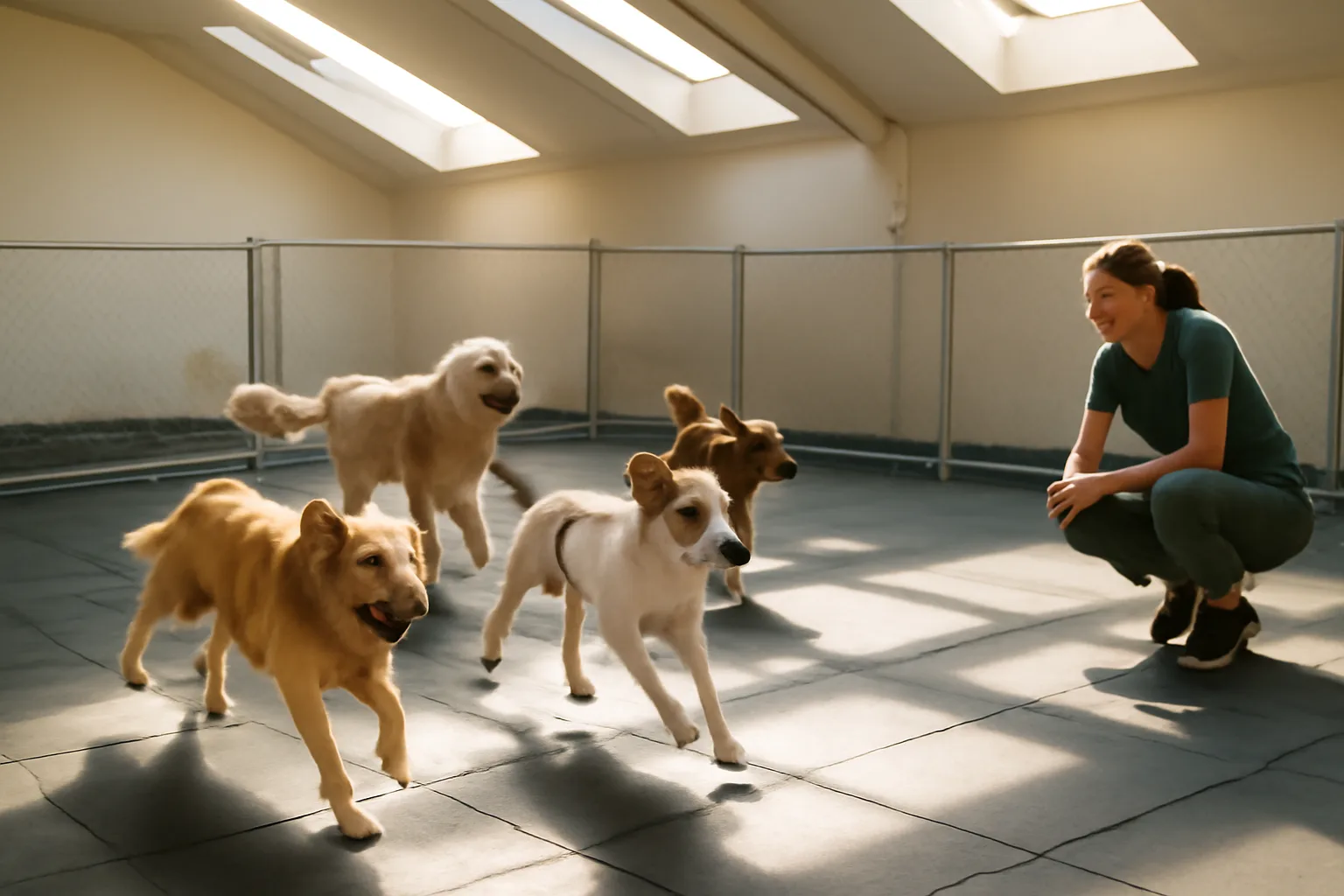
An active dog daycare is a facility built around off-leash group play, usually with turf or rubber-matted yards, agility elements, and staff actively managing dog-to-dog interaction all day, instead of a boarding kennel that mostly separates dogs into runs or crates for rest. The distinction matters for licensing because a lot of state and county codes define "kennel," "commercial animal establishment," or "pet care facility" by activity type and number of animals housed, not by brand name. Most states don't have a category called "daycare" written into statute. You'll usually get licensed under the same commercial kennel or pet dealer rules that apply to boarding operators, sometimes with a separate carve-out if dogs never stay overnight. That's a real cost difference in some states: a facility that only does daytime play and never boards overnight can sometimes qualify for a lighter license tier, but you have to read the actual definition section of your state's code, not assume. If you're comparing daycare to a more traditional kennel setup, it's worth reading through our dog boarding guide and our pet boarding breakdown, since a lot of operators end up running both under one roof and one license.
how much does dog boarding cost (to run, more than to book)?
| State/county kennel license | $25-$300/year | Often tiered by dog capacity [1] | |
|---|---|---|---|
| Local business license | $50-$500/year | City or county dependent | |
| Zoning/conditional use permit | $200-$2,000+ | One-time, plus possible hearing fees | |
| USDA license (if applicable) | $40-$750/year | Only for breeders/dealers over federal thresholds [2] | |
| Build-out (flooring, fencing, drainage) | $15,000-$150,000+ | Wildly dependent on space condition | The honest answer to "how much is dog boarding" for an operator isn't a single number. It's licensing costs (small), zoning costs (medium and unpredictable), and physical space costs (the real budget item). |
For a customer, dog boarding runs roughly $30 to $85 a night at a standard facility, with upscale "dog hotel" suites pushing higher in metro markets. That's the retail price. For an operator, the real cost question is what it takes to get open: state license fees, county zoning and building permits, insurance, and build-out. License fees themselves are usually modest. Many states charge kennel license fees somewhere in the $25 to $300 a year range depending on the number of dogs you house, though a handful of states charge more for larger operations. Pennsylvania sets kennel license fees on a sliding scale tied to how many dogs the kennel is licensed to keep, under its Dog Law statute at 3 P.S. Section 459-208 [1]. That's cheap compared to what you'll spend on flooring, fencing, drainage, and HVAC for odor and disease control. Zoning and building permit costs vary even more. A county might charge a flat conditional-use-permit fee, or make you go through a public hearing with its own fee schedule, engineering review costs, and possible required upgrades like a fire suppression retrofit or ADA parking restriping. None of that is standardized, so treat any number you see online as a starting estimate, not a quote. Here's a rough order-of-magnitude comparison so you can budget conversations with your landlord or lender: | Cost category | Typical range | Notes |
does an active daycare need a different zoning classification than a kennel?
Sometimes, yes. Zoning codes usually classify land use by activity and intensity, not by your marketing name. A facility with dogs running around outdoors all day, barking, generates more noise and traffic complaints than an overnight-only kennel where dogs are mostly resting in climate-controlled rooms. Some counties respond to that by requiring a conditional use permit or special exception specifically for "animal daycare" or "outdoor exercise areas," even in zones that otherwise allow kennels by right. The practical move is to call your county zoning or planning office before you sign a lease, and ask two specific questions: is this exact address zoned for commercial animal boarding/daycare, and does outdoor play area count against setback or noise ordinance limits differently than indoor space? Get the answer in writing if you can. Verbal answers from a front-desk staffer are not something you can hold anyone to later. A lot of daycare operators get tripped up by noise ordinances specifically, since an outdoor play yard next to a residential parcel line is the single most common source of neighbor complaints and zoning board pushback at hearings. If you're prepping for a hearing, it helps to look at how other dog kennels and doggy day care operators have framed noise mitigation (sound fencing, hour restrictions, indoor-only after a certain time) in their own permit applications.
how do you register a dog daycare business (not the same as licensing the animals)?
Registering the business itself is a separate step from getting your kennel or pet-care license. You'll typically need to form a legal entity (LLC is common for liability reasons), register that entity with your state's Secretary of State office, get an EIN from the IRS, register for state sales tax if your state taxes pet services, and then apply for your local business license. That business registration process has nothing to do with individual dog licensing or dog papers, which is a separate question entirely (covered below), and nothing to do with your kennel or commercial animal facility license, which is a third separate process. Operators sometimes conflate all three and miss a step. Handle them as three checklists: business entity registration, facility/kennel licensing, and then any pet-specific registration your customers ask about. Some states require background checks or prior kennel inspection before they'll issue your facility license, so don't wait until your grand opening date to start the application. Processing time varies by state agency but budget several weeks at minimum, and longer if your first inspection turns up items you need to fix and re-inspect.
how do you register a dog (as in, an individual pet, not the business)?
Registering an individual dog usually means getting a dog license from your city or county, which is different from breed registration papers. Dog licensing is a local government requirement, tied to rabies vaccination records, and the money usually funds animal control services. You typically register at your county clerk's office, animal control department, or online portal, by showing proof of current rabies vaccination and paying a fee. For daycare operators, this matters because many facilities require proof of a current dog license or at least current rabies vaccination as a condition of enrollment. That's a smart baseline policy, since it also protects you if a bite incident happens and you need to show the dog had current vaccinations on file.
how to get a dog license, step by step
Getting a dog license is usually a straightforward local government process, separate from any state kennel licensing you need as a business owner. The dog's owner (a customer, or you personally for your own dog) typically needs to bring proof of a current rabies vaccination to the county or city licensing office, or upload it through an online portal where available, then pay a fee that's usually in the $10 to $25 a year range for an altered pet, often more for an unaltered one. Many counties give a lower license fee for spayed or neutered dogs specifically as an incentive. Check your specific county's animal control or county clerk page, since the fee schedule and renewal cycle (annual versus multi-year) differ by jurisdiction. As a daycare operator, you're not usually the one filing this paperwork for your customers' dogs. But you'll want it as an enrollment requirement, and you should know the process well enough to explain it to first-time clients who ask.
how do you get papers for a dog, and does a daycare or breeder need them?
"Papers" almost always means breed registration paperwork through an organization like the American Kennel Club, not a government license. Registration papers document a dog's pedigree and breed eligibility for shows or breeding programs; they carry no legal licensing weight and no state or county agency requires them for boarding or daycare enrollment. To get papers for a puppy, the breeder registers the litter with the registry (commonly AKC) at the time of sale, and the buyer receives individual registration papers for their specific puppy, sometimes called a "registration application" that the new owner completes and mails in or files online. If you bought a dog without papers and want them retroactively, that's usually not possible unless the breeder registered the litter and simply didn't give you the individual paperwork, in which case you'd go back to that breeder directly. Mixed-breed dogs and most rescue dogs won't have registry papers and can't get them after the fact; registries document pedigree lineage, not aftermarket paperwork you can apply for independently. If a customer asks your daycare staff how to get papers for their dog, the honest answer is short: contact the breeder you bought from, or accept that a shelter/rescue dog typically won't have them. That's fine, because papers don't affect a dog's ability to attend daycare or get a local license.
how to become a dog breeder, and when does USDA licensing kick in?
Becoming a dog breeder legally starts with your state's breeder or kennel licensing requirements, which vary widely, and separately, becoming a USDA-licensed breeder only applies once you cross specific federal thresholds under the Animal Welfare Act. The Animal Welfare Act and its implementing regulations define who needs a USDA license largely around how animals are sold. Retail pet stores selling directly to the public in person are generally exempt under 9 CFR Section 1.1's definition of retail pet store. But if you sell dogs wholesale, sell to another business for resale, or sell dogs sight-unseen (online, phone, mail) to buyers who never see the animals or the facility in person before purchase, you likely need a USDA license, regardless of how many dogs you have, once those sales occur across the categories the rule covers [2]. USDA's own guidance is direct about the sight-unseen category: "Anyone who breeds dogs and sells them sight unseen (i.e. without the buyer seeing the animal prior to purchase), whether directly to the public over the internet, or through a broker or other intermediary, must be licensed by USDA" according to APHIS's 2013 final rule amending the definition of retail pet store, published in the Federal Register (78 FR 57227) [2]. That's the rule that catches a lot of small breeders off guard, because it's not about volume, it's about the sales channel. On top of the federal layer, most states run their own separate commercial breeder or kennel licensing programs with their own thresholds (often based on number of females kept for breeding, or total litters sold per year), so you may need both a state breeder license and a USDA license depending on your state and your sales model. Before you breed a single litter, call your state department of agriculture's animal industry division and ask directly whether your planned sales volume and method (in-person versus online) triggers state licensing, then separately check APHIS's own threshold guidance, since the two systems don't automatically line up.
how does a boarding or daycare license differ from a breeder license?
A commercial boarding or daycare facility license and a commercial dog breeder license are usually two entirely different regulatory tracks, even within the same state agency. Boarding and daycare licenses typically focus on facility conditions: sanitation, ventilation, staff-to-dog ratios, isolation protocols for sick animals, and fire/emergency planning. Breeder licenses focus on animal health records, breeding frequency limits, veterinary care documentation, and often a cap on the number of intact females. Some operators run both a boarding/daycare wing and a small breeding program on the same property, which usually means holding two separate licenses and passing two separate inspection standards, sometimes on the same visit if your state combines its animal facility inspectors. Don't assume one license covers both activities; read your state's definitions section, since "kennel" in some state codes explicitly excludes breeding operations and vice versa. Working through the paperwork for two license types at once is exactly the kind of thing that eats a founder's time in the months before opening. That's the gap our $149 Kennel License & Zoning Packet is built for: it organizes the state and county-specific document checklist so you're not guessing which forms apply to your facility type, though you'll still file everything yourselves with your state and county offices directly.
what staff-to-dog ratios and space standards apply to active daycares?
There's no single federal ratio standard for commercial dog daycare play groups. The USDA's Animal Welfare Act regulations set housing, space, and care standards for USDA-licensed dealers, breeders, and exhibitors under 9 CFR Part 3, not for boarding or daycare businesses specifically, since daycare and boarding aren't AWA-covered activities in most cases [3]. State and local rules fill that gap unevenly, and many states have no numeric staff-to-dog ratio requirement at all written into statute. Where ratios do get specified, it's usually through local licensing conditions or a state's general animal facility rules rather than a national standard, so you have to check your specific state's kennel or pet care facility regulations. Some professional associations and industry insurers recommend informal benchmarks (often cited in the range of one staff member per 10 to 15 dogs in an active free-play group), but that's industry practice, not law, and you should not represent it as a legal requirement to a zoning board or inspector. What inspectors do consistently check, regardless of state, is drainage and sanitation adequacy, secure fencing height and gap tolerances, separation capability for sick or aggressive dogs, and emergency evacuation planning. Build your play yard and staffing plan around those universal inspection points first, then layer state-specific numeric requirements on top once you've confirmed them with your state agriculture department or local animal control office.
what does a typical facility inspection look for in an active daycare?
Inspectors checking an active daycare generally focus on five things: adequate drainage so waste and cleaning water don't pool, secure and appropriately sized fencing with no gaps a dog could squeeze through, a working isolation or separation area for sick or injured dogs, proper ventilation and temperature control, and documented emergency and bite-incident protocols. Outdoor play yards get extra scrutiny compared to indoor-only boarding kennels, because loose group play increases injury risk and because surface material (turf, rubber matting, gravel) affects both drainage and paw injury rates. Bring your surface material spec sheet and drainage plan to any pre-opening consultation with your local building or health department, since retrofitting a yard after your grand opening is expensive and disruptive. If you're building out from scratch, it's worth reviewing how established chains structure their play yards and group sizes; searching comparisons of models like Dogtopia against independent operators can give you a feel for common layout choices, though you should still verify every specific requirement against your own state and county rules rather than copying a franchise blueprint that was built for a different jurisdiction.
Frequently asked questions
how much does dog boarding cost for a customer versus an operator?
Customers typically pay $30 to $85 per night depending on market and suite type. Operators face a different cost stack entirely: license fees ($25 to $300/year in many states), local business licenses, zoning permit fees, and build-out costs that can run from $15,000 to well over $100,000 depending on space condition.
how do you register a dog daycare business?
Form a legal entity (commonly an LLC), get an EIN from the IRS, register with your state's Secretary of State, apply for a local business license, and separately apply for your state or county commercial kennel/animal facility license. These are distinct steps, not one application.
how much is dog boarding compared to daycare pricing?
Overnight boarding usually costs more per day than daytime daycare because it includes overnight staffing and lodging space. Daycare-only rates commonly run lower per visit, though exact pricing varies enormously by region and facility type, so check local competitor pricing rather than relying on a national average.
how do you get a dog papers if you bought a mixed-breed or rescue dog?
You generally can't. Registry "papers" (like AKC registration) document verified pedigree lineage established at the breeder level. Mixed-breed and most rescue dogs were never registered as a litter, so there's no retroactive application process. Papers have no bearing on daycare enrollment or dog licensing eligibility.
how do you register a dog with the city or county?
Bring proof of current rabies vaccination to your city or county animal control office or licensing portal, then pay the annual license fee, which is often lower for spayed or neutered dogs. This is separate from any breed registry paperwork and separate from a business kennel license.
how to become a dog breeder legally in most states?
Check your state department of agriculture's animal industry division for a state commercial breeder license, which usually applies once you keep a certain number of intact breeding females or sell above a set number of litters per year. Separately check APHIS's sight-unseen and wholesale sales rules, since federal USDA licensing can apply regardless of state licensing status.
how to get a dog license before enrolling in daycare?
Visit your county or city animal control office (many now offer online portals), show proof of current rabies vaccination, and pay the license fee. Most facilities require proof of current rabies vaccination at minimum for enrollment, and a valid dog license often works as easy proof of that.
how to get papers for a dog after the fact, if the breeder never gave them?
Contact the original breeder directly. If they registered the litter with AKC or another registry at the time of sale, they may still be able to issue your individual dog's registration application. If the litter was never registered, there's no separate process to create papers retroactively.
how can i get papers for my dog if I don't know the breeder?
If you don't have breeder contact information, you likely can't get registry papers, since registries require breeder-submitted litter records. DNA breed testing kits can identify likely breed ancestry, but that's not the same as registry papers and carries no legal or show-eligibility weight.
does USDA licensing apply to dog daycare and boarding operators?
Generally no. USDA/APHIS licensing under the Animal Welfare Act targets dealers, breeders selling wholesale or sight-unseen, and exhibitors, not boarding or daycare facilities. Boarding and daycare fall under state and local commercial kennel licensing instead, per the AWA's own scope in 7 U.S.C. Chapter 54.
what's the difference between a kennel license and a breeder license?
A kennel or boarding/daycare license covers facility sanitation, staffing, and space standards for housing dogs temporarily. A breeder license covers animal health recordkeeping, breeding frequency, and often caps on intact females. Some operators need both if they run boarding/daycare alongside a breeding program on the same property.
how much does a USDA breeder license cost?
APHIS licensing fees for breeders and dealers are set by regulation and include an annual license fee with a minimum tier around $40, increasing with the number of animals or sales volume. Check 9 CFR Section 2.6 and APHIS's current fee schedule directly, since fees are periodically updated by rulemaking.
is there a national staff-to-dog ratio requirement for daycare play groups?
No federal ratio exists for commercial daycare specifically. Some states or local licensing conditions set numeric ratios, but many don't specify one in statute at all. Industry benchmarks (often cited around 1 staff member per 10-15 dogs) are common practice, not enforceable law, unless your specific state or county has written it into code.
Sources
- Pennsylvania Dog Law, 3 P.S. Section 459-208 (Kennel license fees): Kennel license fees are tiered by the number of dogs a kennel is licensed to house
- USDA APHIS, Amendments to the Animal Welfare Act Regulations Definition of Retail Pet Store, 78 Fed. Reg. 57227 (Sept. 18, 2013): Sellers who sell animals sight unseen must be licensed by USDA regardless of sales volume
- 9 CFR Part 3, Subpart A (Specifications for the Humane Handling, Care, Treatment, and Transportation of Dogs): The Animal Welfare Act regulations set housing and space standards for USDA-licensed dealers, breeders, and exhibitors, not general boarding or daycare businesses
- 9 CFR Section 1.1 (Definitions, including retail pet store): Retail pet stores selling animals directly to the public in person are generally exempt from USDA dealer licensing under the regulatory definition
- 9 CFR Section 2.6 (License fees): APHIS license fees are set in tiers with a minimum annual fee at the lowest tier for dealers and breeders