Last updated 2026-07-25
TL;DR
It depends on where you are and how many dogs you sell, but yes, most breeders need something. States often require a license once you keep a set number of intact females or produce a set number of litters a year. USDA (APHIS) licensing kicks in once you have more than 4 breeding females and sell puppies sight-unseen, wholesale, or online without the buyer meeting the dog in person first.
do you need a dog breeding license to breed dogs at home
Usually, yes, if you're doing it as anything beyond a one-off accidental litter. There's no single national "dog breeding license." Instead you're looking at up to three separate layers: your state's commercial breeder law, your county or city's kennel/zoning rules, and federal USDA licensing if you cross certain sales thresholds. A lot of states set the trigger at a specific number of intact females or litters per year rather than requiring a license for every hobby breeder. Ohio, for example, defines a "high volume breeder" as someone with 9 or more sexually intact female dogs who sells or transfers 60 or more puppies in a calendar year, and that status requires state licensing and inspection under Ohio Revised Code 956.01 [1]. Pennsylvania's Dog Law requires a kennel license for anyone who keeps or sells a certain number of dogs, with categories running from small kennels up through commercial breeding kennels of 60 or more dogs, each tier carrying its own fee schedule [2]. So the honest answer is: check your specific state's threshold before you assume you're exempt. A single litter from the family pet, sold to a handful of local buyers who come pick the puppy up in person, is often exempt everywhere. Add a second breeding female, start advertising online, or ship puppies out of state, and you're now in a different legal category in a lot of jurisdictions.
what is the usda threshold for dog breeders
USDA/APHIS licensing under the Animal Welfare Act applies to breeders who have more than 4 breeding female dogs and who sell puppies without the buyer or the buyer's agent physically present to see the animal before sale [3]. That's the retail pet store exemption written into the Animal Welfare Act. If you sell in person, buyer and puppy meet face to face, you're generally exempt from federal licensing no matter how many litters you produce. The exemption disappears once you sell sight-unseen: internet sales shipped to a buyer, wholesale to pet stores, or sales through a broker. The Animal Welfare Act itself defines a "dealer" broadly to include any person who sells or negotiates the sale of animals for research, exhibition, or use as pets, subject to specific exemptions, and USDA's own regulations at 9 CFR 1.1 spell out who counts as a retail pet store exempt from that dealer definition [3]. Breeders under the 4-female threshold, or those who only sell in person, don't need a federal license, but they can still owe their state a license. USDA licensing isn't cheap or fast. Initial license fees are tiered by the dollar amount of animals you sell or handle annually, and APHIS requires an inspection before your license issues, plus ongoing unannounced inspections after that [4]. Budget real lead time, weeks to a few months is common, not days.
how to become a dog breeder legally
There's no single national exam or certificate. Becoming a legal breeder means stacking the right permissions in order, and skipping one is the most common mistake first-time breeders make. First, check your state department of agriculture's breeder or kennel law. States that regulate breeders directly (Pennsylvania, Ohio, and others) publish specific numeric thresholds, license classes, and inspection standards [1] [2]. Second, check your county or city zoning and animal control code. Zoning is where a lot of first-time breeders get tripped up, because a use permitted under state ag law can still be barred outright by a residential zoning district, or capped by a "number of dogs per household" ordinance that has nothing to do with breeding at all. Third, if you'll sell sight-unseen or wholesale, get your USDA class "A" (breeder) license from APHIS before you make that first sight-unseen sale [3]. Fourth, budget for a facility that will pass inspection: whelping area, exercise space, ventilation, sanitation, all measured against written standards (more on that below). Fifth, keep records. Every one of these regulatory layers wants paperwork: health certificates, sales records, litter registrations, vaccination logs. If you're running this as a facility rather than a spare bedroom operation, and you're also boarding or day-boarding dogs on the side, the zoning and facility-standard questions overlap heavily with what dog boarding operators face, worth reading even if breeding is your main business.
how do i get papers for my dog (AKC and other registries)
"Papers" almost always means registration with a breed registry, most commonly the American Kennel Club, and that's a separate process from any government license. AKC registration requires that both parents be individually registered with AKC and that the litter be reported through AKC's litter registration process, with the breeder submitting the litter application and each puppy then getting an individual registration. If you're asking "how do you get a dog papers" for a dog you already own, not a puppy you bred, the path depends on whether the dog's parents were ever registered. If the parents are AKC registered but the individual puppy was never registered by the breeder, you may be able to get an Indefinite Listing Privilege (ILP) number from AKC for mixed-lineage or unregistered purebred dogs, which lets the dog compete in some events without full pedigree registration. If neither parent was ever registered anywhere, there's no way to manufacture papers after the fact; registries only work from documented lineage. One thing worth being blunt about: AKC registration is a pedigree record, not a government license, and it has zero legal bearing on whether you need a state breeder license or a local kennel permit. You can be fully AKC registered and still be operating illegally under your state's breeder law if you haven't gotten the separate state or county paperwork.
how to register a dog with the city or county
Registering a dog with your local government (commonly called a "dog license," separate from a breeder license) is usually a rabies-vaccination-based system run by the county or city clerk, animal control department, or county treasurer. It's not the same thing as a breeder license, and nearly every jurisdiction that requires one applies it to pet owners generally, more than breeders. The typical process: get your dog a rabies vaccine from a licensed vet, bring the rabies certificate to the county or city office (or their online portal), pay the fee, and get a tag. Many counties tie license renewal to the rabies vaccination's expiration date so you're re-licensing every one to three years depending on the vaccine your vet used. Fees usually run in the range of $10 to $25 a year for an altered (spayed/neutered) dog and can run noticeably higher, sometimes $50 to $75 or more, for an intact dog, since a lot of counties intentionally price it that way to nudge people toward spay/neuter. Exact numbers are entirely local, so check your county's own fee schedule before you budget anything. If you're breeding dogs, every adult dog in your kennel typically still needs its own individual dog license from the county in addition to whatever state breeder license or USDA registration applies to your operation as a whole. These are stacked requirements, not alternatives to each other.
how much does dog boarding cost, and does that affect licensing
If you're a breeder wondering whether adding boarding services changes your licensing picture, the answer is generally yes, boarding is regulated as its own category. Dog boarding rates nationally run roughly $25 to $85 a night for a standard kennel or in-home boarding stay, with upscale "dog hotel" style facilities charging more, often $50 to $100+ a night depending on region and amenities. These are market rates, not government figures, and vary a lot by city. More importantly for licensing: most states that regulate kennels define "kennel" broadly enough to catch boarding operations, meaning a breeder who also boards other people's dogs for a fee typically needs a separate kennel license category, even if their breeding license is already current. Pennsylvania's kennel license structure, for instance, applies to facilities keeping dogs for boarding or selling purposes above the numeric thresholds in the statute, regardless of whether the dogs are owned by the kennel or just boarded [2]. If boarding is part of your business plan, read up separately on pet boarding licensing and, if you want a look at how commercial daycare chains structure their facility compliance, Dogtopia is a useful comparison point even though you won't be operating at that scale.
what facility standards do licensed breeders have to meet
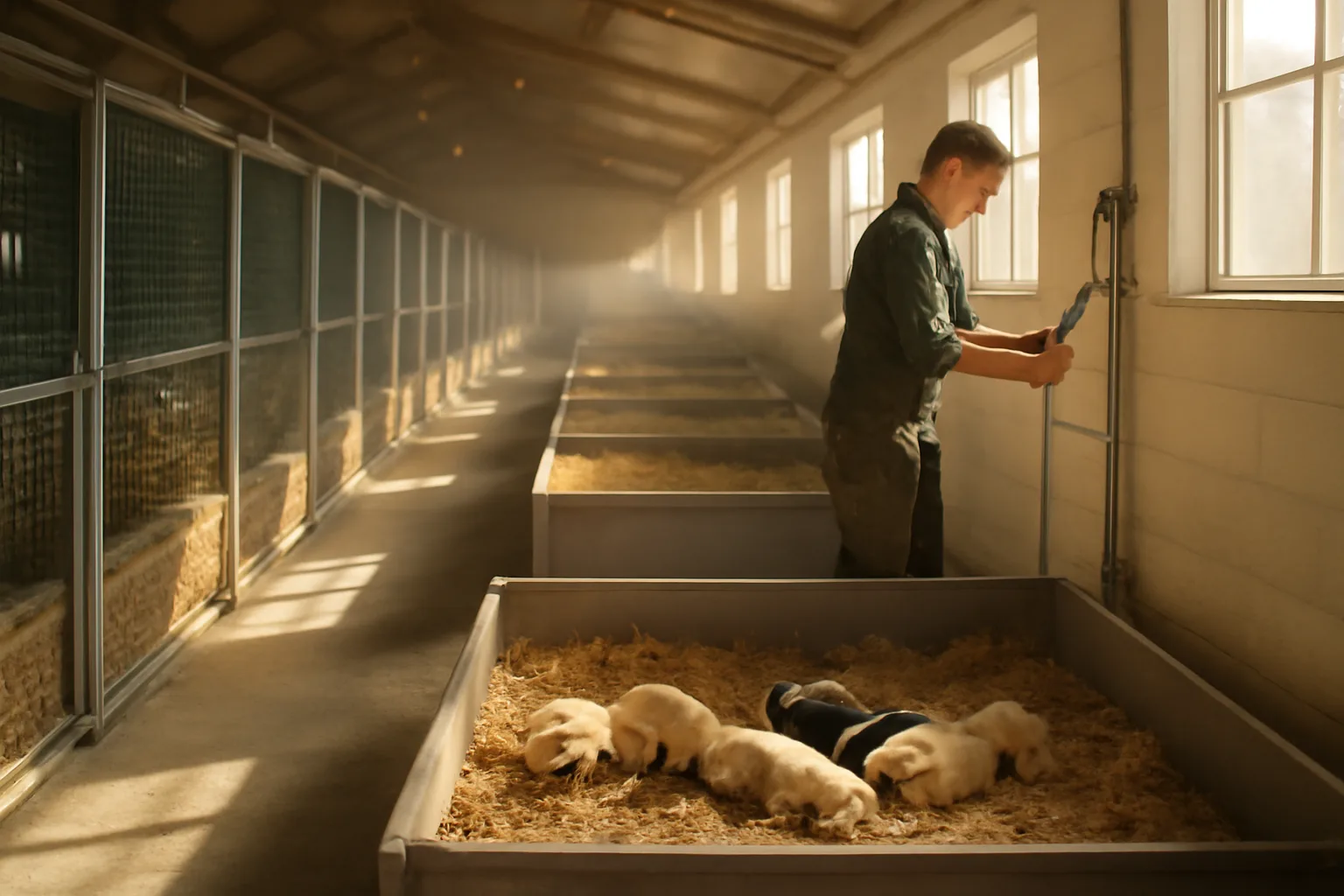
USDA-licensed breeders have to meet the Animal Welfare Act's specific facility standards, which cover housing structure, space per dog based on the dog's size, temperature ranges, ventilation, sanitation schedules, and veterinary care access. These standards are written into federal regulation at 9 CFR Part 3, Subpart A, covering housing facilities and space requirements for dogs, and APHIS treats compliance with them as a condition of getting and keeping a class A license [3] [5]. States that license breeders independently of USDA generally write their own parallel standards, and they don't always match the federal ones exactly. A few things inspectors consistently check, federal or state: primary enclosure size relative to the dog's size, so a dog has room to turn around and lie down comfortably; flooring that doesn't injure paws and can be sanitized; protection from temperature extremes (a shaded or heated area, more than outdoor exposure); clean water and adequate food access at set intervals; and a written veterinary care plan, more than an emergency vet's phone number. Whelping areas usually get extra scrutiny. They need separate, sanitizable, temperature-controlled space for a nursing mother and litter, distinct from general kennel housing. If you're building or retrofitting a facility, it's worth reading state facility-standard guidance before you build anything, not after. Retrofitting concrete runs or adding heating to an existing barn after a failed inspection costs a lot more than designing to the standard up front.
does zoning affect whether you need a breeding license
Yes, and it's the piece breeders most often skip. Your state ag department or USDA doesn't care what your property is zoned for; your county or city zoning office absolutely does, and a state license doesn't override a local zoning denial. Most residential zones cap the number of dogs allowed per household (commonly somewhere in the 3 to 5 range, though this is entirely set by local ordinance and varies dog by dog, county by county) and either restrict or outright ban commercial kennel or breeding use outright. Agricultural zones are typically far more permissive, which is exactly why a lot of larger breeding operations end up located on land zoned agricultural or rural-residential rather than suburban residential. Before you apply for a state breeder license, call or check your county zoning office's website for the parcel's zoning designation and whether "kennel," "animal breeding," or "commercial animal facility" is a permitted use, a conditional use requiring a hearing, or outright prohibited. If it's conditional, you're looking at a public hearing where neighbors can object, and that process alone can take months. This is genuinely the step where a well-prepared packet, site plan, projected dog counts, noise and waste management plan, makes the difference between a fast approval and a contested hearing that drags for half a year.
how do you register a breeding kennel once you're licensed
Once your state license and any needed USDA registration are approved, most states require you to formally register your kennel name and location, which is different from registering individual dogs. This usually means submitting your facility address, the licensee's name, your license number, and sometimes a facility diagram, to the state agriculture department's kennel registry. Some states also require annual renewal filings that update your current dog count, since a lot of tiered fee structures (like Pennsylvania's, tiered by number of dogs kept) recalculate your fee category each year based on actual numbers, not your original application [2]. Miss a renewal deadline and you can lapse into unlicensed status even if nothing else about your operation changed. USDA registration works similarly: once licensed, APHIS assigns you a certificate number that has to appear on your official paperwork, and your facility goes into APHIS's inspection rotation, with unannounced inspections a normal part of maintaining the license, more than a one-time hurdle at approval [4].
what happens if you breed dogs without a license
Penalties vary a lot by state and by whether you're dealing with a state ag department, a county animal control office, or USDA/APHIS, but none of these agencies treat unlicensed commercial breeding as a paperwork technicality. State penalties for operating an unlicensed kennel above the statutory threshold commonly include fines per violation (often in the hundreds of dollars per count, sometimes escalating for repeat violations) plus the ability of the state to seize animals or shut down the operation pending compliance. Pennsylvania's Dog Law, for example, treats operating an unlicensed kennel as a summary offense with fines set in the statute [2]. On the federal side, operating as an unlicensed dealer under the Animal Welfare Act when you meet the more-than-4-breeding-females-plus-sight-unseen-sales threshold exposes you to USDA enforcement action, which can include cease and desist orders, civil penalties, and referral for criminal prosecution in serious or repeat cases [3]. The more common real-world consequence, though, is just losing your sales channel. A lot of buyers, especially anyone shipping a puppy or buying online, now ask for a license number before they'll pay, and pet stores and brokers generally won't take dogs from unlicensed breeders because it exposes them to liability too.
how kennelpermit helps you sort through all these layers
Every one of these licensing layers, state breeder license, county zoning, USDA registration, comes from a different agency with its own forms, its own fee schedule, and its own timeline, and none of them talk to each other. That's the actual problem for a new breeder: not that the rules are secret, they're all public, but that assembling them into one coherent application package for your specific state and county takes real research time. KennelPermit's $149 one-time license packet builder pulls together a state-specific licensing checklist, a zoning hearing prep packet, and facility standard checklists so you're walking into your county zoning hearing or state ag department application with the paperwork already organized around what your specific jurisdiction asks for. It doesn't replace a lawyer or a zoning consultant, and it doesn't get you approved by itself, no service can promise that, but it does mean you're not starting from a blank page.
Frequently asked questions
Do you need a dog breeding license to sell just one litter?
Often no, if it's a true one-off litter sold locally with buyers meeting the puppies in person and you're under your state's numeric threshold for intact females or annual litters. But check your specific state law and county ordinance, since some set the bar lower than people expect, and repeat litters can push you into licensed territory fast.
How much does dog boarding cost?
Standard boarding runs roughly $25 to $85 a night nationally, with upscale dog hotel-style facilities often charging $50 to $100 or more depending on amenities and region. These are market rates set by individual businesses, not government fees, so get quotes locally rather than budgeting off a national average.
How do I register a dog with my city or county?
Get a current rabies vaccination certificate from your vet, then bring it (or upload it) to your city or county clerk, treasurer, or animal control office along with the license fee. You'll get a tag, and renewal is usually tied to your rabies vaccine's expiration, typically every one to three years.
How do you get papers for a dog?
Papers usually mean registry paperwork like AKC registration, which requires both parents to already be registered and the breeder to file the litter registration. If neither parent was ever registered, there's no way to add papers retroactively; some registries offer a limited listing option (like AKC's ILP) for unregistered purebred or mixed dogs instead.
How can I get papers for my dog if I don't know the breeder?
Without breeder cooperation or documented parentage, full registry papers usually aren't possible, since registries require a chain of recorded lineage. DNA breed testing can identify likely breed composition, and some registries offer limited participation programs for dogs of unknown or mixed background, but that's not the same as full pedigree registration.
How to become a dog breeder legally, step by step?
Check your state ag department's breeder license threshold, confirm your property's zoning allows breeding or kennel use, get USDA/APHIS licensing if you'll sell more than 4 breeding females' worth of puppies sight-unseen, build a facility that meets written space and sanitation standards, and keep sales and health records from day one.
What is the USDA threshold that triggers a breeder license?
USDA/APHIS licensing applies once you have more than 4 breeding female dogs and you sell puppies without the buyer seeing the dog in person before purchase. Sell only face to face, no matter your dog count, and you generally fall under the Animal Welfare Act's retail exemption instead.
Does a state breeder license replace the need for local zoning approval?
No. State licensing and county/city zoning are separate systems run by separate offices, and a state license doesn't override a local zoning ordinance. You can be fully state-licensed and still be operating illegally, or unable to operate at all, if your property's zoning doesn't permit breeding or kennel use.
How much is dog boarding compared to daycare?
Boarding (overnight stays) typically costs more per day than daytime-only daycare, since it includes overnight staffing and housing. Daycare often runs $20 to $40 a day in many markets, while overnight boarding frequently lands in the $25 to $85+ per night range; both vary heavily by region and facility type.
Can you get a dog license without a rabies vaccine?
Most counties require a current rabies vaccination certificate as a condition of dog licensing, since license systems are largely built around rabies control. A few jurisdictions allow a medical exemption with a vet's signed waiver, but a plain unvaccinated dog usually can't get licensed without one.
What happens if you're caught breeding dogs without a required license?
Consequences vary by state but commonly include per-violation fines, potential animal seizure, and forced closure until you come into compliance, plus federal enforcement action from USDA/APHIS if you meet the Animal Welfare Act's dealer threshold. Many buyers and brokers also refuse to work with unlicensed breeders at all.
Do hobby breeders with only one or two dogs need a USDA license?
Generally no. USDA/APHIS licensing applies once you exceed 4 breeding female dogs and sell sight-unseen; below that, or if all sales happen face to face, you typically fall outside federal dealer licensing. You may still need a state or local license depending on your state's own threshold.
Sources
- Ohio Revised Code 956.01, Dog Breeding Definitions: Ohio defines a high volume breeder as 9+ intact females producing 60+ puppies/year, requiring state license and inspection
- Pennsylvania General Assembly, Dog Law (3 Pa.C.S. Chapter 20): Pennsylvania's Dog Law sets tiered kennel license categories by number of dogs kept, up to commercial kennels of 60+ dogs, and treats unlicensed operation as a summary offense
- Animal Welfare Act regulations, 9 CFR 1.1 (definitions, retail pet store exemption): Breeders with more than 4 breeding female dogs who sell sight-unseen fall outside the retail pet store exemption and must be licensed as a dealer under the Animal Welfare Act
- Animal Welfare Act regulations, 9 CFR Part 2, Subpart A (licensing and inspection): APHIS requires pre-license inspection and unannounced ongoing inspections as conditions of maintaining an Animal Welfare Act license
- Animal Welfare Act regulations, 9 CFR Part 3, Subpart A (dog housing facilities and space requirements): Federal facility standards for licensed dog breeders cover housing structure, space per dog, temperature, ventilation, and sanitation