Last updated 2026-07-25
TL;DR
Dallas breeders need a City of Dallas animal breeder permit if selling from a residence in city limits, plus Texas licensure under the Texas Department of Licensing and Regulation if you keep 11+ intact female dogs and sell more than a set number of animals a year. Sell wholesale (not directly to buyers) and hit USDA thresholds and you also need a federal APHIS license.
Do you need a permit to breed dogs in Dallas?
Yes, in most cases. The City of Dallas requires an Animal Breeder Permit for anyone keeping an intact female dog or cat and selling or giving away offspring within city limits, under Dallas City Code Chapter 7 (Animals) [1]. This is separate from the basic pet registration every dog owner in Dallas needs, and it's separate from any state or federal license you might also owe. The city permit process runs through Dallas Animal Services. It typically involves an application, a facility check (fencing, sanitation, housing for the dogs), and a per-year fee that the city sets and periodically revises, so confirm the current amount directly with Dallas Animal Services rather than relying on an old number you saw online. If you're outside Dallas city limits but still in Dallas County, you're not automatically off the hook. Unincorporated Dallas County and neighboring suburbs (Plano, Garland, Mesquite, Irving, etc.) each set their own animal ordinances, and some have no breeder-specific permit at all while others mirror the city's approach. Call the specific city or county office where the dogs are actually kept, not where you live if that's different.
What's the difference between a Dallas permit, a Texas breeder license, and a USDA license?
These are three separate layers. A lot of new breeders only find out about the second or third one after animal control or a customer asks for paperwork they don't have. Layer one is local: your city or county breeder permit (Dallas Animal Services, or your county's equivalent) covers zoning, noise, and basic animal welfare oversight for where you physically keep the dogs. Layer two is state: Texas regulates larger-scale breeders under the Texas Department of Licensing and Regulation (TDLR), which administers the Dog or Cat Breeders Program created by Texas Occupations Code Chapter 802 [2]. TDLR licensure kicks in for anyone who keeps 11 or more intact female dogs or cats for breeding purposes and sells more than a set number of animals per year (the statute and TDLR rules define the exact sale threshold; check the current TDLR breeder rule page since it has been amended). Smaller hobby breeders under those numbers generally don't need a TDLR license, but they still need any applicable local permit. Layer three is federal. If you sell dogs sight unseen (online, through a broker, wholesale to a pet store) rather than letting buyers meet the dog and see where it was raised, USDA APHIS may require a Class A or Class B license once you exceed certain thresholds, covered in the next section. Selling directly to the public from your home, where the buyer visits before purchase, is the main exemption most small Dallas breeders rely on.
When does a Dallas breeder need a USDA license?
You need a USDA license if you're a wholesale breeder, not a face-to-face retail seller. APHIS defines a retail pet store exemption: if buyers physically visit your location and see the dog before buying, or you sell exclusively at retail, you're generally exempt from federal licensing under the Animal Welfare Act regardless of how many litters you produce [3]. Where Dallas breeders actually trip the USDA wire is internet and shipped sales. Since a 2013 rule change to the Animal Welfare Act regulations, anyone who sells puppies sight unseen, without personally showing the buyer the animal and its living conditions before the sale, needs to check APHIS licensing requirements once they're over the numeric threshold [3]. That means a Dallas breeder shipping puppies to buyers in Houston or out of state, or selling through a site where the buyer never visits, is very likely required to hold a USDA license even if they only keep a handful of breeding females. APHIS also sets a specific numeric line. Breeders who maintain more than four female dogs used for breeding and sell puppies wholesale (to pet stores, brokers, or research, or sight unseen to the public) meet the definition of "dealer" requiring a license, per the definitions at 9 CFR 1.1 [4]. Four breeding females is the number that surprises a lot of people. It's lower than most assume. If you think you're close to any of these lines, call your APHIS regional Animal Care office before you scale up, not after an inspector shows up. Retroactive compliance is far more expensive than planning for it.
How do you become a dog breeder in Dallas, step by step?
There's no single "become a breeder" license that covers everything. You're stacking permits based on scale and sales method. Start with zoning. Before you buy breeding stock, confirm your property is zoned to allow the number of dogs you plan to keep. Dallas has specific animal-related zoning provisions, and homeowners associations often add their own dog limits on top of city rules, so check both. Get your local permit. Apply for the City of Dallas Animal Breeder Permit through Dallas Animal Services if you're inside city limits, or the equivalent county/suburb permit if not [1]. Check the state threshold. If you'll keep 11 or more intact breeding females and sell above TDLR's stated annual number, register with TDLR under Chapter 802 before you start selling [2]. Check the federal threshold. If you'll sell more than four breeding females' worth of puppies sight unseen (shipped, wholesale, online without buyer visits), apply for a USDA APHIS license before your first sight-unseen sale [3] [4]. Set up recordkeeping. Even exempt hobby breeders should keep litter records, vaccination and vet records, and sale receipts. Every licensing tier above you will ask for these during inspection or renewal. Plan your facility to code. Whatever tier you fall into, your kennel space, fencing, sanitation, and veterinary care standards need to meet the requirements of whichever license you hold, since TDLR and USDA both do site inspections tied to renewal.
How much does it cost to get licensed as a breeder in Dallas?
Costs vary a lot by tier and change over time, so treat these as ranges to verify, not fixed prices. City permit fees: Dallas Animal Services sets its own annual breeder permit fee, which is adjusted from time to time by city ordinance. Confirm the current fee on the city's own fee schedule rather than a secondhand figure, since municipal fee schedules change with budget cycles. TDLR license fees: Texas charges an application and licensing fee for dog or cat breeders under the Chapter 802 program, plus renewal fees on a set cycle. TDLR publishes its current fee schedule for the Dog or Cat Breeders Program on its own site, and it's worth checking before you budget, since these are adjusted periodically by rule [2]. USDA APHIS fees: APHIS charges an initial license application fee plus an annual fee that depends on your license class (Class A breeder vs. Class B dealer) and the number of animals you handle. The exact fee tiers are set out in 9 CFR Part 2 [5]. Budget beyond the fees themselves. Inspection prep (fencing repairs, ventilation, flooring), veterinary costs for health certificates, and any zoning-variance application (if your property isn't already zoned right) usually cost more than the license fee itself. A lot of first-time breeders underestimate the facility side and get caught off guard at inspection.
How do you register a dog in Dallas?
Registering a dog and getting a breeder permit are two different things, and both matter if you're breeding. Every dog over four months old in Dallas needs a current rabies vaccination and a city pet registration, administered through Dallas Animal Services. You register at the time of rabies vaccination (your vet usually reports it, or you register directly with the city), and registration is renewed annually alongside your rabies booster. If you're a breeder, every adult dog in your breeding program needs its own individual registration and rabies documentation, more than a household total. Inspectors checking your breeder permit or TDLR license will typically ask to see individual rabies certificates and city tags for each dog on the premises, so keep this paperwork current and organized by animal, not by litter.
How do you get a dog license?
"Dog license" usually means the same thing as city pet registration in Texas. Dallas doesn't use a separate "license" term; it calls it pet registration tied to rabies vaccination. You get one through Dallas Animal Services after your dog's rabies shot, either through your vet's reporting system or directly with the city, and it's renewed yearly. If you live outside Dallas proper, check your specific city's animal control page: Plano, Garland, Irving, and other Dallas-area suburbs each run their own registration systems with their own annual fees. There isn't one countywide dog license for all of Dallas County; it's handled city by city, plus a county-level system for unincorporated areas.
How do you get papers for a dog?
"Papers" almost always means AKC (or another breed registry) registration proving pedigree, and this has nothing to do with government licensing. It's a private registry service, not a legal requirement. To register a purebred litter with the American Kennel Club, the breeder registers the litter first (both parents must already be AKC-registered), then individual puppy registrations are completed as puppies are sold, usually with the breeder providing a puppy's individual registration application to the buyer at sale. If you bought a puppy advertised as having "papers" but never received the registration application from the breeder, contact the breeder first; only they can register the litter with AKC. If your dog's parents were never registered with AKC or another recognized registry, you generally can't retroactively get full papers. Some breeders use alternative registries (UKC, CKC, and others) with looser parentage documentation requirements, but these carry a lot less market value and don't guarantee much about verified lineage. For a Dallas breeder, this matters twice. First, you need your own breeding dogs properly registered before you can register litters. Second, buyers will ask, so build the AKC (or your registry of choice) litter registration into your sale process and price rather than treating it as an afterthought.
How can I get papers for my dog if I don't know the breeder?
This is a common dead end, and the honest answer is: usually you can't get full registry papers after the fact if the breeder is unknown or the parents were never registered. AKC does allow "Purebred Alternative Listing" (PAL, formerly ILP) for dogs that appear purebred but lack registration papers, which lets the dog compete in some AKC companion events (obedience, agility) without conferring breeding or full pedigree status. It's not the same as papers, and it won't retroactively document ancestry you don't have proof of. If you're trying to verify a dog's breed for your own curiosity rather than for registry purposes, a DNA breed test (Embark, Wisdom Panel, and similar) is the realistic option, though it identifies breed composition, not verified pedigree or registry eligibility. It won't get you "papers" in the traditional sense, just a genetic breakdown.
How much does dog boarding cost, and does it affect a breeder's business plan?
This comes up often for Dallas breeders who also want to run boarding or daycare alongside a breeding operation, so it's worth a straight answer even though it's a separate license track. Dog boarding in the Dallas-Fort Worth area typically runs somewhere in the range of $35 to $75 per night for a standard kennel or in-home boarding, with upscale "dog hotel" suites in some Dallas facilities running higher. There's no single government-set rate; it's market pricing, not licensing-based, and it varies by neighborhood and season. If you're a breeder considering adding boarding or daycare as a second revenue stream, know that it's a separate permit category in most Texas cities, distinct from your breeder permit, and often has its own facility standards (kennel capacity, staff-to-dog ratios some cities suggest, sanitation and drainage rules). Dallas Animal Services and most suburb animal control offices treat boarding kennels and breeding kennels as different license types even if the same building houses both. If you want the fuller picture on typical costs and what boarding facilities are expected to have in place, see dog boarding and pet boarding.
What facility standards does a Dallas breeder need to meet?
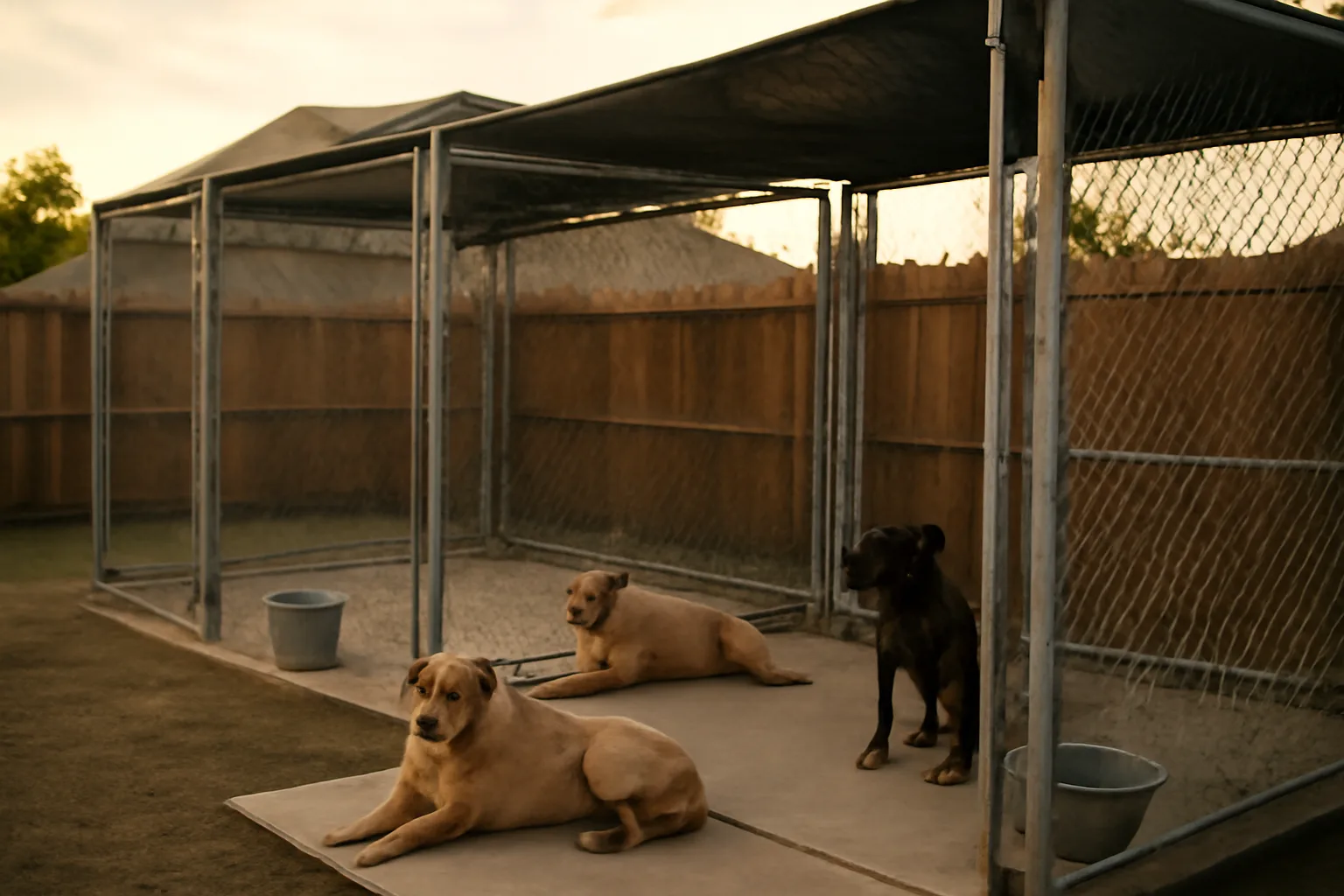
Whichever license tier applies to you, expect inspectors to check similar basics: adequate space per dog, secure and clean fencing, protection from extreme heat (a real issue in Dallas summers, where kennel shade and cooling matter for compliance as well as animal welfare), clean water access at all times, and a written or observable sanitation routine. TDLR-licensed breeders in Texas must meet the standards set in the agency's Dog or Cat Breeders administrative rules, which cover housing, spacing, temperature control, and veterinary care access, and TDLR conducts inspections tied to initial licensure and renewal [2]. USDA-licensed breeders must meet the housing, space, sanitation, and veterinary care standards in the Animal Welfare Act regulations at 9 CFR Part 3, which spell out minimum enclosure sizes tied to the dog's size and specific sanitation and record-keeping requirements APHIS inspectors check on site visits [5]. If you're building out a kennel from scratch or converting part of a Dallas property, it's worth mapping every applicable rule (city, TDLR, USDA, HOA) against your actual floor plan before you build anything permanent. See dog kennels for a broader look at how kennel facility requirements are typically structured.
What happens if you skip licensing or operate over threshold without one?
It's a real risk, and enforcement in Texas has gotten more active in the past decade, not less. Operating without a required TDLR license under Chapter 802 can lead to administrative penalties and cease-and-desist action from the state, since TDLR treats unlicensed breeding above the statutory thresholds as a regulatory violation subject to fines under its enforcement authority [2]. Operating as an unlicensed USDA dealer when you're over the wholesale threshold can trigger federal enforcement action from APHIS, including civil penalties under the Animal Welfare Act, and repeated violations can bar you from ever getting licensed [4]. At the local level, Dallas Animal Services can issue citations for operating without the required Animal Breeder Permit, and repeat violations tied to animal welfare complaints can escalate to seizure of animals in serious cases. None of this is worth the risk of skipping a permit application that, in most cases, costs far less than a single litter's revenue.
Where do you start if you're planning a Dallas breeding operation from scratch?
Work backward from your sales model, not forward from "I want a permit." If you're selling a small number of puppies a year, entirely to local buyers who visit your home before purchase, you're likely looking at just a city permit (or none, depending on your suburb) plus standard pet registration. If you're planning to scale past 11 breeding females or sell wholesale/shipped, you're looking at TDLR and possibly USDA licensure, and you should apply for those before you expand your breeding stock, not after. Call the three offices directly rather than guessing: Dallas Animal Services (or your city/county equivalent) for local permits, TDLR's Dog or Cat Breeders Program for state thresholds, and your regional USDA APHIS Animal Care office for federal licensing. Bring your actual numbers (how many females, how many litters a year, how you plan to sell) to each call, since thresholds are numeric and specific, not judgment calls. Pulling together the zoning check, city permit application, and facility documentation in one packet is exactly the kind of prep work that saves time at inspection. That's the gap our $149 one-time Kennel License & Zoning Packet is built to close: a structured way to organize your zoning research, permit applications, and facility documentation for your specific city and county before you submit anything. Start at /license-packet-builder if you want a head start on the paperwork side while you make these calls.
Frequently asked questions
How much does dog boarding cost in the Dallas area?
Typical Dallas-area boarding runs roughly $35 to $75 per night for standard kennel or in-home boarding, with upscale suite-style facilities pricing higher. There's no government-set rate; it's market pricing that varies by neighborhood, season, and amenities. Get a few local quotes since ranges shift year to year.
How do you register a dog in Dallas?
Register your dog with Dallas Animal Services when it gets its rabies vaccination, either through your vet's reporting or directly with the city, and renew the registration annually alongside the rabies booster. Suburbs outside city limits run their own registration systems, so check the specific city if you're not in Dallas proper.
How do you get a dog license?
In Dallas, this is called pet registration, not a separate "license," and it's tied to your dog's rabies vaccination through Dallas Animal Services. Outside city limits, check your specific suburb's animal control office, since each Dallas-area city runs its own registration system with its own fee and renewal cycle.
How do you get papers for a dog?
Papers usually mean AKC (or another registry) pedigree registration, which is separate from government licensing. The breeder registers the litter first, then completes individual puppy registration at sale, typically handing the buyer a registration application. If the breeder never registered the litter, you generally can't get full papers retroactively.
How can I get papers for my dog if the breeder is unknown?
In most cases, you can't get full registry papers after the fact without documented, registered parents. AKC's Purebred Alternative Listing lets apparently purebred dogs compete in some companion events without full papers, and DNA breed tests identify breed composition, but neither replaces verified pedigree registration.
How do you become a dog breeder in Dallas?
Check zoning first, then apply for a City of Dallas Animal Breeder Permit (or your suburb's equivalent) through Dallas Animal Services. If you'll keep 11+ breeding females or sell above TDLR's stated volume, register with TDLR under Texas Occupations Code Chapter 802. If you'll sell wholesale or sight unseen past USDA thresholds, add an APHIS license.
Do small hobby breeders in Dallas need a USDA license?
Usually not, if buyers visit and see the dog before purchase and you keep four or fewer breeding females. USDA's retail pet store exemption covers face-to-face sales. But shipping puppies sight unseen, or keeping more than four breeding females and selling wholesale, generally requires an APHIS dealer license under 9 CFR definitions.
What's the Texas state threshold for needing a breeder license?
Texas requires TDLR licensure under Occupations Code Chapter 802 for breeders keeping 11 or more intact female dogs or cats for breeding and selling more than the number of animals set in TDLR's current rules. Check TDLR's Dog or Cat Breeders Program page directly, since the sale-volume threshold is set by rule and can be updated.
Does the City of Dallas require a permit for every breeder?
Yes, under Dallas City Code Chapter 7, anyone keeping an intact female dog or cat and selling or giving away offspring within city limits needs an Animal Breeder Permit from Dallas Animal Services, regardless of litter size. Suburbs outside Dallas proper set their own separate rules; some require similar permits, others don't.
What facility standards do USDA-licensed Dallas breeders have to meet?
USDA licensees must meet Animal Welfare Act housing, space, sanitation, and veterinary care standards under 9 CFR Part 3, which set minimum enclosure sizes based on dog size along with specific cleaning and recordkeeping rules. APHIS inspectors check these standards during licensing inspections and periodic follow-up visits.
Can you breed dogs in a Dallas residential neighborhood?
Sometimes, depending on zoning and HOA rules, which are separate from your breeder permit. Confirm your property's zoning designation with the city or county zoning office before acquiring breeding stock, and check any HOA covenant for pet limits, since those can be stricter than city ordinance.
What happens if a Dallas breeder operates without required licenses?
Consequences scale with which layer you skip: city citations for missing local permits, TDLR administrative penalties and cease-and-desist orders for unlicensed operation above state thresholds, and federal civil penalties from APHIS for unlicensed wholesale dealing. Repeat or serious violations can also lead to animal seizure in extreme cases.
Is AKC registration the same as a government breeder license?
No. AKC (and other breed registries) are private organizations that document pedigree for a fee; they have no connection to city, state, or federal licensing requirements. You can be a fully licensed, legal breeder with zero AKC-registered dogs, and you can have AKC papers with no government license at all.
Sources
- City of Dallas, Dallas City Code Chapter 7 (Animals): Dallas requires an Animal Breeder Permit for anyone keeping an intact female and selling/giving away offspring in city limits
- Texas Occupations Code Chapter 802, Dog or Cat Breeders: TDLR licenses breeders keeping 11+ intact breeding females who sell above a set annual threshold under Texas Occupations Code Chapter 802
- 9 CFR 2.1, Requirement to obtain a license (Animal Welfare Act regulations): Breeders selling puppies sight unseen or wholesale must obtain a USDA dealer license unless a retail exemption applies
- 9 CFR 1.1, Definitions (Animal Welfare Act regulations): Breeders keeping more than four breeding females and selling wholesale or sight unseen meet the regulatory definition of a dealer requiring a license
- Code of Federal Regulations, 9 CFR Part 3 (Animal Welfare): USDA-licensed breeders must meet specific housing, space, sanitation, and veterinary care standards for dogs