Last updated 2026-07-25
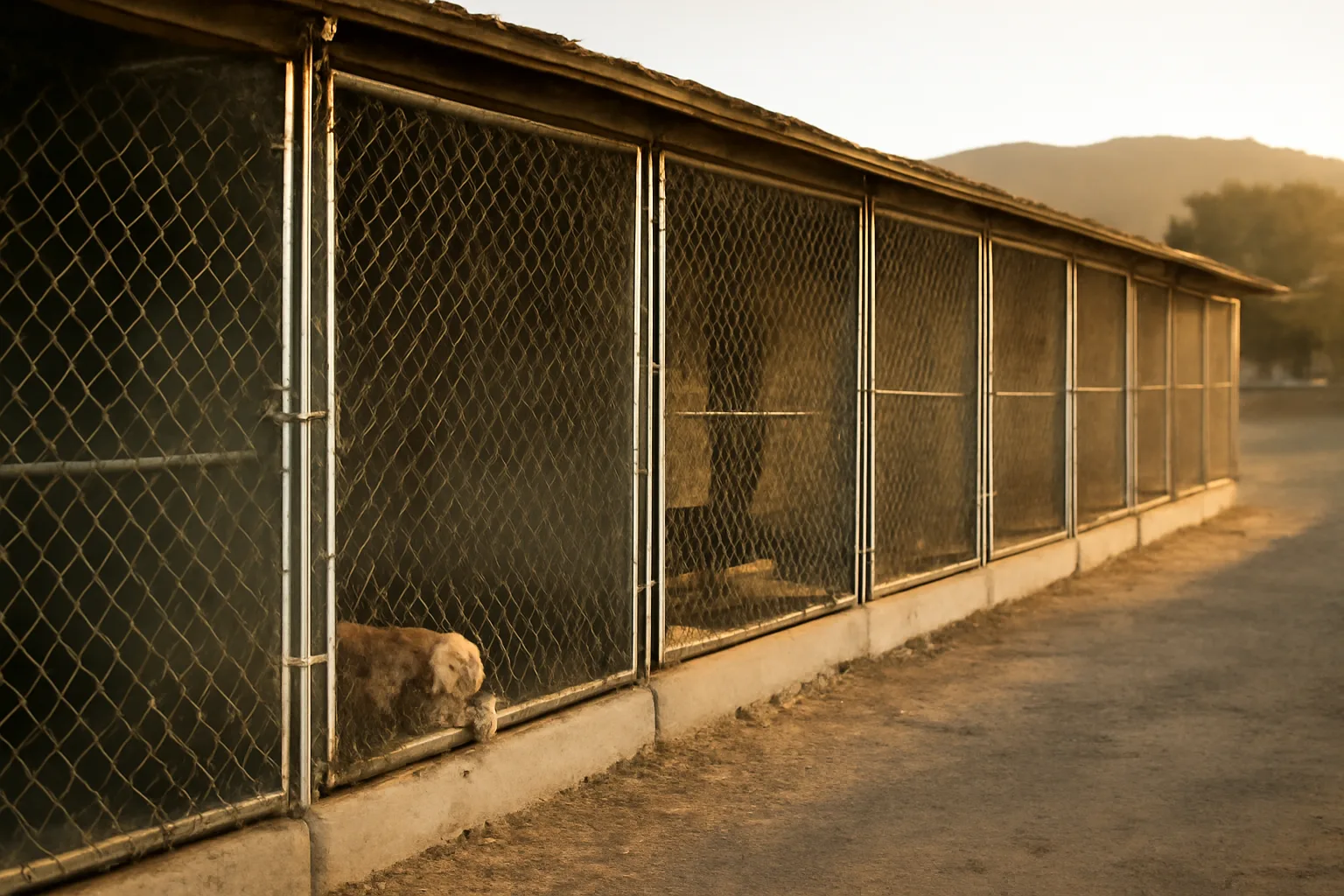
TL;DR
Riverside County requires a kennel license through Riverside County Animal Services once you keep more than a set number of dogs (typically 4-5+ depending on zone), plus a land use/zoning clearance from Riverside County Planning before you can operate. Fees, setback rules, and the exact dog-count trigger vary by unincorporated area versus city, so you confirm both agencies before signing a lease.
What is a Riverside County kennel license and who needs one?
A Riverside County kennel license is a permit issued (in most cases) through Riverside County Animal Services that lets you legally keep multiple dogs at one property for boarding, breeding, or daycare purposes, above whatever number the county treats as a normal household pet limit. If you're just keeping two family dogs, you don't need it. Once you cross into commercial boarding, in-home dog sitting for pay past a certain dog count, or breeding litters regularly, the county wants you licensed and zoned for it. Riverside County Ordinance No. 630 governs animal control and licensing countywide, and it's the base document Animal Services works from when defining kennels and setting license categories. The practical trigger point (how many dogs before you're a "kennel" rather than a pet owner) is set locally and can differ between unincorporated county land and incorporated cities like Temecula, Murrieta, or Palm Springs, each of which can adopt its own animal control code or contract with the county. Always confirm your specific jurisdiction rather than assuming the county-wide number applies inside city limits. This matters because two different agencies are involved. Animal Services handles the kennel license itself (background, facility inspection, rabies and vaccination compliance for resident dogs). Riverside County Planning handles whether your parcel's zoning even allows a kennel use in the first place. You need both. A lot of first-time applicants get the Animal Services piece sorted and then discover their zoning doesn't permit it, or requires a conditional use permit, which adds months. If you're evaluating whether commercial dog boarding is realistic on a given property, start with zoning before you spend money on kennel buildout.
How do I get a dog license in Riverside County (the basic pet license, not a kennel license)?
A dog license is different from a kennel license and almost everyone conflates the two. An individual dog license is the annual tag required for any dog over four months old, proving current rabies vaccination and giving animal control a way to identify and return a lost dog to you. Riverside County Animal Services issues dog licenses countywide (except cities that run their own program), and you apply either online, by mail, or in person at one of their shelter locations, providing proof of current rabies vaccination and, for the discounted rate, proof of spay/neuter. Altered dogs get a lower annual fee than intact dogs in most California counties, and Riverside follows that pattern; check the current fee schedule on the Animal Services site since it's adjusted periodically. If you're a boarding or daycare operator, every resident dog on your kennel license (meaning dogs you own, not client dogs passing through) still needs its own individual license and current rabies proof. Client dogs boarding short-term don't need a Riverside County dog license themselves, but most kennel license conditions require you to verify each client dog's rabies vaccination before intake anyway, and that's worth building into your intake paperwork regardless of what the county explicitly mandates.
How much does a Riverside County kennel license cost?
| Individual dog license (per resident dog, altered) | $15-$30/year | Riverside County Animal Services | |
|---|---|---|---|
| Individual dog license (per resident dog, intact) | $30-$60/year | Riverside County Animal Services | |
| Kennel/cattery permit application | Varies by dog count, confirm current schedule | Riverside County Animal Services | |
| Zoning clearance (by-right use) | Low, often under $500 | Riverside County Planning | |
| Conditional Use Permit (if zoning requires it) | $2,000-$10,000+ | Riverside County Planning | |
| Facility inspection fee | Varies | Animal Services | That CUP range is wide on purpose. A simple boarding kennel in an agriculturally zoned area with no neighbor objections costs far less to process than a daycare facility in a mixed-use commercial zone that draws public comment. Budget for the high end and be pleasantly surprised. |
Riverside County kennel license fees are set by the Board of Supervisors' fee schedule and adjusted periodically, so treat any number here as a starting point to verify, not a locked-in figure. As of recent published fee resolutions, Animal Services kennel/cattery permit fees plus the underlying individual dog license fees for resident animals are separate line items, and you typically pay both, plus an inspection fee if a site visit is required before approval [1]. On top of the Animal Services fee, Riverside County Planning charges separately for any required land use clearance, and if your zone requires a Conditional Use Permit (CUP) rather than a by-right approval, that fee is substantially higher and includes a public hearing cost. CUP application fees at Riverside County Planning commonly run into four figures once you include noticing, environmental review screening under CEQA, and hearing costs, and can climb further if a full environmental study is triggered. Here's a rough breakdown of the cost buckets you're actually budgeting for, using ranges rather than one number because every jurisdiction updates fees on its own schedule: | Cost item | Typical range | Who charges it |
What zoning do I need for a kennel in Riverside County?
Zoning is usually the harder half of this process, not the license itself. Riverside County's zoning ordinance defines where kennels are a permitted use, where they need a Conditional Use Permit, and where they're not allowed at all, and this is set out in the county's Land Use Ordinance administered by Planning [2]. Generally, agricultural and rural residential zones are your best bet for a by-right or easier-approval kennel use, since minimum lot sizes and setback requirements are built to accommodate animal-related uses. Straight residential zones (R-1, R-A below certain acreage) often require a CUP or don't allow commercial kennels at all. Commercial and light industrial zones sometimes allow daycare or boarding as a permitted or conditionally permitted use, especially if there's no outdoor run adjacent to residential parcels. Setbacks are the detail that kills more applications than anything else. Expect requirements measured in dozens to a few hundred feet from property lines and from any inhabited dwelling not on your own parcel, plus noise mitigation expectations if you have outdoor exercise yards. The exact distance depends on your specific zone designation, so pull your parcel's zoning info from the Riverside County Planning GIS/zoning lookup before you assume a property works. If a CUP is required, expect a public hearing, notice to neighbors within a set radius, and a staff report addressing noise, traffic, and odor. This is where a lot of boarding and daycare applicants get tripped up, not because the county is hostile to the business, but because they didn't prepare for objections about barking dogs. Bring a real noise mitigation plan (insulated buildings, limited outdoor hours, indoor-only overnight) to the hearing rather than showing up empty-handed. For a broader look at how zoning hearings work across different counties, see our county-zoning guidance, and if you're comparing Riverside against other Southern California counties for site selection, our dog kennels overview covers facility-type distinctions that affect which zone you're even looking for.
How do I register a dog in Riverside County (new resident or new puppy)?
Registering a dog in Riverside County means getting the individual dog license, and the process is the same whether the dog is a new puppy or you just moved into the county. You need proof of current rabies vaccination (a certificate from your vet, more than a tag), your address, and payment of the license fee, which you can submit online through the Animal Services licensing portal, by mail, or in person. California state law requires rabies vaccination for dogs starting at four months of age, and county licensing ties directly to that requirement, meaning you generally can't get a license without current proof. If you just adopted or bought a puppy, most shelters and reputable breeders will have already started the rabies vaccination series or will tell you exactly when it's due, and you register once that first rabies shot (or booster, depending on age) is documented. Moved from another county or state? Riverside will accept an out-of-county rabies certificate as long as it's current and issued by a licensed veterinarian; you don't need to re-vaccinate just because you crossed a county line. Bring or upload that certificate when you apply. Renewal is annual (or sometimes tied to a multi-year rabies vaccine cycle, since some vets now give 3-year rabies vaccines), and Animal Services typically mails a renewal notice, but don't count on it arriving; set your own calendar reminder, because a lapsed license plus an unlicensed-dog citation is an easy, avoidable fine.
How do I get papers for my dog, and does Riverside County issue them?
This is a common point of confusion, so let's be direct: Riverside County does not issue "papers" in the breed-registration sense. "Papers" almost always refers to AKC registration or another breed registry's pedigree documentation, and that's a private organization process, completely separate from anything the county does. To get AKC papers for a purebred dog, the litter needs to come from two AKC-registered parents, and the breeder registers the litter with the American Kennel Club, which then lets individual puppy buyers register their specific dog and get an individual registration certificate [3]. If you bought a puppy and were told it "comes with papers," that means the breeder either has already registered the litter and can hand you the paperwork, or has told you they will once the litter registration processes. If you already own a dog with no papers and want to register it retroactively, options are limited. AKC has a program called Purebred Alternative Listing (PAL) that lets you enroll a dog that appears purebred but lacks papers, for things like agility or obedience competition, but it doesn't grant breeding rights or full pedigree registration status [3]. There's no way to manufacture pedigree papers after the fact if the breeder never registered the litter; that's a private-registry limitation, not a county one. So to be clear on terminology: a county dog license (the annual tag) is a government requirement tied to rabies control. "Papers" (AKC or similar) are a private breed-registry document tied to lineage. You may need one, the other, both, or neither, depending on whether you're just keeping a pet legally versus trying to show, breed, or sell a purebred dog with verified pedigree.
How do I become a dog breeder in Riverside County, and what licenses does that require?
Becoming a dog breeder in Riverside County stacks several requirements on top of each other, and how many apply depends on your scale. At minimum, if you're keeping breeding dogs at your property, you likely need the kennel license from Animal Services once your dog count crosses the local threshold, plus zoning clearance from Planning confirming breeding/kennel use is allowed on your parcel. California doesn't require a separate state breeder's license for most small-scale hobby breeders, but California Health and Safety Code sections addressing dog and cat breeding do require compliance with specific care standards if you're selling more than a threshold number of animals, and local county ordinances often layer additional permit requirements on top [4]. Check current Riverside County ordinance text for the specific dog-count trigger, since these numbers get updated. The bigger threshold to watch is federal. If you sell puppies wholesale (to a pet store, broker, or online without the buyer meeting the dog in person before purchase) and you have more than 4 breeding females, you likely need a USDA APHIS Class A (breeder) license, since USDA's Animal Welfare Act regulations were amended in 2013 to close the direct-retail-only exemption for many online sellers . The exact retail exemption test involves whether you physically hand the puppy to the buyer at the time of sale on your own premises; if you ship, or if you sell through a broker or pet store, that exemption usually doesn't apply. USDA's own threshold guidance states that breeders who have "more than four breeding female dogs" and sell puppies sight unseen fall under licensing requirements, with specific exemptions for retail pet stores that let buyers see animals in person before purchase . If you're near that four-female line, get ahead of it, because operating over threshold without a license is a federal Animal Welfare Act violation, more than a paperwork gap. So practically: small hobby breeder selling a litter or two locally, meeting every buyer in person, usually stays under both the county kennel threshold and the USDA threshold. Scale up past that (more breeding females, wholesale, online sales without in-person transfer) and you're now juggling county kennel licensing, possibly a CUP for zoning, state Health and Safety Code compliance, and federal USDA licensing simultaneously. If that's the direction you're headed, plan the zoning and licensing stack before you breed your next litter, not after.
How much does dog boarding cost, and does that affect licensing?
Dog boarding cost to consumers in the Riverside/Inland Empire area typically runs $35-$75 per night for standard boarding, and $25-$50 per day for daycare, varying by facility type (basic kennel versus daycare-style cage-free boarding) and add-ons like extra walks or medication administration. Higher-end resort-style facilities in nearby San Diego and Orange County markets run higher, sometimes $60-$100+/night, and Riverside County pricing tends to sit below those coastal counties given lower overhead and rent. This pricing question doesn't directly change your license category, but it matters for your business plan because your kennel license fee, inspection fee, and any CUP cost are fixed overhead you need to recover across your boarding capacity. A 20-run kennel paying, say, a few hundred dollars a year in licensing plus a one-time CUP cost in the thousands needs to spread that cost across nightly rates; it's a rounding error per-dog-per-night once you're at capacity, but it's real cash you need upfront before you're licensed to open at all. If you're pricing out a new facility, our pet boarding and dog hotels near me pages break down facility tiers and what drives rate differences, which is useful context before you decide what scale of kennel license and zoning approval to pursue.
What inspections and facility standards apply once I'm licensed?
Once Riverside County Animal Services issues your kennel license, expect periodic inspections, and possibly an initial pre-license inspection before approval, checking things like enclosure size and construction, sanitation, ventilation, availability of shade and water, separation of aggressive or sick animals, and recordkeeping for vaccination status of resident and boarding dogs. If you also cross USDA breeder or dealer thresholds, add a second layer: APHIS inspectors enforce the Animal Welfare Act's facility standards under 9 CFR Part 3, which specify minimum enclosure dimensions based on the dog's size, temperature ranges for indoor and outdoor housing, feeding and watering frequency, and veterinary care documentation . USDA-licensed facilities get inspected at least annually, more often if prior inspections found violations. County and federal standards overlap in intent but aren't identical in detail, so if you're subject to both, build your facility to the stricter of the two requirements on every point (enclosure size, temperature control, cleaning frequency) rather than trying to track two separate compliance checklists. For a rundown of what inspectors typically check regardless of jurisdiction, our inspections hub is a useful companion reference alongside county-specific rules here.
How do daycare-only operations differ from boarding kennels for licensing purposes?
Daycare-only facilities, where dogs come during the day and go home at night, sometimes fall into a different zoning and licensing category than overnight boarding kennels, because there's no overnight housing component and often lower noise and odor concerns for neighbors. Some counties treat daycare as a lower-intensity commercial use that's easier to get approved in commercial zones; Riverside County's specific treatment depends on your zone designation, so confirm with Planning rather than assuming daycare is automatically easier. That said, Animal Services licensing (the kennel/facility permit tied to how many dogs are on-site) often applies regardless of whether dogs stay overnight, since the trigger is usually the number of dogs present, not whether they sleep there. If you're deciding between a pure daycare model and a boarding-plus-daycare hybrid, model both under Riverside's actual zoning categories before committing to a lease, since the difference in approval difficulty and timeline can be significant. Our doggy day care and dogtopia pages cover how franchise and independent daycare models handle facility layout decisions that also affect your zoning application, which is worth reading before you finalize a floor plan.
What's the fastest path to getting licensed and zoned in Riverside County?
There's no way to skip steps, but you can run them in parallel instead of sequentially, which is the single biggest time-saver. Pull your parcel's zoning designation from Riverside County Planning's GIS lookup on day one, before you sign a lease or make an offer, so you know immediately whether you need a CUP or a simple zoning clearance. While zoning review is pending, get your Animal Services kennel license application started (the facility inspection can often happen once your zoning clearance or CUP is approved, but the paperwork prep, background info, and facility plans can be assembled in advance). Line up your rabies vaccination documentation for every resident dog now, not later, since missing paperwork is a common approval delay. If you're breeding and expect to cross the USDA threshold, contact APHIS early too, since a Class A license application involves its own facility inspection and processing time separate from anything the county does . Don't assume county approval means you're clear federally, or vice versa; the two agencies don't coordinate with each other. This is exactly the kind of multi-agency coordination that gets messy fast, which is why some operators use a structured packet to organize the zoning and licensing paperwork across agencies instead of assembling it ad hoc; our $149 Kennel License & Zoning Packet walks through the document set most Riverside County applicants need for both Animal Services and Planning, though you'll still confirm current fees and specific parcel zoning directly with each office since those numbers change and vary by site.
Where do I confirm current Riverside County fees, forms, and zoning maps?
Every fee and threshold cited in this article should be treated as a snapshot, not a permanent number, because Riverside County updates its fee schedules through Board of Supervisors resolutions periodically. The Riverside County Animal Services website hosts current license fees, kennel permit applications, and licensing forms directly. Riverside County Planning's website hosts the zoning ordinance text, GIS parcel lookup, and CUP application forms and fee schedules [2]. If your operation crosses into USDA territory, aphis.usda.gov is the primary source for Animal Welfare Act licensing requirements, current forms, and the facility standards under 9 CFR Part 3 . Don't rely on secondhand summaries (including this one) for the exact current dollar figure on any fee; go to the source document, because these are exactly the kind of numbers that change year to year and get cited wrong for years afterward on random blog posts. This article is a reference to help you understand the process and ask the right questions of the right office. It's not legal advice, and nobody here represents you before the Planning Commission or Board of Supervisors. For anything with real money or a hearing date attached, confirm directly with Riverside County Animal Services and Riverside County Planning before you act.
Frequently asked questions
How much does dog boarding cost in Riverside County?
Standard boarding in the Riverside/Inland Empire area typically runs $35-$75 per night, with daycare running $25-$50 per day. Prices vary by facility type, cage-free versus traditional kennel runs, and add-ons like medication administration or extra walks. Resort-style facilities charge more; basic kennels charge less. Check current listings for your specific zip code since rates shift with local demand and gas/labor costs.
How do I register a dog in Riverside County?
Get your dog's rabies vaccination certificate from a licensed vet, then apply for a county dog license online, by mail, or in person through Riverside County Animal Services. You'll need the rabies certificate, your address, and the license fee (lower for spayed/neutered dogs). This is required for any dog over four months old, separate from any breed-registry paperwork.
How do I get papers for a dog?
"Papers" means AKC or another breed registry's pedigree documentation, not a government license. The breeder registers the litter with AKC using two AKC-registered parents, and buyers then register their individual puppy. If a dog was never registered as a litter, there's no way to create full pedigree papers retroactively; AKC's PAL program allows limited enrollment for unregistered purebred-looking dogs, but without breeding rights.
How do you get a dog license in Riverside County?
Submit proof of current rabies vaccination and pay the annual fee through Riverside County Animal Services, either online, by mail, or at a shelter location. Spayed/neutered dogs pay a lower fee than intact dogs. This is the basic pet license required countywide, distinct from a commercial kennel license needed for boarding or breeding operations.
How do I become a dog breeder in Riverside County?
Confirm your parcel's zoning allows breeding/kennel use through Riverside County Planning, get a kennel license through Animal Services once you exceed the local dog-count threshold, and check whether you're near the USDA threshold of more than 4 breeding females selling wholesale or online without in-person buyer visits, which would require a federal APHIS Class A license.
How much is a Riverside County kennel license?
Costs vary by dog count and whether you need a Conditional Use Permit for zoning. Budget for individual dog license fees per resident dog (roughly $15-$60/year depending on spay/neuter status), a kennel permit fee from Animal Services, and, if your zone requires it, a CUP fee that can run $2,000-$10,000+ once hearing and noticing costs are included. Confirm current numbers directly with the county.
How do I get papers for my dog if I don't know the breeder?
If you can't identify or contact the original breeder, you generally can't obtain full pedigree registration papers, since AKC registration requires the litter to have been registered by the breeder at birth. DNA breed testing can estimate breed composition for informational purposes, but it doesn't create registry papers or pedigree status.
What's the difference between a dog license and a kennel license in Riverside County?
A dog license is an individual annual tag for a pet dog, tied to rabies vaccination proof, issued by Animal Services. A kennel license is a separate commercial/multi-dog permit required once you keep more dogs than the local household threshold allows, typically for boarding, breeding, or daycare operations, and it also requires zoning clearance from Planning.
Do I need a Conditional Use Permit for a dog kennel in Riverside County?
It depends on your parcel's zoning designation. Agricultural and some rural residential zones may allow kennels by right or with minimal clearance; other residential and commercial zones often require a CUP, which involves a public hearing and neighbor notice. Check your parcel's zoning through Riverside County Planning's GIS lookup before assuming either way.
How many dogs can I have before I need a kennel license in Riverside County?
The exact number is set by local ordinance and can differ between unincorporated county areas and individual cities. Riverside County Ordinance No. 630 governs animal control countywide; confirm the current specific dog-count threshold directly with Riverside County Animal Services, since it varies by jurisdiction and may be updated.
Does USDA licensing apply to Riverside County breeders?
Yes, if you sell puppies wholesale, through a broker, or online without the buyer seeing the puppy in person before purchase, and you have more than 4 breeding females, USDA APHIS Class A breeder licensing under the Animal Welfare Act applies regardless of county rules. This is a separate federal requirement layered on top of any county kennel license.
Can I get AKC papers after buying a puppy without them?
Only if the breeder already registered the litter with AKC and simply hasn't transferred your individual puppy's registration yet; you'd request that directly from the breeder. If the litter was never registered at all, there's no retroactive path to full pedigree papers, though AKC's PAL program offers limited enrollment for unregistered purebred-appearing dogs.
Sources
- Riverside County Planning Department, Fee Schedule: Conditional Use Permit and zoning clearance fee ranges
- California Health and Safety Code Section 121690: California requires rabies vaccination for dogs starting at four months of age
- California Health and Safety Code Section 122045-122050 (Pet Dealer/Breeder provisions): State-level care standards apply to dog and cat breeders selling above a threshold number of animals
- USDA APHIS, 9 CFR Part 3 (Animal Welfare Act Standards): Federal facility standards for enclosure size, temperature, and care apply to USDA-licensed dog facilities
- Riverside County Transportation and Land Management Agency (TLMA) Planning Department: Riverside County zoning ordinance governs land use requirements for kennel facilities
- California Food and Agricultural Code: California state law provisions related to dog licensing requirements referenced by county programs
- California Health and Safety Code: State law defining kennel and facility standards applicable to boarding and breeding operations