Last updated 2026-07-24
TL;DR
Most dog licenses are issued by your county clerk, animal control office, or city treasurer, cost $10-$25 a year (more if a dog isn't spayed/neutered), and require proof of rabies vaccination. You apply in person, by mail, or online, pay the fee, and get a tag. This differs from AKC "papers," which prove pedigree, not legal registration.
How do you get a dog license?
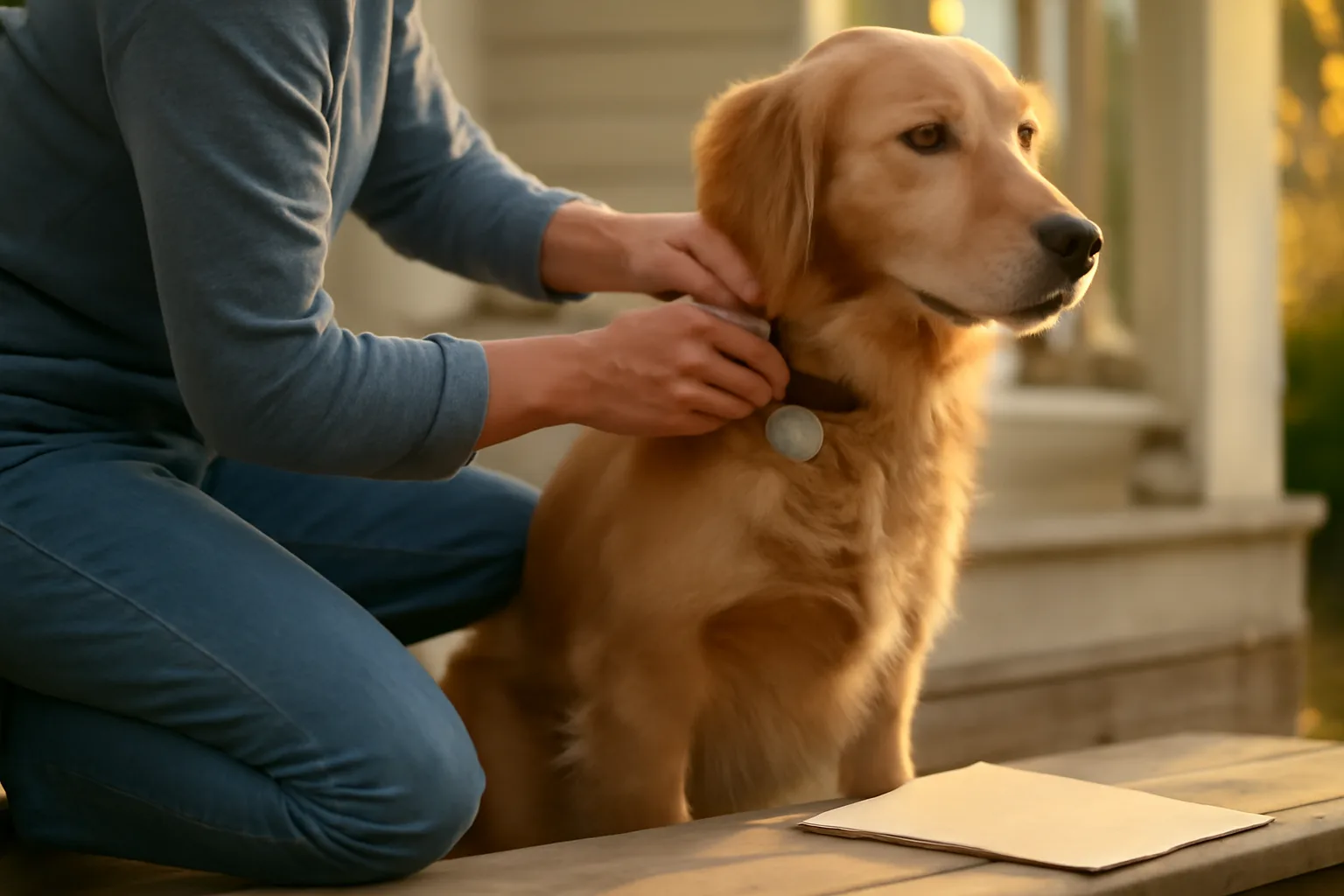
You get a dog license through your local government, almost always the county animal control office, county clerk, or in some states the city or township clerk. It is a local requirement, not a federal or state-issued document in most places, so the exact office varies by where you live. The basic steps are the same almost everywhere. First, get your dog a rabies vaccination from a licensed veterinarian and keep the certificate. Second, find your county or city's licensing office (search "[your county] dog license" plus ".gov" to avoid third-party sites that charge markup fees). Third, fill out the application with your name, address, the dog's breed, sex, age, and color, and whether the dog is spayed or neutered. Fourth, pay the fee and get a metal or plastic tag to put on the collar. Some states set the framework at the state level even though counties administer it. New York, for example, requires every dog four months or older to be licensed under Agriculture and Markets Law Article 7, and towns and cities issue the actual license [1]. California doesn't have one statewide dog license law; instead it authorizes counties and cities to require licensing, so rules and fees differ by jurisdiction [2]. Renewal is usually annual or every three years, timed to match your rabies vaccine schedule (one-year or three-year vaccine). Missing a renewal can trigger a late fee, and in some counties, operating with an unlicensed dog is a fineable offense, though enforcement varies a lot by locality. If you're licensing a dog for a boarding, daycare, or breeding business rather than a single pet, the process is different. It usually involves a separate kennel or commercial dog license through the county, plus possible zoning approval. That's a much bigger process than the walk-in pet license described here. See our guide on dog kennels if that's what brought you here.
How to register a dog (step by step)
"Registering" a dog usually means one of two different things, and mixing them up causes a lot of confusion. It can mean getting the legal dog license from your local government (what this article mostly covers), or it can mean registering a purebred dog with a breed registry like the American Kennel Club (AKC), which is a private organization, not a government body. For the legal license: 1. Get proof of current rabies vaccination from your vet. 2. Confirm your dog is spayed/neutered if you want the lower fee tier (many counties charge less for altered dogs). 3. Find your county or city clerk's dog licensing page (a.gov domain, not a third-party site). 4. Submit the application in person, by mail, or online with the vaccination certificate and fee. 5. Receive your tag and attach it to the collar; most jurisdictions legally require the tag to be worn. For AKC registration, you register a litter or an individual dog with the AKC directly, which is separate from anything your county requires. AKC litter registration currently costs $25 for the first dog in a litter and $5 for each additional dog when submitted online, with paper submissions costing more. That fee has nothing to do with your city's dog license fee. They're unrelated systems run by different organizations.
How much does a dog license cost?
| Spayed/neutered dog | $10-$25 | Most common range across counties | |
|---|---|---|---|
| Intact dog | $20-$50 | Higher fee is a spay/neuter incentive | |
| Senior/service dog | $0-$10 | Many counties discount or waive | |
| Late renewal penalty | $5-$25 | Varies; some charge double the base fee | Always check your specific county page for the current number. Fee schedules change, and a wrong number here isn't just annoying. It can mean a fine if you underpay. |
Dog license fees typically run $10 to $25 a year for a spayed or neutered dog, and $20 to $50 for an intact dog, though this varies widely by county and city. Some jurisdictions charge more, some charge less, and a handful waive fees for senior citizens, service dogs, or microchipped shelter adoptions. A few real examples show the range. New York State law caps municipal dog license fees but allows towns to set their own amount within that structure, and many upstate towns charge $10-$15 for spayed/neutered dogs [1]. Some counties also charge a one-time microchip or replacement tag fee, usually $5-$10. The pattern almost everywhere: intact (not spayed/neutered) dogs cost more to license than altered dogs. This is a deliberate policy lever, not an accident. Counties use the fee gap to nudge owners toward spay/neuter, which reduces shelter intake and animal control costs over time. | License type | Typical annual fee | Notes |
How much does dog boarding cost?
Dog boarding typically costs $25 to $85 per night for a standard kennel or daycare-style facility, with luxury "dog hotel" suites running $50 to $120+ per night in major metro areas. Price depends heavily on region, dog size, and whether you're paying for a basic run or a private suite with webcam access and extra playtime. There's no single national dataset that tracks boarding prices the way the USDA tracks agricultural commodities, so any number you see (including this one) is an estimate built from surveying operator pricing pages and consumer cost-comparison sites, not a government statistic. Treat boarding price ranges as directional, not authoritative. Factors that move the price a lot: dog size (large breeds often cost $5-$15 more per night than small breeds), add-ons (grooming, extra walks, medication administration), holiday surcharges (many facilities add 20-50% around major holidays), and facility type. A basic kennel with outdoor runs costs less than a cage-free daycare-style boarding operation like dogtopia or similar franchise models, which price themselves as premium care rather than pure boarding. If you're the one setting boarding rates rather than paying them, our dog boarding and pet boarding guides cover how facility standards and staffing ratios affect what you can reasonably charge, and how nightly rates need to cover licensing, insurance, and inspection compliance costs that a lot of new operators underestimate.
How do you get papers for a dog?
"Papers" almost always means registration with a breed registry, most commonly the AKC, proving a dog's pedigree and parentage. This is completely separate from your city or county dog license and has nothing to do with legality; an unregistered dog is just as legal to own as a registered one. To get AKC papers, the litter has to come from two AKC-registered parents (or parents eligible for registration), and the breeder submits a litter registration application, typically within specific time windows after the puppies are born. AKC states that mixed-breed dogs and dogs without two registered/registerable parents cannot receive standard AKC registration. Other registries (United Kennel Club, Continental Kennel Club, and various breed-specific clubs) have their own rules, and some are far less selective than AKC, which is worth knowing if a seller says a dog "has papers" without specifying which registry. If you bought a puppy and were told it "has papers," ask specifically which registry. Ask for the actual registration certificate or application number, more than a verbal claim. Papers from an obscure or pay-to-play registry carry much less weight than AKC or UKC registration, and some scam sellers use the word "papers" loosely to mean nothing more than a vaccination record. If you're the breeder trying to get papers issued for your puppies rather than the buyer, that process runs through the registry directly (AKC's litter registration system, for example), and it's separate from any state or USDA licensing you might also need depending on how many litters you produce and how you sell them.
How to become a dog breeder (and when you need a license)
Becoming a dog breeder legally involves state and sometimes federal registration, on top of any breed registry paperwork. The rules kick in based on how many breeding females you keep and how you sell puppies, not on whether you consider yourself a "hobby" or "backyard" breeder. At the federal level, the USDA's Animal Welfare Act requires a license from APHIS if you breed dogs for wholesale or if you sell dogs sight unseen (meaning the buyer never sees the animal or the facility in person before purchase) and you have more than four breeding females, with some additional exemptions and thresholds spelled out in the regulations at 9 CFR Part 2 [3]. APHIS defines a "retail pet store" exemption for breeders who sell only face-to-face, but selling puppies over the internet without an in-person meeting generally removes that exemption, which is exactly what pushed a lot of online sellers into needing a USDA license after the 2013 rule change [3]. At the state level, many states have their own commercial breeder or kennel licensing laws that apply at lower thresholds than the federal rules. Ohio, for instance, requires a high-volume breeder license from the Ohio Department of Agriculture for anyone with 9 or more intact female dogs used for breeding who sells 60 or more puppies in a calendar year, under Ohio Revised Code Chapter 956 [4]. Missouri, Pennsylvania, and several other states have similar commercial kennel license structures with their own numeric thresholds, and the numbers are not interchangeable between states. Practically, becoming a legitimate breeder means: get your breeding stock health-tested and registered with a breed club if you're pursuing purebred lines, check your state department of agriculture's breeder licensing page for thresholds that apply to you, check whether your county requires a separate kennel license or zoning approval for keeping multiple intact dogs, and register with APHIS if you cross the federal thresholds for wholesale or internet sales. Skipping the state or federal license isn't a paperwork technicality. It can mean fines, forced closure, or in some states, criminal charges for operating an unlicensed commercial kennel.
What's the difference between a dog license and dog registration papers?
A dog license is a government requirement proving your dog has a current rabies vaccination and that you, the owner, are accountable for it. A registration "paper" (like AKC papers) is a private pedigree record proving parentage and breed. You need one for legal compliance; you need the other only if you care about proving lineage. Here's the clean distinction. A license is issued by a government office (county, city, or in a few states, a state agency), costs a modest annual fee, requires rabies proof, and its purpose is public health and animal control accountability. Registration papers are issued by a private club (AKC, UKC, or similar), cost a one-time litter or individual fee, require proof of registered parentage, and their purpose is pedigree documentation for showing, breeding, or resale value. A dog can have papers and no license (illegal in most places), a license and no papers (completely normal for the vast majority of pet dogs), both, or neither. Shelters and rescues almost never provide papers because parentage is unknown, but a licensed shelter dog is just as legally owned as a papered show dog. If someone is trying to sell you a puppy at a premium price because it "has papers," that tells you about potential pedigree, not about health, temperament, or legality. Ask to see the actual registration application separately from any local license or vaccination record.
What do you need to bring to license a dog?
Most counties ask for three things: proof of current rabies vaccination (a certificate from a licensed vet, more than a receipt), proof of spay/neuter status if you want the reduced fee, and the license fee itself, paid by cash, check, or card depending on the office. Some counties also want a copy of your rabies tag number, your dog's microchip number if it has one, and a photo in some jurisdictions (uncommon, but a few require it for identification purposes). If you're licensing a dog that just moved from another state, bring the prior state's rabies certificate; most offices will accept it as long as the vaccine is still current. Online applications have become common. Many counties now let you upload a PDF of the rabies certificate and pay by card through the county's own portal, skipping the in-person trip entirely. Be careful of third-party sites that look official but charge a markup on top of the real government fee; stick to the.gov domain for your county whenever possible. If you're licensing multiple dogs, or if this is for a home-based small kennel rather than a single pet, check first whether your county has a separate multi-dog or kennel license threshold; a lot of counties require a different (and pricier) license once you own more than three or four dogs at one address, regardless of whether you're running a business.
Do you need a license for a boarding or daycare facility, more than a pet?
Yes, and it's a different license from the pet dog tag described above. If you're opening a boarding kennel or daycare facility, most states and counties require a commercial kennel license, separate zoning approval for the property, and sometimes a state agriculture department inspection before you can legally operate. This is where the process gets a lot more involved than registering a single family dog. You're typically dealing with three separate approval layers: county zoning (confirming your property is zoned for a commercial animal facility, or getting a conditional use permit if it isn't), a state or county kennel license (with facility standards covering things like kennel size, ventilation, and waste disposal), and, if you also breed and sell dogs above the federal thresholds, a USDA APHIS license on top of that [3]. Each of these has its own application, fee, and inspection, and they don't always run on the same timeline. You can get zoning approval and still be waiting months on a state kennel inspection slot, for example. This is genuinely different work from the walk-in dog license process most of this article covers, and treating it the same way is the single biggest mistake we see new operators make. If you're at this stage, our doggy day care and dog hotels near me guides break down facility-specific requirements, and a state-by-state or county-specific packet (like our $149 one-time Kennel License & Zoning Packet at /license-packet-builder) can help you organize the paperwork trail across zoning, state licensing, and USDA thresholds in one place. That said, none of this replaces actually calling your county zoning office and state agriculture department before you sign a lease; every jurisdiction's requirements are different, and no packet or article can guarantee approval.
What happens if you don't license your dog?
Penalties for an unlicensed dog vary widely, but most jurisdictions treat it as a civil infraction with a fine, not a criminal offense, at least on a first violation. Fines commonly range from $25 to $200 depending on the county, and some places add a per-day penalty if the dog remains unlicensed after a citation. Beyond the fine, an unlicensed dog can complicate things if it ever gets loose and picked up by animal control. A licensed dog with a current tag gets reunited with its owner much faster than one without identification. Some counties also use license fee revenue to fund local animal control and shelter operations directly, so licensing isn't purely a compliance box. It's part of how the local system stays funded. Repeat violations, or licensing violations tied to a dangerous dog designation or a bite incident, can carry steeper consequences in some jurisdictions, including court appearances. This is a genuinely local matter though; a $25 fine in one county might be a $150 fine one county over, and there's no national standard.
How do you renew a dog license?
Renewal works the same way as the original application in most places: proof of current rabies vaccination, the renewal fee, and either an in-person visit, mailed form, or online portal submission. The main difference is timing; renewal is usually tied to your rabies vaccine expiration, not a fixed calendar date. Many counties send a renewal postcard or email reminder before the license expires, but don't count on it arriving. Mail reminders get lost, and a missed renewal still accrues late fees even if you never got the notice. Set your own calendar reminder tied to your rabies vaccine due date instead. If you moved to a new county or state, you generally can't "transfer" a dog license; you apply fresh in the new jurisdiction, though your existing rabies certificate usually still counts as valid proof as long as it hasn't expired.
Frequently asked questions
How much does dog boarding cost per night?
Typical boarding runs $25-$85 per night for standard kennels and daycare-style facilities, with premium suites in major metros running $50-$120+ a night. Price depends on dog size, region, and add-ons like grooming or extra playtime. There's no government dataset tracking this nationally, so treat any number, including this range, as a market estimate rather than an official figure.
How do I register my dog with the city or county?
Get a current rabies vaccination certificate from your vet, find your county or city clerk's dog licensing page (a .gov site), fill out the application with your dog's basic details, pay the annual fee (typically $10-$25 for altered dogs), and receive a tag. Most counties allow in-person, mail, or online submission.
How do I get papers for my dog?
If you mean AKC-style registration papers, that requires the litter to come from two AKC-registered (or registerable) parents; the breeder submits a litter registration application to AKC, and individual puppies get registered from there. Papers are unrelated to your local dog license and don't affect legality of ownership at all [3].
Is a dog license the same as AKC registration?
No. A dog license is a government requirement tied to rabies vaccination and local accountability, issued by your county or city. AKC registration is a private pedigree record proving parentage, issued by the American Kennel Club. You can have either one without the other; only the license is legally required.
How much does it cost to license a dog?
Most counties charge $10-$25 a year for spayed/neutered dogs and $20-$50 for intact dogs, though exact fees vary by jurisdiction. New York State law caps municipal fees while letting towns set their own amount within that structure, and many upstate towns charge $10-$15 for altered dogs [1]. Always check your specific county's current fee page.
How do you become a licensed dog breeder?
Check your state department of agriculture's commercial breeder licensing threshold (for example, Ohio requires a high-volume breeder license at 9+ intact breeding females and 60+ puppies sold per year [6]), register breeding stock with a breed club if pursuing purebred lines, and get a USDA APHIS license if you sell wholesale or sight-unseen above the federal thresholds [5].
Do I need a USDA license to sell puppies?
You generally need a USDA APHIS license if you have more than four breeding females and sell dogs wholesale or sight-unseen (buyer never meets the dog or visits in person before purchase). Selling only face-to-face out of your home typically falls under the retail pet store exemption, but internet sales without in-person meetings often remove that exemption [5].
What documents do I need to license my dog?
Bring proof of current rabies vaccination from a licensed vet, your spay/neuter certificate if applicable (for the lower fee tier), and the license fee. Some counties also want a microchip number. If moving from another state, your prior rabies certificate is usually accepted as long as it's still valid.
Can I license my dog online?
Many counties now offer online licensing through their own government portal; you upload the rabies certificate PDF and pay by card. Be careful of third-party sites that look official but charge a markup on top of the real government fee; verify you're on your county's actual .gov domain.
What's the difference between a dog license and a kennel license?
A dog license is for a single pet dog and just requires rabies proof and a small annual fee. A kennel license is a commercial or multi-dog license, usually required once you own more than a handful of dogs at one address or operate a boarding, daycare, or breeding business, and it often comes with zoning approval and facility inspections attached.
Do I need a dog license if my dog is microchipped?
Yes. A microchip is a separate identification system from your local dog license; microchipping doesn't satisfy the licensing requirement in any jurisdiction we're aware of. You still need the annual (or multi-year) license and tag even if your dog is chipped, though the chip number is sometimes recorded on the license application.
How long does it take to get a dog license?
Most counties issue a license the same day if you apply in person or online with all required documents, since it's mainly a fee payment plus a rabies certificate check. Mailed applications can take one to three weeks for the tag to arrive. There's no formal review or inspection process for a standard pet license.
Sources
- New York State Senate, Agriculture and Markets Law Article 7: New York requires dogs four months or older to be licensed, with towns and cities issuing the license
- California Legislative Information, Food and Agricultural Code: California authorizes counties and cities to require dog licensing rather than setting one statewide fee
- Cornell Law School, Legal Information Institute, 9 CFR Part 2: Federal licensing and recordkeeping requirements under the Animal Welfare Act regulations
- Animal Welfare Act regulations, 9 CFR 2.1: USDA APHIS license requirements for breeders selling wholesale or sight-unseen above the breeding female threshold, including the retail pet store exemption
- Ohio Revised Code Chapter 956, Dangerous Wild Animals and Dog Breeding: Ohio's high-volume breeder license threshold of 9+ intact breeding females and 60+ puppies sold per year