Last updated 2026-07-25
TL;DR
Dogtopia Golden Valley (Minnesota) charges daycare and boarding rates typical of franchised dog daycare, generally $30-$60/day depending on services. This article uses it as a case study to explain boarding costs nationally, how dog licensing and registration work, and what state/county rules any operator (franchise or independent) must clear before opening a facility.
What is Dogtopia Golden Valley and what does it offer?
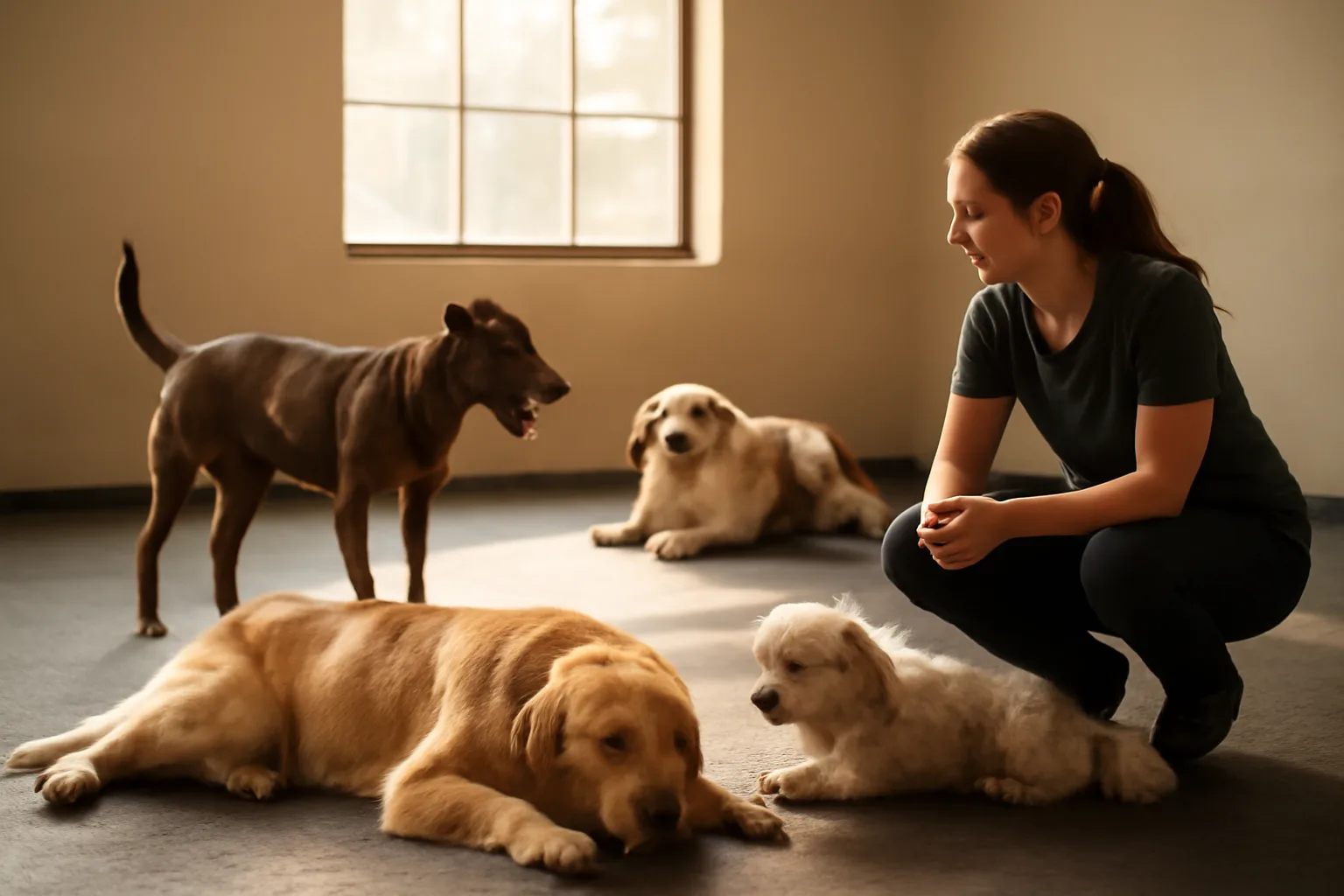
Dogtopia Golden Valley is a franchise location of Dogtopia, a national dog daycare and boarding chain with locations across dozens of states. Like other Dogtopia franchises, the Golden Valley location (Minnesota, in the Minneapolis metro) offers daycare, boarding, and spa services (baths, nail trims) inside an open-play facility model, meaning dogs are grouped and supervised in playrooms rather than kept in individual kennel runs most of the day. Franchise locations set their own local pricing, staffing, and hours within brand standards, so exact rates at any single Dogtopia vary by market. That's true industry-wide too: a boarding facility in a high-cost metro like Minneapolis-St. Paul will price differently than one in a small rural county, even under the same brand. If you're evaluating Dogtopia Golden Valley as a customer, call the specific location for current rates, since franchise pricing changes more often than corporate marketing pages get updated. If you're evaluating it as a competitor or a template for opening your own facility, the more useful exercise is understanding the licensing and zoning load behind any boarding/daycare operation, which is the same for a franchise or an independent shop. For background on daycare-specific rules, see doggy day care.
How much does dog boarding cost?
| Metro vs. rural location | Metro areas often run 30-50% higher | |
|---|---|---|
| Open-play vs. kennel-run model | Open-play (Dogtopia-style) often costs more per night | |
| Group play add-ons | $10-$25/day extra is common | |
| Medication administration | Often $5-$15/day extra | |
| Peak holiday weeks | Many facilities add 10-20% surcharges | |
| Multi-dog discounts | Common, usually 10-15% off second dog | If you're pricing boarding as an operator, look at your local competitors directly rather than a national average. Local rent, labor costs, and required staff-to-dog ratios under your state's kennel rules will matter more to your bottom line than any national figure. |
Dog boarding nationally runs about $25 to $85 per night depending on region, service level (standard kennel vs. suite vs. in-home boarding), and whether daycare play is bundled in. Franchise daycare-boarding hybrids like Dogtopia tend to sit in the $35-$65/night range in most metro markets, though luxury "suite" boarding at some facilities can run over $100/night. There's no federal price-setting body for pet boarding, so nobody publishes an authoritative national average the way, say, the Bureau of Labor Statistics tracks veterinary costs. Pricing surveys from industry groups and pet-service marketplaces generally put average boarding costs somewhere between $30 and $50 per night for a standard kennel stay, with add-ons (playtime, medication administration, grooming) pushing totals higher. Take any single-number "average boarding cost" claim you see online with real skepticism; it's usually based on whatever sample the source happened to survey. What actually drives the price at a given facility: | Factor | Effect on price |
How do you register a dog?
Registering a dog usually means one of two different things, and people conflate them constantly: getting a dog license from your city or county, or registering a dog's pedigree with a breed registry like the American Kennel Club (AKC). They are unrelated processes. A dog license is a local government requirement, typically administered by a county or city clerk, animal control department, or treasurer's office. It usually requires proof of rabies vaccination and payment of a small annual or multi-year fee. Requirements vary heavily by jurisdiction; some states set licensing rules at the state level while enforcement happens at the county level, others leave it entirely to municipalities. Breed registration (AKC-style) is a private, voluntary process that has nothing to do with your legal obligation to license a pet. A dog can be fully AKC-registered and still be unlicensed with the county, and vice versa. If you're a boarding or daycare operator, you'll want proof of your customers' dogs having current rabies vaccination (often required for local licensing anyway) as a condition of admission, which is a facility policy decision, not a legal registration requirement you administer.
How to get a dog license, step by step
Getting a dog license typically means: 1) get your dog's rabies vaccination current with a licensed veterinarian, 2) bring or mail proof of vaccination to your city/county clerk's office or online portal, 3) pay the licensing fee, 4) receive a tag or certificate, often renewable annually. Fees and rules vary by jurisdiction because dog licensing in the US is set at the state or local level, not federally. Some examples of how differently this is structured: Minnesota does not have a statewide dog licensing law, so licensing (where it exists) is set by individual cities and counties under their own local ordinances, typically through a city code section on animal control. New York City, by contrast, requires dog licenses citywide under its health code, with fees that differ for spayed/neutered vs. intact dogs, administered by the city's health department. Because there's no single national rule, the honest answer to "how do I get a dog license" is: check your specific city or county's website first. Search "[your city or county] dog license" and look for a.gov domain. If you can't find a local ordinance, call your county's animal control or treasurer's office directly; they administer this in most places. For boarding and daycare operators, this matters because some jurisdictions require proof of current dog license (more than rabies tag) before or during a facility's kennel license application, and some local health codes tie kennel licensing to whether the animals housed there are individually licensed. Check your county zoning and licensing office before assuming these are separate boxes to check.
How do you get papers for a dog? (AKC registration explained)
"Getting papers" for a dog means registering it with a breed registry, most commonly the American Kennel Club (AKC). This is a private organization process, not a government one, and it establishes a dog's recorded pedigree, not its legal ownership or vaccination status. To register a puppy with AKC, a breeder typically completes an AKC litter registration application after the litter is born, listing the sire, dam, and breed, then individual puppy owners receive registration paperwork (often called "AKC papers") allowing them to register that specific puppy in their own name. If you bought a dog advertised as "purebred" but the seller can't produce AKC registration paperwork (or equivalent from another recognized registry like UKC), that's worth asking hard questions about, since reputable breeders register consistently. If you already own an adult dog with no papers and you want to register it retroactively, options are limited and registry-specific. AKC runs a Purebred Alternative Listing (PAL) program for dogs without full registration papers, which allows them to compete in certain companion events, but PAL dogs cannot be bred or shown in conformation, and PAL is explicitly not full registration. There is no legitimate way to manufacture full AKC papers for a dog whose parentage wasn't documented at birth; be wary of anyone offering to sell you papers separately from the dog itself.
How to become a dog breeder legally
Becoming a legal dog breeder in the US means clearing three separate layers: state breeder licensing (if your state requires it), local zoning/kennel permits (county or city level), and potentially federal USDA/APHIS licensing if you sell wholesale or online sight-unseen. The federal threshold is the one breeders miss most often. Under the Animal Welfare Act regulations, a breeder who sells more than 4 female breeding dogs' worth of puppies and sells any puppies sight-unseen (i.e., the buyer never physically inspects the animal or the facility before purchase, common with online sales) generally must obtain a USDA license as a "dealer" [1]. The regulation at 9 CFR §2.1 sets out this threshold and its exemptions, and breeders who sell puppies only through in-person, face-to-face transactions at their own location are typically exempt from federal licensing regardless of volume [1]. That in-person exemption is the detail a lot of hobby breeders rely on to stay federally unregulated; it disappears the moment you start doing sight-unseen sales through a website or shipping puppies to out-of-state buyers. State-level rules layer on top. Many states have their own commercial breeder or "large-scale dog breeding" licensing laws with lower thresholds than the federal one. As one example, Ohio's High Volume Dog Breeder law requires a state license from anyone who has 9 or more intact female dogs and sells 60 or more puppies (or breeds 60 or more litters) in one calendar year, administered through the Ohio Department of Agriculture [2]. Other states, like Missouri and Pennsylvania, have their own commercial kennel statutes with different numeric thresholds. There is no substitute for checking your specific state department of agriculture's page for breeder licensing. County zoning is the third layer, and it's the one people forget until a neighbor complains. Even a fully USDA-compliant, state-licensed breeder can be zoned out of a residential lot if the county's zoning code caps the number of dogs allowed per household or classifies breeding kennels as a commercial use requiring a conditional use permit. Check your county planning/zoning office before you invest in facility construction. Our guide on dog kennels covers facility design questions that come up at this stage.
What's the difference between a dog license and dog papers?
A dog license is a government requirement tied to rabies control and animal control tracking; it's issued by your city or county and typically costs somewhere in the range of $10-$25/year for an altered dog (fees vary sharply by jurisdiction). Dog papers are a private breed registry document (AKC, UKC, or similar) proving pedigree; they're issued by the registry, not the government, and have no bearing on whether your dog is legally licensed where you live. You need a dog license (where your jurisdiction requires one) regardless of whether your dog has papers. A fully AKC-registered show dog with championship bloodlines still needs a rabies tag and local license if your city or county requires it, exactly like a mixed-breed shelter adoption does. Conflating the two is a common and understandable mistake, since both involve a piece of paper and a fee, but they solve completely different problems: public health/animal control tracking versus breed pedigree documentation.
What licensing does a boarding or daycare facility need to open?
Opening a boarding or daycare facility (franchise or independent) typically requires clearing three separate approvals: a state or county kennel/commercial animal facility license, local zoning approval (often a conditional use permit if you're in a commercial or mixed-use zone), and sometimes a business license from your city. State requirements vary widely. Some states regulate boarding kennels directly through their department of agriculture (often the same agency that handles breeder licensing), others leave kennel licensing entirely to counties and cities, and a few states have almost no facility-specific statute at all, relying on general animal cruelty and public health codes instead. There is genuinely no national standard here, which is why the honest first step for any operator is calling your specific state department of agriculture and your county zoning office directly, rather than assuming what worked for a facility in another state applies to you. Zoning tends to be the slower, more unpredictable approval. Many counties treat boarding kennels and doggy daycares as a conditional or special use in commercial zones, which means a public hearing, notice to neighbors, and a planning commission or board vote, more than a form and a fee. Noise (barking complaints are the number one reason kennel permits get contested at hearings), traffic, and outdoor run placement relative to property lines are the recurring sticking points. If you're building a packet for that hearing, our pet boarding and dog boarding guides walk through what boards typically ask for. This is also where a $149 one-time Kennel License & Zoning Packet from KennelPermit can save real time: it organizes the state licensing checklist and zoning-hearing prep documents into one framework so you're not reverse-engineering requirements from three different government websites at midnight. It doesn't replace your county's actual application or represent you at a hearing, but it gets your paperwork in the right shape before you walk in.
How does a franchise like Dogtopia handle licensing differently than an independent operator?
A Dogtopia franchisee still has to get every state and local license and zoning approval independently; franchising doesn't grant any legal shortcut around state kennel licensing or county zoning. What franchising does provide is a repeatable facility design template (Dogtopia's open-play model, camera systems, staff training curriculum) that some jurisdictions' inspectors are more familiar with simply because they've seen it before at another location in the region. That familiarity can genuinely speed up an inspection or a zoning hearing, because the reviewing agency isn't evaluating a completely novel facility concept. It is not a substitute for the franchisee (or franchise corporate real estate team) doing the same due diligence any independent operator has to do: confirming the specific parcel's zoning allows a kennel/daycare use, applying for the required state or local commercial kennel license, and meeting whatever staff-to-dog ratio or facility standard the state imposes. If you're comparing the franchise route to opening independently, the licensing and zoning cost and timeline are close to identical; the difference is mostly in brand recognition, initial franchise fees (commonly reported in the low-to-mid six figures for total investment across the Dogtopia system, though exact current figures come from Dogtopia's Franchise Disclosure Document, not a public government source), and operational systems. See our dogtopia overview for a broader look at the franchise model.
What facility standards apply to boarding kennels and daycares?
Facility standards for boarding kennels and daycares are set mostly at the state and county level, and they typically cover ventilation, drainage/sanitation, enclosure size per dog, separation of sick or aggressive animals, staff-to-dog supervision ratios, and fire/life safety code compliance. There is no single federal facility standard for boarding kennels the way there is for USDA-licensed breeders. USDA's Animal Welfare Act regulations (9 CFR Part 3) set detailed minimum space, sanitation, and veterinary care standards, but those apply specifically to USDA-licensed dealers, breeders, and exhibitors, not to boarding kennels or daycares that don't sell animals [3]. A pure boarding/daycare operation generally falls under state and local animal facility codes instead, which vary in how detailed they are; some states have almost no boarding-specific facility statute, others (like commercial kennel laws in states such as Pennsylvania) specify exact square footage per dog and exercise requirements. Because this patchwork is genuinely confusing, the safest approach for any operator is to check your state department of agriculture's kennel/animal facility licensing page first, then your county health or zoning department for anything layered on top locally. Our dog kennels guide covers common facility-standard sticking points inspectors flag most often.
How much does a kennel license or breeder license cost?
Kennel and breeder license fees vary enormously by state and county, typically ranging from under $50 for a small local kennel permit to several hundred dollars for a state commercial breeder license, plus separate inspection fees in some jurisdictions. There is no national fee schedule. A few real examples to illustrate the range: Ohio's High Volume Breeder license fee scales with the number of dogs, and the Ohio Department of Agriculture publishes the current fee schedule directly [2]. USDA Class A (breeder) and Class B (dealer) license fees are set federally under 9 CFR §2.6 on a tiered schedule based on the applicant's prior-year gross sales from regulated animals . County-level kennel permits, separate from any state license, often run in the $25-$150/year range for a basic commercial kennel permit, though some counties charge substantially more for larger facilities. Because fees change and vary this much, treat any number you see online (including in this article) as a starting estimate, not a quote. Always confirm the current fee on your specific state department of agriculture's page or your county's fee schedule before budgeting.
How do zoning hearings work for a new boarding or daycare facility?
A zoning hearing for a new boarding or daycare facility typically happens when the proposed use isn't permitted "by right" in that zone, meaning the county or city planning commission has to approve it as a conditional use, special exception, or variance, usually after a public notice period and a hearing where neighbors can comment. Common materials a board wants to see: a site plan showing dog run and building placement relative to property lines, a noise mitigation plan (sound barriers, limits on outdoor time, indoor soundproofing), a traffic/parking plan, proof of state kennel licensing (or application in progress), and sometimes a letter from your veterinarian or a professional animal behavior consultant addressing odor and noise management. Boards weigh these because barking complaints and property value concerns are the most common reasons neighbors show up to object. Timelines vary by county but often run 60-120 days from application to hearing decision, longer if a continuance is requested or if the board requires a traffic study. Building your packet ahead of time (site plan, business plan, state license application status, noise plan) rather than assembling it reactively after the first hearing gets a call for more information is the single biggest time-saver operators report anecdotally, though there's no formal study measuring this. For a structured starting point, see the /license-packet-builder tool, which organizes these documents against your specific state and county requirements.
Frequently asked questions
How much does dog boarding cost per night?
Standard dog boarding runs roughly $25-$85 per night depending on region and service level, with most metro-area facilities (including open-play models like Dogtopia) charging $35-$65/night. Rural areas and basic kennel-run boarding tend to run lower; suite-style luxury boarding runs higher. There's no single authoritative national average; check local competitors directly for realistic pricing.
How do I register my dog with the city or county?
Get your dog's rabies vaccination current, then bring or submit proof to your city or county clerk's office, animal control department, or online licensing portal along with the required fee. Requirements are set locally or by state, not federally, so search "[your city/county] dog license" and look for a .gov result, or call your county animal control office directly.
How do I get papers for my dog?
"Papers" means breed registry documentation (AKC, UKC, etc.), issued when a breeder registers a litter after birth and passes registration to individual puppy buyers. You generally cannot get full papers retroactively for an adult dog with undocumented parentage; AKC's Purebred Alternative Listing (PAL) program allows some companion events but explicitly isn't full registration and doesn't allow breeding or conformation showing.
How can I get papers for my dog if I don't know the breeder?
If you can't identify the original breeder or litter registration, full AKC papers usually aren't obtainable retroactively. Your realistic options are AKC's Purebred Alternative Listing (PAL) program, which allows participation in some companion events (not conformation or breeding), or DNA breed testing services, which estimate breed composition but aren't a substitute for registry papers.
How to become a dog breeder legally in the US?
Check three layers: federal USDA/APHIS licensing (required if you sell more than 4 breeding females' worth of puppies sight-unseen, per 9 CFR §2.1), your state department of agriculture's breeder licensing law (thresholds vary by state), and your county zoning code for kennel or animal-limit restrictions. In-person, face-to-face sales at your own location are typically exempt from federal licensing regardless of volume.
How to get a dog license and what does it cost?
Bring proof of current rabies vaccination to your city or county clerk, treasurer, or animal control office, pay the licensing fee (commonly $10-$25/year for an altered dog, though this varies enormously by jurisdiction), and receive a tag or certificate. Some cities, like New York City, require licensing citywide under their health code; many states, like Minnesota, leave it entirely to local ordinance.
What's the USDA threshold that requires a dog breeder to get licensed?
Under 9 CFR §2.1, a breeder generally needs a USDA license if they have more than 4 female breeding dogs and sell any puppies sight-unseen (buyer never physically inspects the dog or facility before purchase). Breeders who sell only face-to-face at their own location are typically exempt regardless of how many dogs they have, per the same regulation's exemptions.
Do I need a license to open a dog boarding or daycare business?
Almost certainly yes, but which license depends entirely on your state and county. Most jurisdictions require a state or county commercial kennel/animal facility license plus local zoning approval (often a conditional use permit), and sometimes a general business license from your city. Check your state department of agriculture and county zoning office directly; there's no national standard.
What is the difference between AKC registration and a dog license?
AKC registration is a private breed-pedigree record with no legal weight; a dog license is a government requirement (set by state or local law) tied to rabies control and animal tracking. A dog can have full AKC papers and no local license, or a local license with no pedigree papers at all. They solve different problems and neither substitutes for the other.
How much does it cost to franchise a Dogtopia location?
Total investment for a Dogtopia franchise is commonly reported in the low-to-mid six figures across the system, though exact current figures (franchise fee, buildout, working capital) are disclosed in Dogtopia's Franchise Disclosure Document (FDD), not a public government source. Contact Dogtopia's franchise development team directly for current figures before budgeting.
Do zoning rules for a dog daycare differ from a boarding kennel?
Often yes. Many county zoning codes distinguish daycare (dogs present only during business hours, no overnight stays) from boarding kennels (overnight housing), sometimes permitting daycare by-right in commercial zones while requiring a conditional use permit for boarding due to overnight noise and staffing concerns. Check your specific county zoning code's definitions section; terminology varies.
How long does a kennel license or zoning approval typically take?
Timelines vary widely by county, but zoning approval for a conditional use (common for boarding kennels) often takes 60-120 days from application to hearing decision, and state kennel license processing can add several more weeks for inspection scheduling. Build in buffer time; delays from continuances or requests for more information (traffic studies, revised site plans) are common.
Sources
- New York City Administrative Code, Health Code Article 161: New York City requires dog licenses citywide with fees differing for spayed/neutered vs. intact dogs
- Electronic Code of Federal Regulations, 9 CFR §2.1: USDA dealer licensing threshold based on number of breeding females and sight-unseen sales
- Ohio Revised Code, Chapter 956 (Dangerous Dogs and High Volume Breeders): Ohio's High Volume Dog Breeder license threshold of 9+ intact females and 60+ puppies/litters per year
- Electronic Code of Federal Regulations, 9 CFR Part 3: Federal facility standards under the Animal Welfare Act apply to USDA-licensed dealers, breeders, and exhibitors
- Electronic Code of Federal Regulations, 9 CFR §2.6 (License fees): USDA Class A/B license fees are tiered based on the applicant's prior-year gross sales