Last updated 2026-07-24
TL;DR
Dogtopia Clifton Park is a franchised dog daycare and boarding facility in Clifton Park, NY. Boarding there (and at similar facilities) typically runs $40-$75+ per night depending on add-ons, while New York State requires every dog over four months old to carry a town or city dog license, separate from any commercial kennel license the business itself needs.
What is Dogtopia Clifton Park and what does it offer?
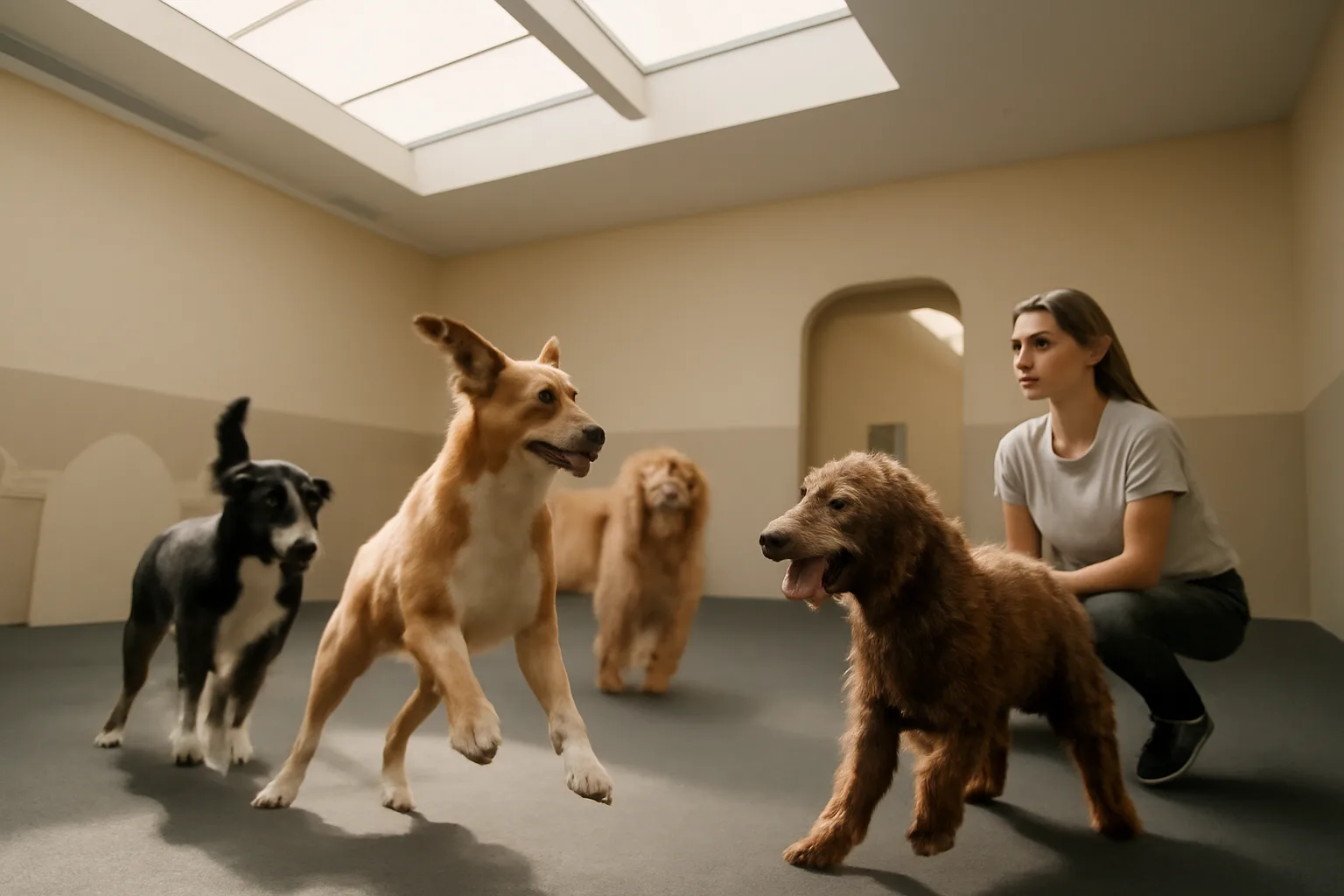
Dogtopia is a national franchise chain built around open-play daycare, boarding, and spa services for dogs. The Clifton Park location, in Saratoga County, New York, operates under that same model: dogs get supervised group play in large indoor/outdoor rooms instead of sitting alone in a crate all day, and the facility offers overnight boarding, grooming add-ons like baths and nail trims, and sometimes training packages. If you're researching this location as a pet owner, the practical questions are usually about cost, what a "day" actually includes, and whether your dog needs anything extra (proof of vaccines, a temperament evaluation) before the first visit. If you're researching it as an operator or franchise-curious business owner, the more useful questions are about licensing, zoning, and what it actually takes to run a facility like this in New York or any other state. This article covers both angles, because most people searching "Dogtopia Clifton Park" land in one of those two buckets. We'll walk through real boarding cost ranges, how dog licensing works in New York (and generally), what separates a personal dog license from a commercial kennel license, and what it takes to become a licensed breeder if that's the direction you're headed instead. For a wider look at how daycare chains like this compare to independent boarding operations, see dogtopia and doggy day care.
How much does dog boarding cost?
Dog boarding in the US generally runs $30 to $85 per night at commercial facilities, with the wide range driven by location, whether the dog gets a private suite versus a shared kennel run, and whether daycare-style play is bundled in. Chain daycare-boarding hybrids like Dogtopia tend to sit in the $40-$75+ per night range once you add play and any grooming extras. Exact pricing at any single location (including Clifton Park) is set by that franchise owner and changes over time, so always confirm current rates directly with the facility rather than relying on a number from an article. A few cost drivers matter more than people expect. Boarding during holidays (Thanksgiving week, the week around Christmas, July 4th) often carries a surcharge of $5-$15 a night at many facilities because demand spikes and staffing costs go up. Multi-dog discounts are common, usually 10-20% off the second dog. Add-on services, bath before pickup, extra playtime, medication administration, can each add $5-$25 per stay. If you're pricing out a stay, ask for the all-in total, more than the base nightly rate. A facility that quotes "$45/night" but charges $12/day for required daycare add-on and $20 for a bath-before-pickup can end up costing well over $60/night in practice. For comparison shopping across boarding types, see dog boarding, pet boarding, and dog hotels near me.
How to register a dog (and how is that different from getting a dog license)?
"Registering a dog" usually means one of three different things, and people mix them up constantly: getting a municipal dog license, registering with a breed registry like the AKC, or registering a kennel/breeding operation with a state agriculture department. They are not the same process and don't satisfy each other. Municipal dog licensing is a legal requirement in most states. In New York, for example, state law requires that "every dog four months of age or older" be licensed, and the license is issued by the town, city, or village clerk where the owner resides, not by the state directly [1]. You'll typically need proof of a current rabies vaccination to get one, and license fees are set locally, commonly in the $10-$20 per year range for a spayed/neutered dog and somewhat more for an intact dog, though exact fees vary by municipality and you should check with your town or city clerk. AKC or breed registry "registration" is a private paperwork process that has nothing to do with government licensing. It records a dog's pedigree and litter information with a private organization so the dog can be shown, bred, or sold as a registered purebred. A state kennel or breeder registration is a business-level regulatory filing, separate from both of the above, required once you're operating a commercial kennel, breeding multiple litters a year, or crossing certain sale thresholds (more on that below in the USDA section).
How to get a dog license (step by step)
Getting a dog license is a local government process almost everywhere in the US, not a state or federal one, and it usually takes four steps: get a rabies vaccination, get the certificate from your vet, bring it (plus proof of spay/neuter if applicable) to your town/city/county clerk or animal control office, and pay the fee. In New York specifically, Agriculture and Markets Law Article 7 sets the licensing requirement statewide, and license issuance happens at the municipal level (town, city, or village clerk) [1]. Fees are set locally by each municipality, so a license in one Saratoga County town can cost differently than one in the next town over. Renewal is typically annual or aligned with the rabies vaccination cycle (one or three years). Failing to license a dog can result in a fine, though enforcement intensity varies widely by town. Most states follow a similar pattern: check with your county or city clerk's office, not a state hotline, for the actual fee and renewal schedule. A few states (and many counties) also require a separate "kennel license" once you keep more than a set number of dogs on one property (often 4-6 dogs triggers this, though the exact number is set locally), which is a different filing from an individual pet license and usually involves a property inspection.
How do you get papers for a dog? (AKC registration and pedigree papers)
"Getting papers" for a dog means registering it with a breed registry, most commonly the American Kennel Club (AKC), so it has documented pedigree. This has nothing to do with government licensing and won't affect whether your dog is legal to own in your town. The process depends on whether the litter's breeder already registered the litter. If the breeder is AKC-affiliated, they typically give buyers an AKC Registration Application (sometimes called a "blue slip") at the time of sale. The new owner fills it out and submits it to the AKC, either online or by mail, along with the registration fee, to get an individual registration certificate for that specific dog. If a dog has no papers at all, meaning no litter registration exists, there generally isn't a way to retroactively get full AKC papers unless the breed registry has a specific limited program for it. The AKC's Purebred Alternative Listing / Indefinite Listing Privilege program, for instance, allows some intact purebred dogs without papers to get a listing number for the purpose of entering AKC performance events, but it does not grant full conformation-eligible pedigree registration. A mixed-breed dog cannot get AKC papers at all, though organizations like the American Mixed Breed Obedience Registration exist for performance-event eligibility. If you're asking this because you want to breed the dog and sell puppies commercially, papers and government licensing are two separate tracks you'll likely need to run in parallel; see the breeder section below.
How to become a dog breeder (state and federal requirements)
Becoming a legal commercial dog breeder involves at least two layers of regulation: your state's breeder/kennel licensing law, and potentially a federal USDA license if you sell above certain thresholds. Skipping either one is a common and expensive mistake. At the federal level, the USDA's Animal Welfare Act requires a license from APHIS (Animal and Plant Health Inspection Service) for most dog breeders who sell puppies sight-unseen (online, through brokers, or to pet stores) if they maintain more than four breeding females. Under the Animal Welfare Act regulations at 9 CFR 2.1, anyone who operates as a "dealer" as defined in the Act, subject to specific exemptions, must be licensed before engaging in that business, and the regulatory definition of "retail pet store" that governs the face-to-face sales exemption is set out at 9 CFR 1.1 [2]. Breeders who sell exclusively face-to-face, where the buyer physically sees the animal and its living conditions in person before purchase, are generally exempt under what's often called the "retail pet store exemption," but that exemption has been narrowed over the years, so anyone selling online or shipping puppies should check current APHIS licensing guidance directly rather than assume they're exempt. At the state level, most states have their own breeder or kennel licensing law layered on top of federal rules, and these vary enormously. Some states regulate based on number of litters per year, others on number of adult dogs kept, others by revenue. New York, for instance, regulates "pet dealers" (which includes many commercial breeders) under Agriculture and Markets Law Article 26-A, requiring registration with the state Department of Agriculture and Markets for anyone breeding and selling animals commercially above the law's thresholds [3]. County and municipal zoning is the third layer, and it's the one people forget until it stops their plans cold. A property zoned residential may flatly prohibit a commercial kennel or breeding operation regardless of state licensing status, or it may allow it only with a conditional use permit and a public hearing. Always check with your county or town zoning office before investing in breeding stock or facility construction. For the breeding side specifically, see breeder-rules content and dog kennels for adjacent facility standards that often overlap with breeding kennel construction requirements.
What's the difference between a boarding/daycare license and a breeder license?
| Federal | Generally not USDA-regulated unless also breeding/selling | USDA APHIS license required if >4 breeding females and selling sight-unseen, per 9 CFR 2.1 [2] | |
|---|---|---|---|
| State | State/local commercial kennel license, varies by state | State pet dealer/breeder registration (e.g., NY Ag & Markets Art. 26-A) [3] | |
| County/Local | Zoning approval, health/fire inspection, local kennel license | Zoning approval (often conditional use in residential zones), local kennel license | |
| Individual dog | Owner still needs a personal dog license per dog housed long-term in some jurisdictions | Each adult breeding dog typically needs individual town license too | A franchise location like Dogtopia Clifton Park operates under the boarding/daycare column: it's licensed as a commercial kennel/daycare facility at the state and local level, and it is not, as far as its public-facing service model, a USDA-licensed breeding operation. If you're planning to open a facility that does both boarding and in-house breeding, budget time and money for both compliance tracks separately. |
A boarding or daycare facility license and a breeder license regulate two different activities, and a facility that does both (some do) may need both sets of paperwork. Boarding and daycare licensing focuses on animal care standards for dogs temporarily in your custody: space per dog, sanitation, staff-to-dog ratios, fire safety, and often a local commercial kennel license from the town or county. Breeder licensing focuses on reproduction and sale of animals you own: whelping conditions, veterinary care records for breeding stock, and sale/transport documentation. Here's a comparison of the typical layers involved: | Layer | Boarding/Daycare (like Dogtopia) | Commercial Breeder |
How much does it cost to open a facility like Dogtopia Clifton Park?
Franchise sources put total Dogtopia franchise investment in the range of roughly $500,000 to $1.5 million+ depending on market and build-out size, per Dogtopia's own franchise disclosure materials, plus an initial franchise fee. Independent (non-franchise) daycare/boarding facilities can launch for considerably less, sometimes under $150,000 for a smaller storefront buildout, but lose the brand recognition, training systems, and national marketing that come with the franchise fee. Beyond construction and franchise fees, budget for licensing costs separately: a state or local commercial kennel license (fees vary widely by state and county, often $50-$500+ annually), business licensing, a certificate of occupancy tied to zoning approval, fire marshal sign-off, and often a conditional use permit hearing if the property isn't zoned commercial-kennel by right. Zoning is usually the slowest part, not the most expensive. A conditional use permit hearing can take two to six months from application to decision in many counties, and that's before construction even starts. Get your zoning question answered before you sign a lease, not after. This is where a lot of first-time operators get stuck: they know the state license fee and the build-out budget, but they don't have the actual local zoning packet, the specific ordinance citation, or the hearing checklist for their county. If you want a starting framework instead of guessing at what your county wants to see, our $149 one-time Kennel License & Zoning Packet at /license-packet-builder walks through the pieces most counties ask for. It's a reference tool, not a substitute for your county zoning office or an attorney, and it won't guarantee approval; every county's ordinance is different, so verify final requirements with your local zoning office directly.
What should first-time boarding/daycare customers ask before booking?
Before booking a stay anywhere, including a Dogtopia location, ask about the vaccine requirements (rabies, DHPP, and often Bordetella and canine influenza are standard asks), the temperament evaluation process for new dogs, staff-to-dog supervision ratios during open play, and what happens in a medical emergency (on-site vet relationship, nearest emergency vet, who makes the call to treat). Ask to see the play area, more than the lobby. A facility confident in its sanitation and supervision will let you look. Ask how play groups are split (by size, temperament, energy level) since mixing an anxious small dog into a large rowdy group is a common and preventable source of injuries. Get the full-cost picture before you book, including any mandatory add-ons, holiday surcharges, and late-pickup fees, since these can turn an advertised nightly rate into a noticeably higher final bill.
How does county zoning affect facilities like this?
Zoning determines whether a commercial dog daycare/boarding facility is even allowed on a given piece of property, separate from any state licensing the business itself needs. Most residential zones prohibit commercial kennels outright. Commercial and light-industrial zones often allow them by right or with a conditional/special use permit, which typically requires a public hearing where neighbors can raise noise and traffic concerns. Noise ordinances are the single most common reason a zoning board denies or conditions a kennel/daycare permit, especially for outdoor play areas near residential property lines. Counties frequently require a sound study, a setback distance from property lines, and sometimes acoustic fencing or indoor-only outdoor-hour restrictions (for example, no outdoor play before 7am or after 8pm). Because zoning is set at the county or municipal level, there's no way to give a single national answer here. Always pull the specific zoning ordinance and permitted-use table for the parcel you're considering, directly from the county or town's planning/zoning department, before signing a lease or making an offer.
Frequently asked questions
How much does dog boarding cost per night?
Typical commercial dog boarding runs $30 to $85 per night in the US, with chain daycare-boarding facilities like Dogtopia often landing around $40-$75+ once play and grooming add-ons are included. Exact rates depend on the specific location, room type, and season, so always confirm current pricing directly with the facility rather than relying on a general estimate.
How do I register my dog with the city or county?
Bring proof of a current rabies vaccination (and spay/neuter proof if applicable) to your town, city, or county clerk's office or animal control office, and pay the local licensing fee. In New York, state law requires licensing for every dog four months or older, but the license itself is issued locally, not by the state directly [1].
How do you get papers for a dog?
"Papers" means registration with a breed registry like the AKC. If the breeder is AKC-affiliated, they provide a registration application at time of sale, which the buyer submits with a fee to get an individual pedigree certificate. There's generally no way to add full papers retroactively to a dog with no litter registration, and mixed-breed dogs can't get AKC papers at all.
How can I get papers for my dog if the breeder never registered the litter?
If the litter was never registered with the AKC or another registry, there's usually no way to get full pedigree papers after the fact. Some registries offer limited listing programs (like the AKC's Purebred Alternative Listing) for performance-event eligibility only, not full conformation registration. Contact the breed registry directly to ask about any limited program your specific situation might qualify for.
How to become a dog breeder legally?
Check your state's breeder/kennel licensing law (many states register "pet dealers" or breeders above certain litter or dog-count thresholds), confirm your property's zoning allows a breeding kennel, and check USDA APHIS licensing if you'll sell puppies sight-unseen and keep more than four breeding females, per the licensing rule at 9 CFR 2.1 [2]. All three layers, state, county zoning, and possibly federal, usually apply together.
Does a home-based breeder need a USDA license?
Only if you sell dogs sight-unseen (online, via broker, or shipped) and keep more than four breeding females, per the Animal Welfare Act licensing requirement at 9 CFR 2.1 [2]. Breeders who sell exclusively face-to-face, where buyers see the animal and premises in person, are typically exempt under the retail pet store exemption defined at 9 CFR 1.1, though that exemption has narrowed, so verify current status with APHIS directly.
Is Dogtopia Clifton Park USDA licensed?
Daycare and boarding facilities generally aren't required to hold a USDA APHIS breeder/dealer license, since that license applies to breeding and wholesale/retail animal sales, not boarding services. A facility would only need APHIS licensing if it also breeds and sells dogs commercially above the thresholds APHIS sets.
What's the difference between a dog license and a kennel license?
A dog license is issued per individual pet, usually annually, by your town or city clerk, and requires proof of rabies vaccination. A kennel license is a business-level or property-level license required once you keep dogs commercially or above a certain number on one property (often 4-6 dogs), and it usually involves a facility inspection separate from any single dog's license.
How much does it cost to open a Dogtopia franchise?
Total investment for a Dogtopia franchise generally runs from roughly $500,000 to over $1.5 million depending on market and build-out size, according to Dogtopia's franchise disclosure materials, plus the initial franchise fee. Independent, non-franchise daycare/boarding facilities can often launch for considerably less, though they lack brand recognition and franchise support systems.
Do I need a zoning permit to open a dog daycare?
In most areas, yes, unless the property is already zoned for commercial kennel use by right. Many counties require a conditional use permit and public hearing for daycare/boarding facilities in commercial zones, and most residential zones prohibit them entirely. Always check the specific permitted-use table with your county or town zoning department before signing a lease.
What vaccines does a dog need for boarding or daycare?
Most facilities require proof of current rabies vaccination plus DHPP (distemper, hepatitis, parvovirus, parainfluenza), and commonly Bordetella (kennel cough) and sometimes canine influenza vaccination. Exact requirements vary by facility, so check with the specific location, including Dogtopia Clifton Park, before your dog's first visit or evaluation appointment.
How long does it take to get a dog license?
Getting a dog license typically takes one visit to your town, city, or county clerk's office if you already have your rabies vaccination certificate in hand; some municipalities also allow online or mail applications. Processing is usually immediate or within a few business days for the physical tag and certificate.
Sources
- New York Senate, Agriculture and Markets Law Article 7: New York requires every dog four months of age or older to be licensed, issued at the municipal level
- Code of Federal Regulations, 9 CFR 2.1 (Animal Welfare Act licensing requirement): Breeders who operate as dealers under the Animal Welfare Act, absent an exemption, must hold a USDA license before doing business, and more than four breeding females selling sight-unseen commonly triggers this
- New York Senate, Agriculture and Markets Law Article 26-A: New York regulates commercial pet dealers/breeders under Article 26-A, requiring state registration
- Code of Federal Regulations, 9 CFR 1.1 (definitions, including 'retail pet store'): The regulatory definition of 'retail pet store,' which governs the face-to-face sales exemption from USDA licensing, is set out in 9 CFR 1.1
- American Kennel Club, Purebred Alternative Listing / Indefinite Listing Privilege program: The AKC's PAL/ILP program allows some intact purebred dogs without papers to get a listing number for performance events, without granting full conformation-eligible pedigree registration