Last updated 2026-07-24
TL;DR
"Dog place" usually means one of four things: a boarding kennel, a dog license from your city or county, breed registration papers, or becoming a licensed breeder. Boarding averages $25 to $85 a night depending on region and amenities. Dog licenses typically cost $10 to $50 a year through your county or city clerk. Papers mean AKC or another registry, not a government document.
what does "dog place" actually mean when people search for it
People type "dog place" into Google for a handful of very different reasons, and the search engines have to guess which one you mean. Most of the time it breaks down into four buckets: someone looking for a boarding kennel or daycare ("dog place near me"), someone trying to register their dog with the city ("how do I get my dog registered"), someone whose dog needs breed registration papers, or someone thinking about opening their own facility and wondering what a "dog place" legally requires to operate. This article covers all four, because the honest answer depends entirely on which one applies to you. If you're a pet owner, the boarding and licensing sections are for you. If you're planning to open a boarding, daycare, or breeding operation, the later sections on licensing and USDA thresholds matter more. One quick clarification up front: a dog license (the tag your city or county requires) and dog papers (AKC or breed registry documents) are two completely different things issued by two completely different types of organizations. A lot of confusion online comes from people mixing these up.
how much does dog boarding cost
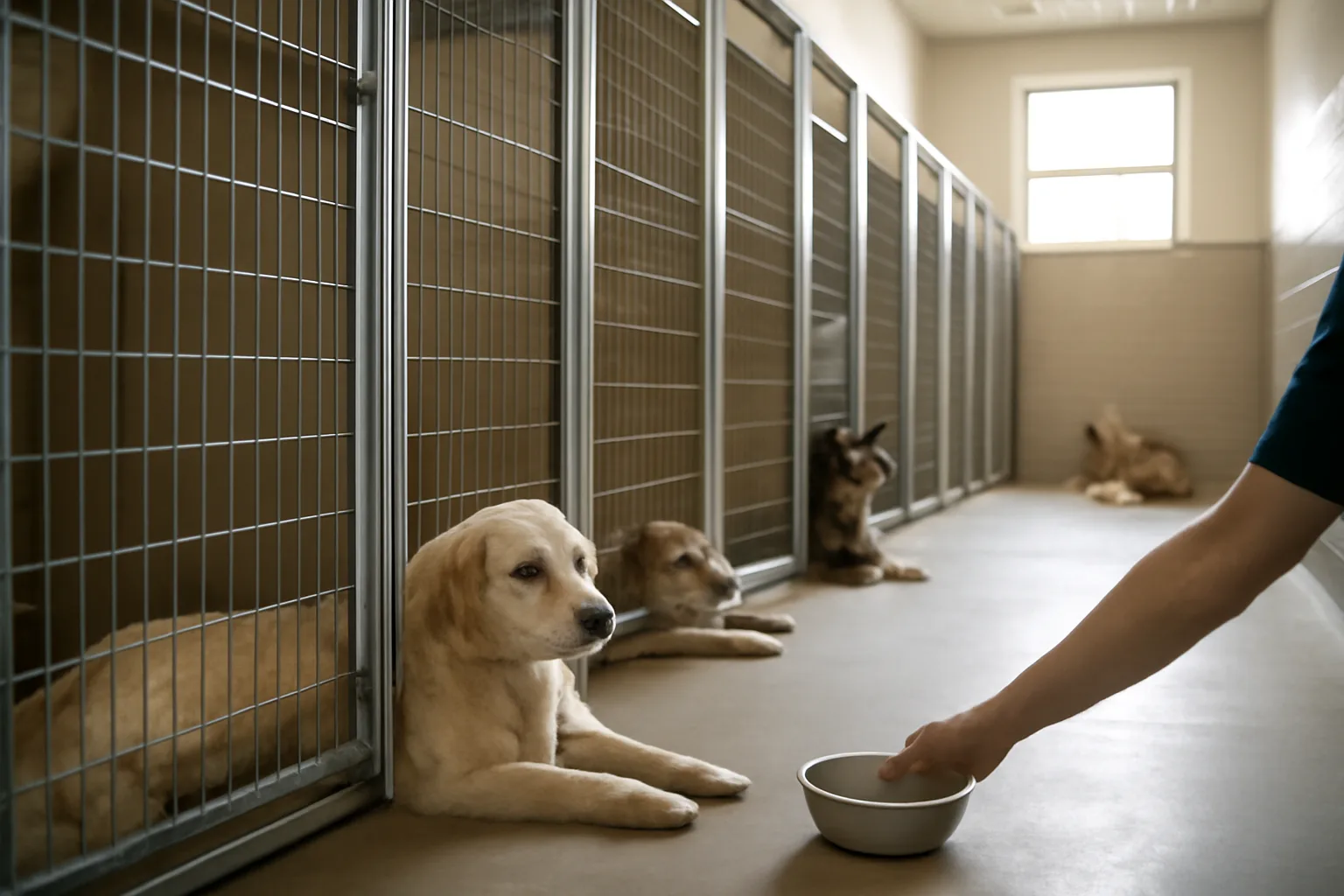
Dog boarding typically runs $25 to $85 per night in the United States, with the wide range driven by region, the type of facility, and whether you're paying for a basic kennel run or a suite with webcam access and extra playtime. Boutique daycare-and-boarding hybrids in major metro areas can run $70 to $120 a night for larger dogs or premium suites, while a rural kennel might charge $20 to $35. Most facilities also charge extra for things owners assume are included: administering medication (often $5 to $15 per dose), extra walks or playtime blocks ($10 to $25 each), and holiday surcharges that can add 20 to 50 percent to the base rate around Thanksgiving, Christmas, and July 4th. Multi-dog discounts (for dogs from the same household sharing a suite) are common and usually knock 10 to 20 percent off the second dog's rate. If you're pricing out a stay, ask for the all-in nightly rate plus a list of common add-ons, more than the headline number. Facilities rarely post their fee schedule clearly online. A phone call before booking saves surprises, every time. For a broader comparison of what different boarding formats charge, see dog boarding and pet boarding. Daycare (day-only, no overnight stay) is usually cheaper: expect $20 to $45 a day depending on the market, with chains like Dogtopia often running toward the higher end of that range in urban markets.
how to register a dog with your city or county
Registering a dog (getting a dog license) is a local government requirement in most U.S. cities and counties, separate from any breed registry. The process is almost always the same three steps: get your dog's rabies vaccination certificate from your vet, fill out a short application with the city or county clerk (or animal control office), and pay an annual or multi-year fee. Fees generally run $10 to $50 a year, though many jurisdictions offer a discount, sometimes 50 percent or more, if the dog is spayed or neutered. Some counties issue lifetime licenses for a flat fee (commonly $50 to $150) instead of annual renewal. Requirements and pricing are set at the county or municipal level, not federally, so there's no single national fee schedule; you need to check your specific county clerk or animal control department's page. Most jurisdictions require the license within 30 days of acquiring the dog or moving into the area, and most require proof of current rabies vaccination as a condition of licensing, since rabies control is usually the actual public health reason the license requirement exists in the first place. If you skip it, penalties vary widely. Some counties just send a reminder notice. Others fine unlicensed dog owners $25 to $500 depending on the ordinance and whether it's a repeat violation. Check your county's official animal control or clerk page directly, since ordinance text and fee schedules change and vary by jurisdiction.
how to get a dog license step by step
Getting a dog license is usually a same-day or by-mail process once you have the right paperwork in hand. Here's the typical sequence: 1. Get your dog vaccinated against rabies by a licensed veterinarian and keep the certificate. 2. Find your city or county's licensing office, usually animal control, the county clerk, or a treasurer's office depending on local structure. 3. Fill out the application (many counties now let you do this online) with your dog's breed, age, sex, and spay/neuter status. 4. Pay the fee, commonly $10 to $50 annually, sometimes less for altered dogs or seniors. 5. Attach the rabies tag to your dog's collar along with the license tag; some jurisdictions also require a county-issued microchip scan or registration. Some states handle rabies vaccination requirements at the state level even though the actual issuing office is local. State departments of agriculture or health often set the baseline rabies vaccination requirement that counties then enforce through licensing. The Centers for Disease Control and Prevention notes that rabies vaccination of dogs is regulated at the state and local level in the U.S., and the compendium published by the National Association of State Public Health Veterinarians is the model that many states adapt into their own statutes [1]. Always confirm with your specific county or city page since the office that handles this (clerk vs. animal control vs. treasurer) is not consistent nationwide.
how do you get papers for a dog (and what does that even mean)
"Papers" for a dog means registration with a breed registry like the American Kennel Club (AKC), not a government document. If your dog's parents are both registered with the AKC and the litter was properly registered by the breeder, you get papers through the breeder at the time of purchase, or you register the puppy yourself using a form the breeder provides. The process works like this: the breeder registers the litter with the AKC after the puppies are born, then each puppy gets an individual registration application (sometimes called a "blue slip" historically, now usually a digital or paper AKC Registration Application) that the new owner completes to put the dog in their own name. AKC registration costs around $25 to $40 per dog as of recent published fee schedules, though the AKC updates pricing periodically, so check their current fee page directly. If you already own a dog with no papers, and you're wondering how to get papers after the fact, the honest answer is: usually you can't. Not through AKC's standard process, anyway, unless the dog's parents were registered and the breeder simply never filed the paperwork. The AKC does run a Purebred Alternative Listing (PAL) program for dogs that appear to be purebred but lack documented parentage, which allows the dog to compete in some non-conformation events, but it does not grant full registration status or make the dog eligible for conformation showing. There is no way to retroactively manufacture pedigree papers for a mixed-breed or undocumented dog, and any service claiming otherwise is not using the real AKC process.
how do you register a dog with a breed registry
Registering a dog with the AKC or another breed registry requires that the litter itself was registered by the breeder first. You cannot register an individual adult dog out of nowhere; the paper trail has to start with the litter registration, which the breeder files with the AKC (or another registry like the United Kennel Club, UKC) shortly after the puppies are born. Once the litter is registered, each puppy gets its own registration number tied to the litter. The new owner fills out the individual dog's registration form (available through the AKC's website) and pays the per-dog fee. If you bought a puppy and the breeder never gave you registration paperwork, contact the breeder directly first; they may not have completed the litter registration yet, which is common and usually just takes a follow-up. Other registries exist too. The UKC registers many of the same breeds plus some AKC doesn't recognize, and there are breed-specific registries (like those for certain working or rare breeds) that operate independently. None of these are government agencies; they're private nonprofit or membership organizations, and none of them replace your local dog license requirement.
how to become a dog breeder legally
Becoming a legal dog breeder means clearing three separate layers of regulation: local zoning, state licensing (in states that require it), and federal USDA licensing if you sell wholesale or exceed certain thresholds. None of these are optional just because you're "small" or "just doing it as a hobby." First, check your local zoning. Counties and cities regulate breeding kennels through zoning ordinances, often requiring a conditional use permit, minimum lot size, or distance from neighboring residences, especially if you're keeping more than a handful of intact adult dogs. This is entirely locally determined; check your county zoning or planning department's page directly, since requirements vary block by block in some jurisdictions. Second, check your state. Many states require a commercial breeder license once you exceed a certain number of breeding females or litters sold per year; thresholds and fees vary widely and are set by each state's department of agriculture or equivalent. There is no single national number, so you have to check your specific state agriculture department's licensing page. Third, check USDA (APHIS). Under the Animal Welfare Act (7 U.S.C. 2131 et seq.), if you sell puppies wholesale (to a pet store, broker, or research facility, or sight-unseen to buyers who never see the animal or facility in person before purchase), and you have more than four breeding females, you generally need a USDA Class A (breeder) license administered by APHIS, per the licensing definitions at 9 CFR 2.1 [2]. APHIS's own published guidance states that breeders who sell puppies directly to the public in face-to-face transactions are generally exempt from federal licensing under the retail pet store exemption, but that exemption disappears once you sell sight-unseen (internet sales, for example) above the retail threshold [3]. Getting all three layers right before you sell your first litter is the difference between a legitimate operation and one that gets shut down by a zoning complaint or a USDA compliance letter. For a rundown of the operational side once you're licensed, see dog kennels.
when do breeders need a USDA license (the four-female threshold)
| 4 or fewer breeding females, any sales method | Generally no | |
|---|---|---|
| 5+ breeding females, all sales face-to-face at your property | Generally exempt (retail exemption) | |
| 5+ breeding females, any sight-unseen or wholesale sales | Yes, Class A license required | |
| Selling through a broker or pet store, any number of females | Generally yes (Class A or Class B depending on role) | This table reflects the regulatory definitions found in 9 CFR Parts 1 and 2, but always verify against the current APHIS Animal Welfare Act licensing regulations before you plan around it, since interpretation and enforcement guidance can shift [2] [3]. |
The USDA APHIS threshold that trips federal licensing is tied to breeding females and sales method, not litter count alone. Under the Animal Welfare Act regulations at 9 CFR Part 2, a person who owns more than four female dogs used for breeding and sells any of the puppies wholesale or sight-unseen generally must get a USDA Class A breeder license [2]. APHIS defines this in its licensing regulations: breeders who sell directly to the public, in person, where the buyer can see the animal and the premises before purchase, typically qualify for the retail pet store exemption defined at 9 CFR 1.1 and don't need a federal license, regardless of how many females they have. The moment sales happen sight-unseen, meaning the buyer commits to purchase before ever seeing the dog or the facility in person (common with online sales, shipping puppies, or selling through a broker or pet store), the exemption goes away [3]. Here's the table breeders actually need: | Scenario | USDA license needed? |
how do I know if I need a state or county kennel license too
Even if you're under the USDA threshold, you may still need a state breeder license or county kennel permit, because state and local rules operate independently of federal Animal Welfare Act thresholds. Some states set their own breeding female or litter thresholds that are stricter than USDA's four-female line; others regulate any commercial breeding operation regardless of scale. County zoning is a separate question again. Many counties classify any property housing more than a set number of dogs (often 3 to 6, varies enormously) as a "kennel" for zoning purposes, triggering a conditional use permit hearing, setback requirements from property lines, and sometimes a public notice period where neighbors can object. This applies to boarding and daycare facilities too, more than breeders. Because county zoning is 100 percent locally determined, and the terminology (kennel, cattery, animal facility) and thresholds differ from one county to the next, the only reliable way to get an accurate answer is to call or check your specific county zoning or planning department's website directly. If you're opening a boarding or daycare facility rather than breeding, the zoning hearing prep is largely the same process; see doggy day care for how that side of the business typically gets structured. Putting together the zoning packet (site plan, noise mitigation plan, projected animal counts, waste management plan) before your hearing date is the single biggest factor in a smooth approval versus a contentious one. This is where a lot of first-time applicants get caught flat-footed; the zoning board wants specifics, not a general business plan. A prebuilt reference packet, like KennelPermit's $149 one-time Kennel License & Zoning Packet, can save you from reinventing this from scratch for your state and county combination; check the license packet builder for the fill-in template approach. This isn't legal representation and doesn't guarantee approval; you still need to confirm your county's specific requirements and, for anything contested, talk to a local land-use attorney.
how much is dog boarding compared to daycare and in-home options
| Overnight boarding kennel | $25 to $85 | |
|---|---|---|
| Boutique/luxury boarding suite | $70 to $120 | |
| Daytime daycare only | $20 to $45 | |
| In-home pet sitting (visits) | $30 to $75 | |
| In-home overnight sitting | $50 to $100+ | These ranges reflect market averages pulled together from typical published rate cards and industry pricing guides; actual prices vary by city, facility quality, and dog size (many facilities charge more for large or giant breeds). If you're comparing local options, check dog hotels near me for how premium overnight facilities structure their pricing. |
Boarding, daycare, and in-home pet sitting all price very differently, and comparing them side by side helps explain why costs vary so much between quotes. Overnight kennel boarding runs $25 to $85 a night nationally. Daytime-only daycare runs $20 to $45 a day. In-home pet sitting (someone staying at your house or visiting daily) runs $30 to $75 a day depending on region and visit frequency, according to typical rate ranges reported by pet sitting industry associations and consumer price surveys. | Service type | Typical daily cost |
what do I actually need to open a boarding or daycare "dog place"
Opening your own boarding or daycare facility means clearing local zoning approval, a state kennel or boarding license (where required), and facility standards that usually cover space per dog, ventilation, sanitation, and staff-to-dog ratios. This is a different track from breeding, though the zoning and county permitting steps often overlap. Start with zoning. Confirm your property is zoned for a commercial kennel or animal facility use, or apply for a conditional use permit if it isn't. Then check your state's licensing requirement; some states license boarding and daycare facilities through the department of agriculture, others through a separate consumer protection or animal welfare office, and a few states have no state-level boarding license at all, leaving it entirely to county and city permitting. Facility standards commonly checked during inspection include minimum square footage per dog (often referencing a multiple of the dog's body length, similar in spirit to the primary enclosure sizing formula in the USDA's Animal Welfare Act regulations at 9 CFR 3.6, though boarding-specific state rules vary and aren't bound by that federal formula) [4], adequate ventilation and temperature control, sanitation and waste disposal protocols, and a fire and emergency evacuation plan. Insurance is a practical requirement too, even where it's not a legal one. General liability plus care, custody, and control coverage is close to universal among lenders and landlords before they'll sign off on a commercial lease for this kind of business. If you're weighing a franchise model like Dogtopia against building an independent facility, the licensing and zoning burden is largely the same either way; the franchise mostly helps with brand recognition and operational systems, not with getting your permit approved faster.
Frequently asked questions
How much does dog boarding cost per night?
Dog boarding typically costs $25 to $85 per night in the U.S., with boutique or luxury suites running $70 to $120. Rates depend on region, dog size, and add-ons like medication administration or extra playtime, which are often billed separately from the base nightly rate.
How do I register my dog with the city?
Get your dog's rabies vaccination certificate from a vet, then apply through your city or county clerk or animal control office, usually online or in person. Fees run $10 to $50 a year, often discounted for spayed or neutered dogs. Requirements are set locally, so check your specific county's page.
How do you get papers for a dog?
"Papers" means AKC or another breed registry, not a government document. The breeder registers the litter with the AKC after birth, then gives each new owner an individual registration form to complete. There's no way to add papers to an adult dog whose litter was never registered.
How can I get papers for my dog if the breeder never gave me any?
Contact the breeder first; they may not have filed the litter registration yet, which is fixable. If the parents were never AKC-registered, you generally can't get full papers, though AKC's PAL program allows some undocumented purebred-looking dogs to compete in certain non-conformation events without full registration.
How do you register a dog with the AKC?
The breeder registers the litter with the AKC shortly after birth, and each puppy gets an individual registration number. As the new owner, you complete the AKC Registration Application (paper or online) for your specific puppy and pay the current fee, roughly $25 to $40, to put the dog in your name.
How to become a dog breeder legally?
Clear three layers: local zoning (often a conditional use permit for a kennel use), state breeder licensing where your state requires it, and USDA APHIS licensing if you have more than four breeding females and sell wholesale or sight-unseen. Check your county zoning office and state agriculture department directly.
How to get a dog license?
Get proof of current rabies vaccination, then apply through your city or county's animal control, clerk, or treasurer's office (varies by jurisdiction). Pay the annual fee, typically $10 to $50, and attach the tag to your dog's collar. Most areas require this within 30 days of acquiring the dog.
How much is dog boarding compared to a dog walker or sitter?
Boarding runs $25 to $85 a night. In-home pet sitting with visits runs $30 to $75 a day, and overnight in-home sitting runs $50 to $100 or more. Daycare (day only, no overnight) is usually the cheapest option at $20 to $45 a day.
Do I need a USDA license to sell puppies?
Only if you have more than four breeding females and sell wholesale or sight-unseen (buyer never sees the dog or premises in person before purchase). Face-to-face retail sales at your property are generally exempt regardless of how many females you have, under APHIS's retail pet store exemption.
What's the difference between a dog license and dog papers?
A dog license is a government requirement (city or county) tied to rabies control and animal control tracking; it costs $10 to $50 a year typically. Dog papers are private breed registry documents (AKC, UKC) proving pedigree. They're issued by completely different organizations for completely different reasons.
Can you get a dog license online?
Many counties now offer online dog license applications through their clerk or animal control website, though some still require an in-person visit or mailed application with a copy of the rabies certificate. Check your specific county's animal control or clerk page for their current process.
What happens if I don't license my dog?
Penalties vary by jurisdiction: some counties just send a reminder, others issue fines ranging from $25 to $500, sometimes escalating for repeat violations. A few jurisdictions also complicate rabies bite-quarantine handling for unlicensed dogs. Check your specific county ordinance for the actual penalty schedule.
Do I need a zoning permit to open a dog boarding facility?
Almost always, yes, if the property isn't already zoned for a commercial kennel or animal facility use. Most counties require a conditional use permit and a public hearing, with requirements on setbacks, noise, and animal counts. This is entirely determined locally, so confirm with your county zoning office.
Sources
- CDC, Compendium of Animal Rabies Prevention and Control (NASPHV): Rabies vaccination of dogs is regulated at the state and local level, using a national compendium as the model states adapt into statute
- USDA APHIS, Animal Welfare Act regulations, 9 CFR Part 2 (licensing): Four breeding female threshold and Class A license requirement for wholesale or sight-unseen puppy sales
- USDA APHIS, Animal Welfare Act regulations, 9 CFR 1.1 (retail pet store definition): Retail pet store exemption for face-to-face sales versus sight-unseen sales requiring federal licensing
- USDA APHIS, Animal Welfare Act regulations, 9 CFR 3.6 (primary enclosures for dogs): USDA enclosure sizing formula referenced as a baseline for licensed breeding facility space standards
- USDA APHIS, Licensing and Registration Under the Animal Welfare Act guidance: Federal Register rule discussing licensing thresholds and definitions applied to breeders under the Animal Welfare Act