Last updated 2026-07-25
TL;DR
The dog kennel industry covers boarding, daycare, and breeding operations regulated by a mix of state agriculture departments, county zoning boards, and (for larger breeders) USDA APHIS. Boarding costs $25 to $85 a night depending on region. Licensing needs vary by state and county; there's no single national kennel license, so you check your state department of agriculture and local zoning office directly.
what is the dog kennel industry, exactly
The phrase covers three overlapping businesses: pet boarding (overnight stays), dog daycare (day-only supervised play), and breeding operations that sell puppies. They get lumped together because most states regulate them under the same "kennel" or "animal facility" license category, even though a daycare-only operator and a USDA-licensed breeder have almost nothing in common day to day. The industry is bigger than people assume. The American Pet Products Association's 2023-2024 National Pet Owners Survey found about 65.1 million U.S. households own a dog. Not all of those dogs board or attend daycare, but the volume explains why boarding and daycare chains have expanded fast over the last decade, and why zoning boards in growing suburbs keep seeing kennel applications land on their agenda. Here's the thing that trips up new operators: there's no federal boarding or daycare license. The USDA only steps in at specific thresholds, mostly for breeders and certain wholesale sellers. Boarding and daycare licensing is state and county work, full stop. That means the rules you need to follow depend entirely on where your building sits, not on some national standard you can look up once and be done with.
how much does dog boarding cost
Dog boarding in the U.S. typically runs $25 to $65 a night for a standard kennel run, and $45 to $85 or more a night for upscale "suite" or cage-free accommodations in major metro areas. Small-town, no-frills kennels can still be found for $20 to $30 a night. Add-ons (extra walks, medication administration, grooming, one-on-one playtime) commonly add $5 to $25 per service per day. Pricing is set by the operator, not by any regulation, so there's real spread. A basic kennel in a rural county might charge $22 a night flat. A boutique daycare-and-boarding facility in a place like Austin or Denver might charge $60-$75 a night for a private suite with webcam access, plus $30-$40 for enrichment add-ons. Multi-dog and long-stay discounts (10-20% off for a second dog or for stays over 7 nights) are common industry practice, though again, not required by any law. Daycare-only pricing runs differently: expect $20 to $40 per day for drop-in care, with monthly packages (say, 20 days a month) bringing the per-day cost down to roughly $18-$28. None of these figures come from a government source because none of this is price-regulated; they reflect what boarding and daycare operators nationally tend to charge based on market rate surveys and public rate sheets from major chains. Treat any number you see, including these, as a planning range, not a guarantee. If you're building a budget for a new facility, the real cost driver isn't the nightly rate, it's occupancy. A 40-run kennel charging $40/night only works if you're consistently filling 60-70% of runs; empty kennels don't generate revenue no matter how well you've priced your service.
how do i get a kennel license, and does every state require one
Most states require some form of kennel, pet boarding facility, or animal facility license once you house a certain number of dogs commercially, but the trigger number and the agency in charge vary a lot. Some states license through the department of agriculture, some through the department of health, and some leave it entirely to county or city government with no state-level license at all. A few concrete examples show the range. Pennsylvania requires a kennel license from the Bureau of Dog Law Enforcement for anyone who keeps 26 or more dogs over the age of six months for the purpose of sale, breeding, boarding, or training, with license classes and fees set out in the Dog Law statute [1]. Virginia requires a business license for commercial dog breeders and defines a "commercial dog breeder" partly by number of adult female dogs and litters produced annually, administered by the Virginia Department of Agriculture and Consumer Services [2]. Other states, like much of the Mountain West, have no state kennel license at all; the whole thing is handled at the county level through a business license and a zoning permit. Because of that patchwork, the honest first step is always the same: call or check your state department of agriculture's licensing page, then call your county clerk or zoning office, in that order. Don't assume the absence of a state law means you're in the clear. County ordinances often impose their own kennel permit requirements (number-of-dogs caps, setback distances, noise limits) even when the state stays silent. If you want a structured way to pull together what your specific state and county require before you walk into a zoning hearing, a kennel license and zoning packet can save you the scavenger hunt of digging through five different.gov pages; it's a starting checklist, not a substitute for calling your local offices to confirm current fees and forms.
how do you register a dog, and how is that different from a kennel license
Registering a dog usually means getting a dog license for that individual pet from your city or county, which is a completely different thing from a business kennel license. Dog registration/licensing is typically required by cities and counties for pet owners generally, proves rabies vaccination, and funds local animal control. A kennel license, by contrast, is a business permit that lets you operate a boarding, daycare, or breeding facility. Most dog license ordinances require proof of current rabies vaccination, a modest annual or multi-year fee (commonly $10-$25 for an intact dog and less for a spayed/neutered dog in cities that offer that discount), and a tag the dog wears on its collar. Enforcement and renewal timing vary block by block; some counties do annual renewal, others go three years to match the rabies vaccine's duration. If you're opening a boarding or daycare facility, you'll want to know your county's individual dog licensing rules for a separate reason: many facilities require every boarded or daycare dog to carry current rabies vaccination and, sometimes, a valid dog license as a condition of intake. Building that into your intake paperwork protects you if animal control ever asks.
how do you get a dog papers, and how do you get papers for your dog
"Getting papers" for a dog almost always means registering it with a dog breed registry like the American Kennel Club (AKC), which documents pedigree, not legal ownership or government licensing. Papers are a private registry record, not a government requirement, and having them (or not having them) has no bearing on whether you can legally own, board, or breed a dog. To register a purebred puppy with the AKC, you typically need the litter to already be registered by the breeder (through AKC's litter registration process), after which each puppy gets its own individual registration; the breeder usually provides an AKC registration form or a note that registration is pending at the time of sale. If you bought a dog described as purebred but the seller never gave you registration paperwork, contact the breeder first; if the litter was AKC-registered, the AKC website has a process for individual dog registration using the litter number. If your dog wasn't from a papered litter, you generally cannot get retroactive AKC papers no matter how purebred the dog looks. Some breed clubs and registries (like the AKC's Purebred Alternative Listing, or other registries such as the UKC) have separate limited-registration paths for specific circumstances, but there's no universal way to manufacture pedigree paperwork after the fact. For breeders: if you plan to sell puppies as AKC-registrable, you need to register the litter with the AKC before or at the point of sale, using the sire and dam's own registration numbers. That's an AKC administrative process, separate entirely from your state kennel license or any USDA requirement covered below.
how to become a dog breeder, legally
Becoming a legal dog breeder means clearing three separate layers: local zoning (can you keep breeding dogs on this property at all), state breeder or kennel licensing (does your state require a breeder-specific license once you hit a certain number of breeding females or litters), and federal USDA licensing (does your sales volume or sales channel trigger APHIS oversight). Start with zoning. Many residential zones cap the number of dogs you can keep before you're classified as a "kennel" use requiring a conditional use permit or special exception, and breeding operations often draw closer scrutiny than boarding because of noise, odor, and traffic concerns raised at hearings. Check your county zoning office before you invest in facility upgrades. Next, check state law. Virginia, for example, defines a "commercial dog breeder" as someone who maintains 5 or more adult female dogs and sells or offers 5 or more litters of puppies in a calendar year, triggering state breeder license requirements administered by VDACS [2]. Pennsylvania's kennel license threshold (26+ dogs over six months, kept for sale, breeding, boarding, or training) also functionally captures many breeders [1]. Other states have their own separate thresholds, and some have none at all beyond general animal cruelty and health codes, so this step has to be done state by state. Finally, check USDA APHIS. If you sell puppies sight unseen (online, by phone, through a broker) to buyers who never physically visit your facility before purchase, and you keep more than 4 breeding female dogs, you likely need a USDA Class A (breeder) license under the Animal Welfare Act [3]. If you sell directly to the public in person, retail sales are generally exempt from USDA licensing regardless of volume, per the Animal Welfare Act's retail pet store exemption [3]. This distinction, in-person retail sale versus remote sale, is the single biggest factor in whether a breeder needs federal oversight, and it surprises a lot of first-time breeders who assumed volume alone was the trigger. Once you're breeding at any commercial scale, you'll also want a straight answer on kennel-specific facility rules (run sizes, flooring, ventilation), which we cover in our facility standards coverage and in our breakdown of dog kennels as a business type generally.
what is the usda threshold for dog breeders and dealers
The USDA Animal Welfare Act requires a license for anyone who breeds and sells dogs at wholesale, or sells them sight unseen, if they maintain more than 4 breeding female dogs. Below that threshold, or if all sales happen face-to-face at retail, no federal license is required, though state and local rules still apply. The Animal Welfare Act regulations define "retail pet store" in a way that excludes many direct sellers from licensing, and APHIS guidance explains that a person who owns more than 4 breeding female dogs and sells any offspring sight unseen, through a broker, auction, or over the internet, generally needs a Class A dealer/breeder license under 9 CFR Chapter I, Subchapter A [4]. The key phrase is wholesale or sight-unseen channels, meaning sales where the buyer doesn't see the animal in person before purchase, such as online sales shipped directly to a buyer, or sales through a broker or pet store that never let the buyer meet the breeder. A breeder who sells every puppy in person, buyer physically present at time of sale, stays outside USDA licensing under the retail exemption in the Animal Welfare Act regulations, no matter how many litters a year they produce [4]. That's why some large-volume breeders never touch USDA licensing (they sell only in person) while some small breeders who ship a couple of puppies a year across state lines sight-unseen do need a license. USDA-licensed breeders (Class A) are subject to APHIS inspections, facility standards under 9 CFR Part 3 (space requirements, veterinary care, record-keeping, sanitation), and annual license renewal fees that scale with the number of animals, ranging roughly from $40 to several hundred dollars a year depending on your animal inventory bracket, per APHIS's licensing fee regulations at 9 CFR 2.6 [5]. If you're near the 4-breeding-female line or you're starting to ship puppies out of state, it's worth checking directly with your regional APHIS office before you scale further, since the penalty structure for unlicensed wholesale dealing includes real fines under the Act.
how to get a dog license (the individual pet version)
To get a dog license, you generally bring proof of current rabies vaccination and, in many jurisdictions, proof of spay/neuter status, to your city or county's animal control office or licensing portal, pay a fee, and receive a tag. Fees commonly run $10-$25 a year for an intact dog, often less for a spayed or neutered dog, and some counties offer multi-year licenses tied to a 3-year rabies vaccine. The process is entirely local. Some counties let you register online in ten minutes; others require an in-person visit with your rabies certificate. Some cities tie dog licensing to microchip registration as well, recording the chip number alongside the license. If you've moved recently, you'll need a new license in your new county even if your old one hasn't expired, since dog licenses generally aren't portable across jurisdiction lines. For kennel and daycare operators: build a copy of the current dog license (where required) into your client intake packet alongside vaccination records. It's a small thing, but it's the kind of paperwork detail that animal control checks first if there's ever a complaint or an incident at your facility.
what facility and zoning rules apply to boarding and daycare operators
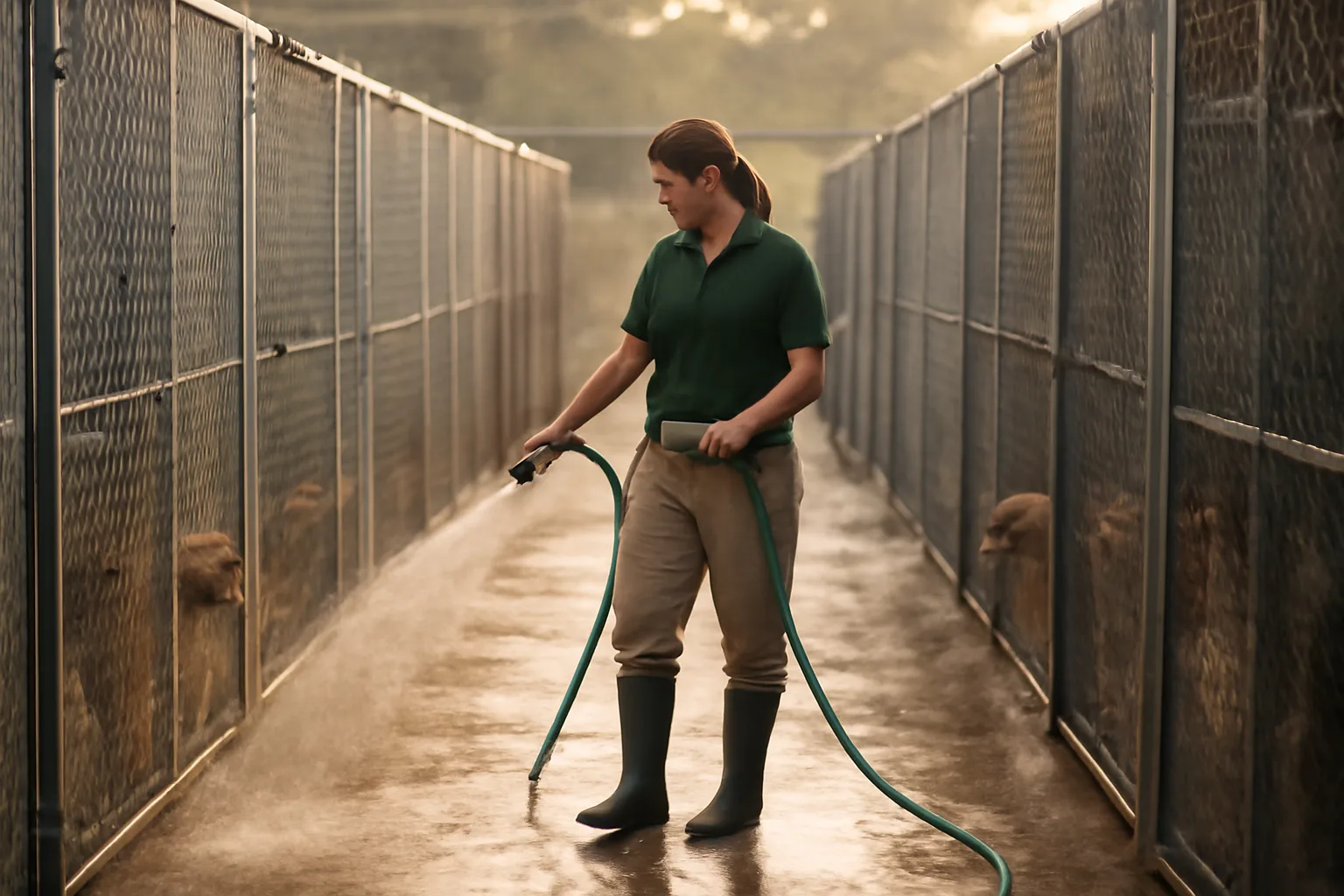
Boarding and daycare facilities typically face two separate approval tracks: a facility/health license (covering kennel construction, sanitation, ventilation, and animal care standards) and a zoning approval (covering where a commercial animal facility is allowed to operate and under what conditions). You usually need both before you can legally open, and they come from different offices. Zoning is almost always the harder hurdle in practice. Most municipal zoning codes don't list "dog daycare" or "kennel" as a permitted use in residential or even light commercial zones outright; instead you're looking at a conditional use permit, special exception, or variance process that requires a public hearing. Neighbors show up to these hearings. Noise, odor, traffic, and property value concerns are the recurring objections, and boards frequently attach conditions (sound barriers, restricted outdoor hours, capped dog counts, buffer distances from residential lots). Facility standards vary by state but commonly touch: minimum square footage per dog, flooring and drainage requirements, ventilation and temperature control, fire suppression and exits, separate isolation space for sick animals, and staff-to-dog ratios during operating hours. USDA-licensed breeders face a detailed federal version of these standards under 9 CFR Part 3 [4], but pure boarding/daycare operators without USDA involvement follow whatever their state or county has written, which ranges from a one-page checklist to a lengthy code chapter depending on the state. If you're preparing for a zoning hearing, the practical advice is boring but true: get your traffic and noise mitigation plan on paper before the hearing, not during it. Boards respond better to specific commitments (fencing height, hours dogs are outside, sound barrier type) than to general reassurances. For more on daycare-specific facility layout and staffing norms, see our coverage on dog daycare and pet boarding operations.
how do costs and licensing differ between boarding, daycare, and breeding operations
| Operation type | Primary regulator | Typical trigger | Rough cost to reader | |
|---|---|---|---|---|
| Boarding (overnight) | State ag dept and/or county | Any commercial boarding for pay | $25-$85/night charged to clients | |
| Daycare (day only) | State ag dept and/or county | Commercial daycare for pay | $20-$40/day charged to clients | |
| Breeder, in-person retail sales only | State breeder law (if any) + county zoning | State-specific (e.g., VA: 5+ breeding females, 5+ litters/yr) [2] | Varies; no USDA fee if fully retail | |
| Breeder, wholesale or sight-unseen sales | USDA APHIS (Class A) + state + county | More than 4 breeding females, non-retail sales [4] | USDA license fee ~$40-several hundred/yr by inventory bracket [5] | The table above is the fastest way to see why "the kennel industry" resists a single set of rules: a daycare-only operator with zero breeding dogs may never interact with USDA at all, while a small breeder shipping puppies across state lines can trigger federal licensing well before they'd consider themselves a serious commercial operation. One more wrinkle worth flagging: some states fold boarding, daycare, and breeding into one "kennel license" category regardless of which activity you actually do, meaning a daycare-only business might technically apply for the same license class as a 40-dog breeding operation, just at a lower dog-count tier. Always read your state's statutory definition of "kennel" carefully; it often includes any facility housing dogs commercially, more than breeders. |
what should i check before applying for any kennel license
Before filing anything, confirm four things directly with your state and county: your state department of agriculture's kennel/breeder licensing page (thresholds, fees, renewal cycle), your county zoning office's rules for your specific parcel (permitted use, conditional use process, hearing requirements), your county's individual dog licensing ordinance (in case you need it for client intake), and, only if you breed and sell sight-unseen, your regional USDA APHIS office regarding Class A/B licensing. Don't skip the zoning step even if you're renewing an existing license or moving from home-based to a small commercial space. A change in location or a jump in dog count is often enough to re-trigger the conditional use review, even for an operator who's run a compliant business for years. Keep a paper trail. Every state and county office you call, note the date, the person's name, and what they told you, because verbal guidance changes and you'll want a record if a rule gets applied inconsistently later. This is also where a kennel license and zoning packet earns its keep: it's built to organize exactly this kind of state-by-state, county-by-county fill-in-the-blank research so you're not starting from a blank page at each office. It doesn't replace calling those offices, and it's not legal advice or representation before your zoning board, but it keeps the process from turning into five browser tabs and a headache.
Frequently asked questions
How much does dog boarding cost per night?
Standard kennel boarding runs $25-$65 a night in most U.S. markets, with rural facilities sometimes as low as $20-$30 and upscale suite-style boarding in major metros reaching $45-$85 or more. Add-ons like extra walks or medication administration typically add $5-$25 per service. These are market rates, not government-set fees.
How do I register a dog with my city or county?
Bring proof of current rabies vaccination (and often spay/neuter status) to your local animal control office or its online portal, pay the annual or multi-year fee (commonly $10-$25), and you'll receive a tag. Requirements and fees are set locally, so check your specific county or city's animal control page for exact steps.
How do you get papers for a dog?
"Papers" usually means AKC or similar breed registry documentation, which requires the litter to have been registered by the breeder first. If your dog came from a registered litter, you register it individually using the litter number through the AKC. If it didn't come from a registered litter, there's generally no way to obtain retroactive papers.
How can I get papers for my dog if the breeder never gave me any?
Contact the breeder first and ask whether the litter was registered with the AKC or another registry; if so, you can usually complete individual registration using the litter number. If the litter was never registered, standard registries won't issue retroactive papers, though some offer limited alternative listing programs in specific circumstances.
How do you become a dog breeder legally?
Check three layers: county zoning (whether breeding dogs is a permitted use on your property), state breeder or kennel license rules (thresholds vary widely by state), and USDA APHIS licensing, which applies if you keep more than 4 breeding female dogs and sell puppies wholesale or sight-unseen rather than in person.
What is the USDA threshold for needing a breeder license?
USDA APHIS requires a Class A license for breeders with more than 4 breeding female dogs who sell offspring through wholesale channels or sight-unseen (online, broker, auction). Breeders selling exclusively in person, buyer physically present, fall under the Animal Welfare Act's retail exemption regardless of how many litters they produce annually.
How do I get a kennel license to open a boarding or daycare business?
Start with your state department of agriculture's licensing page to see if a state kennel license applies, then contact your county zoning office, since most commercial dog facilities need a conditional use permit or special exception even where no state license is required. Requirements differ enough by state and county that there's no single national process.
Is a dog license the same as AKC registration papers?
No. A dog license is a local government requirement proving rabies vaccination and funding animal control, costing roughly $10-$25 a year. AKC papers are a private pedigree registry record with no legal or government function. You can have one without the other, and neither substitutes for the other.
Do all states require a kennel license for boarding or breeding?
No. Some states, like Pennsylvania, set an explicit dog-count threshold (26+ dogs kept for sale, breeding, boarding, or training) for state kennel licensing. Other states leave licensing entirely to counties or cities. Always check your specific state department of agriculture and county zoning office rather than assuming a rule applies everywhere.
How much does it cost to get a USDA breeder license?
USDA APHIS license fees for Class A breeders scale with the number of animals kept, ranging roughly from about $40 a year at the smallest inventory tier to several hundred dollars a year at larger tiers, based on APHIS's licensing fee regulations. Confirm current fees directly with APHIS since schedules are periodically updated.
What's the difference between dog boarding and dog daycare licensing?
Boarding involves overnight stays and often faces more detailed facility standards (isolation space, overnight staffing, fire egress) than daycare, which is day-use only. Many states and counties still license them under the same general "kennel" or "animal facility" category, so check whether your jurisdiction distinguishes between the two or treats them identically.
Can I board dogs at my house without a license?
It depends entirely on your local zoning code and the number of dogs involved; many residential zones allow a small number of dogs before requiring a business license or conditional use permit, but thresholds and definitions of "kennel" vary by county. Check your zoning office before accepting paying boarding clients at a residential address.
Sources
- Pennsylvania Dog Law, 3 Pa.C.S. Chapter 45 (Bureau of Dog Law Enforcement): Pennsylvania kennel license required for 26+ dogs over six months kept for sale, breeding, boarding, or training
- Virginia Department of Agriculture and Consumer Services, Comprehensive Animal Care Law / Commercial Dog Breeder definition: Virginia defines a commercial dog breeder as maintaining 5+ adult female dogs and producing 5+ litters annually
- Animal Welfare Act regulations, 9 CFR Part 1, Section 1.1 (definitions of retail pet store and dealer): USDA license required for breeders with more than 4 breeding female dogs selling in wholesale/sight-unseen channels; retail in-person sales are exempt
- Animal Welfare Act regulations, 9 CFR 2.6 (License fees): USDA Class A license fees scale with animal inventory bracket, from roughly $40 to several hundred dollars annually
- USDA APHIS, 9 CFR Part 3 Animal Welfare Regulations, Subpart A (Dogs): Federal facility standards for USDA-licensed dog breeders cover space, sanitation, and veterinary care requirements