Last updated 2026-07-25
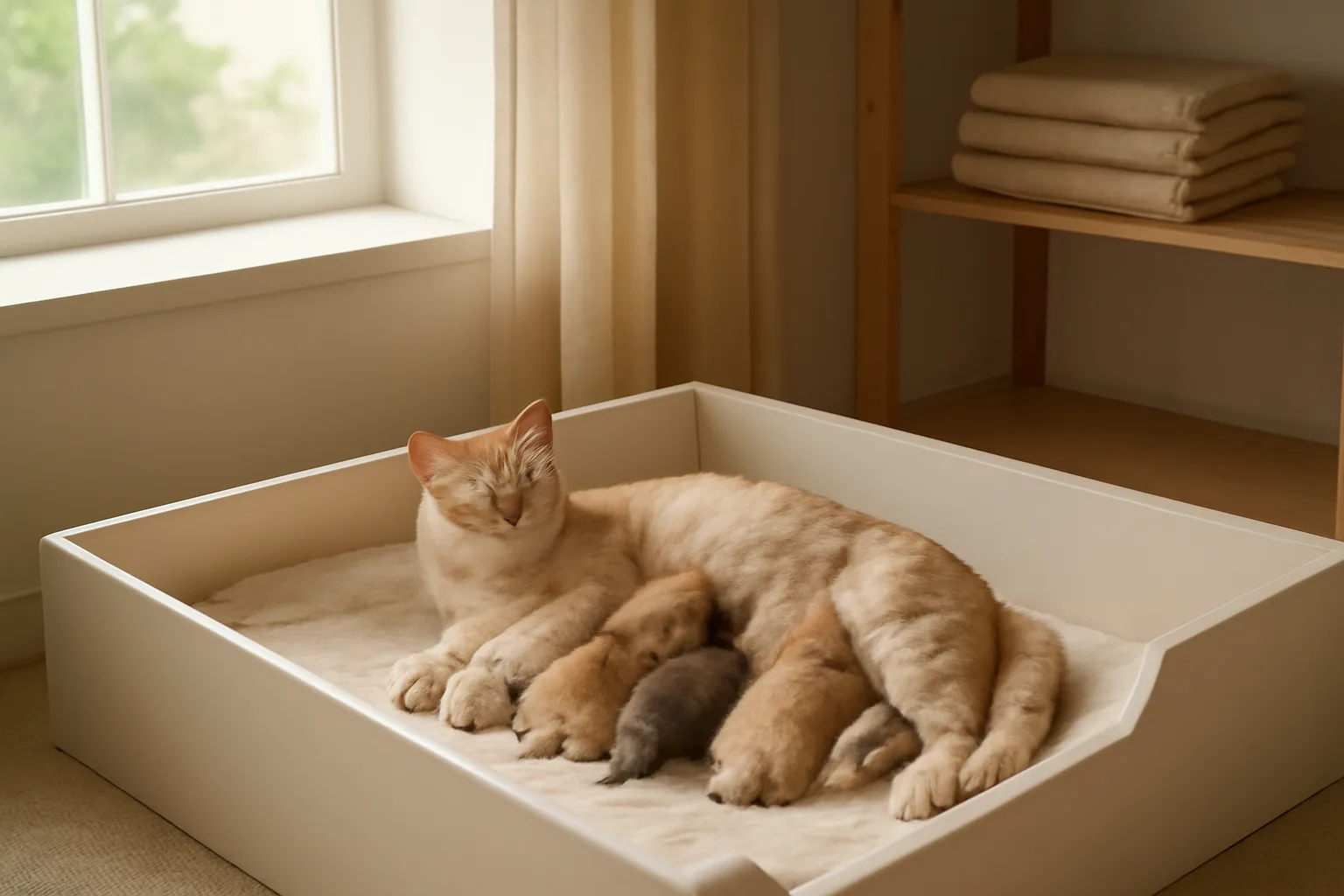
TL;DR
Becoming a cat breeder legally means registering your cattery with a pedigree registry (CFA, TICA), checking state and county licensing rules (many states exempt small catteries under a litter or animal count), and figuring out if you cross the USDA threshold of selling to pet stores or online sight-unseen, which requires a federal license under 7 U.S.C. §2133.
what does it actually take to become a cat breeder legally
There's no single national license for cat breeders. Instead you're dealing with three separate layers that often don't talk to each other: your state's pet dealer or animal breeder law, your county or city zoning and animal control rules, and (only if you sell a lot of cats a certain way) federal USDA licensing. Most small cat breeders, someone with one or two queens producing a handful of litters a year, never touch the federal system at all. The USDA's Animal Welfare Act licensing requirement is triggered by specific sales channels, not by the mere fact that you breed cats [1]. State rules are the ones that trip people up because they vary enormously. Some states (Pennsylvania is the famous example on the dog side) have detailed kennel license tiers; many states have nothing specific for cats at all and just fold you into general pet dealer or seller statutes. So the honest first step isn't buying a website template or picking a cattery name. It's a three-part check: (1) does my state require a breeder or pet dealer license at my volume, (2) does my county zoning code allow keeping this many cats at my address (or as a home occupation), and (3) am I anywhere close to USDA thresholds. Skip any of the three and you risk a shutdown order, more than a fine.
how to become a dog breeder vs a cat breeder, what's actually different
People searching "how to become a dog breeder" usually land on stricter rules than cat breeders face, and it's worth knowing why before you assume the same playbook applies. Several states (New York, Pennsylvania, Ohio, Virginia among others) have dog-specific commercial breeder or kennel licensing statutes with litter-count or dollar-volume triggers. Very few states have an equivalent cat-specific statute; cats usually fall under a state's general animal dealer, pet shop, or consumer pet purchaser protection law instead. The federal layer is nearly identical for both species under the Animal Welfare Act, though. USDA APHIS defines a "dealer" that needs a Class A or Class B license as anyone who sells or negotiates the sale of animals for use in research, for resale, or wholesale, with a carved-out exemption for people who sell fewer than four female breeding animals' offspring at retail directly to the public in a given year, and a further 2013 rule change that pulled many online, sight-unseen retail sellers into licensing regardless of volume [1] [2]. That online-sales rule is the one that actually catches more cat breeders than the old headcount rule ever did, because so much cat breeding today happens through website inquiries and shipped kittens rather than local pickup. If you're also weighing dog operations, our guides on dog boarding and dog kennels cover the parallel state licensing landscape in more detail.
do you need a state license to breed cats
Sometimes, and the answer depends entirely on which state you're in, so treat any blanket "no license needed for cats" claim online with suspicion. A growing number of states have passed pet dealer or animal seller statutes that cover anyone selling a threshold number of animals, and those statutes are usually written broadly enough to include cats even when the enforcement history is mostly about dogs and puppy mills. Check two things at your state department of agriculture (or, in some states, the department of health or a consumer protection division): whether there's a numeric threshold (litters per year, animals sold per year, or gross revenue) that triggers a state breeder or dealer license, and whether cats are explicitly named or just swept in under "animals." Some states also have retail pet store licensing that applies if you sell kittens from a storefront or via certain online listing arrangements, separate from any breeder-specific rule. Because this varies state by state and the citation you need is a specific statute or licensing page, not a general agency homepage, the right move is to search "[your state] department of agriculture animal dealer license" or "[your state] pet dealer statute" and read the actual code section. Don't rely on secondhand summaries, including this one, for the specific number in your state; verify it against the primary source before you skip a license you actually needed.
how do you get a cat papers, what does registration actually mean
"Papers" for a cat means registration with a pedigree cat registry, most commonly the Cat Fanciers' Association (CFA) or The International Cat Association (TICA). This is a private membership and pedigree-tracking system, not a government license, and it has nothing to do with legal permission to breed. A cat can be fully licensed and legal to breed in the eyes of your state and still have zero papers, and a cat can have a full CFA pedigree and its owner can still be operating illegally under local zoning. To register a litter with CFA, you typically need the litter's sire and dam to already be registered with CFA, you submit a litter registration application (with the breeding pair's registration numbers, dates, and colors) and pay a per-kitten or per-litter fee, then individual kitten owners can register their specific cat once it's identified. TICA runs a comparable system with its own forms and fee schedule. If you bought or bred from an unregistered cat, you generally cannot retroactively get "papers" for that specific animal; the pedigree chain has to be unbroken back through registered ancestors. So if someone asks "how do you get a cat papers" expecting a government form, redirect them: it's a private registry application, it costs a modest per-litter and per-cat fee (each registry publishes its own current fee schedule, so check CFA's or TICA's site directly rather than trust a fixed number here), and it only works if the breeding cats were registered first.
how do you register a cat with a breed registry, step by step
The mechanics are similar across CFA and TICA even though the paperwork differs. Here's the general sequence: 1. Register (or confirm registration of) both parent cats individually with the registry before the litter is born, if they aren't registered already. 2. After the litter arrives, submit a litter registration form listing the breeding date, birth date, number of kittens, and colors/patterns, along with the litter fee. 3. The registry issues a litter registration number, and each kitten can then be individually registered by whoever ends up owning it, using that litter number. 4. If you're registering a cat of unknown or mixed background, some registries (TICA in particular, with its household pet category) allow registration without full pedigree documentation, but that cat won't carry breed papers, just an ID registration. A lot of new breeders assume registration is the hard part and zoning/licensing is an afterthought. It's really the reverse. Registry paperwork is a same-week process with a form and a fee. Getting your property legally zoned for a multi-cat cattery, or getting your state breeder license approved, can take months and can fail entirely if your property or plan doesn't meet the requirements.
how do you get a dog license (and does a cat need the equivalent)
This question comes up constantly because people confuse breeder licensing with the individual pet license every dog owner needs. A dog license is a local, usually county or city, registration tag for an individual pet, typically required annually and tied to proof of rabies vaccination; it's issued by your county clerk, county treasurer, or local animal control office, and fees are usually in the range of about $10 to $25 a year for an altered animal, more for an unaltered one in many jurisdictions, though the exact fee is set locally and you should check your county's page directly. Most states and localities do not require an individual pet license for cats the way they do for dogs; the classic municipal dog license law traces back to rabies control programs and dog-specific nuisance ordinances. If you're breeding cats commercially, though, don't assume that means zero municipal contact: check whether your city or county requires a "multiple cat permit" or "cattery permit" once you exceed a certain number of adult cats on one property (some cities cap it at four or five before requiring a permit, others have no cap at all). That's a local ordinance question, not a state one, so it has to be checked at your specific county or city clerk's page.
how much does it cost to become a cat breeder
There's no single number because the real costs split across four buckets: registry fees, state/local licensing fees, facility setup, and veterinary care, and only the first bucket is genuinely small and predictable. Registry fees (CFA or TICA cattery name registration, litter registration, individual cat registration) typically run in the range of tens of dollars per litter, plus a one-time cattery name registration fee, though exact current fees should be checked on each registry's own fee page since they do change. State or local breeder/dealer licenses, where required, vary from roughly $25 to a few hundred dollars depending on the state and the scale of your operation; some states scale the fee to the number of animals or litters. USDA Class A/B dealer licenses (only if you cross that threshold) have an annual fee currently set on a tiered schedule based on gross sales from animals, with the lowest tier for smaller operations and higher tiers as revenue increases; check the current fee table on APHIS's license and registration fee page since it's periodically updated by rule [3]. The bigger, less predictable cost is the physical setup: cattery housing, ventilation and sanitation upgrades, separate queening/kitten rooms, veterinary screening (FeLV/FIV testing, genetic panel testing for breed-specific conditions), and ongoing vet costs for pregnancy checks and kitten wellness visits. None of that is optional if you want a responsible operation, and none of it is capped by any government fee schedule; it's just what running a clean cattery costs. Budget in the low thousands of dollars for initial setup even for a small home-based cattery, more if your local zoning forces you into a separate structure.
what is the USDA threshold that turns a cat breeder into a federal licensee
| Sell all kittens in person, fewer than 4 breeding queens | No (retail exemption applies) [2] | |
|---|---|---|
| Sell kittens sight-unseen via website/shipping, any queen count | Yes (2013 rule closes the exemption) [2] | |
| Sell to pet stores or brokers for resale | Yes (wholesale/resale triggers dealer status) [1] | |
| 4+ breeding queens, in-person retail sales only | Check state law; federal exemption may still apply but confirm current female-count threshold on APHIS's site [2] | If you're unsure which row you're in, call your USDA APHIS Animal Care regional office before you scale up shipping. Retroactive enforcement for unlicensed dealing carries real penalties, and "I didn't know about the sight-unseen rule" is not a defense regulators tend to accept. |
This is the one federal number every serious breeder should actually know, because it's a bright line, not a judgment call. Under the Animal Welfare Act's implementing regulations, a person who sells animals born and raised on their own premises directly to the public at retail, and who sells the offspring of fewer than four breeding females in a given calendar year, is exempt from needing a USDA dealer license, as long as those sales are hands-on, in-person retail transactions [2]. That exemption disappears if you sell animals sight unseen, meaning the buyer never physically inspects the animal before purchase, which the USDA's 2013 rule specifically pulled into licensing regardless of how few breeding females you have. APHIS's own guidance states the licensing requirement applies to "any person who sells or negotiates the sale or purchase of any wild or exotic animal, dog, or cat... for research, teaching, testing, exhibition, or use as a pet, and who is not exempted" and specifically flags online and sight-unseen sales as a common trigger [1] [2]. In practice, a cat breeder who ships kittens to out-of-state buyers based only on photos and video calls, with no in-person meeting before the sale finalizes, is very likely required to hold a USDA license even with just one or two litters a year. |Situation|USDA license likely needed?|
how do zoning and county rules affect a home cattery
This is where most cat breeders actually get shut down, not federal or state licensing. Zoning is entirely local: your county or city planning/zoning office decides whether keeping breeding cats at a residential address is a permitted use, an accessory use requiring a permit, or outright prohibited above a certain animal count. Common triggers to check at your county zoning office: a maximum-animals-per-household ordinance (frequently capping cats somewhere between four and six before you need a kennel or cattery permit), noise and nuisance ordinances that get invoked by neighbor complaints regardless of your paperwork, and home-occupation rules if you're selling kittens commercially from a residential property. Some counties require a conditional use permit or special exception, which means a hearing in front of a zoning board, more than a form and a fee. If you're already researching kennel-style facility standards for a boarding or daycare component alongside breeding, our guides on pet boarding and doggy day care walk through the parallel facility and zoning standards that many counties apply across species. A properly built kennel license and zoning packet, matched to your county's actual ordinance language, is exactly the kind of prep that keeps a hearing from turning into a denial; that's the gap our $149 one-time Kennel License & Zoning Packet is built to close, though it's a document-prep tool, not legal representation, and it can't guarantee a board's decision.
how much is boarding for cats and dogs, and why does it matter to breeders
Breeders often end up asking this because they're weighing whether to add boarding or daycare services to diversify income, or because they need to board queens and kittens during travel or facility upgrades. Nationally, dog boarding commonly runs somewhere in the range of $30 to $85 per night depending on region and amenities, with upscale "dog hotel" style facilities charging more, though there's no single federal or state data source that tracks this pricing, so treat any number (including this range) as a market estimate rather than a regulated figure. Cat boarding tends to run somewhat lower than dog boarding, often in the $20 to $45 per night range at general boarding facilities, partly because cats need less staff supervision and no walking, though prices vary just as much by region and facility quality. If you're building out a mixed-species boarding operation alongside a cattery, that's a genuinely different licensing and facility-standards conversation than pure cat breeding; check our dog boarding and dog hotels near me guides for that side of the business, and expect your zoning office to evaluate a commercial boarding operation under different rules than a hobby cattery.
what health and welfare standards should a cat breeder follow
There's no single federal welfare code for cat breeders the way USDA's Animal Welfare Act regulations spell out cage sizes and sanitation for licensed dealers, but if you do cross the USDA threshold, the standards in 9 CFR Part 3, Subpart D apply, covering housing, temperature, sanitation, feeding, and veterinary care specifically for cats held by licensed dealers and exhibitors [4]. Even if you never cross that federal line, most state veterinary boards and breed registries expect baseline practices: FeLV/FIV testing before breeding, appropriate vaccination protocols per your vet's guidance, genetic screening for known breed-specific conditions (polycystic kidney disease in Persians, HCM in Maine Coons and Ragdolls, for example), and a queen breeding schedule that respects recovery time between litters. CFA and TICA both publish breeder codes of ethics that aren't legally binding but are enforced through registry membership standing, meaning a registry can suspend or revoke your registration privileges for documented welfare violations even without any government action against you.
what's the realistic step-by-step path to becoming a cat breeder
Here's the order that actually avoids rework, based on how the different systems depend on each other: 1. Pick your breed and find a mentor breeder in that breed through CFA or TICA's breed council contacts; this is genuinely more valuable early on than any paperwork step. 2. Check your county zoning ordinance for animal-count limits and cattery/kennel permit triggers before you acquire breeding cats, not after. 3. Check your state's pet dealer or animal breeder statute for any license or registration threshold that applies to cats specifically. 4. Register your cattery name with CFA or TICA, then register your breeding queen and stud (or confirm the stud service you're using has current registration). 5. Set up veterinary relationships for pre-breeding health testing before your first litter, not during it. 6. Decide your sales model early: local in-person sales only keeps you inside the federal retail exemption in most cases; shipping sight-unseen kittens across state lines likely requires a USDA license regardless of how few litters you produce [2]. 7. If you're at all close to any threshold, whether it's your county's animal-count cap, your state's licensing trigger, or the USDA's sight-unseen rule, call the actual agency and ask before you scale. A five-minute phone call to your county zoning office is cheaper than a cease-and-desist letter.
Frequently asked questions
How do you get papers for a cat?
You register the cat's parents with a pedigree registry like CFA or TICA before breeding, then submit a litter registration form after the kittens are born, and finally register the individual kitten under that litter number. You can't get papers for a cat whose ancestors were never registered; the pedigree chain has to be unbroken.
How do you get papers for a dog if it doesn't have any?
If the dog's parents were registered with a group like the AKC, you can often still register it as long as the breeder submits the litter paperwork. If the parents were never registered, you generally cannot retroactively get full papers; some registries offer limited or "listed" registration options for dogs of unknown pedigree instead.
How do you register a dog with the AKC or a similar registry?
You register the litter through the registry (commonly the AKC) using the sire and dam's registration numbers, submit the litter application and fee, then register the individual puppy once an owner is identified. This is separate from any state breeder license or your local dog license tag.
How much does dog boarding cost per night?
Typical dog boarding runs roughly $30 to $85 per night depending on region, facility type, and amenities, with upscale dog hotels charging more. There's no government-set rate; it's set by the market, so get quotes from a few local facilities to know your area's real range.
How much is cat boarding compared to dog boarding?
Cat boarding usually costs somewhat less than dog boarding, often in the $20 to $45 per night range, since cats generally need less staff time and no walking. Prices still vary widely by region and facility, so this is a general market estimate, not a fixed rate.
How do you get a dog license for your pet?
You register your dog with your county or city clerk's office (or local animal control), usually annually, and show proof of current rabies vaccination. Fees typically run around $10 to $25 for an altered dog, though your specific county sets the exact amount and renewal schedule.
Do cats need a license the way dogs do?
Most cities and counties do not require an individual pet license for cats the way they do for dogs, since dog licensing grew out of rabies control programs. Some jurisdictions do require a multi-cat or cattery permit once you exceed a set number of cats at one address, which is a separate local ordinance question.
How do you become a dog breeder legally?
Check your state's dog breeder or kennel licensing statute for litter or animal-count thresholds, check your county zoning code for kennel permit requirements, register your breeding dogs with a pedigree registry, and confirm whether your sales volume or method crosses the USDA's dealer licensing threshold under the Animal Welfare Act.
What is the USDA threshold for needing a breeder license?
Under the Animal Welfare Act, you generally need a USDA dealer license if you sell animals wholesale, sell to resellers, or sell them sight-unseen, or if you sell the offspring of four or more breeding females at retail in a calendar year. Selling fewer than four breeding females' offspring, in person only, is typically exempt.
Does selling kittens online require a USDA license?
It can, even with just one litter a year. USDA's 2013 rule change removed the small-scale exemption for anyone selling animals sight-unseen, meaning the buyer never physically inspects the kitten before the sale is final, so shipped or ship-on-approval kitten sales often require a license regardless of volume.
How much does it cost to start a cattery?
Registry fees are modest, tens of dollars per litter plus a cattery name fee. State or local licensing, if required, ranges roughly from $25 to a few hundred dollars. The bigger cost is facility setup and veterinary screening, which can run in the low thousands of dollars even for a small home-based operation.
Can I breed cats without any government license at all?
Often yes, at small scale, if your state has no cat-specific breeder statute, your county has no cattery permit trigger for your animal count, and you sell only in person under the federal retail exemption. But you must check all three independently; each varies and none can be assumed from the others.
Sources
- USDA APHIS, Animal Welfare Act licensing overview: USDA dealer licensing applies to those who sell or negotiate sales of dogs or cats for research, resale, exhibition, or as pets, subject to exemptions
- USDA APHIS, Animal Welfare Act regulations, retail pet store exemption and 2013 rule: Retail sellers of fewer than four breeding females' offspring sold in-person are exempt, but sight-unseen sales require licensing regardless of volume
- USDA APHIS, Animal Welfare license and registration fees: USDA Class A/B dealer license fees are set on a tiered schedule based on gross animal sales revenue
- Code of Federal Regulations, 9 CFR Part 3 Subpart D: Federal animal welfare housing, sanitation, and veterinary care standards for cats apply to USDA-licensed dealers and exhibitors
- Electronic Code of Federal Regulations (eCFR): Defines terms used in the Animal Welfare Act regulations, including who qualifies as a 'dealer' or 'breeder' subject to USDA licensing.
- Electronic Code of Federal Regulations (eCFR): Specifies licensing requirements and application procedures under the Animal Welfare Act for animal breeders and dealers.