Last updated 2026-07-23
TL;DR
There's no single official "best" little dog house in Texas because it's a consumer product category, not a regulated one. What matters is size, insulation, and chew-safety for the dog, and (if you're running a boarding or breeding operation) whether your housing setup meets your city/county zoning and state licensing rules. This article covers both angles.
What makes a dog house actually good, more than cute
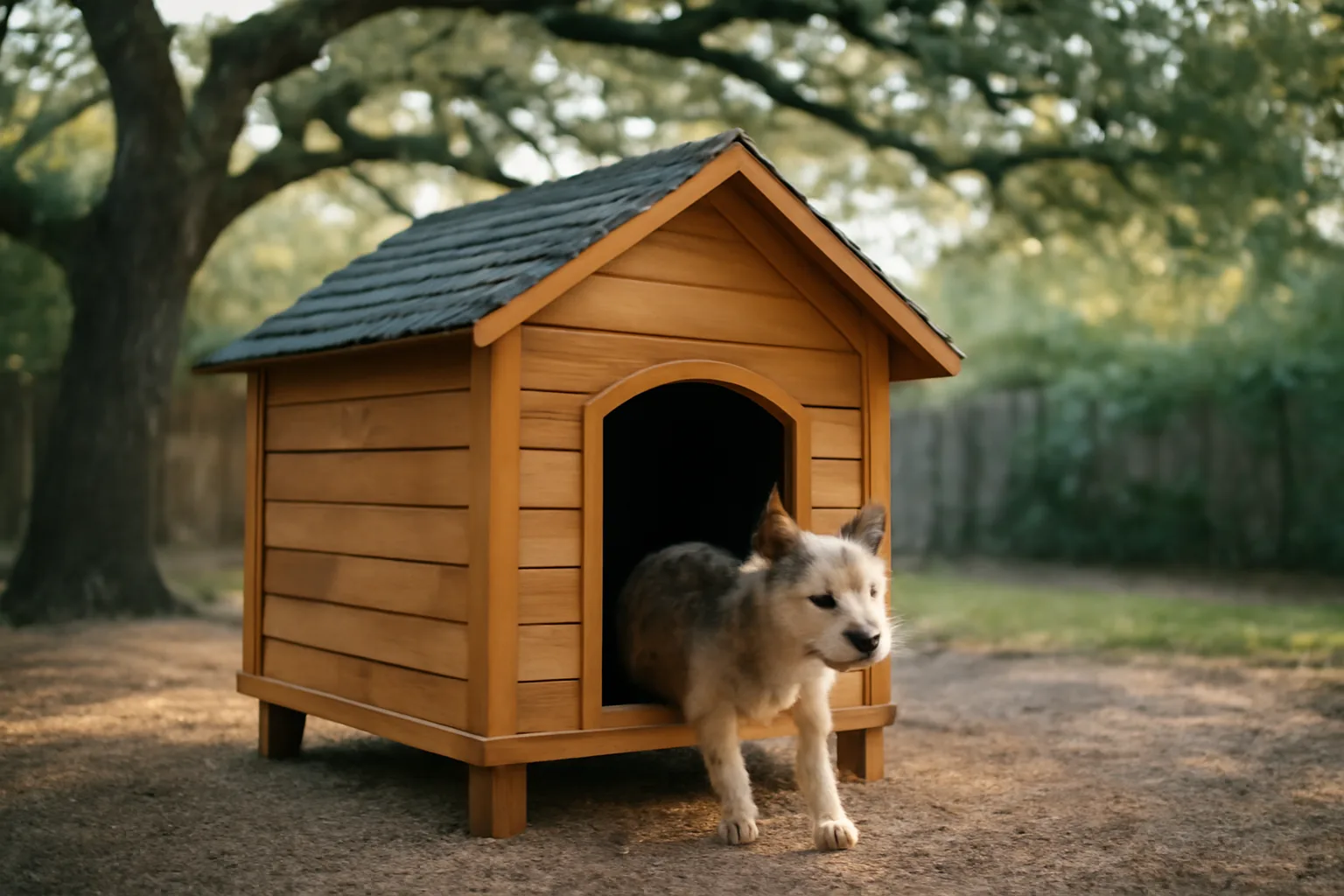
People searching "best little dog house in Texas" are usually shopping for a small dog, and the state's climate makes this a real engineering question, more than a style one. A good small dog house needs three things: raised floor (off cold or wet ground), a door offset from direct wind, and enough insulation or shade to handle both 100+ degree summers and the occasional hard freeze that hits Texas every few winters (remember Winter Storm Uri in February 2021, when much of the state saw sustained sub-freezing temps for days). Size matters more than people think. The classic rule of thumb from various extension and shelter-medicine sources is that a dog house should be big enough for the dog to stand up, turn around, and lie down comfortably, but not so big that the dog's body heat can't warm the space in winter. For a small dog (under 20 lbs), that usually means an interior footprint around 18-24 inches square, not the oversized "barn style" houses marketed as one-size-fits-all. Material matters for Texas specifically. Cedar and other rot-resistant woods hold up better against humidity in East Texas; in West Texas and the Panhandle, UV-resistant plastic or insulated resin houses handle sun exposure without cracking as fast. If you're boarding or breeding dogs commercially rather than buying a backyard dog house, the housing standard isn't a consumer review question at all, it's a facility standard tied to your state or county license. More on that below. There is no Texas state agency that certifies or ranks dog houses as products. The "best" one is the one sized right for your specific dog and climate zone, which is why most of this article focuses on what a buyer or operator actually needs to check, not a single winner.
How much does dog boarding cost in Texas
Dog boarding in Texas typically runs $25 to $65 per night for a standard kennel or daycare-style stay, with luxury "dog hotel" suites running $50 to $120+ per night in metro areas like Austin, Dallas, and Houston. Add-ons (grooming, extra playtime, medication administration) usually cost $5 to $25 each on top of the base rate. Pricing varies a lot by what's actually being provided. A basic kennel run with twice-daily walks costs less than a cage-free daycare-style boarding suite with webcams and private play sessions. Holiday weekends (Thanksgiving, Christmas, July 4th) often carry a surcharge of $5 to $15 per night because demand spikes and staffing costs go up. There's no statewide price database for this, so treat any number here as a market range, not a quote. If you're evaluating dog boarding options as a consumer, call three or four facilities in your area and ask what's actually included: is it 24-hour supervision, a set number of potty breaks, group play, or solo runs? The price difference between a $30/night kennel and a $90/night suite is usually about square footage, staff ratio, and whether dogs get individual attention versus group housing. If you're the one opening the facility, cost planning looks totally different: you're pricing out square footage per dog, HVAC load, drainage, and staffing ratios against your local health and zoning code, not shopping a nightly rate. See the pet boarding and dog kennels pages for facility-side planning.
How do you register a dog in Texas
Texas doesn't have a statewide dog registration or licensing requirement; registration happens at the city or county level, and rules vary widely. Most Texas cities that require pet registration also require proof of rabies vaccination, and many tie the registration renewal to your rabies vaccination schedule (typically annual or every 3 years depending on vaccine type). To register a dog, you'll generally: (1) get your dog vaccinated against rabies by a licensed veterinarian, (2) bring proof of that vaccination to your city or county animal services office (or their website portal), and (3) pay a small registration or tag fee, often $5 to $25 for a spayed/neutered dog and somewhat more for an intact dog in cities that price-differentiate to encourage sterilization. The Texas Health and Safety Code Chapter 826 sets statewide rabies vaccination and control requirements that counties and cities administer locally [1]. Because the actual registration process is run by your specific city or county, the right first move is checking your county's animal services or health department page directly, not a statewide portal, because there isn't one. If you're a breeder or boarding operator, this consumer-level dog registration is a separate thing entirely from your business license. Don't confuse a $15 rabies tag with a commercial kennel or breeder license, they're different systems with different rules.
How do you get a dog license in Texas
"Dog license" and "dog registration" mean the same thing in most of Texas: a local rabies-tag-based system run by your city or county, not a state license. There is no Texas Department of State Health Services statewide dog license requirement for pet owners; the rabies control law (Health and Safety Code Chapter 826) authorizes local rabies control authorities to require registration and charge fees [1]. To get one, contact your county's local rabies control authority, usually the county or city animal services department, and ask what they require. Most ask for current rabies vaccination proof and a small fee. Some counties, especially rural ones, don't enforce a registration requirement at all beyond the rabies vaccination law itself. This is different from a commercial kennel license, which is what you need if you're boarding, breeding, or grooming dogs as a business. Texas regulates commercial breeders and certain animal-related businesses under the Texas Department of Licensing and Regulation's Animal Regulation and Licensing program, which covers dog breeders, retail pet dealers, kennels, and similar operators depending on volume thresholds. If you're opening a facility rather than just owning a pet, you want that program, not the pet-tag registration process.
How do you get papers for a dog (AKC registration, explained)
"Papers" almost always means American Kennel Club (or another breed registry) registration, which documents a dog's parentage and breed, not a government license. To get AKC papers, the dog's litter has to be registered by the breeder at birth through the AKC, and the buyer then completes individual registration using the paperwork the breeder provides. If you bought a purebred puppy from a breeder, ask for the AKC (or applicable registry) litter registration application at the time of purchase. That document lets you register the individual puppy in your name. If the breeder didn't register the litter, you generally cannot get retroactive papers unless the registry has a specific limited-registration or DNA-verification path, and policies here vary by registry, so check directly with AKC's registration department rather than assuming. If you already own a dog with no papers and no known breeder, you typically cannot get full breed registry papers after the fact. Some registries offer alternative programs (AKC's Purebred Alternative Listing, for example, covers dogs of unknown breeding history for limited purposes like agility or obedience competition) but these are not full pedigree registrations. "Papers" is a private registry function, not a Texas government function, so no state agency can issue or backfill them for you.
How do you get papers for your dog if you're the breeder
If you're breeding, you register the litter with the breed registry (AKC or similar) after whelping, then transfer individual registration paperwork to each buyer. The process starts with registering your dam and sire (if not already registered) and filing a litter application, usually within a set window after the puppies are born; AKC's own guidance recommends registering litters promptly so buyers can complete individual paperwork without delay. Separately, if you're breeding at a scale that crosses federal thresholds, you may need a USDA license regardless of whether you register litters with AKC at all. The USDA Animal and Plant Health Inspection Service (APHIS) requires a license under the Animal Welfare Act for most breeders who sell dogs sight unseen (online, by phone, or by mail) and who maintain more than four breeding females, per 9 CFR Part 2 and the Act's definition of a "dealer". Breeders who sell only in person, allowing the buyer to see the animal before purchase, are generally exempt from USDA dealer licensing regardless of scale, per APHIS's own guidance on the retail pet store exemption. This is where a lot of small breeders get confused: AKC registration and USDA licensing are completely separate systems. You can have a fully AKC-registered litter and still be operating illegally under federal law if you're selling sight-unseen above the threshold without a USDA license. Conversely, you can have a proper USDA license and choose not to register with any breed registry at all. Check both boxes independently.
How do you become a dog breeder in Texas (legally)
Becoming a legal dog breeder in Texas means clearing three separate layers: state licensing (if you meet the volume threshold), possible USDA federal licensing (if you sell sight-unseen above the threshold), and local zoning/permitting for keeping breeding dogs on your property. None of these substitute for each other. At the state level, Texas requires a license under the Texas Department of Licensing and Regulation's Dog or Cat Breeders Program for anyone who keeps 11 or more intact female dogs or cats and sells or offers to sell more than a certain number of animals per year for compensation; the program sits under Texas Occupations Code Chapter 802 [2]. Smaller hobby breeders below that threshold typically don't need the state license but should still check current TDLR rules directly, since thresholds and fee schedules get updated. At the federal level, check the USDA APHIS dealer licensing threshold described above (more than 4 breeding females plus sight-unseen sales). At the local level, check your county or city zoning code for how many dogs you can keep, whether a kennel or breeding operation counts as a home occupation or requires a specific-use permit, and what setback and sanitation rules apply to any outdoor housing or runs. A lot of new breeders build out a barn full of little dog houses and whelping boxes before checking any of this, then get a cease-and-desist letter from county code enforcement. Do the licensing and zoning check first. This is genuinely one of the more confusing multi-agency processes in pet-related business, which is part of why a packet that walks through state, federal, and county steps together (like the $149 Kennel License & Zoning Packet) exists as a starting checklist rather than a substitute for a lawyer or your county's own guidance.
How does housing (like a little dog house) factor into a kennel or breeding facility license
If you're running a licensed kennel, boarding facility, or breeding operation, the housing you provide isn't a style choice, it's an inspection item. Both USDA APHIS and Texas TDLR standards specify minimum space per animal, temperature ranges, drainage, and sheltering requirements for any dog kept outdoors. Under federal Animal Welfare Act regulations (9 CFR Part 3), outdoor housing facilities for dogs must provide shelter from sun and weather sufficient to protect against overheating and cold stress, and the regulation sets specific ambient temperature ranges that facilities must maintain or provide shelter to allow the dog to escape from [3]. A "little dog house" bought off a shelf might satisfy this for a single pet owner, but a USDA-licensed breeding facility needs housing that meets specific dimensional and insulation standards checked by an APHIS inspector, more than "looks sturdy." Texas TDLR's breeder rules incorporate similar space and sanitation requirements for licensed facilities, covering enclosure size relative to the dog's size, flooring type, and temperature control [2]. If you're scaling from a couple of home dog houses to a licensed kennel operation, expect your inspector to check: floor space per square foot relative to dog weight, whether housing keeps animals dry and off wet ground, ambient temperature control (usually a range like 45-85°F unless supplemental heating/cooling or shelter is provided), and cleaning/sanitation access. This is the real answer to "best little dog house in Texas" for an operator: the best one is the one that passes your specific facility inspection under 9 CFR Part 3 and/or your TDLR breeder rules, sized and insulated for your climate zone, not a specific brand or model.
What should a boarding or daycare facility check before buying housing units
Before buying dog houses, crates, or kennel runs in bulk for a boarding or daycare facility, check four things: your city/county zoning classification, your local health/animal control code's minimum space requirements, your fire marshal's requirements if the structure is enclosed or heated, and your insurance carrier's facility standards (many require specific flooring and drainage for liability coverage). Zoning is usually the first wall people hit. Many counties classify a kennel or boarding facility as a distinct land use requiring a specific-use permit or conditional-use permit, separate from a general commercial or agricultural zoning designation. Check your county zoning office's page directly; Texas counties administer this locally and there's no statewide zoning code for kennels. Sanitation and drainage rules often specify that outdoor housing sit on a surface that can be hosed down and drains away from the structure, not bare dirt or grass, both for the USDA-regulated tier and many local health codes. If you're renovating an existing barn or building new runs, get your surface and drainage plan approved before you pour concrete or buy housing units, because retrofitting drainage after inspection failure is expensive. If you're comparing your options across categories like doggy day care, a full-service dog hotel model, or a franchise setup like Dogtopia, the housing standards differ mainly by whether dogs are in individual runs overnight (higher space-per-dog and shelter requirements) versus group daycare play areas during the day (different supervision ratio rules, less about individual housing dimensions).
Texas boarding, breeding, and licensing costs at a glance
| Item | Typical range | Who sets it | |
|---|---|---|---|
| Dog boarding, standard kennel | $25-$65/night | Market rate, varies by city | |
| Dog boarding, luxury suite | $50-$120+/night | Market rate, varies by city | |
| Local dog registration/tag | $5-$25/year | City or county rabies control authority [1] | |
| AKC individual dog registration | Roughly $25-$40 (check AKC current fee schedule) | American Kennel Club | |
| TDLR dog/cat breeder license | Set by TDLR fee schedule, check current rules | Texas Dept. of Licensing and Regulation [2] | |
| USDA APHIS Class A/B dealer license | Tiered by number of animals, set by APHIS fee schedule | USDA APHIS | These numbers move. Treat this table as a planning range, confirm the current fee with the specific agency before budgeting, and don't assume last year's number still applies since agencies periodically adjust fee schedules. |
What's the difference between a pet tag, breed registry papers, and a business license
These three things get confused constantly, and they're not interchangeable. A pet registration/license tag proves your dog is vaccinated against rabies and is tracked by your local rabies control authority under Texas Health and Safety Code Chapter 826 [1]. Breed registry "papers" (AKC or similar) document lineage and breed for a purebred dog, issued by a private nonprofit registry, not any government body. A kennel, breeder, or boarding business license is a commercial permit issued by TDLR (state level) and/or USDA APHIS (federal level) depending on your scale, plus whatever your county or city zoning office requires for the physical facility [2]. You can own a dog with a pet tag and no papers. You can own a dog with AKC papers and no pet tag (though you probably still need the tag locally). You can run a breeding operation with a state TDLR license and no USDA license if you sell only in person and stay under the federal threshold, or you might need both if you sell sight-unseen above 4 breeding females. If you're opening or expanding a facility, the practical order is: check your county zoning first (can you legally operate there at all), then your state license requirement, then your federal USDA threshold, then your local health/animal control rules for housing and sanitation. Skipping the zoning check first is the single most common expensive mistake, because you can hold a perfect state and federal license and still get shut down by a county zoning violation.
Frequently asked questions
How much does dog boarding cost in Texas?
Standard kennel boarding runs about $25 to $65 per night in most Texas markets, and luxury "dog hotel" style suites run $50 to $120 or more per night in cities like Austin, Dallas, and Houston. Add-ons like grooming, extra playtime, or medication administration usually cost $5 to $25 each. There's no statewide price database, so call around for current local rates.
How do I register a dog in Texas?
Get your dog vaccinated against rabies by a licensed vet, then bring proof to your city or county animal services office and pay the local registration fee (typically $5-$25). Texas doesn't have a statewide registration system; it's run locally under the rabies control law, Texas Health and Safety Code Chapter 826. Check your specific county's animal services page for exact steps.
How do I get a dog license in Texas?
"Dog license" in Texas usually means the local rabies registration tag issued by your city or county's rabies control authority, not a statewide license. Contact your county animal services department, show proof of current rabies vaccination, and pay the local fee. There's no Texas state agency issuing individual pet dog licenses directly.
How do I get papers for a dog?
"Papers" means breed registry registration (AKC or similar), which documents parentage, not a government license. If you bought a purebred puppy, the breeder should give you a litter registration application to complete individually with the registry. If the litter was never registered, you generally can't get full papers retroactively; check the registry's limited-registration options instead.
How can I get papers for my dog if the breeder never registered the litter?
If the litter wasn't registered with AKC or another registry at whelping, you usually can't get full pedigree papers after the fact. Some registries offer alternative programs, like AKC's Purebred Alternative Listing, for dogs of unknown or unregistered breeding, but those cover limited purposes (like sport competition), not a full pedigree record. Contact the registry directly to check current options.
How do you register a dog with AKC?
The breeder registers the litter with AKC shortly after whelping, then gives each buyer an individual registration application specific to their puppy. The buyer completes and submits that application (often online) to register the dog in their own name. Without the breeder's litter registration, individual AKC registration generally isn't possible.
How do I become a dog breeder in Texas?
Check three layers: your county/city zoning rules for keeping breeding dogs on your property, Texas's TDLR Dog or Cat Breeders Program license if you keep 11+ intact females and sell above the program's threshold, and USDA APHIS federal licensing if you sell dogs sight-unseen and keep more than 4 breeding females. Clear zoning first; it's the most common reason breeders get shut down.
Do I need a USDA license to breed dogs in Texas?
Only if you sell dogs sight-unseen (online, phone, mail order without the buyer seeing the dog first) and keep more than 4 breeding females, per USDA APHIS's Animal Welfare Act dealer licensing rules under 9 CFR Part 2. Breeders who sell only face-to-face, letting buyers see the dog before purchase, are generally exempt regardless of how many dogs they keep.
What size dog house does a small dog need?
A rough rule of thumb from shelter and extension guidance is that housing should let the dog stand, turn around, and lie down easily but stay small enough that body heat can warm the space in cold weather. For a small dog under 20 lbs, that's typically an 18 to 24 inch square interior footprint, raised off the ground with the door angled away from prevailing wind.
Is there a Texas state agency that licenses dog boarding facilities?
Not a single dedicated state license for boarding specifically; boarding facilities mainly answer to local city/county zoning and health/animal control codes, plus any state licensing that applies if the facility also breeds animals (TDLR) or if federal thresholds apply (USDA APHIS). Check your specific county zoning office and city ordinance for boarding-specific rules.
What's the difference between a dog license and AKC registration?
A dog license (registration tag) is a local government requirement tied to rabies vaccination and control, issued by your city or county. AKC registration is a private breed registry record of a dog's lineage, issued by the American Kennel Club, unrelated to any government requirement. You may need one, both, or neither depending on where you live and whether your dog is a registered purebred.
How many breeding female dogs can I have before I need a Texas state license?
Texas's TDLR Dog or Cat Breeders Program threshold is generally keeping 11 or more intact adult female dogs or cats for breeding purposes and selling more than a set number of animals per year, under Texas Occupations Code Chapter 802. Confirm the current threshold and any sales-volume trigger directly with TDLR, since program rules get updated.
Sources
- Texas Health and Safety Code, Chapter 826 (Rabies Control Act): Texas rabies control law authorizes local rabies control authorities to require dog registration and vaccination
- Texas Occupations Code, Chapter 802 (Dog or Cat Breeders): Texas state law establishing licensing requirements for dog and cat breeders
- USDA APHIS, 9 CFR Part 3 Animal Welfare Standards: Federal outdoor housing and temperature/shelter requirements for licensed dog facilities
- Texas Occupations Code Chapter 801: Definitions and licensing framework related to animal-related occupations relevant to Texas dog breeder regulation
- Electronic Code of Federal Regulations (eCFR), 9 CFR Part 3: Federal housing facility standards (space, shelter, structural requirements) that apply to licensed dog breeding and boarding facilities
- Texas Health and Safety Code Chapter 828: State regulation of animal shelters and kennels relevant to boarding facility housing requirements in Texas