Last updated 2026-07-24
TL;DR
Dogtopia Bloomington, MN charges daycare and boarding rates typical of Twin Cities franchise daycares, generally in the $30-45 per day range with boarding priced per night on top of daycare. If you're researching it to open a similar facility, Minnesota requires city/county zoning approval and, depending on dog volume, a state commercial kennel license through the Board of Animal Health.
what is dogtopia bloomington mn and what does it offer
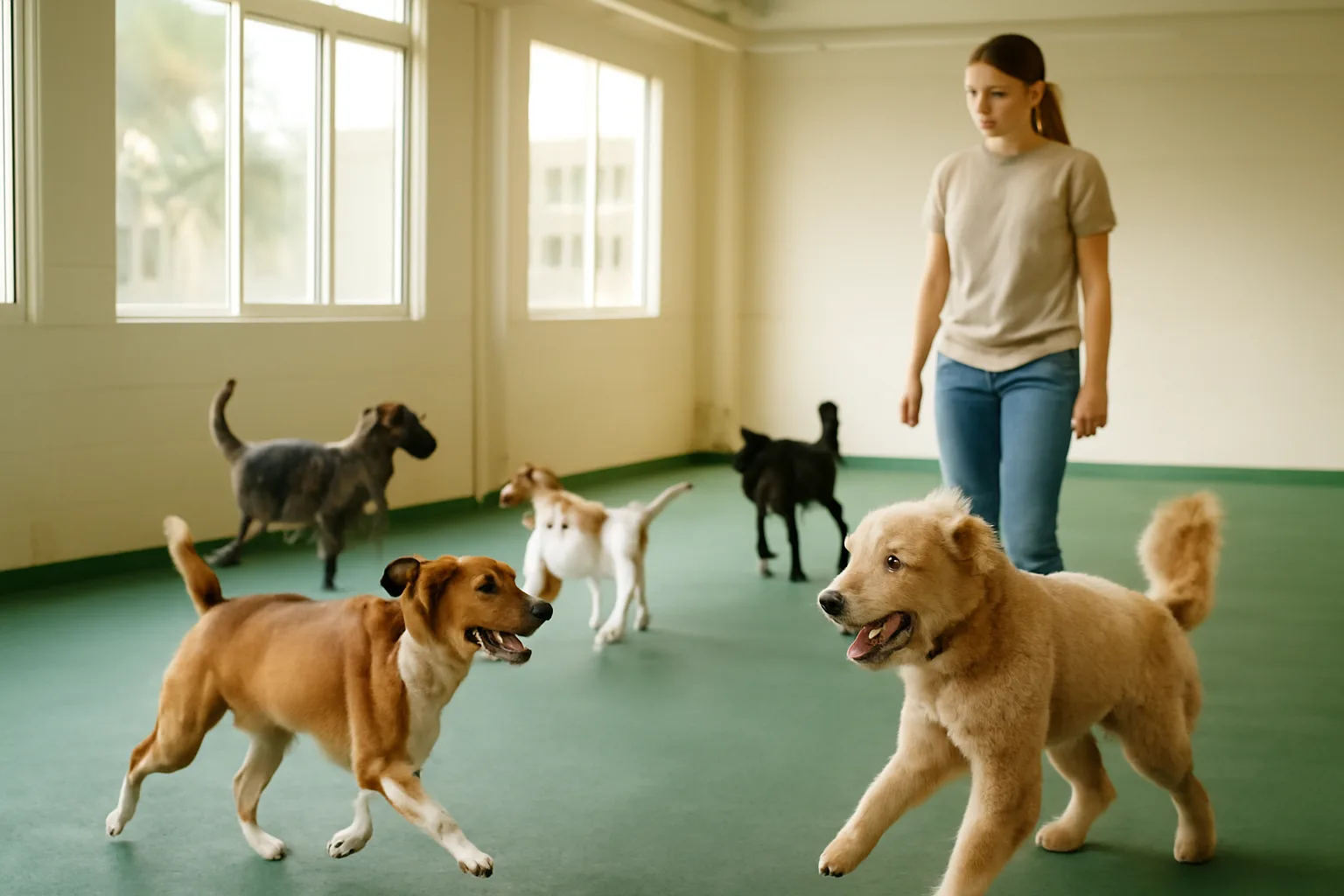
Dogtopia is a national franchise chain built around open-play dog daycare, boarding, and spa services (bathing, nail trims). The Bloomington, Minnesota location operates under that franchise model, meaning pricing, playroom layout, and camera systems (Dogtopia is known for its "Tommy Cam" live webcams) follow corporate standards even though the location is independently owned and operated like most Dogtopia franchises. If you're a pet owner, the practical questions are simple: what does a day cost, does my dog need to pass a temperament evaluation first, and can I board overnight. If you're an operator scouting the market (a lot of our readers are), the more useful questions are about the zoning class Bloomington uses for kennels, what the city requires before a facility like this can open, and how Minnesota's kennel and animal health rules apply once you cross certain dog volume thresholds. This article covers both. We'll walk through the consumer side (cost, registration, boarding basics) and then the operator side (licensing, zoning, and the USDA threshold that trips up breeders and some large boarding operations).
how much does dog boarding cost
Dog boarding costs vary a lot by region and by whether the facility offers basic overnight kenneling or full daycare-plus-boarding with play groups. Nationally, boarding runs anywhere from about $25 to $85 per night depending on the market and level of service, with upscale "dog hotel" style facilities charging more for private suites, webcams, and added playtime. In the Twin Cities metro, including Bloomington, franchise daycare-boarding combos like Dogtopia typically price a boarding night in the $50-70 range when it includes a full day of supervised play, with add-ons for extra activities, grooming, or medication administration pushing that higher. Straight daycare (no overnight stay) is usually cheaper, often $30-45 per day depending on package (single day vs. multi-day punch cards, which usually knock 10-20% off the per-day rate). A few cost drivers to know before you call around: - Play group supervision ratios (lower ratios cost more to staff, so pricing reflects that)
- Vaccine and temperament evaluation requirements (a required trial day sometimes costs less than a normal daycare day)
- Peak-season and holiday surcharges, which are common industry-wide
- Multi-dog discounts, which most boarding facilities offer If you're the one setting these prices as an operator, don't just copy a competitor's rate card. Model your actual staffing cost per play group, your square footage per dog (most states set minimum kennel space requirements you'll need to meet regardless of price point), and your no-show/cancellation policy before you publish pricing.
how to register a dog (and how is that different from getting papers)
"Registering a dog" usually means one of two very different things, and mixing them up causes real confusion for pet owners and new breeders alike. The first is government registration: getting your dog a license with your city or county animal control office. This is a legal requirement in most municipalities, tied to rabies vaccination proof, and it's what animal control uses to reunite lost dogs with owners. It has nothing to do with breed pedigree. The second is breed registry registration, meaning enrolling a dog with an organization like the American Kennel Club (AKC) so it has official pedigree "papers." That's a private, voluntary system, not a government one, and it doesn't replace your local dog license. For day-to-day pet owners in Bloomington or anywhere else, government registration (the dog license) is the one that actually carries legal weight and potential fines if skipped. Check your specific city or county's animal control page for the license fee and required documents; Minnesota leaves dog licensing to individual cities and counties rather than setting one statewide fee.
how to get a dog license
Getting a dog license is a local (city or county) process almost everywhere in the U.S., not a state or federal one. You'll typically need proof of current rabies vaccination from a licensed veterinarian, your dog's basic info (breed, age, sex, color), and a license fee that's often lower for spayed/neutered dogs. The general steps: 1. Get your dog vaccinated against rabies by a licensed vet and keep the certificate. 2. Contact your city clerk's office or county animal control to find the license application (many now allow online applications). 3. Pay the fee, which commonly ranges from about $10 to $30 annually depending on the jurisdiction and spay/neuter status, though some counties charge more for unaltered dogs specifically to encourage spay/neuter. 4. Attach or display the tag on your dog's collar. Animal control uses this tag to identify lost dogs quickly. Minnesota does not run a single statewide dog license; it's handled at the city or county level, so a Bloomington resident should check the city's own animal control or municipal code page directly rather than assume a state form applies. Bloomington's municipal code, like most Minnesota cities, sets its own licensing requirement and fee schedule under its animal control chapter [1]. Renewal is usually annual or every 1-3 years depending on the jurisdiction's rabies vaccine interval policy.
how do you get a dog papers (akc registration explained)
"Getting papers" for a dog means registering it with a breed registry, most commonly the American Kennel Club (AKC), so it has documented pedigree and can compete in AKC events or be marketed as a registered purebred. Here's how that actually works. If you bought a puppy from a breeder, the breeder should give you an AKC registration application (often called a "blue slip") at the time of purchase, assuming both parent dogs were themselves AKC registered. You complete that application, pay the AKC registration fee, and submit it to formally register the puppy in your name. If you didn't get papers at purchase, you generally cannot create pedigree papers after the fact for a dog that isn't part of a registered litter. The AKC also runs a Purebred Alternative Listing (PAL) option for dogs that appear purebred but lack papers; PAL allows the dog to participate in many AKC companion events (agility, obedience) without full pedigree registration, but it does not grant breeding or full pedigree status. Confirm current PAL eligibility rules and fees directly with AKC before assuming a dog qualifies. This matters for boarding and daycare operators too: some facilities ask for breed documentation for insurance or breed-restriction reasons, but AKC papers are not required for daycare, boarding, or state licensing purposes. Don't let a customer's confusion here turn into a policy problem: your kennel license and your customers' AKC paperwork are two completely separate systems.
how do you register a dog with a breed registry
Registering a dog with the AKC or another breed registry (like the United Kennel Club, UKC) requires that the litter itself was registered by the breeder first. You can't register an individual dog into a pedigree registry independent of its litter's registration status. The process breeders follow: register the litter with the AKC within the required time window after whelping (typically the breeder does this soon after birth), then individual puppy buyers complete and submit their own registration application (the "blue slip") to put the dog in their name. Fees are modest, generally in the range of $25-40 per dog depending on registry and whether it's done online or by mail, though exact current pricing should be checked directly with the registry since these fees change. If you're a breeder reading this because you're scaling up litters, note that breed registry paperwork is entirely separate from your state licensing and any USDA obligations. A dog can be fully AKC registered and its breeder still be out of compliance with state kennel law or federal Animal Welfare Act licensing if sales volume crosses certain thresholds, which we cover below.
how to become a dog breeder (the licensing side nobody explains clearly)
Becoming a dog breeder legally involves layers most new breeders don't expect: local zoning, state kennel/breeder licensing, and potentially federal USDA licensing, all stacked on top of each other. First, check local zoning. Many cities and counties cap the number of adult dogs allowed on a residential property before it's classified as a "kennel" requiring a conditional use permit or rezoning. This is often the first place new breeders get tripped up, not the state paperwork. Second, check your state's commercial breeder law. States vary widely: some require a state kennel or breeder license once you exceed a set number of adult female dogs or litters per year, others have no state-level breeder license at all and rely entirely on local rules plus federal oversight. Minnesota, for example, regulates commercial breeders under Minnesota Statutes Section 347.31, which defines a "commercial breeder" as a person who possesses more than five adult intact female dogs or cats and is in the business of breeding for direct or indirect sale, and requires such breeders to be licensed and inspected by the Board of Animal Health [2]. Check the current statute directly before assuming you're exempt, since definitions and thresholds can be amended. Third, check the federal threshold. The USDA's Animal Welfare Act requires a federal license from APHIS if you sell more than a certain number of dogs per year sight-unseen (i.e., without the buyer physically seeing the animal and its living conditions before purchase or pickup). Under the Animal Welfare Act regulations at 9 CFR Part 2, breeders who sell puppies wholesale, over the internet, or otherwise without an in-person meeting, and who maintain breeding females above the exempt threshold, need a USDA license and are subject to APHIS inspection [3]. The Act itself states its purpose is to "insure that animals intended for use in research facilities or for exhibition purposes or for use as pets are provided humane care and treatment" and to regulate the transportation, sale, and handling of such animals. A lot of hobby breeders never cross this line because they sell in-person to local buyers. But if you're building a wholesale, broker, or high-volume online sales model, get the federal threshold confirmed before you scale, not after an APHIS inspector shows up.
what zoning approval do bloomington-area kennels and daycares need
Zoning is usually the single biggest delay for a new boarding or daycare facility, bigger than the state license itself. Cities classify commercial kennels, dog daycares, and boarding facilities differently from ordinary pet ownership, and most require a conditional use permit (CUP) or special use permit rather than allowing them by-right in commercial zones. For a facility in Bloomington, Minnesota specifically, that means checking the city's zoning code and planning department directly for which zoning districts allow kennel or animal daycare use, and whether a CUP hearing is required. Bloomington's municipal code defines specific use categories (commercial kennel, pet daycare, veterinary clinic) that may be treated differently even on the same commercial strip [1]. What to expect at a typical zoning hearing for this use type: - Distance requirements from residential property lines (varies widely, sometimes 100-500 feet, sometimes none if fully indoor)
- Noise mitigation plans, especially for any outdoor play yards
- Parking and traffic studies for peak drop-off/pickup times
- Waste disposal and odor control plans
- Maximum dog capacity tied to square footage Don't assume a location that housed a previous pet business is automatically grandfathered for your use; zoning classifications get revisited when ownership or use type changes, and a lapse in the use (the space sitting vacant for a period) can void grandfathered status in many municipal codes. Check with Bloomington's planning division before signing a lease, not after.
what state and county licenses does a boarding or daycare facility need
| Local business license | City clerk / county clerk | General right to operate a business at that address | |
|---|---|---|---|
| Zoning/CUP approval | City or county planning department | Land use approval for kennel/daycare use | |
| State kennel or boarding license | State Dept. of Agriculture or Board of Animal Health | Facility standards, inspections, sometimes tied to dog volume thresholds | |
| Federal USDA license | APHIS (for breeders/dealers meeting AWA thresholds) | Only applies to certain breeding/wholesale operations, not typical boarding/daycare | Minnesota Statutes Section 347.31 defines the commercial breeder licensing category that the Board of Animal Health administers, and the specific license category and fee depend on your facility type and dog capacity, so confirm current requirements directly with the Board rather than relying on secondhand summaries [2]. Most straightforward boarding and daycare operations (no breeding, no wholesale sales) won't trigger the federal USDA layer at all; that's mostly a breeder and broker issue, not a boarding/daycare one, unless the facility also breeds or sells dogs. |
Beyond zoning, most states require a separate commercial kennel or boarding license issued by a state agency (often the Department of Agriculture or, in Minnesota's case, the Board of Animal Health for facilities meeting certain thresholds), plus a county or city business license. Here's a rough map of the layers, though exact requirements are state and county specific and must be confirmed directly: | Layer | Who issues it | What it typically covers |
what facility standards does a dogtopia-style daycare need to meet
Whether you're evaluating a Dogtopia franchise location or building your own competing facility, physical facility standards are where inspectors spend most of their time, and where new operators most often get flagged on their first inspection. Common items state and local inspectors check, based on typical state kennel regulations: - Minimum square footage per dog in play areas and individual kennel/rest spaces
- Flooring that's non-porous and drains properly (bare concrete without sealant is a common fail point)
- Ventilation and temperature control (many states set minimum/maximum temperature ranges for kenneled dogs)
- Fire safety and emergency evacuation plans, including after-hours staffing or monitoring
- Separate isolation space for sick or injured animals
- Sanitation schedule documentation (how often runs are disinfected and with what product)
- Staff-to-dog ratios during supervised play, which some states specify explicitly and others leave to "adequate supervision" language Franchise operators like Dogtopia build to corporate specs that usually exceed minimum state requirements (rubberized flooring, dedicated HVAC zones, and camera systems are standard across the chain), but corporate specs don't replace your obligation to get the state and local licenses; those are separate systems even inside a franchise. If you're building out a space and unsure what your state actually mandates versus what's just best practice, this is exactly the gap a kennel license and zoning packet is meant to close: it won't get you approved by itself, but it organizes what your specific state and county require so you're not guessing at your CUP hearing.
how does the usda aphis threshold work for breeders and large facilities
The USDA's Animal Welfare Act (AWA) sets the federal floor for licensing, and the key trigger is retail versus wholesale/remote sale, not simply how many dogs you own. Under the AWA regulations at 9 CFR Part 2, Subpart A, a person who breeds dogs and sells them at retail, in person, directly to the buyer, is generally exempt from needing a USDA license as a "retail pet store" seller. The license requirement kicks in for breeders and dealers who sell dogs wholesale, to brokers, or to buyers who never see the animal in person before the sale (internet and shipped sales are the classic trigger) [3]. APHIS's licensing regulations at 9 CFR 2.1 define who must obtain a license, including dealers who sell animals to another dealer, a research facility, an exhibitor, or a wholesaler, or who sell animals sight-unseen. There isn't one single magic number of dogs that applies to everyone; the threshold is about sales channel and breeding female count together, and the specific numeric thresholds are defined in the AWA regulations themselves, so check the current regulation text at 9 CFR Part 2 or contact your USDA APHIS regional office before assuming you're exempt [3]. If your business model is: local buyers meet the puppy and the parents in person before paying, you likely stay in the exempt "retail" category. If your model includes any online sales without an in-person visit, or broker/wholesale relationships, get the current threshold confirmed directly with APHIS, because being wrong here means operating without a required federal license, which carries real enforcement risk including fines and facility shutdown orders.
how boarding and daycare operators can prepare for a zoning hearing
A zoning hearing for a new kennel, boarding facility, or daycare is not the place to wing it. Planning commissions and city councils that approve conditional use permits want specifics, not intentions. What tends to move a hearing in your favor: - A written noise and odor mitigation plan, even for a fully indoor facility (commissioners ask about this reflexively)
- Traffic and parking data for your expected peak drop-off/pickup windows, ideally compared to a similar existing business
- Letters of support or at minimum no organized opposition from adjacent property owners (a lot of operators go door-knocking before the hearing)
- A clear maximum dog capacity number tied to your actual square footage, not a vague "we'll manage it" answer
- Proof you've already contacted the state licensing agency (Board of Animal Health or Dept. of Agriculture) so the commission sees this as a coordinated, compliant plan rather than a first attempt Commissions in built-out suburban areas like Bloomington tend to be more sensitive to noise and traffic concerns near residential zones than rural counties are, simply because the adjacency is tighter. Read your specific city's planning department pre-application checklist before the hearing, not the week of it; most municipal planning departments post these publicly.
dogtopia franchise vs. independent facility: what's actually different
| Zoning/CUP requirement | Same, filed by the franchisee | Same, filed by the owner | |
|---|---|---|---|
| State kennel license | Same, filed by the franchisee | Same, filed by the owner | |
| Build-out standards | Set by corporate (often above state minimums) | Owner sets, must meet at least state minimums | |
| Initial franchise fee | Often in the tens of thousands of dollars plus ongoing royalties (check current FDD) | None | |
| Brand marketing | Built-in national brand | Owner builds local reputation from scratch | Neither path removes your obligation to get local zoning approval and state licensing; that paperwork sits with whoever owns and operates the specific location, franchise or not. If you're comparing markets or facility types more broadly, pet boarding and dog hotels near me style facilities and dog kennels all fall under the same basic zoning-plus-state-license structure, even though the marketing language differs. |
If you're evaluating whether to open an independent dog boarding or doggy day care business versus buying into a franchise like Dogtopia, the licensing and zoning burden is identical either way; the franchise fee buys you brand recognition, build-out specs, and a training system, not a shortcut through your city's CUP process or your state's kennel license application. | Factor | Franchise (e.g. Dogtopia) | Independent facility |
Frequently asked questions
How much does dog boarding cost?
Dog boarding typically runs $25-85 per night nationally depending on region and service level. In Twin Cities-area franchise facilities offering daycare-plus-boarding, expect roughly $50-70 per night including supervised play, with add-ons for grooming or medication pushing costs higher. Multi-dog and multi-night discounts are common industry-wide.
How do I register a dog with my city?
Contact your city clerk or county animal control office directly. You'll need proof of current rabies vaccination from a licensed vet, your dog's basic details, and a license fee (commonly $10-30 annually, often less for spayed/neutered dogs). Minnesota handles dog licensing at the city/county level, not statewide, so check your specific municipality's page.
How do you get a dog papers?
Your dog's breeder should provide an AKC registration application (the 'blue slip') at purchase if both parents were AKC registered. You complete it and submit it with a fee to register the puppy in your name. If you never received this at purchase, you generally can't retroactively create full pedigree papers; AKC's PAL program is an alternative for companion events only.
How do you register a dog with the AKC?
Breeders register the litter with the AKC after whelping, then individual buyers complete and submit their own registration application to put the dog in their name, paying a modest registration fee (typically in the range of $25-40, verify current pricing with AKC directly). You can't register a dog independently of its litter's registration status.
How to become a dog breeder legally?
Check local zoning first (many areas cap adult dogs before requiring a kennel permit), then check your state's commercial breeder licensing law if one exists, then check the federal USDA/APHIS threshold under the Animal Welfare Act, which applies mainly to wholesale or sight-unseen sales. All three layers can apply simultaneously.
How do I get a dog license?
Get proof of current rabies vaccination from a licensed vet, then apply through your city or county animal control office (many offer online applications). Fees commonly range from $10-30 annually, often discounted for spayed/neutered dogs. This is separate from breed registry 'papers' and is a legal requirement in most municipalities.
How do I get papers for my dog if I already own it?
If your dog wasn't registered as part of a litter at birth, you generally cannot create full pedigree papers after the fact. The AKC's Purebred Alternative Listing (PAL) program lets purebred-appearing dogs without papers compete in many companion events, but it doesn't grant breeding or full pedigree status.
Does Dogtopia require vaccination records before daycare or boarding?
Franchise daycare and boarding facilities like Dogtopia typically require proof of core vaccinations (rabies, distemper/parvo, bordetella) plus a temperament evaluation day before regular admission. Exact requirements are set by the individual location, so confirm directly with the specific Bloomington, MN facility before your dog's first visit.
What's the difference between a kennel license and AKC registration?
A kennel license is a government permit (state and/or local) allowing you to legally operate a boarding, breeding, or daycare facility, tied to facility standards and inspections. AKC registration is a private, voluntary pedigree system with no legal operating authority. A facility can be fully licensed with zero AKC-registered dogs on site, or vice versa.
How many dogs can I breed before I need a USDA license?
There's no single universal number; the trigger is largely about sales channel. Retail sellers who meet buyers in person before the sale are generally exempt from USDA licensing under 9 CFR Part 2. Wholesale, broker, or sight-unseen (internet/shipped) sales above the regulatory threshold require a USDA APHIS license under the Animal Welfare Act. Confirm current thresholds directly with APHIS.
Do I need a zoning permit to open a dog daycare in Bloomington, MN?
Almost certainly yes. Most cities, including Bloomington, classify commercial dog daycare and kennel use separately from general commercial use and require a conditional use permit or special use permit. Check the City of Bloomington's planning and zoning division directly before signing a lease.
Is a Dogtopia franchise exempt from state kennel licensing?
No. Franchise status doesn't exempt a location from state kennel/boarding licensing or local zoning approval. The franchisee, as the business owner, is responsible for securing the same state and local licenses any independent facility would need, though corporate build standards often exceed state minimums.
Sources
- City of Bloomington, MN - Municipal Code, Animal Control Chapter: Bloomington sets its own dog licensing requirement and fee schedule under its municipal animal control code, consistent with Minnesota's city/county-level licensing approach
- Minnesota Statutes Section 347.31 - Commercial Breeders: Minnesota regulates commercial dog and cat breeders under state statute administered by the Board of Animal Health, defining a commercial breeder as a person with more than five adult intact female dogs or cats used for breeding and sale
- 9 CFR Part 2, Subpart A - Licensing (Animal Welfare Act regulations): USDA APHIS licensing requirements for dealers under the Animal Welfare Act regulations, including sight-unseen and wholesale sales triggers
- Electronic Code of Federal Regulations: Defines terms and licensing requirements under the Animal Welfare Act relevant to dog breeders
- Minnesota Statutes: Outlines requirements for dog licensing tags and enforcement in Minnesota
- American Kennel Club: Describes AKC breeder standards and best practices relevant to becoming a licensed dog breeder