Last updated 2026-07-24
TL;DR
Dogtopia Birmingham operates as a franchised daycare, boarding, and grooming facility; national Dogtopia rates for full-day daycare typically run $35-$50, with boarding higher. Alabama has no statewide kennel license, so Birmingham operators need a business license, Jefferson County zoning approval, and often a health department sign-off. This article covers those steps plus the licensing, breeder, and registration questions people search alongside it.
What is Dogtopia Birmingham and what services does it offer?
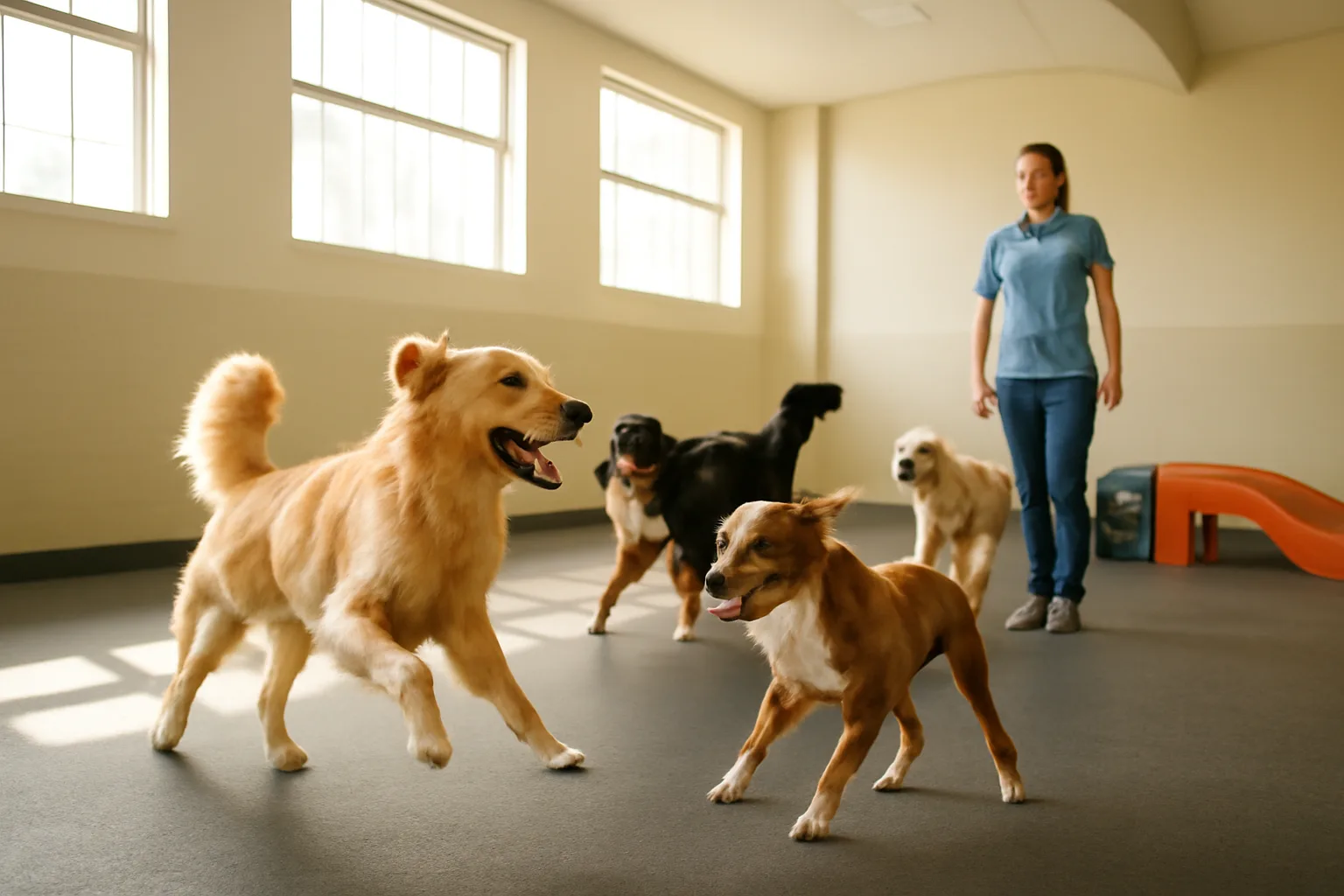
Dogtopia is a national franchise chain built around open-play dog daycare, and the Birmingham location follows the same model as its roughly 250+ locations across North America. That means large open playrooms with rubberized flooring, live webcams so owners can check in on their dogs during the day, daycare-based boarding (dogs board in the same play environment rather than isolated kennel runs), and add-on spa or grooming services. The franchise's core pitch is that daycare isn't a side offering, it's the main product, and boarding customers get folded into the daycare population rather than sitting in a back kennel all day. That's a real point of differentiation from a traditional boarding kennel, where dogs might spend most of their day in a run with a couple of short group play sessions. If you're researching Dogtopia Birmingham because you're a pet owner, the practical questions are cost, availability, and vaccine requirements (typically bordetella, rabies, and DHPP, sometimes canine influenza depending on the location's policy). If you're researching it because you're an operator thinking about opening a competing facility or a franchise of your own, the real substance is in licensing, zoning, and facility standards, which is where the rest of this article goes.
How much does dog boarding cost?
| Basic kennel/run | $25-$40 | Traditional indoor-outdoor run, limited play time | |
|---|---|---|---|
| Daycare-based boarding (Dogtopia-style) | $40-$65 | Dogs join daycare play groups during the day | |
| Luxury suite boarding | $50-$85+ | Private suite, webcam, premium amenities | |
| In-home pet sitting | $30-$75 | Varies by sitter experience and region | These ranges come from general pet-industry cost surveys rather than a single government source, since boarding pricing isn't regulated or centrally tracked anywhere. Always get a written quote before booking. |
Dog boarding costs vary enormously by region and by whether you're looking at a big-box franchise, an independent facility, or in-home pet sitting. National averages from pet-industry sources put traditional boarding kennel rates around $30 to $50 per night for a standard run, with upscale or 'luxury' suite boarding running $50 to $85+ per night. Daycare-style boarding franchises like Dogtopia tend to price nightly boarding as daycare plus an overnight fee, often landing in a similar $40 to $65 range depending on the market. Birmingham-area independent kennels and franchise locations generally track a bit under national coastal-market averages, since Alabama's overall cost of living and commercial rents run lower than the coasts. Expect standard daycare in the $25 to $40 per day range and overnight boarding in the $35 to $60 per night range at most metro Birmingham facilities, though you should always confirm current pricing directly with any specific location since rates change and vary by dog size. Here's a rough comparison of boarding cost tiers nationally: | Boarding type | Typical nightly rate | Notes |
How much is dog boarding at Dogtopia specifically?
Dogtopia doesn't publish a single national price list because pricing is set at the franchise-owner level and varies by location, dog size, and membership plan. Most Dogtopia locations offer daycare passes (single-day, 5-day, 10-day, and monthly unlimited packages) and separate boarding rates that bundle a night's stay with a full daycare day. As a rough national pattern, single-day daycare tends to fall in the $35-$50 range, with meaningful discounts (often 15-30% per visit) on multi-day packages or unlimited monthly memberships. Overnight boarding typically adds $15-$30 on top of the daycare rate for the overnight portion. The only way to get an accurate current price for the Birmingham location is to call the store directly or check its page on the corporate Dogtopia site, since franchise owners set their own rates and packages. If you're comparing Dogtopia Birmingham to other dog boarding options in the metro area, ask each facility for their current rate sheet in writing, since verbal quotes over the phone sometimes miss add-on fees for vaccines, medication administration, or peak-season surcharges.
Does Alabama require a state kennel license to operate a facility like this?
No. Alabama does not have a statewide kennel licensing law that applies to commercial boarding, daycare, or grooming facilities the way some states do. The Alabama Department of Agriculture and Industries regulates dog and cat dealers under the state's Dog and Cat Dealer/Breeder statute (Ala. Code Title 3), but that statute is aimed at breeders and dealers selling animals, not boarding or daycare operators. That means a facility like Dogtopia Birmingham operates primarily under local business licensing and zoning rules rather than a state kennel permit. This is a meaningful difference from states like Pennsylvania or New Jersey, which run dedicated statewide kennel license programs through their departments of agriculture. What Alabama operators do need: a Birmingham (or Jefferson County) business license, compliance with any local animal control ordinance governing commercial kennels or 'kennel' zoning classifications, and in many cases a health inspection if the business offers grooming or food-adjacent services. If you plan to breed and sell dogs in addition to running boarding or daycare, that triggers separate state and possibly federal rules, covered further down.
What zoning and local approvals does Jefferson County or Birmingham require?
Zoning is where most new boarding and daycare operators actually get stuck, not state licensing. Birmingham's zoning ordinance classifies commercial kennels and animal boarding facilities under specific use categories, and whether your address allows that use depends entirely on the underlying zoning district. In practice, that means checking with the City of Birmingham Planning, Engineering and Permits department (or Jefferson County's planning office if you're outside city limits) before signing a lease. A location zoned for general commercial or light industrial use might allow a kennel outright; a location in a neighborhood retail district might require a conditional use permit or a variance hearing in front of the zoning board of adjustment. Common zoning conditions attached to boarding/daycare approvals include sound attenuation requirements (to address barking complaints), minimum distance from residential property lines, outdoor exercise area screening or fencing, and limits on hours of outdoor animal access. If your building sits near a school, church, or residential zone, expect extra scrutiny and possibly a public notice/comment period before approval. This is exactly the kind of process where operators waste months by assuming zoning approval is a formality. It usually isn't. Pull the zoning classification for your specific parcel first, then talk to planning staff about the use category, before you spend money on buildout. If you want a structured starting point for organizing the zoning-hearing documentation, application checklist, and local contact list, that's what the $149 Kennel License & Zoning Packet is built for; it's a self-serve document organizer, not representation before any board.
How do you register a dog in Alabama or Jefferson County?
Registering a dog in Alabama usually means two separate things: rabies vaccination registration (a state and county public health requirement) and a local dog license or tag, which some Alabama counties and municipalities require and others don't. Most Alabama counties require rabies vaccination for dogs over a certain age (commonly 3-4 months) under state rabies control law, administered through licensed veterinarians who then report to local health departments. Some cities and counties additionally require a dog license or tag purchase, often tied to proof of current rabies vaccination, with fees typically in the $5-$20 per year range where they exist, though this varies by jurisdiction and isn't universal across Alabama. To register your dog: get the rabies vaccine from a licensed vet, keep the certificate, then check with your specific city or county clerk's office or animal control department to see if a local license/tag is also required and what it costs. Jefferson County residents should confirm requirements directly with Jefferson County Animal Control since municipal rules inside Birmingham can differ from unincorporated county areas.
How do you get a dog license, and is it different from registration?
A 'dog license' and 'dog registration' often refer to the same local process, but the terminology varies by jurisdiction. In places that use the term 'dog license,' it's usually a municipal or county requirement, separate from state rabies law, that requires owners to purchase an annual or multi-year tag proving the dog is vaccinated and accounted for. Not every Alabama city or county runs a dog license program. Where they exist, the process is typically: prove current rabies vaccination, pay the fee at the county revenue office or animal control office, receive a tag to attach to the collar. Some jurisdictions offer discounted rates for spayed/neutered dogs as an incentive. The honest answer for Birmingham-area readers is that requirements differ by whether you're inside city limits or in unincorporated Jefferson County, and the licensing office (city clerk vs. county revenue commissioner vs. animal control) also varies. Call your specific municipal office rather than assuming a statewide rule applies, because Alabama does not run a single centralized dog licensing system the way, for example, some states with statewide pet registries do.
How do you get papers for a dog, and what does 'papers' actually mean?
'Papers' almost always means registration with a breed registry, most commonly the American Kennel Club (AKC), that documents a dog's pedigree, meaning its parentage and breed lineage. Getting papers is not a government process at all; it's private registry paperwork, distinct from any city, county, or state licensing requirement. To register a purebred puppy with AKC, the litter's breeder typically registers the litter first (submitting the sire and dam's registration numbers and a litter registration application with fees), and then individual puppy buyers complete individual registration using the paperwork the breeder provides [1]. If you bought a puppy from a breeder who is not AKC-registered, or from a breeder who didn't register the litter, you generally cannot get retroactive 'papers' unless you can document the parentage independently, which is difficult and not guaranteed to be accepted. If you already own a dog and want to know how to get papers for your dog after the fact, the honest answer is: it depends entirely on whether the breeder registered the litter and gave you the individual registration form (often called a 'blue slip' in AKC terms). Without that documentation from the original breeder, there generally isn't a path to full AKC pedigree registration, though some dogs can be registered through AKC's Purebred Alternative Listing/Indefinite Listing Privilege program if they appear purebred but lack documented papers, which allows entry into companion events but not conformation showing [2].
How can I get papers for my dog if I don't have breeder documentation?
If the breeder never gave you registration paperwork, your options are limited but not zero. First, contact the breeder directly, since sometimes litters are registered late or the paperwork was simply never handed over. Second, check whether the breeder is listed with AKC at all; you can search by kennel name or contact AKC customer service to ask if a specific litter was registered [1]. If there's truly no registration trail, AKC's Purebred Alternative Listing (PAL) program, formerly called ILP, lets dogs that appear to be purebred (based on photos and a vet exam) get a PAL number, which allows entry into obedience, agility, rally, and other companion events, but not conformation dog shows, and does not establish a documented pedigree [2]. This is the realistic path for most people asking 'how can I get papers for my dog' after the fact. What papers do not affect: your dog's eligibility for local licensing, rabies vaccination requirements, or boarding/daycare admission at facilities like Dogtopia. Boarding facilities care about vaccine records and behavior, not pedigree documentation.
How do you become a dog breeder legally?
Becoming a legal dog breeder in the US involves layered rules: federal, state, and local, and which ones apply depends heavily on how many dogs you breed and whether you sell direct-to-buyer or through a broker/pet store. At the federal level, USDA APHIS requires a license under the Animal Welfare Act if you breed dogs for wholesale, meaning you sell to pet stores, brokers, or research facilities, or if you sell dogs sight-unseen (i.e., the buyer never physically visits your facility before purchase) and you have more than 4 breeding females, with limited exceptions . Retail breeders who sell directly to the public, where buyers visit in person, are generally exempt from federal licensing regardless of how many litters they produce, per the 2013 'Retail Pet Store Rule' definition . At the state level, Alabama's Dog and Cat Dealer/Breeder law under Title 3 of the Alabama Code governs dealers and breeders who sell or deal in dogs, with the Alabama Department of Agriculture and Industries administering permits and inspections for covered dealers. Whether a given hobby breeder is covered depends on sales volume and method; check directly with the state department of agriculture for a current determination rather than assuming exemption. At the local level, Jefferson County or Birmingham may have separate rules about how many dogs a residential property can keep before it's classified as a kennel use requiring zoning approval, entirely apart from any breeding-specific license. Realistically, becoming a legitimate breeder means: confirm your USDA threshold status, register with the state ag department if you meet their dealer/breeder definition, confirm your property's zoning allows the number of adult dogs you intend to keep, and set up a vet relationship for health testing and vaccination records before you place your first litter.
When do breeders cross the USDA licensing threshold?
| 4 or fewer breeding females, any sales method | Generally no | |
|---|---|---|
| 5+ breeding females, all sales in-person | Generally no (retail exemption) | |
| 5+ breeding females, any sight-unseen sales | Yes, Class A/B license required | |
| Selling to brokers or pet stores (wholesale) | Yes, regardless of female count | If you're unsure which side of the line you fall on, APHIS's Animal Welfare Act licensing page walks through the definitions in detail, and it's worth reading directly rather than relying on secondhand summaries, since the sight-unseen distinction is the part people misunderstand most . |
The USDA Animal Welfare Act licensing threshold for dog breeders hinges on two factors together: how many breeding females you have, and whether buyers see the animal and its housing in person before purchase. APHIS's own guidance states that a person who has more than four breeding female dogs and sells any offspring sight unseen (i.e., without the buyer physically visiting the premises) needs a Class A (breeder) or Class B (dealer) license . Breeders who sell exclusively face-to-face, where the buyer physically comes to see the puppy and the facility before purchase, generally fall under the retail exemption regardless of how many females they keep, per the Retail Pet Store Rule finalized in 2013 . This is why some larger-volume breeders never need a federal license (they sell only in person) while a much smaller breeder shipping puppies sight-unseen to out-of-state buyers can trigger the requirement with just five breeding females. Here's the threshold picture in table form: | Factor | Triggers USDA license? |
What facility standards apply once you're USDA-licensed?
Once a breeder or dealer crosses the USDA threshold, the Animal Welfare Act regulations (9 CFR Parts 1-3) set minimum standards for housing, sanitation, veterinary care, exercise, and record-keeping . These include specific space formulas for enclosures based on the dog's size, requirements for climate control within defined temperature ranges, and mandated veterinary care programs with a named attending veterinarian. APHIS inspects licensed facilities, and inspection reports are public record, searchable through APHIS's Animal Care Information System. A pattern of repeat noncompliant items in inspection reports is one of the fastest ways a breeding operation loses its license or faces enforcement action, so treating the standards as a compliance floor rather than an aspiration matters. If you're planning a facility that combines breeding with boarding or daycare, like some larger operations do, you're stacking USDA facility standards on top of whatever state and local kennel or zoning rules apply, and the paperwork burden compounds. This is a common blind spot: a facility that's fine for boarding zoning might not meet USDA space or ventilation standards for breeding females, and vice versa.
How does Dogtopia Birmingham compare to independent facilities?
Franchise daycare/boarding operations like Dogtopia typically compete on consistency and brand recognition rather than lowest price. You get a known evaluation process, standardized playgroup protocols, and a webcam system across every location, which independents don't always match. Independent Birmingham-area kennels and daycares sometimes undercut franchise pricing and may offer more flexible boarding formats (private runs instead of open-play-based boarding, which matters for dogs that don't do well in group settings). If your dog has reactivity issues, resource guarding, or just doesn't enjoy constant group play, an open-play franchise model isn't automatically the right fit regardless of brand reputation. For operators studying the market rather than pet owners choosing a provider, the comparison that matters most is: franchise fees and territory protection versus the flexibility of building an independent brand. Franchise agreements typically include ongoing royalty percentages, mandated buildout specs, and territory restrictions that a from-scratch pet boarding or doggy day care business avoids, at the cost of not having a recognized name on day one. Neither path skips the local zoning and licensing steps described above; a franchise agreement doesn't substitute for a zoning approval or a business license.
What should a new Birmingham-area operator do first?
Start with zoning, not licensing. Alabama's lack of a statewide kennel license means the single biggest approval risk for a new boarding, daycare, or breeding facility is local zoning, not a state agency permit. Confirm the parcel's zoning classification with Birmingham Planning, Engineering and Permits or Jefferson County's planning department before signing a lease or committing to a location . Second, figure out which state rules actually apply to your business model. Pure boarding/daycare operators generally deal with business licensing and health/zoning compliance only. Breeders need to check both the Alabama Department of Agriculture and Industries' dealer/breeder rules and the USDA sight-unseen threshold described above . Third, build your documentation packet before you walk into a zoning hearing or apply for a business license: site plan, proposed hours, noise mitigation plan, parking plan, and any letters of support from neighboring businesses. Zoning boards respond better to applicants who show up prepared with specifics than to applicants who show up asking what's required. If you want a starting template for organizing that packet across zoning, business licensing, and (if relevant) state breeder documentation, the Kennel License & Zoning Packet is a $149 one-time tool built for exactly that gap; it organizes the document checklist and local contact research, it doesn't file anything on your behalf or represent you before a board. Finally, compare your build-out plan against facility standards commonly required by insurers and franchise systems even where state law is silent, since insurance underwriters for kennel and daycare businesses often impose their own space, fencing, and fire-safety requirements regardless of what the state or county mandates.
Frequently asked questions
How much does dog boarding cost per night?
Nationally, traditional kennel boarding runs about $30-$50 per night, and upscale suite boarding runs $50-$85 or more, based on general pet-industry pricing surveys [2]. Metro Birmingham facilities tend to price a bit lower, often $35-$60 per night. Daycare-based boarding franchises like Dogtopia typically bundle a daycare-day rate plus an overnight fee, landing in a similar range. Always confirm current pricing directly with the facility.
How much is dog boarding at Dogtopia Birmingham specifically?
Dogtopia doesn't publish one national price list since franchise owners set local rates. National patterns suggest single-day daycare around $35-$50 and overnight boarding adding roughly $15-$30 on top. Call the Birmingham location directly or check its page on Dogtopia's corporate site for current, location-specific pricing and package discounts.
How do you register a dog in Alabama?
Get a rabies vaccination from a licensed veterinarian (required for dogs typically over 3-4 months old under state rabies control rules), keep the certificate, and then check with your specific city or county for any additional local dog license or tag requirement, since Alabama has no single statewide dog registration system [4].
How do you get a dog license?
Where a local dog license program exists, you typically bring proof of current rabies vaccination to your city clerk's office, county revenue office, or animal control department, pay the annual fee (often $5-$20 where charged), and receive a tag. Not every Alabama jurisdiction runs a license program, so confirm with your specific city or county first.
How do you get papers for a dog?
'Papers' means breed registry documentation, most commonly through the American Kennel Club, not a government process. The breeder registers the litter and gives individual buyers a registration form to complete. Without that original breeder paperwork, retroactive full pedigree registration generally isn't available, though AKC's Purebred Alternative Listing program offers a limited path for companion events [6].
How can I get papers for my dog if the breeder never gave me any?
Contact the original breeder first; sometimes litters get registered late. If that fails, check AKC's Purebred Alternative Listing (formerly ILP) program, which lets dogs that appear purebred get a listing number for companion events like agility and obedience, based on photos and a vet exam, though it doesn't create a documented pedigree or allow conformation showing [6].
How do you become a dog breeder legally?
Confirm whether you cross the USDA sight-unseen sales threshold (generally 5+ breeding females plus any sales without an in-person buyer visit) [7], check Alabama's dealer/breeder rules under Title 3 with the state Department of Agriculture and Industries [3], and confirm your property's zoning allows the number of dogs you plan to keep before placing your first litter.
Does Alabama require a state kennel license for boarding or daycare facilities?
No. Alabama has no statewide kennel licensing program for boarding, daycare, or grooming operators. The state's Title 3 dealer/breeder law targets animal dealers and breeders, not boarding facilities. Boarding and daycare operators primarily need local business licensing and zoning approval instead.
What zoning approval does a boarding or daycare facility need in Birmingham?
It depends on the parcel's existing zoning classification. Some commercial or light-industrial zones allow kennel/boarding uses outright; others require a conditional use permit or a zoning board of adjustment variance. Check with Birmingham Planning, Engineering and Permits or Jefferson County's planning office before leasing a location.
When does a breeder need a USDA license?
Generally when a breeder has more than 4 breeding female dogs and sells any puppies sight-unseen, meaning without the buyer visiting the facility in person, per APHIS's Animal Welfare Act licensing rules [7]. Breeders selling exclusively face-to-face typically fall under the retail exemption regardless of how many females they keep [8].
Is Dogtopia a boarding kennel or a daycare?
Both. Dogtopia's core model is open-play daycare, and its boarding option places overnight dogs into the same daycare play groups during the day rather than isolating them in traditional kennel runs overnight-only. This differs from a classic boarding kennel where dogs spend most of the day in individual runs.
What vaccines does a dog need for daycare or boarding admission?
Most daycare and boarding facilities, including franchise chains like Dogtopia, require proof of rabies, DHPP (distemper/parvo combo), and bordetella (kennel cough) vaccination at minimum, with some facilities also requiring canine influenza vaccination depending on regional outbreak history. Requirements vary by facility, so confirm directly before booking.
Can a breeder operate under the USDA retail exemption in Alabama?
Yes, if all sales happen face-to-face with the buyer physically present at the breeder's facility before purchase, per the federal Retail Pet Store Rule definition [8]. That federal exemption doesn't automatically exempt the breeder from Alabama's separate state dealer/breeder rules under Title 3, which have their own criteria [3].
Sources
- USDA APHIS, Retail Pet Store Rule (2013): Breeders selling dogs exclusively face-to-face to buyers who visit in person generally qualify for the retail pet store exemption from federal licensing
- USDA APHIS, Animal Welfare Act regulations, 9 CFR Parts 1-3: Licensed breeding and dealing facilities must meet federal housing, sanitation, veterinary care, and record-keeping standards under 9 CFR Parts 1-3
- eCFR: Requirement to obtain a USDA license before engaging in certain animal-related business activities
- eCFR: Facility standards (housing, sanitation, space requirements) that apply once a breeder is USDA-licensed
- Alabama Department of Public Health: Alabama state regulations governing kennel and animal facility licensing requirements