Last updated 2026-07-25
TL;DR
There's no one number. Most cities and counties let you keep 3-5 dogs before you need a kennel license, and beyond that the license itself usually has no fixed dog cap, just building and space limits set by your local zoning and health codes. Boarding kennels and breeders scale by square footage and USDA thresholds, not a headcount written into the license.
How many dogs can you have with a kennel license?
The honest answer is: it depends entirely on your city or county, and there is no federal number that governs household or small-scale kennel dog counts. Most municipal codes set a "pet limit" (commonly 2 to 4 dogs) that triggers a kennel license requirement once you go over it, but the license itself rarely states a hard maximum. Instead, once you're licensed as a kennel, your actual dog count gets capped indirectly by things like square footage per dog, noise ordinance limits, waste disposal capacity, and your zoning district's conditional use permit. For example, some counties cap home kennels at 10 dogs regardless of license status, while unincorporated areas or agriculturally zoned parcels may allow 20, 50, or more with a commercial kennel permit. A breeder in a rural county zoned agricultural could hold a state kennel license covering 40 breeding females, while a boarding facility in a light industrial zone might have a fire-code occupancy limit that works out to 60 dogs at once, unrelated to any stated "kennel license" number. So the real question isn't "what does a kennel license say," it's "what does my zoning district, my county animal control ordinance, and (if I'm breeding or shipping dogs) USDA APHIS require, layered on top of each other." Those three things together set your practical ceiling, not a single line item on a license application.
What number of dogs triggers a kennel license in most places?
Most municipalities set the trigger between 3 and 5 dogs per household before you're legally considered a "kennel" and need a separate license. Anne Arundel County, Maryland, for instance, defines a kennel as any place keeping more than 4 dogs over four months old [1]. Many other counties use a similar 4-dog or 5-dog threshold, though a few rural counties set it as high as 6 or don't regulate household numbers at all outside city limits. If you're at 3 dogs and thinking about adding a 4th, check your specific municipal code before assuming you're fine. Some cities count puppies under a certain age (often 4 or 6 months) separately from adults, so a litter doesn't automatically push you into kennel territory. Others count every dog on the property regardless of age. This threshold matters because it's the difference between a simple annual dog license (a tag, a rabies cert, a small fee) and a full kennel license application that can involve site plans, neighbor notification, and a zoning hearing. If you're planning a boarding or daycare business rather than just owning more personal pets, you'll need the commercial kennel license track no matter how many dogs you currently have, because it's the business use that triggers zoning review, more than the count. For readers comparing dog boarding as a business model against a private multi-dog household, the zoning path is completely different even if the eventual dog count looks similar on paper.
Does a kennel license set a maximum number of dogs?
Sometimes, but not usually as a flat number on the license certificate itself. More often the cap comes from a conditional use permit tied to the license, and that cap is calculated from things like lot size, distance from property lines, or square feet of indoor/outdoor space per dog. A common facility standard structure looks like this: a minimum number of square feet per dog for primary enclosures, scaled by dog size, under standards similar to those in USDA's Animal Welfare Act regulations for licensed dealers (9 CFR Part 3), which set minimum space by measuring from the dog's nose to the base of its tail, adding 6 inches, squaring that, and dividing by 144 to get required square feet, then adding 6 inches of headroom above the dog's head [2]. States and counties frequently borrow this formula or something close to it for their own facility standards, even for kennels that never cross the federal USDA threshold. So two facilities with identical kennel licenses in different counties could legally hold very different numbers of dogs, because one has 2,000 square feet of usable kennel space and the other has 8,000. The license authorizes the use; the physical building and your local facility code set the actual number.
When does the USDA get involved, and does that change my dog limit?
USDA APHIS licensing kicks in based on how you sell dogs and to whom, not simply how many you own. Under the Animal Welfare Act, if you sell dogs at wholesale to pet stores, brokers, or research facilities, or if you sell dogs sight unseen (online, by phone, or through a photo) without the buyer physically meeting the dog and its living conditions before purchase, you generally need a USDA Class A or Class B license [3]. A hobby breeder who sells all puppies in person, and keeps 4 or fewer breeding females, is typically exempt under the "retail pet store" exclusion carved out by the 2013 rule change, which set that 4-female threshold explicitly [4]. That means the USDA doesn't give you a dog count ceiling either. It sets a threshold for whether you need a federal license at all, and once you're licensed, your actual number of adult breeding dogs is governed by your facility's ability to meet 9 CFR Part 3 space, sanitation, veterinary care, and exercise standards, which get checked at inspection. For operators who cross state lines to sell dogs, or plan to sell to brokers, budget real time for this. USDA license applications require a facility inspection before the license issues, and APHIS reports processing times that can run several weeks to a few months depending on region and inspector availability [3]. Breeders should read our guide on dog kennels for how state and federal requirements stack together.
How do state kennel licenses differ from county limits?
| City/county pet limit ordinance | Household dog ownership | Sets 3-5 dog trigger for "kennel" status |
|---|---|---|
| County zoning / conditional use permit | Where and how large a commercial kennel can be | Sets actual practical cap via lot size, setbacks, space-per-dog |
| State kennel/dealer license | Business licensing, inspections, recordkeeping | Rarely sets a hard number; enforces facility standards |
| USDA APHIS license | Interstate/wholesale/sight-unseen dog sales | Sets a 4+ breeding female threshold for license requirement, not a max |
States generally license the operation type (commercial kennel, pet dealer, boarding facility, breeder) and set facility, health, and recordkeeping standards. Counties and cities layer zoning on top: where you can operate, how many dogs your specific parcel supports, setback distances from property lines, and whether neighbors get a say through a public hearing. A state might issue you a commercial kennel license with no numeric dog cap written on it at all, deferring entirely to your county's zoning approval for the actual number. New York, for example, requires a license for any dog dealer or pet dealer under Agriculture and Markets Law but administers facility standards through licensing regulation rather than fixing a statewide headcount [5]. Meanwhile your county zoning board decides whether your property, in your specific district, supports 15 dogs or 150. This two-layer system is exactly why so many new operators get surprised. You can hold a valid state kennel license and still be denied the ability to operate at your desired capacity because your zoning hearing didn't go your way, or because your county requires a separate conditional use permit renewal every 1-3 years that re-evaluates your dog count based on complaint history. | Layer | What it controls | Typical dog number impact |
How do I get a dog license for my pet?
A basic dog license is separate from a kennel license and is required almost everywhere for individually owned pets, usually through your county clerk, county treasurer, or local animal control office. You'll typically need proof of current rabies vaccination, your dog's basic description, and a small annual or multi-year fee, often $10 to $25 for a spayed/neutered dog and somewhat higher for an intact dog in counties that charge a differential rate to encourage spay/neuter [6]. Most counties process this same-day at the counter or within a couple weeks by mail. Renewal is annual in most jurisdictions, tied to your rabies vaccination expiration date. If you move states, you generally need to re-register within a window set by your new county (often 30 days), even if your old license is still technically valid. This is a completely different process from a kennel license application, which involves zoning review and often a public hearing. Don't confuse the two when you're budgeting time or money for a multi-dog operation.
How do you get papers for a dog, and what does that actually mean?
"Papers" almost always means AKC registration papers or another breed registry's pedigree documentation, not a government license. If you're asking how to get papers for a dog you already own, it depends on the situation: If your dog's parents were both AKC registered and the litter was registered by the breeder, you should have received an AKC Registration Application at the time of purchase or adoption. You complete and submit that to register the individual dog under your name. If the breeder never registered the litter and both parents are AKC registered, the breeder can still apply for litter registration retroactively, though there are time-based fee increases the longer you wait after the puppy's birth. If you don't know your dog's parentage at all (a shelter dog or one bought without documentation), you generally cannot get standard AKC papers, because registry papers document verified lineage, more than breed appearance. AKC does offer a Purebred Alternative Listing (PAL) program, which lets purebred dogs without papers get an ID number for participation in some AKC events like agility and obedience, but PAL is explicitly not full registration and doesn't establish breeding rights or pedigree status [7]. So if you're asking "how do I get papers for my dog" because you want to breed it, understand that papers document ancestry that either exists on record or doesn't; they aren't a certificate you can apply for independent of lineage.
How do you register a dog, step by step?
There are two entirely separate meanings of "register a dog," and mixing them up wastes time. One is government registration (your local dog license), and the other is breed registry registration (AKC or similar). For government registration: contact your county's animal control or treasurer's office (search "[your county] dog license"), bring or upload proof of rabies vaccination, pay the fee, and get your tag. This is required for pet ownership in most jurisdictions and is separate from any breeding or business activity. For breed registry registration: if you bred the litter yourself and both parents are registered with the same registry, you file a litter registration application with that registry (AKC, UKC, or others), then individual owners complete individual registration for each puppy. If you're buying a puppy from a breeder, ask before purchase whether registration is included and already filed, since some contracts limit registration ("limited registration" restricts breeding rights even though the dog is AKC registered). Neither of these processes has anything to do with your kennel license or dog count limits. They can happen in parallel with zoning applications but are administratively unrelated.
How do I become a licensed dog breeder?
Start by figuring out which threshold applies to you, because the requirements stack in layers and skipping the assessment step is the single most common mistake new breeders make. First, check your state's definition of a commercial breeder or kennel, since many states set their own numeric threshold (often based on number of adult intact females or litters per year) independent of USDA rules. Second, check whether you cross the federal APHIS threshold: if you sell wholesale, sell to brokers or pet stores, or sell any puppy without the buyer meeting the dog and inspecting the premises in person, you likely need a USDA license regardless of how few dogs you keep [3]. Third, check your county zoning, since breeding multiple litters per year on a residential lot can require a conditional use permit even if neither your state nor USDA requires a license at your scale. Once you know which licenses apply, the practical steps are: register your kennel name and business entity if required, pass a facility inspection (state or USDA, or both), maintain veterinary care and vaccination records for every breeding dog, and keep sales and litter records for whatever retention period your state or USDA requires (USDA requires records be kept for at least 1 year after the animal's disposition under 9 CFR 2.75 [8]). Many new breeders underestimate how long the zoning piece takes. Building your facility before your conditional use permit is approved is a common and expensive mistake; boards can and do deny permits after construction is underway. If you're assembling this paperwork yourself, a structured kennel license and zoning packet, like the $149 one-time packet at our license packet builder, can help you organize state license forms, zoning hearing materials, and facility documentation in the order your county actually wants to see them, though it doesn't replace legal advice or guarantee approval.
How much does dog boarding cost, and does dog count affect price?
Dog boarding typically runs $25 to $85 per night depending on region, facility type, and add-ons like daycare play groups, grooming, or medication administration. Basic kennel-style boarding in lower cost-of-living areas often starts around $25-$35 per night, while upscale "dog hotel" or suite-style boarding in major metro areas can run $60-$85 or more per night, sometimes higher for large breeds or multi-dog households needing shared or adjoining suites [9]. Multiple-dog discounts are extremely common; many facilities charge full price for the first dog and a reduced rate (often 10-20% off, or a flat per-additional-dog rate) for a second dog sharing the same run or suite. This is a pricing decision by individual facilities, not a regulated number, so it varies a lot. From the operator side, your dog capacity (how many dogs your license and facility can hold at once) directly caps your revenue ceiling, which is why the space-per-dog math discussed earlier matters so much when you're deciding how big a facility to build or lease. Readers researching pet boarding or comparing dogtopia franchise economics against an independent buildout should model both the license/zoning cap and local market pricing before committing to square footage.
What facility standards actually limit how many dogs a boarding kennel can hold?
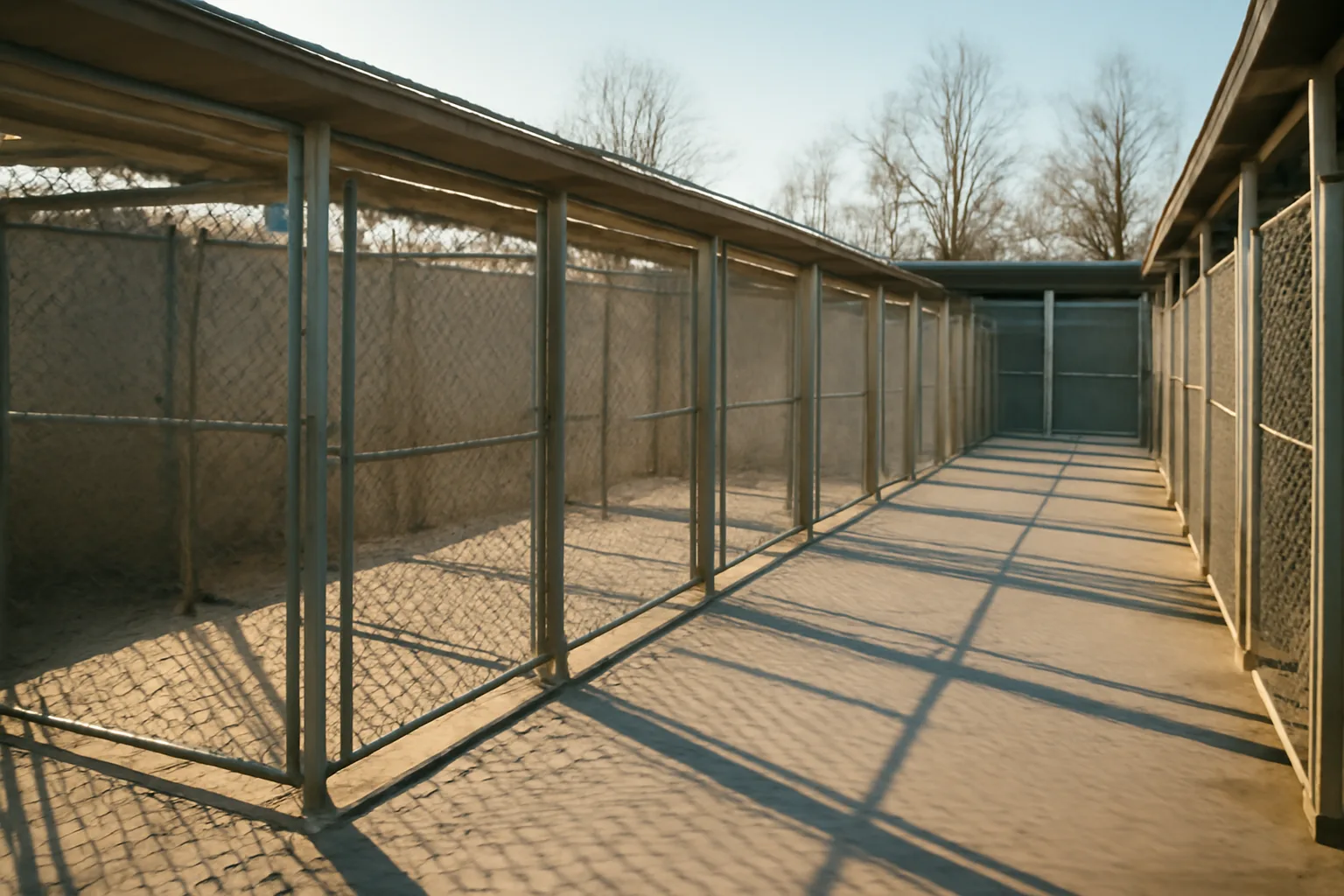
Space per dog is the single biggest limiting factor for boarding and daycare facilities, and it's usually set by state agriculture department regulation or, for USDA-licensed facilities, by 9 CFR Part 3. The federal formula requires enough primary enclosure space that each dog can turn around freely, stand, sit, and lie down in a normal position [2]. Many states adopt similar or identical language for their own boarding kennel licensing standards, since it's a well-tested baseline. Beyond raw square footage, most jurisdictions also regulate: ventilation and temperature range (commonly requiring indoor areas be kept between roughly 45°F and 85°F, drawn from the same federal standard many states mirror), sanitation and waste removal frequency, separation of sick or aggressive dogs, and staff-to-dog ratios during active supervision hours like daycare play groups. Fire and building code occupancy limits can end up being the actual binding constraint even when your kennel license and zoning permit would technically allow more dogs. A converted warehouse zoned correctly for a kennel use might still be capped by its fire marshal's occupancy certificate at a lower number than your zoning board approved, so check both before signing a lease.
Frequently asked questions
How many dogs can you have with a kennel license?
There's no universal number. Most counties require a kennel license once you exceed 3-5 dogs, but the license itself rarely states a maximum. Your practical cap comes from zoning conditions, lot size, required square feet per dog, and fire/building occupancy limits, which vary by county and can range from under 10 to over 100 depending on your zoning district and facility size.
How much does dog boarding cost?
Dog boarding generally runs $25 to $85 per night depending on region and facility type, with basic kennel boarding on the lower end and upscale suite-style 'dog hotels' in major metro areas on the higher end. Many facilities offer 10-20% multi-dog discounts for a second dog sharing space, though pricing is set by individual businesses, not regulated by any government body.
How to register a dog with your local government?
Contact your county animal control office or treasurer, provide proof of current rabies vaccination, pay the licensing fee (commonly $10-$25 annually, often less for spayed/neutered dogs), and receive a tag. This dog license is separate from breed registry registration and separate from any commercial kennel license.
How do you get a dog papers?
'Papers' means breed registry documentation (usually AKC), which requires verified lineage. If both parents were registered and the litter was registered by the breeder, you complete individual registration using the application provided at purchase. Without documented parentage, you generally cannot get standard registry papers, though AKC's Purebred Alternative Listing offers limited event eligibility without full pedigree registration.
How do you register a dog with a breed registry like AKC?
The breeder files a litter registration application with the registry (both parents must already be registered), then each puppy's individual owner completes individual registration paperwork. This process is entirely separate from your local government dog license and unrelated to any kennel license or zoning approval.
How to become a dog breeder legally?
Check three layers: your state's breeder/kennel licensing threshold, whether you cross the USDA's wholesale/sight-unseen sales threshold requiring an APHIS license, and your county's zoning rules for breeding operations. Most hobby breeders selling in person with 4 or fewer breeding females fall under USDA's retail exemption, but state and county rules can still apply.
How to get a dog license after moving to a new county?
Re-register within your new county's required window, typically around 30 days, even if your prior county's license or tag is still valid. Bring current rabies vaccination proof and expect a fee similar to your old jurisdiction's, usually $10-$25 annually depending on spay/neuter status.
How to get papers for a dog with unknown parentage?
You generally can't get standard breed registry papers without documented lineage, since papers certify verified ancestry, more than appearance. AKC's Purebred Alternative Listing program allows some purebred dogs without full papers to get an ID number for participation in certain events, but it does not grant full registration or breeding-eligible pedigree status.
How can I get papers for my dog if I bought it without them?
Contact the breeder first; if both parents are registered and the litter simply wasn't registered yet, the breeder can often still file late litter registration, though fees typically increase the longer you wait past the puppy's birth date. If the breeder can't or won't help and parentage isn't documented, standard registry papers usually aren't obtainable.
Does a kennel license set a specific dog limit, or does zoning decide?
Zoning almost always decides the practical number. The license authorizes the kennel use and enforces facility, health, and recordkeeping standards, but your actual dog cap comes from your conditional use permit, lot size, required space per dog, and local fire or building occupancy limits, all of which are set at the county or city level.
What's the USDA threshold for needing a breeder license?
Under USDA's 2013 rule, breeders who sell puppies sight unseen (without the buyer meeting the dog in person before purchase) or sell wholesale to brokers/pet stores generally need a USDA license, while those keeping 4 or fewer breeding females and selling entirely in-person are typically exempt as a retail pet store. This is a sales-method threshold, not a flat dog-count cap.
How long does it take to get a USDA kennel license?
APHIS requires a facility inspection before issuing a license, and processing can take several weeks to a few months depending on your region and inspector availability. Build this timeline into any expansion plan, since operating before licensure (if required) risks enforcement action.
Sources
- Anne Arundel County Code, Animal Control: Anne Arundel County defines a kennel as keeping more than 4 dogs over four months old
- USDA APHIS, 9 CFR Part 3 Animal Welfare Act Standards: Federal minimum enclosure space formula and indoor temperature range standards for licensed dog facilities
- USDA APHIS, Animal Welfare Act Licensing: USDA license generally required for wholesale sales or sight-unseen sales of dogs
- USDA APHIS, Retail Pet Store Rule (2013): The 4-or-fewer breeding female threshold for the retail pet store exemption
- New York Agriculture and Markets Law, Article 26: New York licenses dog dealers and pet dealers under Agriculture and Markets Law rather than setting a statewide dog headcount
- AKC, Dog Licensing Requirements by State: Typical dog license fee ranges and rabies vaccination requirement for registration
- American Kennel Club, PAL Program: The Purebred Alternative Listing program provides event eligibility without full pedigree registration
- USDA APHIS, 9 CFR 2.75 Recordkeeping Requirements: USDA requires dealers to keep records for at least 1 year after an animal's disposition
- American Kennel Club, Cost of Boarding a Dog: Typical nightly dog boarding price range across facility types and regions