Last updated 2026-07-23
TL;DR
Dog boarding (a 'dog hotel') typically runs $25 to $85 per night depending on region and amenities, with luxury suites hitting $100+. Before booking, check that the facility holds a state or local kennel license, ask for its inspection history, and confirm vaccine requirements. If you're the one opening a facility, licensing and zoning rules vary by state and county, so check your state department of agriculture and county zoning office directly.
what is a "dog hotel" and how is it different from regular boarding?
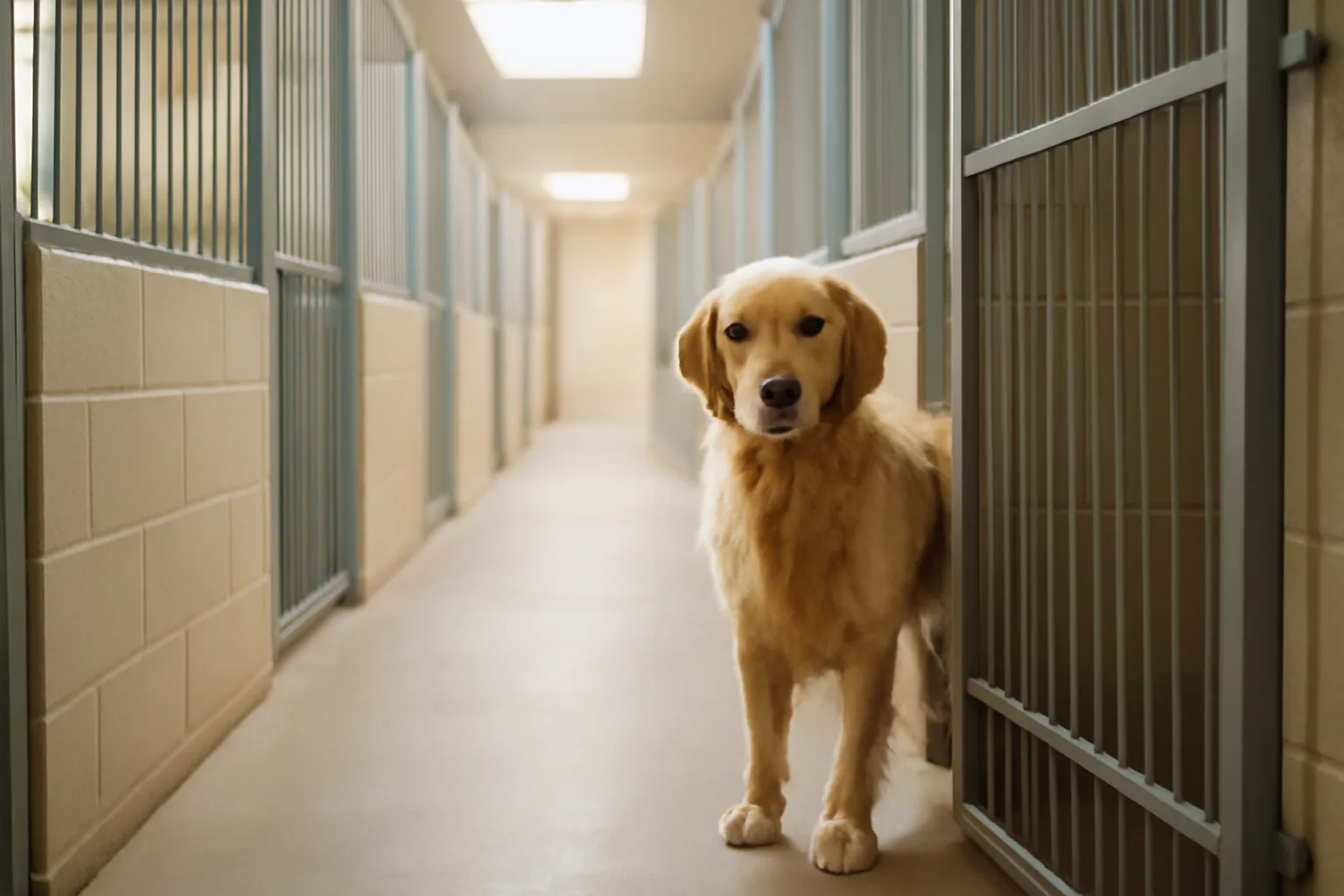
A "dog hotel" is just marketing language for upscale pet boarding. There's no legal category called a dog hotel in any state code. When people search "dog hotel near me," they usually mean a boarding facility with private suites, webcams, extra playtime, and sometimes amenities like pools or "pupcakes" on a dog's birthday. Under the hood, it's still a kennel or boarding facility, regulated the same way as any other dog daycare or overnight care business. Some states use the word "kennel" in statute regardless of how a business brands itself. Others separate "boarding kennel" from "commercial breeder" from "pet shop" in their licensing categories. If a facility calls itself a hotel but takes dogs overnight for a fee, it almost always falls under whatever your state's boarding or kennel license covers. What actually varies between a basic kennel and a self-described "hotel" is the amenity list and price point, not the regulatory bucket. A concrete block kennel run and a suite with a raised bed and a television can be licensed under the identical state statute. So when you're comparing options, don't let the word "hotel" substitute for checking licensing and inspection records. For more on how basic boarding operations are structured and licensed, see dog boarding and pet boarding.
how much does dog boarding cost?
| Basic kennel/run | $25-$40 | Concrete run, limited individual attention | |
|---|---|---|---|
| Mid-tier boarding | $40-$60 | Daily walks, some playgroup time | |
| Luxury suite/"hotel" | $65-$100+ | Private room, webcam, extra enrichment | |
| Daycare-only (no overnight) | $20-$45/day | See doggy day care for a full pricing breakdown | None of this pricing is regulated by any government agency. States set licensing and health requirements, not rates. If a quote feels unusually low, ask directly what's included (vaccine checks, staff-to-dog ratios, exercise time) before you book. |
Dog boarding generally costs $25 to $85 per night in the US, with rural areas and basic kennel runs at the low end and urban "luxury" suites at the high end. Add-ons like extra playtime, grooming, or medication administration usually run $5 to $20 each, per day. The range is wide because boarding pricing tracks local cost of living almost exactly. A kennel in a small town in Kansas might charge $22 a night for a standard run. A boutique facility in Manhattan or San Francisco can charge $90 to $150 a night for a private suite with webcam access. Chains like Dogtopia (see our Dogtopia breakdown) and independent operators both set pricing based on local rent, staffing costs, and whatever the market will bear, not a national standard. Here's a rough breakdown by facility type: | Facility type | Typical nightly rate | Notes |
how do i know if a dog hotel near me is actually licensed?
Ask the facility directly for its state or local kennel license number, then verify it with your state department of agriculture or your county's animal control/zoning office. Most states publish licensed facility lists online, though not all do, and some regulate boarding at the county or city level instead of the state level. Requirements differ enormously by state. Some states, like California, largely leave kennel and boarding licensing to city and county governments rather than a state agency. Other states, like Ohio, require a state kennel license once you exceed a certain number of dogs sold or bred (not necessarily boarded) in a year. Boarding-only facilities (no breeding, no sales) are sometimes exempt from state licensing entirely and only need a local business license plus a zoning permit, which is why checking your specific county zoning office matters as much as checking the state. A few practical checks any pet owner can do in five minutes: - Ask if the facility is licensed and ask for the number. A legitimate operator will give it to you without hesitation.
- Search your county's zoning or planning department site for the business name or address to confirm it has an active permit for kennel/boarding use.
- Ask about their most recent inspection date and what, if anything, was flagged. Facilities regulated as USDA Class C exhibitors or dealers (rare for pure boarding, more common if breeding is also happening on-site) have inspection reports posted through USDA APHIS.
- Check for visible red flags: overcrowded runs, no visible staff during your visit, no vaccine record request from you. If you're evaluating multiple options in your area, our guide to dog hotels near me walks through a side-by-side comparison checklist.
what vaccines and paperwork does my dog need to check in?
Nearly every boarding facility requires proof of rabies vaccination (required by law in all US states), plus distemper/parvo (DHPP) and Bordetella (kennel cough). Many now also require canine influenza vaccination, especially in regions that have had outbreaks. Rabies vaccination is a legal requirement, more than a boarding-facility preference. It's enforced at the state or local level, and specifics on required intervals (one-year vs three-year vaccine) vary by state and by which vaccine product your vet used. Bordetella and canine influenza aren't legally mandated in most places, but boarding facilities require them as a condition of admission because dogs are in close contact all day. Bring or have your vet fax over: - Rabies certificate (more than a tag)
- DHPP records
- Bordetella record, usually needs to be within the last 6-12 months depending on the facility's policy
- Canine influenza vaccine record, if the facility requires it
- Any medication instructions in writing, plus the medication itself in original packaging This is a different question from "how do you get a dog papers" for registration or breed purposes, covered below. Vaccine records prove health status for boarding. Registration papers prove pedigree or ownership.
how do you register a dog, and how do you get a dog license?
Registering a dog for legal purposes (a dog license) is a local requirement, usually issued by your county or city, and is separate from breed registry paperwork like AKC papers. Most US counties require an annual or multi-year dog license, often tied to proof of current rabies vaccination, with fees typically ranging from $10 to $25 a year for spayed/neutered dogs and somewhat more for intact dogs. To get a dog license, you generally: 1. Bring proof of current rabies vaccination to your county clerk, animal control office, or the county's online licensing portal. 2. Pay the license fee. Many counties charge less for spayed/neutered animals as an incentive. 3. Receive a tag to attach to your dog's collar, which local animal control can scan or look up if your dog is ever found loose. The exact office varies by state. Some states handle it through county treasurers, others through animal control departments, others through city clerks. There's no single national dog license system, so you'll need to search "[your county] dog license" to find the right office. Some counties, like many in Ohio, set license fees and deadlines by state statute but administer them at the county auditor's office. This licensing requirement applies to pet owners, not to boarding or daycare businesses. If you're opening a facility, your business itself needs a separate kennel or commercial license, which is a different process covered in the sections below.
how do you get papers for a dog (AKC or breed registration)?
"Papers" usually means registration with a breed registry like the American Kennel Club (AKC), which documents a dog's pedigree, not its legal ownership. You get papers by registering a litter (if you're the breeder) or by registering an individual puppy using a registration form provided by the breeder at the time of purchase. If you bought a purebred puppy from a breeder, ask for the AKC (or applicable registry) registration application at pickup. The breeder registers the litter first, then provides individual puppy registration slips to each buyer, who completes and submits the paperwork (often now done online) to finalize registration in the buyer's name. If you already own a dog without papers and its parents were registered, you may be able to get "papers" retroactively only if you can document the dog's parentage, sometimes requiring DNA testing to confirm lineage. If the parents weren't registered, there's no way to add papers after the fact. A dog without traceable registered parents can't become AKC-registered no matter how purebred it looks. This is different from a dog license (a legal, local requirement) and different from health/vaccine records. "Getting papers" is purely about pedigree documentation and only matters if you plan to breed, show, or sell the dog as registered stock.
how do i get papers for my dog if it's a mixed breed or unknown pedigree?
You can't get traditional AKC-style papers for a dog without documented purebred lineage, but you have other options depending on what you actually need the paperwork for. If you want proof of breed for informational or insurance purposes, a DNA breed test (Embark, Wisdom Panel, and similar) gives you a report, though it is not the same as registry papers and isn't accepted by AKC as a substitute. If your goal is legal ownership documentation rather than pedigree, a dog license from your county serves that function. If your goal is showing or breeding, some registries (like the AKC's Purebred Alternative Listing/PAL program) allow registration of a dog that appears purebred but lacks documentation, specifically so it can compete in AKC companion events, though it can't be bred and registered as if fully documented [1]. Bottom line: if you need papers to sell a dog as purebred stock, you need documented, registered parents. If you need papers to prove legal ownership, get a county dog license. If you need papers to compete in agility or obedience with a mixed-breed or undocumented dog, look into AKC Canine Partners, which allows any dog, including mixed breeds, to compete in many events without pedigree papers at all [2].
how do you become a dog breeder legally?
Becoming a legal dog breeder requires checking three separate layers of rules: your state's breeder or kennel licensing law, your county's zoning rules for keeping and selling animals, and federal USDA licensing if you sell above certain thresholds or sell to pet stores/wholesalers rather than direct to the public. Federally, USDA APHIS requires a license under the Animal Welfare Act if you breed and sell dogs and don't fall under an exemption. The most relevant exemption for small hobby breeders: if you sell puppies you bred and raised on your own premises directly to the public (not through a broker, pet store, or online-only retail platform without physical delivery inspection), and you have four or fewer breeding females, you're generally exempt. Sell above that, or sell wholesale, and USDA licensing kicks in. APHIS states its licensing threshold applies to dealers who buy or sell animals "wholesale" or breed and sell more than a set number of animals directly, and the exact retail-exemption thresholds have been revised over the years, so check the current APHIS Animal Welfare Act page directly before assuming you're exempt. State-level rules stack on top of federal ones and vary enormously. Some states, like Ohio and Pennsylvania, have their own commercial breeder or "kennel" licensing thresholds (often triggered by number of adult dogs kept for breeding, sometimes as low as 9 or more female dogs, though exact numbers differ by state) with inspections handled by the state department of agriculture. Other states have no separate state breeder license at all and leave regulation to county animal control and business licensing. County and city zoning is the third layer, and it's the one most new breeders miss. Even if your state doesn't require a breeder license, your county may cap how many intact adult dogs you can keep on residential-zoned property, or may require a conditional use permit for any commercial animal-related business, including home-based breeding operations selling multiple litters a year. Practical starting steps: 1. Check your state department of agriculture's website for a breeder or kennel licensing page. 2. Check APHIS's licensing page to see if your sales volume or sales channel (retail vs wholesale) triggers federal licensing. 3. Call your county zoning or planning office and ask specifically about keeping/breeding dogs on your property type. 4. Check local ordinances for intact-dog limits, which are common even where breeding itself isn't separately licensed. See dog kennels for more on how kennel classifications work across states, since many breeder licenses are folded into the same statute as boarding kennel licenses.
what usda thresholds should breeders and boarding operators know about?
USDA APHIS regulates dog breeders (as "dealers") under the Animal Welfare Act, but boarding-only and daycare-only businesses that don't breed or sell dogs are generally not subject to USDA licensing at all, since USDA jurisdiction is tied to breeding/selling and certain commercial animal handling, not overnight care services. The federal Animal Welfare Act's stated purpose covers "the humane care and treatment of animals" in commerce, including breeding for wholesale/retail sale, exhibition, and transport. Key point for boarding and daycare operators: if all you do is board, walk, and provide daycare for dogs owned by the public, with no breeding or animal sales happening on-site, USDA licensing typically doesn't apply to you. Your regulation comes from state and local kennel/business licensing instead. Key point for breeders: the trigger isn't just "do you breed dogs," it's sales volume, sales channel, and number of breeding females. Direct retail sales to the public from your own premises have historically had a narrower licensing requirement than wholesale sales or sales through brokers and online-only platforms without in-person delivery. Because these thresholds have been amended by rule changes over the years (notably around online/retail sales definitions), don't rely on older blog posts. Go straight to the current APHIS Animal Welfare Act licensing page before deciding you're exempt. If you're crossing from "a few litters a year for friends" into an actual commercial operation, this is the point where getting your state and federal paperwork right stops being optional. A single missed threshold (one extra breeding female, one wholesale contract) can move you from exempt to needing a full USDA license, state breeder license, and a zoning permit, all at once.
what should i actually check before booking a dog hotel near me?
Before booking, verify licensing, check staff-to-dog ratios, confirm vaccine requirements, and ask what happens in a medical emergency. These four checks catch most of the problems pet owners run into. - Licensing: ask for the license number and verify it with the state or county office. A facility that won't provide one, or gets vague about it, is a red flag.
- Staff ratios: ask how many dogs each staff member supervises during playgroups. There's no single national standard, but many state kennel regulations set minimum square footage per dog and require adequate supervision language, even if they don't specify an exact ratio number.
- Vaccine enforcement: a facility that doesn't ask you for proof of vaccination isn't enforcing it on other dogs either, which matters for your dog's safety around others.
- Emergency protocol: ask which vet they use if your dog needs emergency care while you're unreachable, and whether you'll be charged for that care upfront. A facility calling itself a "hotel" and charging premium rates should be able to answer all four questions immediately and without hesitation. If they can't, that's more informative than any amount of website polish or Instagram photos.
if you're opening your own dog hotel or boarding facility, where do you start?
Start with your county zoning office, not your state agency, because zoning approval is usually the first gate you have to clear before any license matters. Kennel and boarding uses are commonly restricted to certain zoning districts (commercial, agricultural, or a specific "kennel" overlay), and many jurisdictions require a conditional use permit and a public zoning hearing even in districts where the use is technically allowed. A rough sequence that works in most states: 1. Call your county planning/zoning department and ask whether your intended property is zoned for a commercial kennel, boarding, or daycare use, and whether it needs a conditional use permit or special exception. 2. Check your state department of agriculture's site for state-level kennel or commercial breeder/boarding licensing requirements. 3. Check APHIS's page if you'll also breed or sell dogs on-site, since that can trigger separate federal licensing on top of state and local rules. 4. Review your state's facility standards for construction (run size, drainage, ventilation, fencing height) before you sign a lease or start building, since retrofitting an existing building to meet kennel standards is often the most expensive part of the whole process. 5. Prepare for a zoning hearing if one's required; neighbors object to kennel businesses more often than almost any other small business type, usually over noise and odor concerns. This is genuinely the messiest part of opening a boarding or daycare business, because there's no single federal rulebook you can just read once. Every state, and often every county within that state, has its own version of these rules, and they change. If you want a structured way to pull together the state-specific and county-specific requirements into one packet before you walk into a zoning hearing, our $149 Kennel License & Zoning Packet is built around exactly that gap. It's not legal advice and it doesn't replace a lawyer or a zoning consultant, but it organizes the state and county-specific questions you need answered before you spend money on a lease or construction.
Frequently asked questions
How much does dog boarding cost?
Dog boarding typically costs $25 to $85 per night in the US. Basic kennel runs in lower cost-of-living areas start around $22-$30, mid-tier boarding with daily walks runs $40-$60, and luxury suites in major cities can hit $100+ per night. Add-ons like medication administration or extra playtime usually cost $5-$20 extra per day.
How is dog boarding priced compared to daycare?
Overnight boarding is priced per night ($25-$85 typically), while daycare (no overnight stay) is priced per day and usually runs $20-$45. Some facilities offer package discounts for multiple daycare days per week. Neither price is set by any government agency; it's entirely market-driven based on local costs and amenities.
How do you register a dog?
Registering a dog usually means getting a county or city dog license, which requires proof of current rabies vaccination and a fee, typically $10-$25 annually. Bring vaccine records to your county clerk, animal control office, or use your county's online licensing portal. This is separate from AKC-style breed registration papers.
How do you get a dog license?
Bring your dog's current rabies vaccination certificate to your county animal control office, clerk, or treasurer (varies by state), pay the licensing fee, and you'll receive a tag. Many counties discount fees for spayed/neutered dogs. Requirements and offices differ by state, so search "[your county] dog license" to find the right department.
How do you get papers for a dog?
"Papers" (breed registry documentation like AKC registration) come from the breeder at the time of sale, who registers the litter and provides individual registration slips to buyers. You can't add papers to a dog after the fact unless its parents were already registered and you can document the lineage, sometimes via DNA testing.
How can I get papers for my dog if I don't know its parents?
If a dog's parents aren't documented or registered, you can't get traditional AKC papers for it. Options instead: a DNA breed test for informational purposes, a county dog license for legal ownership proof, or AKC Canine Partners/PAL programs, which let mixed-breed or undocumented dogs compete in certain events without full pedigree registration.
How do you become a dog breeder legally?
Check three layers: your state department of agriculture for breeder/kennel licensing rules, your county zoning office for property use and intact-dog limits, and USDA APHIS's Animal Welfare Act licensing page to see if your sales volume or channel (wholesale vs retail) triggers federal licensing. Requirements differ significantly by state.
What USDA threshold requires a breeder to get licensed?
USDA APHIS requires licensing under the Animal Welfare Act for dealers who breed and sell dogs above certain volume or through wholesale/broker channels rather than direct retail sale from their own premises. Exact thresholds have been revised over time, so check the current APHIS Animal Welfare Act licensing page directly rather than relying on older sources.
Do dog boarding and daycare businesses need a USDA license?
Generally no. USDA APHIS licensing under the Animal Welfare Act applies to breeding, dealing, exhibiting, and related commercial animal activities, not to boarding or daycare services alone. Boarding-only facilities are typically regulated at the state and county level instead, through kennel licensing and zoning rules.
What vaccines does my dog need before boarding at a dog hotel?
Most facilities require proof of rabies (legally mandated in all states), DHPP (distemper/parvo), and Bordetella (kennel cough), often within the past 6-12 months. Many now also require canine influenza vaccination. Bring actual vaccine certificates, more than tags, and any written medication instructions if your dog needs them.
How do I check if a dog hotel or boarding facility is licensed?
Ask the facility for its license number directly, then verify it with your state department of agriculture or county zoning/animal control office, since licensing is handled differently depending on the state. Many states and counties post licensed facility lists online; if a business won't share its license number, treat that as a warning sign.
What's the difference between a dog license and AKC registration papers?
A dog license is a local legal requirement proving vaccination and ownership, issued by your county or city for a small annual fee. AKC (or other registry) papers document pedigree and breed lineage, issued by the breeder at sale. You need a dog license regardless of breed; you only get registry papers if the dog's parents were registered.
Does opening a dog boarding facility require a zoning hearing?
Often yes. Many counties require a conditional use permit or special exception for commercial kennel, boarding, or daycare uses, even in districts where the use is technically allowed, which usually means a public zoning hearing. Requirements vary widely by county, so call your local zoning/planning office before signing a lease.
Sources
- American Kennel Club, Purebred Alternative Listing (PAL) Program: AKC PAL program allows registration for companion events without full pedigree documentation
- American Kennel Club, Canine Partners Program: AKC Canine Partners allows mixed-breed dogs to compete in events without pedigree papers
- Electronic Code of Federal Regulations (eCFR): USDA licensing requirements for animal dealers and exhibitors under the Animal Welfare Act, relevant to dog breeders and boarding operators
- Electronic Code of Federal Regulations (eCFR): Federal standards for facilities housing dogs, including space and care requirements relevant to boarding kennels
- Electronic Code of Federal Regulations (eCFR): Defines terms used under the Animal Welfare Act regulations, relevant to licensing definitions for boarding and breeding facilities.
- USDA: Provides background on the Animal Welfare Act and its regulations that govern licensed animal boarding and breeding facilities.
- Centers for Disease Control and Prevention (CDC): Provides guidance on rabies vaccination and health requirements relevant to dogs staying at boarding facilities.