Last updated 2026-07-23
TL;DR
Dog boarding typically costs $25 to $85 per night depending on region and amenities, with luxury suites running higher. Kennel operators need state or county licensing, not a federal one, unless they hit USDA breeding/sales thresholds. "Dog papers" usually means AKC registration, which is separate from any government license or your dog's rabies tag.
How much does dog boarding cost?
Most dog boarding runs $25 to $85 per night in the US, with the national average landing somewhere around $40 to $55 depending on region, season, and whether the facility is a straightforward kennel or a higher-end 'pet hotel.' Rural facilities in the Midwest or South often charge less than $30 a night. Boarding in dense metro areas like San Francisco, Chicago, or New York routinely runs $60 to $100+ for a standard run, and private suites with webcams, playtime add-ons, or 'luxury' bedding can push $100 to $150 a night. There's no federal price database for this because boarding is a private service, not a regulated utility, so every number you see online (including this one) is an estimate built from surveys and posted rate sheets, not an official figure. Care.com's pet care cost surveys and local chamber-of-commerce pricing studies are the closest thing to real market data, and they consistently land in that $25-$85 range for base boarding. What actually moves the price: location (urban costs more), whether meals are included, whether the dog needs meds administered, group play vs. solo runs, and peak-season surcharges around holidays. Many facilities charge $5 to $15 extra per day for administering medication, and holiday weekends (Thanksgiving, Christmas, July 4th) often carry a $10-$20/night surcharge plus a multi-night minimum stay requirement. If you're the operator setting rates rather than the pet owner paying them, price against your local competitors first, then adjust for your actual costs: staff-to-dog ratios, square footage, insurance, and whether you're running group daycare-style boarding or individual runs. Undercutting the market by a lot usually signals under-staffing to experienced pet owners, not a bargain. For comparison shopping, it helps to look at how dog boarding and pet boarding rates are structured in your specific state, since licensing costs and inspection requirements get baked into what operators charge.
What does a dog owner actually need before boarding a dog?
Almost every boarding kennel requires proof of current vaccinations before your dog can stay: rabies, distemper/parvo (DHPP), and very often the Bordetella (kennel cough) vaccine, sometimes given as recently as within 6-12 months. Some facilities also require a negative fecal test or flea/tick prevention documentation. This is a facility policy, not a law in most states, though a handful of states tie rabies vaccination to licensing requirements for kennels themselves. Owners should also expect an intake form covering feeding schedule, medical history, emergency contacts, and behavior notes (resource guarding, dog-reactivity, separation anxiety). Reputable facilities do a temperament evaluation before the first group-play stay, sometimes as a separate paid session. None of this requires 'papers' in the AKC-registration sense. A vaccination record from your vet is the only paperwork that matters for boarding. If a facility asks for a pedigree or registration certificate, that's unusual and not a standard requirement anywhere in the US.
How do you register a dog?
'Registering a dog' means different things depending on who's asking, and this is where a lot of search confusion comes from. There are three separate systems: 1. Local dog licensing (a government requirement in many counties and cities): you register your dog with the county or city clerk, usually annually, and it costs somewhere between $10 and $25 for a spayed/neutered dog and $20 to $50 for an intact dog in most jurisdictions that charge a differential rate. This is a public health and animal control measure, tied to proof of rabies vaccination. 2. Breed registry registration (AKC, UKC, etc.): this is what most people mean by 'getting papers,' and it's a private, voluntary system with zero government involvement. 3. Microchip registration: registering your chip number with a database (AKC Reunite, HomeAgain, etc.) so a shelter or vet can scan and contact you if your dog is lost. This costs $15-$25 one-time in most cases and has nothing to do with a license or breed papers. For local licensing specifically, check your county clerk's or animal control's website; requirements and fees vary by jurisdiction and there's no national standard.
How do you get a dog license?
You get a dog license from your city or county government, not from a pet store or breed registry. The process is nearly always the same three steps: get your dog vaccinated for rabies by a licensed vet, take (or mail) the rabies certificate to your local county clerk, animal control office, or county treasurer, and pay the licensing fee. Fees vary enormously by jurisdiction. Some counties charge a flat $10-$15 per year. Others use a tiered system: cheaper for spayed/neutered dogs, more for intact dogs, and sometimes a senior citizen discount. A handful of cities (parts of California and New York, for example) also require microchipping as part of the licensing process. Most licenses run on an annual or triennial cycle tied to your rabies vaccination schedule, since a 3-year rabies vaccine often lets you get a 3-year dog license in jurisdictions that allow it. Renewal reminders typically come by mail or email from the county. If you're not sure whether your city or county requires a dog license at all, your county's official government website (the.gov domain, not a third-party pet site) is the only reliable source, because requirements really do vary block by block in some metro areas with overlapping city and county rules.
How do you get papers for a dog?
'Papers' means registration with a breed registry, most commonly the American Kennel Club (AKC), and it works through the breeder, not the owner acting alone after the fact. Here's the actual sequence: a breeder registers a litter with the AKC (or another registry like the United Kennel Club), the AKC issues individual registration paperwork for each puppy, and the breeder transfers that registration to the buyer at time of sale, usually included in the purchase price or as a small add-on fee. If you bought a purebred puppy and the breeder never registered the litter, you generally cannot get 'papers' after the fact unless the breeder does it retroactively, and some breed registries won't allow that after a certain age cutoff. There is no way for an owner to independently register an adult dog of unknown or unverified parentage as a purebred with full papers; DNA testing can confirm breed likelihood but does not grant registry papers. The AKC's own registration process requires the litter application to be submitted by the breeder (the owner of the dam at the time of breeding), with each puppy then individually registered. Costs for AKC litter registration and individual puppy registration are modest, generally in the range of $25-$45 per litter application plus a small per-puppy fee, though the AKC updates these periodically and you should check their current fee schedule directly. If you already have a dog without papers and you're being told you can 'get papers' for a fee from some third-party site that isn't AKC or UKC, that is very likely a registry mill selling meaningless certificates. Those aren't recognized by legitimate breed clubs, don't affect resale value in any real way, and shouldn't be confused with an actual pedigree registration.
How do you become a dog breeder (legally)?
Becoming a legal dog breeder means clearing three separate regulatory layers, and most first-time breeders only think about one of them. First is local zoning: many counties limit how many intact dogs you can keep on a residential property before you're classified as a 'kennel' requiring a conditional use permit or special zoning variance. This threshold is often as low as 3-5 adult dogs, and it's set entirely at the county or city level. Second is state licensing. Many states require a breeder's license or kennel license once you exceed a certain number of litters or dogs sold per year, and some states, like Ohio and Pennsylvania, have their own dedicated 'high volume breeder' or 'kennel' licensing statutes with specific standards for housing, veterinary care, and record-keeping. Check your state department of agriculture's website for the exact threshold and application, since these numbers are not federal and differ state to state. Third, and this is the one that surprises people, is federal USDA/APHIS licensing. If you sell more than 4 female breeding dogs' worth of puppies per year sight-unseen (meaning the buyer never physically sees the animal or the facility before purchase, like most online or shipped sales) or if you sell wholesale to pet stores or brokers, you likely need a USDA Class A or Class B license. The USDA's own regulation states that anyone who sells or offers to sell puppies at wholesale, or who breeds and sells more than a threshold number of dogs directly to the public without the buyer viewing the animal in person, is a 'dealer' under the Animal Welfare Act and must be licensed. APHIS explicitly states: 'A person who has four or fewer breeding female dogs, cats, and/or small exotic or wild mammals... and who sells only the offspring of these dogs, cats, and/or small exotic or wild mammals, born and raised on his/her premises, for pets or exhibition, is not required to be licensed'. Cross that four-female threshold, or sell wholesale/sight-unseen, and the license requirement kicks in, along with USDA facility inspections covering housing, sanitation, veterinary care, and recordkeeping under 9 CFR Parts 1-3 [1]. Most small hobby breeders never trigger the USDA threshold because they sell in-person to local buyers. It's breeders shipping puppies across state lines, selling through brokers, or running large-scale wholesale operations who most often cross it, sometimes without realizing they've become a 'dealer' in the legal sense until an APHIS inspector shows up.
What licenses does a boarding or daycare facility actually need?
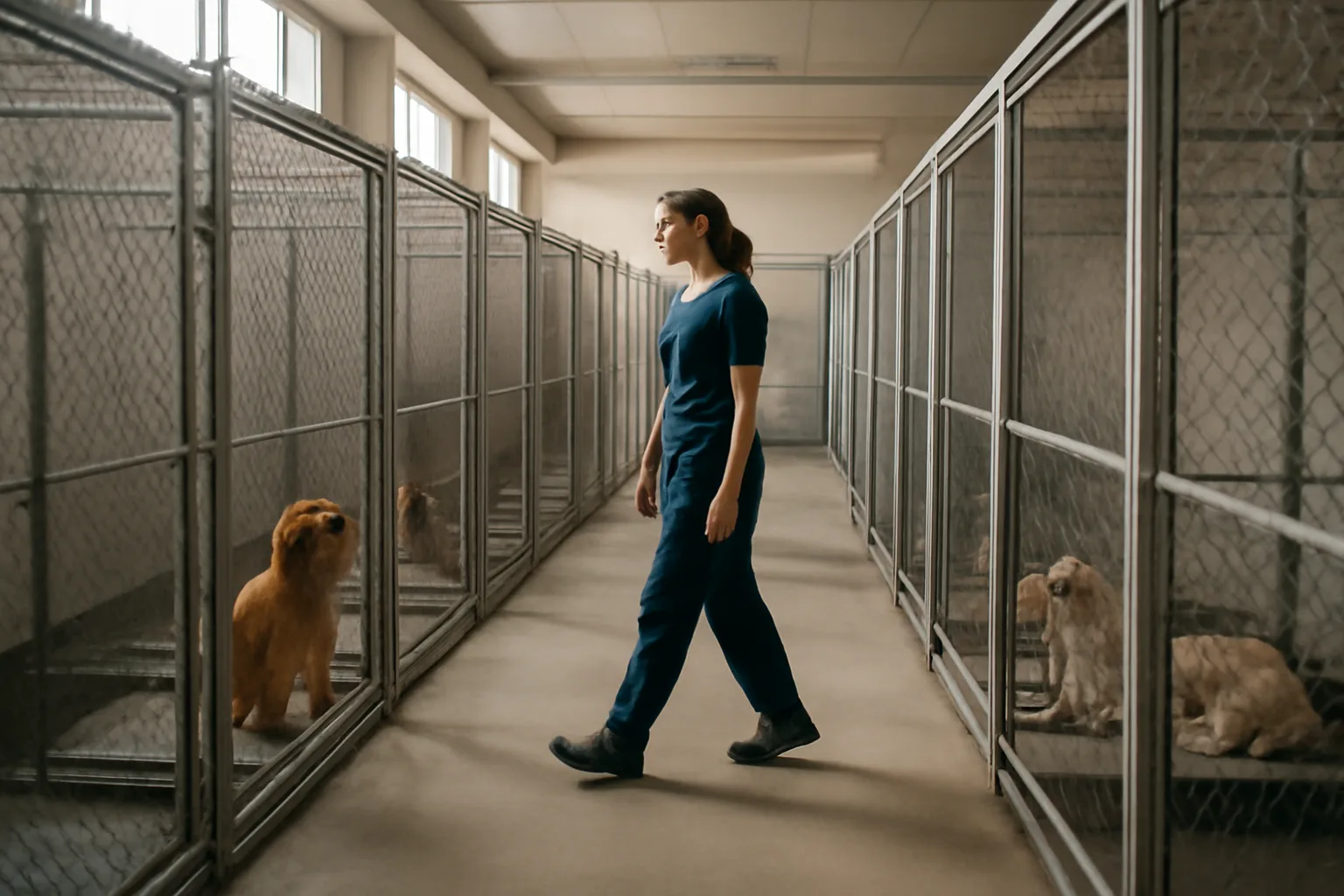
There's no single federal boarding license, and the USDA generally does not regulate pure boarding and daycare operations the same way it regulates breeders and dealers, because boarding facilities aren't selling animals. Boarding and daycare licensing lives almost entirely at the state and county level, and it stacks up like this: - County/city business license: a basic requirement to operate any commercial business, usually $50-$400 depending on the jurisdiction.
- Zoning approval or conditional use permit: this is often the hardest part. Kennels and boarding facilities are frequently zoned separately from general commercial or agricultural use, and many counties require a public hearing before the zoning board.
- State kennel or animal facility license: a growing number of states require a specific kennel license for any facility housing a set number of dogs overnight (commonly triggered somewhere around 10-25+ dogs, though the exact number is set state by state). Check your state department of agriculture's licensing division for the current threshold and fee.
- Fire and building code inspection: required in nearly every jurisdiction before a certificate of occupancy is issued for a commercial animal facility. Because every one of these varies by state and county, there's no honest way to give a single national fee or process. What you can do is pull your state department of agriculture's kennel licensing page and your county zoning office's ordinance directly, and build your application checklist from those two primary sources rather than guessing. This is where a lot of first-time operators get tripped up, and it's genuinely the reason a packaged checklist tool exists: pulling together zoning ordinance language, state license applications, and inspection prep into one packet saves the weeks most people spend hunting through county PDF archives. If you want a starting structure rather than building the checklist from scratch, the Kennel License & Zoning Packet is a $149 one-time reference packet built for exactly this stacking problem, though it doesn't replace an actual attorney or zoning consultant for your specific hearing.
How is a boarding kennel different from a breeding kennel for licensing purposes?
| Federal (USDA/APHIS) license | Generally not required | Required if selling wholesale or sight-unseen, per 9 CFR [1] | |
|---|---|---|---|
| State kennel license | Often required above a dog-count threshold (varies by state) | Often required regardless of count in states with breeder-specific statutes | |
| County zoning permit | Almost always required for commercial animal facilities | Almost always required, often with stricter dog-count caps | |
| Typical inspection focus | Sanitation, ventilation, fire safety, staff ratios | Above, plus veterinary care records, breeding female health, whelping conditions | Some operators run both boarding and a small breeding program on the same property, and that's exactly when the paperwork gets layered: you may need a state kennel license for the boarding side and hit USDA thresholds separately for the breeding side, with two different sets of inspection standards applying to two parts of the same building. |
A pure boarding/daycare kennel houses other people's dogs temporarily and doesn't sell animals, so it typically falls under state and local animal facility rules only, not USDA jurisdiction. A breeding kennel that sells puppies, especially sight-unseen or wholesale, can trigger USDA/APHIS licensing on top of the same state and county requirements. | Factor | Boarding/Daycare | Breeding (over USDA threshold) |
What do inspectors actually check at a boarding facility?
Inspection standards vary by state, but they cluster around the same core categories almost everywhere: sanitation and waste removal schedules, ventilation and temperature control, enclosure size per dog, fire suppression and emergency exits, staff-to-dog supervision ratios during group play, and recordkeeping (vaccination records, incident logs, medication logs). For USDA-licensed facilities (breeders and dealers crossing the threshold discussed above), the specific standards live in 9 CFR Part 3, which sets minimum requirements for housing facilities, including space calculations tied to the dog's body length, and requires that 'primary enclosures shall be constructed and maintained so as to provide sufficient space to allow each dog... to make normal postural adjustments' [1]. State kennel inspectors often use similar space-and-sanitation logic even when the facility isn't USDA-licensed, because most state statutes were modeled loosely on the federal framework. What trips up first-time operators most isn't the big stuff, it's the paperwork trail: missing vaccination records for a boarded dog, no written emergency evacuation plan, or a fire inspection that expired six months before the county inspector shows up. Get your vaccination intake system airtight before you worry about anything else, because it's the single most common citation across state inspection reports.
How much does a state kennel or breeder license actually cost?
This is genuinely one of those 'it depends' answers, and anyone giving you one flat number is guessing. State kennel license fees commonly range from $25 to a few hundred dollars annually, sometimes scaled to the number of dogs on-site. Pennsylvania's Bureau of Dog Law Enforcement, for example, runs a kennel licensing system with fees that scale by kennel class and dog count, and the state publishes its current fee schedule directly through the Department of Agriculture [2]. Ohio runs a similar tiered system through its Department of Agriculture for 'high volume breeders.' County zoning and business license fees stack on top of the state fee, and those are set independently by each county commission or planning department, often ranging from under $100 to several hundred dollars depending on whether a public hearing and site inspection are required. The honest answer for 'what will this cost me' is: pull your specific state's department of agriculture kennel licensing fee schedule, add your specific county's zoning and business license fees, and budget for at least one inspection visit and possibly a legal consultation if your zoning classification is contested at a public hearing. Nobody can give you a national number that's actually true for your address.
Do you need a USDA license just to run a boarding or daycare business?
No. Straight boarding and daycare operations, where you're caring for dogs that already belong to other people and you're not selling animals, generally fall outside USDA/APHIS licensing entirely. USDA licensing under the Animal Welfare Act targets breeders, dealers, exhibitors, and certain transporters, not pet care service providers. The one place this gets blurry is combination facilities: a kennel that boards dogs and also breeds and sells puppies on the same property. In that case, the breeding/sales side may need USDA licensing (if it crosses the thresholds described above) while the boarding side is governed only by state and county rules. These are evaluated somewhat separately even when they're the same physical building, so keep the recordkeeping cleanly divided between 'dogs we're boarding' and 'dogs we're breeding/selling' if you're running both.
Frequently asked questions
How much does dog boarding cost per night?
Most dog boarding costs $25 to $85 per night, with the national average around $40-$55. Rural and small-town kennels run cheaper, often under $30. Urban 'pet hotel' style facilities with private suites, cameras, and extra playtime commonly charge $60-$150 a night, especially over holiday weekends.
How do you register a dog with the city or county?
Take your dog's rabies vaccination certificate to your city or county clerk, animal control office, or county treasurer, fill out the licensing form, and pay the fee, typically $10-$50 depending on your jurisdiction and whether the dog is spayed/neutered. This is separate from AKC registration and has nothing to do with breed papers.
How do you get papers for a dog after buying it?
You generally can't get papers after purchase unless the breeder registers the litter with the AKC (or another registry) and transfers the registration to you. If the breeder never registered the litter, there's usually no legitimate way to add papers retroactively, and third-party sites offering 'instant papers' for a fee aren't recognized registries.
How do you get a dog license and what does it cost?
Contact your county clerk's office or local animal control, provide proof of current rabies vaccination, fill out the license application, and pay the fee. Costs commonly run $10-$25 for spayed/neutered dogs and $20-$50 for intact dogs, though exact numbers vary by county and some places require microchipping too.
How does someone become a legal dog breeder?
Check your county zoning rules for how many intact dogs trigger a kennel permit (often 3-5), check your state department of agriculture for breeder or kennel license requirements, and check USDA/APHIS rules if you sell more than 4 breeding females' worth of puppies wholesale or sight-unseen. All three layers can apply at once.
Do dog boarding facilities need a USDA license?
Usually not. USDA/APHIS licensing under the Animal Welfare Act targets breeders, dealers, and exhibitors, not businesses that board other people's pets. A facility only needs USDA licensing if it also breeds and sells dogs above the federal thresholds, separate from its boarding operations.
What's the difference between a dog license and AKC papers?
A dog license is a government requirement (city or county) proving rabies vaccination and registering your dog for animal control purposes, costing roughly $10-$50 a year. AKC papers are a private, voluntary breed registry record proving pedigree, issued through the breeder at time of sale, with no government involvement at all.
How many dogs can you own before you need a kennel license?
It depends entirely on your county and state; there's no national threshold. Some counties classify a property as a 'kennel' requiring special zoning at just 3-5 adult dogs, while others allow more. Check your specific county zoning ordinance and state department of agriculture kennel statute directly.
How much does a breeder's license cost?
State breeder or kennel license fees commonly range from about $25 to a few hundred dollars annually, often scaled by dog count, plus separate county zoning and business license fees. USDA licenses (for those crossing federal thresholds) have their own separate fee schedule published by APHIS. There's no single national number.
Can you register an adult dog with unknown parentage as purebred?
Generally no. Breed registries like the AKC require registration through the breeder at the litter level; an owner can't independently register an adult dog as purebred later without documented, verifiable lineage. DNA tests can estimate breed composition but don't grant official registry papers.
What triggers USDA/APHIS licensing for a dog breeder?
APHIS requires a license if you have more than 4 breeding female dogs and sell their offspring, or if you sell wholesale (to pet stores or brokers) or sell puppies sight-unseen (buyer never sees the dog or facility in person) before purchase, per the Animal Welfare Act regulations.
Is dog boarding regulated the same in every state?
No. Boarding and kennel licensing is set at the state and county level, and requirements, dog-count thresholds, fees, and inspection standards all vary. Always check your specific state department of agriculture and county zoning office rather than relying on a national figure, since none exists.
Sources
- USDA, 9 CFR Part 3 (Animal Welfare Act standards): Federal housing and space standards for licensed dog facilities, including enclosure size requirements
- Pennsylvania Department of Agriculture, Bureau of Dog Law Enforcement: State kennel licensing fee structure scaled by kennel class and dog count
- Electronic Code of Federal Regulations (eCFR), Title 9 Part 2: Federal regulations outline licensing requirements under the Animal Welfare Act for dealers, exhibitors, and breeders
- Electronic Code of Federal Regulations (eCFR), Title 9 Part 3: Federal standards specify housing, care, and sanitation requirements that inspectors check at facilities handling dogs
- American Kennel Club: Requirements and best practices for becoming a recognized dog breeder