Last updated 2026-07-26
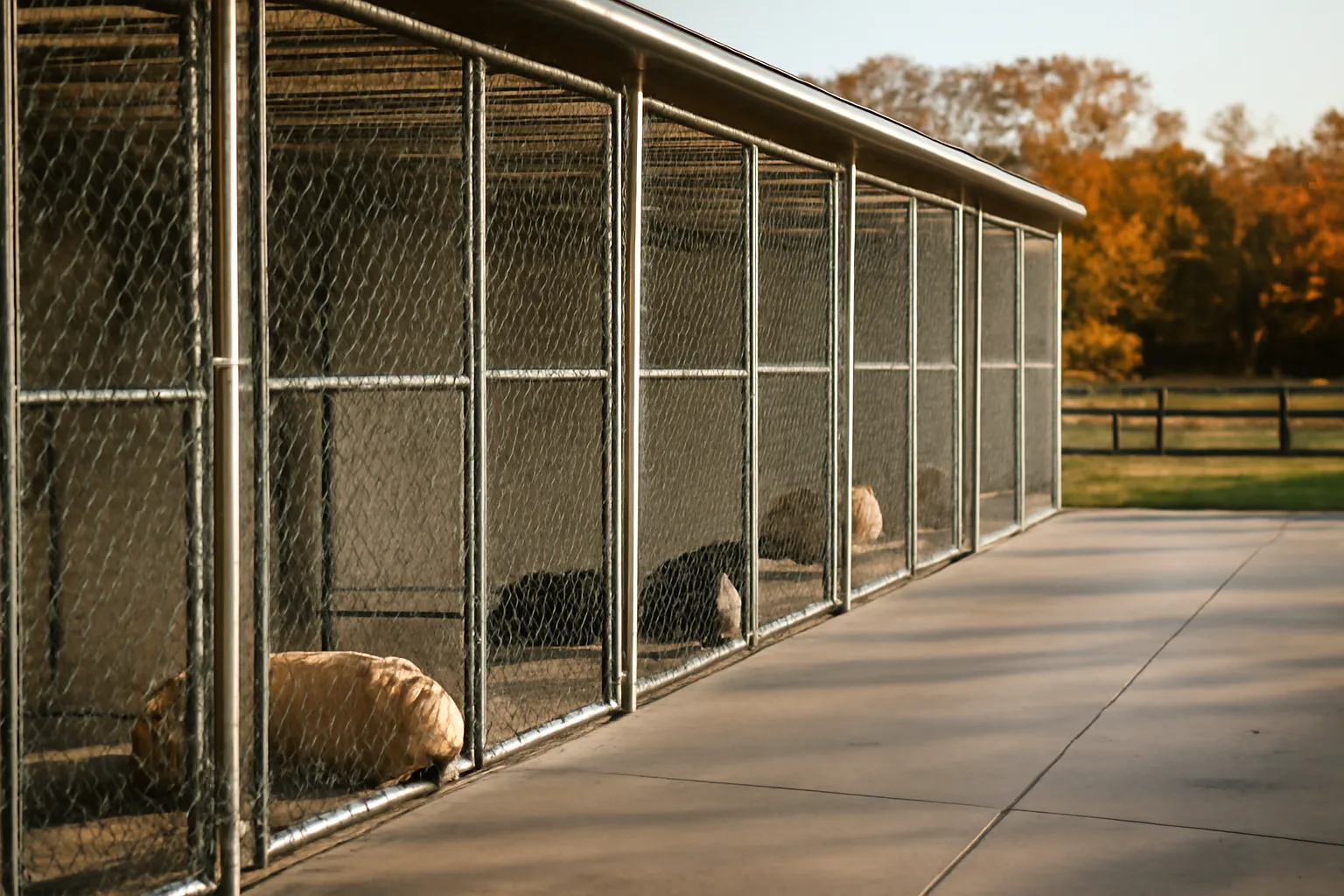
TL;DR
Iowa requires a state Commercial Establishment license through the Iowa Department of Agriculture and Land Stewardship for anyone boarding, breeding, selling, or grooming dogs commercially, under Iowa Code Chapter 162. Fees scale with the number of animals kept, facilities must pass an inspection, and breeders selling wholesale or across state lines may also need a USDA Class A or B license.
Does Iowa require a state license for a dog kennel?
Yes. Iowa Code Chapter 162 requires anyone operating a "commercial establishment," which includes boarding kennels, pet shops, dog daycares, groomers, and breeders that meet certain thresholds, to hold a state license issued by the Iowa Department of Agriculture and Land Stewardship (IDALS) [1]. The law defines a boarding kennel as a facility that houses dogs or cats not owned by the facility operator for compensation, and it defines a commercial breeder based on the number of intact females and litters produced in a year [1]. If you're just keeping your own pets, or you're a hobby breeder under the statutory threshold, you likely don't need this license. But the moment you take money to board someone else's dog overnight, run a daycare that also boards, or sell puppies at commercial volume, Iowa considers you a licensed business subject to inspection. The agency that runs this program is the Bureau of Animal Industry, Consumer Protection Division within IDALS. They publish licensing details and inspection checklists on their site, and they're the ones who show up for your annual inspection [2].
Who exactly needs an Iowa commercial establishment license?
| Overnight boarding for pay | Boarding kennel | Yes | |
|---|---|---|---|
| Daycare only, no overnight stays | Often still a commercial establishment | Check with IDALS | |
| Breeding 4+ intact females, selling puppies | Commercial breeder | Yes | |
| Retail sale of puppies to the public | Pet shop | Yes | |
| Grooming only, no boarding | Usually not covered | Confirm locally | Daycare-only operations are a gray area in a lot of states, and Iowa is no exception. Some daycares that never board overnight still register voluntarily or get told to during a county zoning review. If you're planning a hybrid daycare-and-boarding model, plan on licensing from day one. For a broader look at how daycare and boarding get treated differently across states, see our guide on doggy day care rules. |
Iowa Code section 162.2 lays out several license categories, and most kennel and daycare operators fall under "boarding kennel" or "pet shop." A boarding kennel is defined as a place where dogs or cats are kept for boarding, training, or similar purposes in exchange for a fee [1]. A commercial breeder is someone who owns or has custody of more than three intact female dogs and sells, trades, or gives away more than a set number of puppies (the statute ties this to the definitions used for public sale) in a calendar year [1]. There's also a separate category for "public auctions" and "dealers," which matters if you're moving dogs wholesale rather than retail to the public. Here's the practical breakdown: | Activity | Iowa license category | Typically needed? |
How much does an Iowa kennel license cost?
Iowa's licensing fees under Chapter 162 are tiered by the number of animals the facility keeps, and the statute sets maximum fee amounts that IDALS can charge within ranges set by rule [1]. Exact current dollar figures change periodically through the Iowa Administrative Code, so treat any number you see as a starting point and confirm the live fee schedule directly with IDALS before you budget [2]. As of recent licensing cycles, commercial establishment license fees in Iowa have generally run from roughly $50 for the smallest operations up to several hundred dollars for larger kennels and breeders housing dozens of animals, with the fee tied to your declared animal capacity at the time of application [2]. Renewal is annual. Late renewal typically triggers a penalty fee on top of the base license cost. Don't forget the county and city layer. Many Iowa counties and cities also require their own kennel permit or business license, sometimes with separate zoning approval, on top of the state license. The state license does not substitute for local zoning compliance. If you're budgeting for a new facility, plan for state fees, a local permit fee, possible zoning application fees, and inspection-related costs (fencing, ventilation, drainage upgrades) separately.
How much does dog boarding cost to run as a business, and what should I charge?
This is a different question from licensing fees, but it comes up constantly for people opening a kennel in Iowa, so it's worth addressing directly. Nobody publishes a single authoritative national number for boarding rates because pricing varies enormously by region, facility type, and services bundled in. As a rough market reference (not a government figure), boarding rates at commercial kennels and daycare-boarding hybrids in the Midwest commonly run in the $25 to $55 per night range for a standard dog run, with upcharges for large breeds, medication administration, or private suites. Upscale "dog hotel" style facilities in metro areas can charge $60 to $100+ per night. These are market observations, not regulated rates. Iowa doesn't set or cap boarding prices; that's entirely a business decision. What Iowa does regulate is the facility side: cage and run sizes, sanitation, temperature control, and staffing ratios sufficient to observe animals daily [1] [2]. Your pricing has to cover those compliance costs, more than rent and food. If you're scoping out a market before setting rates, our dog boarding and pet boarding guides break down typical cost structures operators use when building a rate sheet.
What facility standards does Iowa require for kennels?
IDALS inspects commercial establishments against standards covering housing, sanitation, ventilation, temperature, food and water, and veterinary care, modeled in part on the federal Animal Welfare Act standards but enforced under state authority [1] [2]. Inspectors check things like: - Primary enclosure size relative to the dog's size (enough room to stand, turn around, and lie down normally)
- Solid, non-toxic flooring that can be sanitized, with proper drainage
- Ambient temperature control, generally required to stay within a safe range and not left to extremes
- Access to potable water at all times and food appropriate to the animal's age and condition
- A written veterinary care plan or a working relationship with a licensed vet
- Recordkeeping on acquisitions, sales, and health treatments Inspections happen at least annually for a licensed commercial establishment, and IDALS can conduct unannounced inspections if there's a complaint [2]. Failing an inspection doesn't automatically pull your license, but it usually means a follow-up visit and a compliance deadline. Repeated or serious violations can lead to license suspension or revocation under Chapter 162's enforcement provisions [1]. If you're building out a new facility, get the layout reviewed against these standards before you pour concrete. Retrofitting drainage or fencing after an inspection failure is far more expensive than designing it right the first time. Our facility standards content (linked separately across the site) covers build specs in more depth if you're still in the design phase.
How do federal USDA rules interact with Iowa's state license?
Iowa's Chapter 162 license is a state-level requirement. It does not replace a federal USDA license, and a lot of breeders and dealers in Iowa need both. Under the federal Animal Welfare Act, anyone who sells dogs at wholesale, sells to pet stores, sells sight-unseen to buyers who never see the animal in person before purchase, or sells more than a small number of dogs bred on their own premises typically needs a USDA license through APHIS [3]. The federal threshold that matters most for hobby breeders: if you have more than four breeding females and sell puppies sight-unseen (including many online sales where the buyer never visits before purchase), you generally need a USDA Class A (breeder) license [4]. Retail pet stores that sell directly to the public in person are often exempt from federal licensing under the Retail Pet Store Rule, but that exemption has real limits, especially for internet sales, so don't assume online listings keep you exempt [4]. Boarding kennels and daycare operations don't typically need a USDA license just for boarding, since USDA licensing under the AWA targets breeders, dealers, exhibitors, and certain transporters, not pure boarding services [3]. But if your kennel also breeds and wholesales puppies, you may be running a dual-licensed operation: state Chapter 162 license plus federal USDA Class A or B license. APHIS publishes the specific licensing thresholds and application steps directly, and that's the authoritative source to check before you assume you're exempt [4].
How do you register a dog in Iowa, and is that the same as a kennel license?
No, these are two completely different things, and mixing them up causes real confusion. Registering an individual dog usually means one of two things: getting a county dog license/rabies tag for your pet, or registering a purebred dog's pedigree with a breed registry like the American Kennel Club. County dog licensing in Iowa is handled locally, not by the state. Many Iowa counties and cities require dog owners to license their pets annually, tied to proof of rabies vaccination, through the county auditor's office, city clerk, or local animal control [5]. Fees are typically modest, often in the $5 to $25 range depending on the jurisdiction and whether the dog is spayed or neutered, though you need to check with your specific county or city clerk since there's no single statewide fee schedule for individual pet licensing. That's separate from the Chapter 162 commercial establishment license, which applies to the business (the kennel, breeding operation, or pet shop), not to individual pet owners registering their family dog. A kennel operator in Iowa may need both: the state Chapter 162 license for the business, and individual dog licenses/rabies tags for any resident dogs at the facility if the local jurisdiction requires it.
How do you get papers for a dog, and how does that relate to registering a dog?
"Papers" almost always means AKC (or another breed registry) pedigree registration, not a government license. This trips up a lot of first-time breeders and buyers. To register a litter with the AKC, the breeder needs to have registered the sire and dam, then submits an AKC litter registration application (online or by mail) after the puppies are born, which then allows individual puppy registration [6]. If you bought a puppy that was supposed to come with papers but the breeder never registered the litter, you generally can't manufacture AKC papers after the fact; you'd need the breeder to complete the registration retroactively, which the AKC does allow within certain time windows but at higher late fees. If you're asking "how can I get papers for my dog" as a breeder starting out, the sequence is: register your breeding stock with the registry of your choice, keep accurate breeding records, register the litter promptly after whelping, then register individual puppies to transfer to buyers. None of this involves the state of Iowa or USDA at all. Papers are a private registry function, not a legal requirement to own, breed, or sell a dog. A dog without AKC papers is still a completely legal dog to own, board, or sell in Iowa; it's just not eligible for AKC conformation shows or purebred-restricted events.
How do you become a dog breeder in Iowa legally?
Start by figuring out which threshold you cross, because that determines which licenses apply. If you keep four or fewer intact female dogs and sell a small number of puppies a year, you may fall under Iowa's hobby breeder exemption and not need the state Chapter 162 license at all, though you should confirm the current threshold directly with IDALS since these numeric limits get adjusted [1] [2]. If you exceed that threshold, you need the state commercial breeder license from IDALS, which means passing a facility inspection covering housing, sanitation, and veterinary care standards [1]. Separately, check the federal side: more than four breeding females combined with any sight-unseen sales generally triggers USDA Class A licensing requirements under the Animal Welfare Act [4]. Then there's local zoning. A lot of new breeders skip this step and get burned by it. Rural Iowa counties often allow kennels and breeding operations in agricultural zones without much friction, but incorporated cities and some unincorporated residential zones restrict or ban commercial breeding outright, or cap the number of dogs per household regardless of state licensing status. Check your county zoning office before you invest in whelping infrastructure, not after. Realistically, becoming a legitimate Iowa breeder means: verify your local zoning allows it, get the state license if you're above the hobby threshold, get the USDA license if you cross the federal threshold, set up a vet relationship for health testing and whelping care, and keep clean breeding and sales records from the start. Our breeder-rules hub goes deeper on multi-state breeder compliance if you plan to sell across state lines.
How do you get a dog kennel license step by step in Iowa?
Here's the realistic sequence for a new commercial kennel, daycare, or breeding operation in Iowa: 1. Check local zoning first. Call your county zoning administrator or planning office before you sign a lease or buy property. Confirm the parcel is zoned for a kennel or animal boarding use, and ask whether a conditional use permit or public hearing is required. 2. Design the facility to meet Chapter 162 standards. Enclosure sizes, drainage, ventilation, and temperature control need to be built in, not retrofitted. 3. Apply for the IDALS commercial establishment license. Submit the application with the required fee based on your declared animal capacity [1] [2]. 4. Schedule and pass the initial inspection. IDALS staff walk the facility against the state standards before issuing the license [2]. 5. Check whether you need a USDA license too. If you're breeding and selling wholesale or sight-unseen, apply through APHIS separately [4]. 6. Get any required local business license or kennel permit from your city or county, in addition to the state license. 7. Renew annually. Iowa's commercial establishment license is not a one-time credential; expect an annual renewal fee and a follow-up inspection cycle [2]. Zoning hearings are where a lot of applications stall out, especially in growing suburban counties where neighbors show up to object to noise or traffic. Preparing a clear site plan, noise mitigation plan, and traffic estimate before the hearing matters more than most first-time applicants expect.
What paperwork should I have ready before applying?
IDALS and most county zoning boards want to see a consistent packet, not a pile of separate documents mailed in over weeks. At minimum, plan to gather: - Proof of property ownership or a signed lease with landlord consent for kennel use
- A site plan showing building layout, outdoor runs, parking, and setback distances from property lines
- Your business entity paperwork (LLC formation, EIN) if you're not a sole proprietor
- A veterinary care plan or letter from a local vet confirming they'll provide services
- Proof of liability insurance, which most counties require even if the state doesn't mandate a specific amount
- Your animal capacity numbers, since Iowa's state fee tier depends on this This is the point where a lot of first-time operators lose weeks going back and forth with the zoning office because they show up with half the packet. A prebuilt packet that maps state license requirements to your specific county's zoning submission checklist saves that back-and-forth. That's the gap our $149 one-time Kennel License & Zoning Packet is built to close: it doesn't file anything for you or replace legal advice, but it organizes the state and county requirements into one document set so you walk into the zoning hearing with what they actually asked for.
What happens at an Iowa kennel inspection?
IDALS inspectors conduct the initial licensing inspection before your license is issued, then generally at least one inspection per year afterward, plus any complaint-driven visits [2]. They'll walk every enclosure, check food storage and water access, review your written records (acquisitions, health treatments, sales if applicable), and confirm sanitation protocols are actually being followed, more than written on paper. Common failure points for first-time kennels include inadequate drainage in outdoor runs, enclosure sizes too small for the dogs actually housed there, missing or incomplete health records, and temperature control that doesn't hold up in an Iowa winter or summer. Iowa's climate swings hard, from well below freezing in January to 90-degree humidity in July, and inspectors pay attention to whether your HVAC and shelter design actually handle both extremes, more than one season. If you fail, you typically get a written notice of the violation and a compliance deadline, not an automatic shutdown. Repeated failures or serious animal welfare violations can lead to suspension or revocation of the license under Chapter 162's enforcement authority [1]. Our inspections content covers what inspectors check across multiple states if you want the broader comparison.
Iowa kennel license vs. USDA license: which one do I actually need?
| Issued by | Iowa Dept. of Agriculture and Land Stewardship | USDA Animal and Plant Health Inspection Service | |
|---|---|---|---|
| Covers | Boarding kennels, pet shops, commercial breeders, groomers operating in Iowa | Breeders/dealers selling wholesale or sight-unseen, exhibitors | |
| Trigger | Commercial boarding for pay, or exceeding intact female/litter thresholds | More than 4 breeding females + any sight-unseen sales [4] | |
| Inspection frequency | At least annually [2] | Annually, sometimes more for larger operations [3] | |
| Applies to pure boarding/daycare? | Yes, if paid overnight boarding | Generally no | |
| Applies to retail-only pet sales? | Yes, pet shop category | Often exempt under Retail Pet Store Rule, with limits [4] | Most boarding kennels and daycares only need the state license. Most breeders selling locally and in person to buyers who visit before purchase may stay under both thresholds. Breeders selling online, shipping puppies, or selling to brokers usually need both licenses running in parallel. |
This confuses almost every new breeder and boarding operator in the state, so here's the direct comparison. | Factor | Iowa state license (Ch. 162) | USDA license (APHIS/AWA) |
Frequently asked questions
How much does dog boarding cost in Iowa?
Market rates, not government-set prices, typically run $25 to $55 per night at standard Iowa boarding kennels, with upscale dog-hotel style facilities charging $60 to $100 or more. Iowa doesn't regulate boarding prices; that's a business decision. State licensing fees for the kennel itself are separate and tied to animal capacity under Iowa Code Chapter 162 [1][2].
How do I register a dog in Iowa?
Individual pet registration (a county dog license and rabies tag) is handled locally, through your county auditor, city clerk, or animal control office, not the state [5]. This is different from a commercial kennel license. If you're registering a business kennel or breeding operation instead, that goes through IDALS under Iowa Code Chapter 162 [1].
How do I get papers for a dog?
"Papers" means registration with a breed registry like the AKC, not a government document. The breeder registers the litter with the AKC after whelping, then transfers individual puppy registration to buyers [6]. If a breeder never registered the litter, buyers generally can't get papers after the fact unless the breeder completes late registration through the AKC.
How can I get papers for my dog if the breeder didn't provide them?
Contact the breeder directly; only they can complete AKC litter registration, which is required before individual puppies can be registered. If the breeder is unresponsive or the litter was never registered, the AKC generally cannot issue papers retroactively without the breeder's registration record. A dog without papers is still legal to own, board, and sell in Iowa.
How do you register a dog for AKC purposes?
The breeder registers the litter online or by mail through the AKC after the puppies are born, using the registered sire and dam's information, then individual puppies get registered and ownership transferred to the buyer. This is a private registry process, separate from any Iowa state or county requirement, and has nothing to do with the Chapter 162 kennel license.
How do I get a dog license in Iowa?
Individual dog licenses (tags proving rabies vaccination) are issued by your city or county, not the state of Iowa directly. Contact your county auditor's office or city clerk for the local fee schedule and renewal cycle [5]. This is different from the state commercial establishment license required for kennels, breeders, and pet shops under Chapter 162.
How do I become a dog breeder in Iowa?
Check local zoning first, then determine if you exceed Iowa's hobby breeder threshold for intact females and litters; if so, apply for an IDALS commercial breeder license under Chapter 162 [1]. Separately check the federal USDA threshold: more than 4 breeding females plus sight-unseen sales generally requires a USDA Class A license [4].
Does Iowa require a kennel license for dog daycare only, no boarding?
It depends. Iowa's Chapter 162 mostly targets boarding, breeding, and retail sale, but many daycare-only operations get pulled into licensing anyway once they add any overnight stays or grooming services. Contact IDALS directly to confirm whether your specific service mix qualifies as a commercial establishment before assuming you're exempt [1][2].
What's the difference between a state kennel license and a USDA license?
Iowa's Chapter 162 license is a state requirement covering boarding kennels, breeders, and pet shops operating within Iowa [1]. The USDA license (through APHIS) is federal and applies mainly to breeders and dealers selling wholesale or sight-unseen, or exhibitors [3][4]. Many breeders need both; pure boarding kennels usually need only the state license.
How much does an Iowa commercial kennel license cost?
Fees are tiered by the number of animals kept and set under IDALS rules pursuant to Chapter 162, historically ranging from roughly $50 for small operations to several hundred dollars for larger facilities [1][2]. Exact current fees change periodically, so confirm the live schedule with IDALS before budgeting.
Do I need local zoning approval in addition to the state kennel license?
Yes. The Iowa Chapter 162 state license does not override or replace county or city zoning rules. Many jurisdictions require a conditional use permit, public hearing, or separate local kennel permit before you can operate, regardless of your state license status. Check with your county zoning office before signing a lease or breaking ground [7].
How often does Iowa inspect licensed kennels?
IDALS conducts an initial inspection before issuing the license, then generally at least one inspection annually after that, plus unannounced visits triggered by complaints [2]. Inspectors check enclosure size, sanitation, temperature control, water and food access, and recordkeeping against the standards in Iowa Code Chapter 162 [1].
Sources
- Iowa Legislature, Iowa Code Chapter 162 (Commercial Establishments): Definitions and requirements for commercial establishments, boarding kennels, and commercial breeders in Iowa
- Iowa Department of Agriculture and Land Stewardship, Animal Welfare / Commercial Establishments program: IDALS licensing, fee tiers, and inspection frequency for commercial establishments
- USDA APHIS, Animal Welfare Act licensing overview: Federal licensing requirements for breeders, dealers, and exhibitors under the Animal Welfare Act
- USDA APHIS, Retail Pet Store Rule and licensing thresholds: The 4-breeding-female and sight-unseen sale thresholds triggering USDA Class A licensing
- Iowa Legislature, Iowa Code Chapter 351 (Dogs): County and city authority to require individual dog licensing and rabies vaccination proof
- American Kennel Club, Litter Registration: Process for breeders to register a litter and individual puppies with the AKC