Last updated 2026-07-25
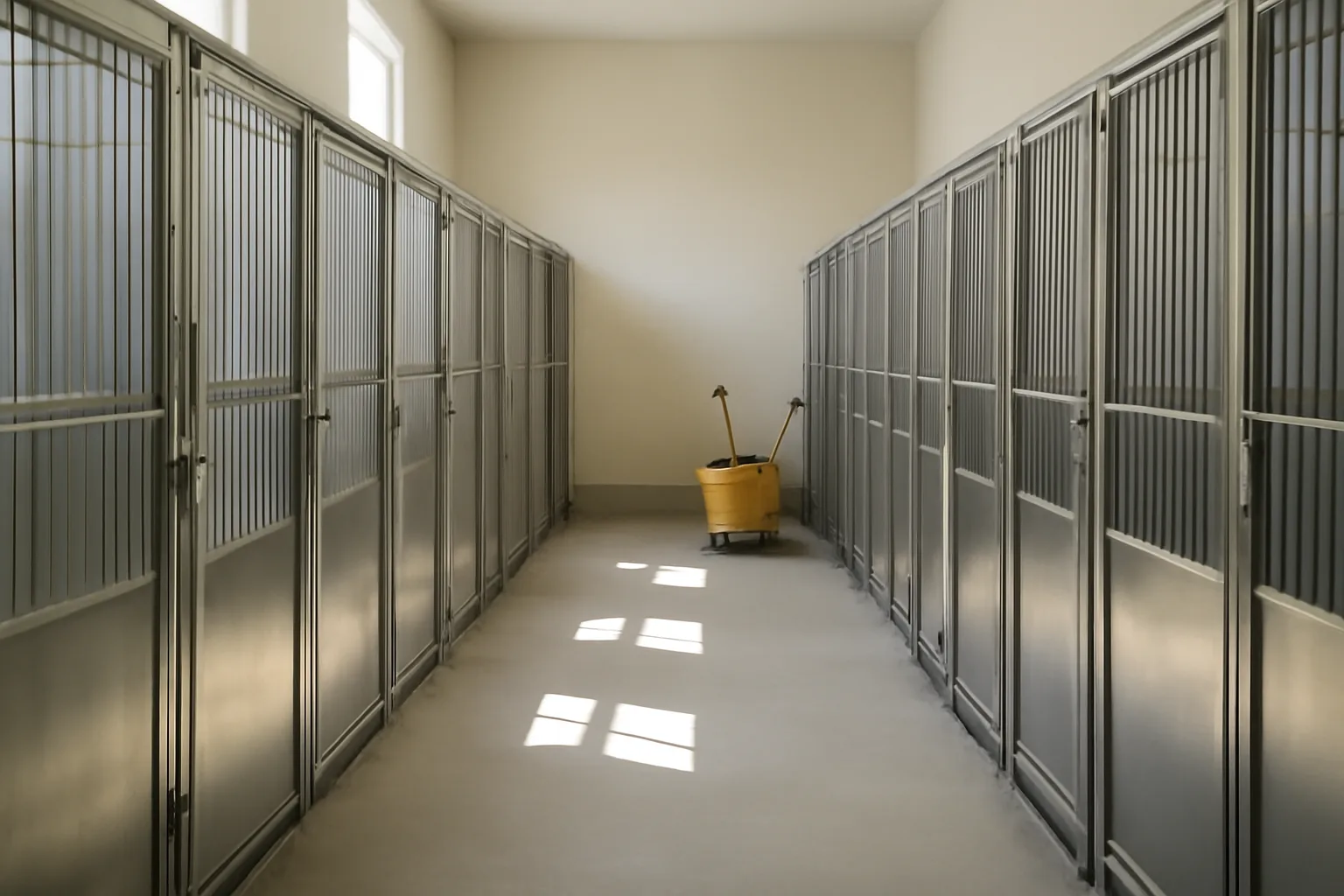
TL;DR
Massachusetts kennel licenses are issued locally by your city or town clerk under M.G.L. Chapter 140, with fees set by the number of dogs housed (commercial kennels run roughly $10 to $200 depending on class). You'll also need a local board of health permit, zoning approval, and possibly a USDA license if you sell puppies across state lines or online.
What is a kennel license in Massachusetts, and who needs one?
A Massachusetts kennel license is a local permit, issued by your city or town clerk, that lets you keep multiple dogs at one address for boarding, breeding, training, or sale. It's separate from an individual dog license, which every dog owner in the state needs regardless of how many dogs they have [1]. Under Massachusetts General Laws Chapter 140, Section 137A, a "kennel" generally means a facility, other than a private household keeping personal pets, where dogs are boarded, bred, or trained for a fee, or a household that keeps more dogs than the town's individual dog license limit allows without a kennel license [2]. The exact dog-count threshold that triggers kennel licensing (often four or more dogs over six months old) is set at the local level and varies by town, so you have to check your specific municipal bylaw, more than the state statute. If you're running a boarding facility, a daycare, a grooming operation with overnight stays, or a breeding operation with multiple adult dogs, you almost certainly need a kennel license, more than individual dog licenses. Towns issue different kennel license "classes" based on capacity, and the fee schedule scales with how many dogs you're licensed to keep [1]. This is different from a lot of states where the kennel license comes from a state agriculture department; in Massachusetts, the state sets the framework, but your town or city runs the actual licensing program.
How do you get a Massachusetts kennel license, step by step?
You apply through your city or town clerk's office, not a state office. The process generally has five steps, though the order and specific forms differ by municipality. 1. Confirm zoning first. Before you sink money into an application, call your local zoning or planning department to confirm your property is zoned for a commercial kennel, boarding facility, or animal care business. Many towns limit kennels to industrial, agricultural, or specific commercial districts, and some require a special permit or variance even in allowed zones. Skipping this step is the single most common reason kennel applications stall. 2. Get your board of health sign-off. Massachusetts kennels typically need approval from the local board of health, which checks sanitation, waste handling, noise, and animal welfare conditions before the clerk will issue the license [2]. Expect a site visit. 3. File the kennel license application with the town clerk. You'll list the number and type of dogs, the property address, and often the name of a licensed veterinarian who can attest to the animals' health. 4. Pay the fee, which is set by your municipality within the state's fee structure. State law allows towns to charge kennel fees on a sliding scale by kennel class (commonly categories for up to 10, 25, 50, or more dogs), with a state-level portion built in; individual town fees for commercial kennels often run somewhere between $10 and $200 depending on class and local surcharges, but you need to confirm the current schedule with your clerk because towns can set their own add-on fees [1]. 5. Renew annually. Massachusetts kennel and dog licenses run on a calendar year and must be renewed, typically by April 1, alongside individual dog licensing deadlines in many towns [1]. If you want a structured way to pull together your zoning check, board of health prep, and license application into one packet before you start calling town offices, that's exactly the gap our kennel license and zoning packet is built to fill. It's a $149 one-time tool, not a law firm and not a substitute for talking to your town, but it saves you from missing a step.
How much does dog boarding cost, and does that affect licensing?
Dog boarding in Massachusetts commonly runs $35 to $75 per night for a standard kennel or suite, with upscale "dog hotel" style facilities charging $60 to $120 or more per night depending on the region and amenities. These are market prices you set as a business owner; they have nothing to do with your license fee, but they matter for your business plan because your kennel license class (how many dogs you're approved to house) caps your revenue potential. There's no statewide price control on boarding rates in Massachusetts. What is regulated is capacity: your board of health and kennel license set the maximum number of dogs you can house at once, and exceeding that number without amending your license is a code violation, more than a business risk. If you're scaling from a 10-dog kennel license to a 30-dog operation, you'll need to reapply or amend your license and likely go through another zoning and board of health review. For context on typical facility economics and what boarding operators charge nationally, see our guides on dog boarding and pet boarding costs and setup.
How do you register a dog in Massachusetts (individual dog licenses)?
Every dog owner in Massachusetts, whether they run a kennel or just have a family pet, must license their dog annually with their city or town clerk once the dog turns six months old, under M.G.L. Chapter 140, Section 137 [1]. This is separate from, and required in addition to, any kennel license you hold as a business. To register, you typically bring proof of current rabies vaccination (Massachusetts requires rabies vaccination for all dogs per 105 CMR 330.000, the state's rabies control regulation) and, in many towns, proof of spay/neuter status, since altered dogs often qualify for a lower license fee [3]. You pay the town's set fee, which is usually in the $10 to $20 range for an intact dog and less for a spayed or neutered one, though exact amounts are set locally and vary town to town. Dog license tags must be worn on the dog's collar, and towns enforce this through animal control. If you're licensing dogs on behalf of a kennel or foster operation, check whether your town requires each dog to be individually licensed even under a kennel license umbrella; many do.
How do you get papers for a dog (proof of breed and lineage)?
"Papers" usually means one of two different things, and people conflate them a lot: registration with a breed club (like the American Kennel Club) that documents pedigree, or a state dog license that proves the dog is legally registered with your town. They are not the same thing, and neither one requires the other. For breed registration papers, the process runs through the breed club, not the state. If you bought a puppy from a breeder, the breeder should provide an AKC registration application (or the equivalent from another registry) at the time of sale, which you then complete and submit to formally register the dog in your name. If you don't have papers and believe your dog is purebred, some registries offer limited registration paths, but there's no guarantee, and Massachusetts state government has no role in breed pedigree registration. For a state dog license (the legal requirement), you register directly with your town clerk as described above, using proof of rabies vaccination. If you're asking how to get papers for a rescue or shelter dog with unknown lineage, the honest answer is you generally can't get breed pedigree papers retroactively; you can get a town dog license, and if you want DNA-based breed information, a genetic testing kit is the only real option, and it's informational, not an official registration.
How do you become a dog breeder in Massachusetts?
Massachusetts doesn't have a single statewide "breeder license" separate from the kennel licensing system. If you keep multiple breeding dogs at one property, you fall under the same municipal kennel license framework described above, and your town's dog-count threshold determines when you cross from "pet owner" to "kennel operator" [2]. Beyond the local kennel license, breeders need to watch two additional layers. First, Massachusetts has an animal welfare statute (M.G.L. Chapter 140, Section 151A and related sections) governing commercial dog breeding conditions, and the Massachusetts Department of Agricultural Resources has authority over certain animal health and welfare matters, so check with them directly if you're planning a larger breeding operation [4]. Second, and this is the one people miss most often, if you sell puppies sight unseen (online, by phone, or through a broker) to buyers in another state, or if you're a wholesale breeder selling to pet stores or brokers, you likely need a USDA license under the Animal Welfare Act. The federal threshold is specific: under USDA APHIS regulations, breeders who sell more than 25 dogs per year (born on their premises) directly to the public sight-unseen, or who sell any dogs to a broker, dealer, or pet store as a middleman, generally need a Class A or Class B USDA license, unless they qualify for the retail pet store exemption for buyers who see the animal in person before purchase . As APHIS puts it, the Animal Welfare Act "requires that minimum standards of care and treatment be provided for certain animals bred for commercial sale... or exhibited to the public" . If you sell exclusively face to face, locally, in small numbers, you may stay under this federal threshold, but the moment you start shipping puppies out of state or selling through a website without in-person visits, get familiar with the APHIS licensing rules before you take a deposit. Zoning is the other trap. A lot of new breeders assume that because they're "just breeding a few litters," they don't need to touch zoning or a kennel license. But if your town's threshold is, say, four dogs over six months, and you're keeping five breeding females plus stud dogs, you're over the line and need a kennel license regardless of intent. Check your specific municipal bylaw; Massachusetts leaves this threshold to local governments, and it is not uniform across the state's 351 cities and towns.
How to get a dog license if you're opening a boarding or daycare business
If you're opening a boarding or daycare facility, you need two license tracks running in parallel: the individual dog license for any dogs you personally own, and the commercial kennel license for the business itself. These aren't interchangeable, and confusing them is a common early mistake. For the business side, start with your town clerk and ask specifically for the "kennel license" application, not the individual dog license form. Ask what kennel class fits your planned capacity (some towns break this into small, medium, large, or use straight dog-count brackets), and ask what board of health documentation they require before they'll issue it [1] [2]. Expect them to ask about ventilation, waste disposal, noise mitigation, and fencing or containment, since these are standard board of health concerns for kennels statewide even though specific standards are set locally. For zoning, don't assume a commercial storefront location works. Boarding and daycare facilities often need to be in a business, commercial, or industrial zone, and some towns specifically carve out "kennel" or "animal care facility" as a use requiring a special permit even within an allowed zone. Call the zoning office before you sign a lease. For a broader look at facility setup considerations once you clear licensing, our guides on doggy day care and dog kennels cover layout and operational planning.
What does a Massachusetts kennel license cost, and how are fees structured?
| Small (up to ~10 dogs) | ~$10-$50 | Town clerk, per local bylaw | |
|---|---|---|---|
| Medium (~10-25 dogs) | ~$25-$100 | Town clerk, per local bylaw | |
| Large (~25-50+ dogs) | ~$100-$200+ | Town clerk, per local bylaw | |
| Individual dog license (per dog) | ~$10-$20 | Town clerk | *Ranges are illustrative based on common municipal fee patterns under M.G.L. Chapter 140; your town sets the actual number, so confirm directly [1] [1]. On top of the license fee itself, budget for board of health inspection fees, possible zoning application or special permit fees (these can run several hundred dollars in some towns), and any required professional fees if your town wants engineered site plans for waste management or drainage. None of these are state-mandated dollar amounts; they're local, and they add up faster than people expect. |
Massachusetts kennel license fees are set locally within a state framework, and they scale by the number of dogs the kennel is licensed to house. State law establishes kennel license classes tied to dog-count brackets, and towns then set the actual dollar fee within or alongside that structure, so you'll see real variation from one town to the next [1]. As a rough guide, commercial kennel license fees in Massachusetts towns commonly range from about $10 for the smallest kennel class up to $200 or more for the largest commercial classes, with individual dog license fees layered on top in some jurisdictions. Because towns set their own numbers, you should treat any figure here as a planning estimate, not a quote, and confirm the current fee schedule directly with your town clerk before budgeting. | Kennel size (approx. dog count) | Typical Massachusetts fee range* | Who sets it |
What zoning rules apply to a Massachusetts kennel or boarding facility?
Zoning for kennels in Massachusetts is entirely local, run through your city or town's zoning bylaw and enforced by the zoning board of appeals or planning board, not a state agency. There's no statewide zoning code for kennels; the state's role is limited to the licensing framework under Chapter 140 [2]. Most towns place kennels, boarding facilities, and animal care businesses in commercial, industrial, or agricultural zoning districts, and many require a special permit even within those districts, which usually means a public hearing before the zoning board. Expect the board to ask about setbacks from property lines and neighboring residences, noise mitigation (barking is the number one neighbor complaint at these hearings), traffic and parking for drop-off and pick-up, and waste and odor management. If your property is in a residential zone, don't assume you're out of luck; some towns allow a kennel as a special exception use with conditions, but plenty of others don't allow it at all in residential districts, full stop. Check your town's actual zoning bylaw text (usually posted as a PDF on the town website) rather than relying on secondhand advice, since bylaws differ significantly even between neighboring towns. If you need a structured starting point for pulling together your zoning research and board of health documentation before a hearing, that's the specific gap our $149 kennel license and zoning packet is designed to close. It doesn't replace a lawyer or represent you before the board, but it organizes the pieces you'll need.
How does the USDA (APHIS) threshold affect Massachusetts breeders and boarders?
USDA licensing is federal and applies on top of, not instead of, your Massachusetts kennel license. The Animal Welfare Act, enforced by USDA's Animal and Plant Health Inspection Service (APHIS), requires a federal license for certain commercial breeders and, in some cases, boarding or transport operations that deal in regulated animals across state lines . For breeders specifically, APHIS licensing generally kicks in when you sell dogs wholesale (to pet stores, brokers, or over the internet/phone without the buyer seeing the animal in person before purchase) and you exceed limited thresholds; the commonly cited retail exemption threshold is selling no more than a small number of breeding females (historically referenced around four or fewer) while relying on person-to-person retail sales, though the current regulatory text and APHIS guidance should be checked directly since these thresholds have been revised over time . If you're near this line, don't guess: APHIS maintains current licensing guidance and you can also call your regional APHIS Animal Care office directly. For boarding and daycare operators, USDA licensing is less commonly triggered, since most boarding is a service to owners rather than a sale or exhibition of animals, but if you're also breeding, transporting animals commercially across state lines, or operating in a way that overlaps with exhibition or wholesale sale, it's worth a direct call to APHIS to confirm you're clear. Getting this wrong isn't a paperwork inconvenience; operating without a required USDA license can bring federal enforcement action separate from anything your town does.
What should you do before applying, and what's the realistic timeline?
Realistically, budget 60 to 120 days from your first zoning call to having a usable kennel license in hand, longer if your town requires a special permit hearing (those often run on a monthly public hearing cycle with posting and notice requirements that add weeks by themselves). Here's the order that avoids the most expensive mistakes: confirm zoning eligibility before you sign a lease or buy property, get a preliminary sense of board of health expectations before you build out the space, apply for the kennel license once your facility meets those standards, and only then start marketing or taking bookings. Operators who reverse this order (leasing first, asking questions later) are the ones who end up in front of a zoning board asking for a variance on a property that was never going to work. It's also worth checking whether your town treats boarding, daycare, and breeding as the same "kennel" category or as separate use classifications with different standards; some do split them out. And if you're planning to eventually cross the USDA threshold through growth (more breeding females, wholesale accounts, interstate sales), plan your facility and recordkeeping systems now so you're not retrofitting for federal inspection later.
Frequently asked questions
How much does dog boarding cost in Massachusetts?
Standard boarding kennels typically charge $35 to $75 per night, while upscale facilities with suites or extra play time can run $60 to $120 or more per night. Rates vary by region, season, and amenities, and there's no state price regulation; you set your own rates as the operator, within whatever capacity your kennel license allows.
How do you register a dog in Massachusetts?
You register with your city or town clerk once your dog turns six months old, bringing proof of current rabies vaccination as required under 105 CMR 330.000. Fees are set locally, typically $10 to $20, often less for spayed or neutered dogs. This is required annually under M.G.L. Chapter 140, Section 137, regardless of whether you also hold a kennel license.
How do you get a dog license in Massachusetts?
Visit or contact your town or city clerk's office, bring proof of rabies vaccination, and pay the local licensing fee. Some towns allow online or mail renewal after the first year. Licenses are due annually, commonly by April 1, and the tag must stay on the dog's collar.
How do you get papers for a dog?
If you mean breed registration (like AKC papers), that comes from the breeder at time of sale or from the breed registry directly, not from any government office. If you mean a legal dog license, that's issued by your town clerk. Massachusetts state government has no role in pedigree paperwork.
How can I get papers for my dog if the breeder never gave me any?
Contact the breeder first; they may have simply delayed the paperwork. If they're unresponsive or the dog's lineage is unknown, you generally can't create pedigree papers after the fact. A DNA breed test gives informational ancestry data but isn't an official registry document. You can still get a standard town dog license regardless.
How do you become a dog breeder in Massachusetts?
There's no separate state breeder license; once you keep more breeding dogs than your town's threshold allows (often around four), you need a municipal kennel license under M.G.L. Chapter 140. If you sell wholesale or ship puppies out of state sight-unseen, you may also need a federal USDA APHIS license.
What is the USDA threshold that requires a federal breeder license?
USDA APHIS generally requires a license when breeders sell dogs wholesale, through brokers, or sight-unseen (online/phone sales without an in-person visit) beyond a small retail exemption threshold. The exact numeric thresholds have been revised over time, so check current APHIS Animal Welfare Act licensing guidance directly before assuming you're exempt.
How much does a Massachusetts kennel license cost?
Fees are set locally and scale by kennel size, commonly ranging from around $10 for small kennels to $200 or more for large commercial operations, plus possible board of health and zoning fees. Because towns set their own schedules under M.G.L. Chapter 140, confirm exact current fees with your specific town clerk.
Do I need a kennel license just to board dogs occasionally in my home?
It depends on your town's dog-count threshold and whether you're charging a fee. Occasional, unpaid dog-sitting for friends usually doesn't trigger licensing, but regularly boarding dogs for money, or exceeding your town's kennel threshold, generally does require a municipal kennel license and possibly zoning review.
Does Massachusetts require a separate business license beyond the kennel license?
Possibly. Depending on your town, you may also need a general business certificate, a home occupation permit if you're operating from a residence, and board of health sign-off. These run separately from the M.G.L. Chapter 140 kennel license, so ask your town clerk for the full list of required local permits.
What's the difference between an individual dog license and a kennel license in Massachusetts?
An individual dog license (M.G.L. Chapter 140, Section 137) is required for every pet dog over six months old, regardless of business activity. A kennel license is a separate commercial or multi-dog permit required once you exceed your town's dog-count threshold or operate a boarding, breeding, or training business.
Can a zoning board deny a kennel license application in Massachusetts?
Zoning approval and the kennel license itself are handled by different bodies, but yes, if your property isn't zoned for a kennel use and you need a special permit or variance, the zoning board of appeals or planning board can deny it after a public hearing. Neighbor objections about noise and traffic are common grounds for denial or added conditions.
Sources
- Massachusetts General Laws, Chapter 140, Section 137 (dog licensing): Every dog owner must license their dog annually with the city or town clerk once the dog turns six months old.
- Massachusetts General Laws, Chapter 140, Section 137A (kennel license definitions): Defines what constitutes a kennel and establishes the municipal kennel licensing framework.
- Massachusetts Department of Public Health, 105 CMR 330.000 (rabies control regulation): Massachusetts requires rabies vaccination for dogs, which is required documentation for dog licensing.
- Massachusetts General Laws, Chapter 140, Section 151A (animal welfare/kennel conditions): State statute governs conditions and welfare standards for commercial dog-keeping facilities.
- Massachusetts General Court: Defines terms used in the Massachusetts dog licensing and control laws, including definitions relevant to kennels.
- Massachusetts General Court: Establishes requirements for individual dog licensing in Massachusetts, including annual registration.
- Massachusetts General Court: Outlines requirements applicable to kennels and commercial boarding or breeding operations under state animal control law.
- Mass.gov: Describes the process for registering an individual dog license in Massachusetts.
- Massachusetts Department of Agricultural Resources: State agency involved in oversight of animal health and kennel-related regulations in Massachusetts.
- Code of Federal Regulations: Defines terms under the Animal Welfare Act relevant to USDA APHIS licensing thresholds for breeders and boarding facilities.
- Code of Federal Regulations: Establishes licensing requirements for dog breeders and dealers under USDA APHIS regulations.