Last updated 2026-07-25
TL;DR
Michigan requires a state Dog Law license (through your county treasurer or a state-approved shelter) for anyone keeping multiple dogs for breeding, boarding, or sale, plus separate county dog licenses for each animal. Boarding kennels and breeders may also need a USDA license if they sell dogs sight unseen across state lines, and every facility needs local zoning approval before the state will finalize anything.
What is a kennel license in Michigan, exactly
Michigan doesn't have one single "kennel license" that covers everything. There are actually three separate layers, and mixing them up is the single biggest reason operators get stuck mid-application. First, there's the individual dog license. Michigan's Dog Law of 1919, as amended (MCL 287.262), requires every dog four months or older to be licensed through the county where the owner lives [1]. This is the same license a pet owner with one Labrador needs, and it's separate from anything commercial. Second, there's the kennel license under the same Dog Law, which covers anyone who keeps, harbors, or boards multiple dogs, whether for breeding, sale, boarding, or exhibition. Counties administer this, and the specific threshold (often four or more dogs, though this varies by county) and the fee schedule are set locally, not by the state legislature directly [1]. Third, if you sell puppies commercially, especially sight unseen to buyers in another state, you may cross into a federal USDA Animal Welfare Act license or registration, regulated by APHIS, separate from anything Michigan issues [2]. If you're opening a boarding facility or dog boarding business rather than breeding, your main paperwork trail runs through the county kennel license and local zoning, not USDA. If you're breeding and selling multiple litters a year, you need to check both. We'll separate these clearly below because conflating them is how applications get bounced back.
How do I get a kennel license in Michigan (county by county)
You apply through the county treasurer's office in the county where the facility is physically located, not where you live if that's different, and not through a state website that issues one uniform license. Michigan's Dog Law puts county treasurers in charge of issuing dog licenses and kennel licenses, and counties are allowed to set their own fee structures within the law's framework [1]. The general path looks like this in most counties: 1. Confirm your dog count triggers a kennel license (commonly 4+ dogs over four months old, but verify with your specific county treasurer, since Michigan counties don't all use identical thresholds). 2. Get your local zoning approval or a letter confirming the use is permitted (see the zoning section below); many county treasurers will ask for this before they'll issue the kennel license. 3. Provide proof of rabies vaccination for each dog covered under the kennel license. 4. Pay the kennel license fee, which is set by the county board of commissioners and varies. Some counties charge a flat kennel fee, others charge per-dog rates layered on top of a base kennel fee. 5. Renew annually, generally by the date set in your county's dog license ordinance. Because fees and exact dog-count thresholds are set at the county level, never assume a number you saw for one Michigan county applies to yours. Call the county treasurer or check their published fee schedule before you budget for this.
How much does a kennel license cost in Michigan
There's no single statewide number, and any article that gives you one flat figure for the whole state is guessing. Michigan's Dog Law authorizes counties to set their own dog and kennel license fees, so a kennel license in one county can cost meaningfully more or less than the next county over [1]. What you can budget for, realistically, are three cost buckets: the county kennel license fee itself (a locally set flat or per-dog rate), the individual dog license fees for each animal covered (also county-set, often with a discount for spayed/neutered dogs), and separate local zoning or business license fees charged by your township or city. None of these three numbers come from the same office, so you'll be making at least two or three calls or site visits: the county treasurer, and your local zoning or planning department. If you're also crossing into USDA licensing territory as a breeder, add federal fees to the list. APHIS charges licensing fees under 9 CFR 2.6, based on the class of license and the scale of your operation, with fees reviewed periodically; check the current APHIS fee structure directly rather than relying on an old number [3]. Budget guidance: get the exact county kennel fee and the zoning fee in writing before you sign a lease or make a real estate commitment. Facilities have opened, then found out zoning wouldn't allow a commercial kennel use in that parcel at all, which is a far more expensive problem than any license fee.
How do you register a dog in Michigan (basic dog licensing)
Registering a dog in Michigan means getting the individual county dog license, which is a separate, smaller step from the kennel license discussed above. Michigan's Dog Law requires the owner of any dog four months or older to obtain a license from the county treasurer where the owner resides, and to keep the dog wearing its tag (MCL 287.262) [1]. To register a dog, you'll generally need: a current rabies vaccination certificate from a licensed veterinarian, proof of spay/neuter status if you want the reduced fee many counties offer, and payment of the county's set license fee. Most counties process this at the treasurer's office, and some allow registration through partner veterinary clinics or online portals set up by the county. This individual dog registration is required whether you own one pet or run a boarding facility with fifty dogs passing through. It does not substitute for the kennel license discussed above, and boarding facilities are generally responsible for confirming that dogs in their care carry current licenses and vaccination records, since liability for an unlicensed or unvaccinated dog on your property can fall back on the facility depending on your local ordinance and your intake contract.
How do you get papers for a dog in Michigan (registration vs. breed papers)
This is where people mix up two completely different things, and it's worth separating clearly because so many searches land here confused. "Getting papers" for a dog usually means one of two things: getting the dog's official government license (the county dog registration above), or getting AKC (or another breed registry's) pedigree/breed registration papers, which is a private, non-governmental process. County dog license: this is the government-issued tag and registration discussed above, required by Michigan law for every dog over four months old [1]. It has nothing to do with breed or pedigree. Breed registration papers: if you want papers proving a dog's breed lineage (commonly called "AKC papers"), that comes from the breed registry itself, not from the state of Michigan or any county office. Breed registries issue registration based on the litter being registered by the breeder at birth, with the sire and dam already registered with that same organization. If you bought a puppy from a breeder who never registered the litter, you generally cannot retroactively get full pedigree papers; you'd need the breeder's cooperation and their own registered stock. There is no Michigan state office that issues breed pedigree papers. If someone tells you they can "get you papers" for a dog without breeder or registry involvement, be skeptical. Legitimate breed papers trace back through the litter registration, not a government license.
How do you become a dog breeder in Michigan (state and federal rules)
Becoming a breeder in Michigan means clearing three separate checkpoints: your county kennel license if you keep enough dogs to trigger it, Michigan's Dog Law compliance generally, and potentially a federal USDA license if you sell puppies commercially without the buyer seeing the dog or facility in person first. At the state and county level, if you're breeding and keeping multiple adult dogs on your property, you likely need the county kennel license described above, plus compliance with any local zoning rules for kennel or breeding operations in your zoning district (see the next section). At the federal level, the Animal Welfare Act (7 U.S.C. §2131 et seq.), enforced by USDA APHIS, requires a license for people who breed dogs for wholesale, for resale, or who sell dogs sight unseen (for example, entirely online or by phone) directly to the public, above certain thresholds. The regulations implementing the Act, at 9 CFR 2.1, define who must be licensed as a "dealer," and a 2013 Federal Register rule extended that definition to cover retail sellers of pet animals who sell animals sight unseen over the internet, by phone, or by mail, closing an exemption that previously applied to anyone selling directly to the public regardless of method [4]. The federal threshold most operators actually hit involves selling dogs sight unseen, not simply the number of females owned; if you sell puppies over the internet or by phone to buyers who never see the dog or your facility before purchase, you likely need a USDA license regardless of how few dogs you keep. Practically: if you're a small in-home breeder selling locally and letting buyers visit before purchase, you may stay in county-only territory. If you're shipping puppies to other states or advertising online without in-person visits, get familiar with USDA's licensing rules before you sell your first litter, not after an inspector calls.
What zoning approval do I need before applying for a kennel license
Zoning approval is the step most new operators underestimate, and it's usually required before your county will finalize a kennel license, not after. Zoning is set at the township, city, or county planning level in Michigan, and it varies enormously: a parcel zoned agricultural might allow a large breeding kennel outright, while the same use in a residential district might need a special land use permit, a variance, or might be flatly prohibited. Before you apply for your kennel license, contact your local zoning or planning office (this is a city, township, or county-level office, not the same office that issues dog licenses) and ask directly: is a commercial kennel, boarding facility, or breeding operation a permitted use, a special/conditional use, or a prohibited use on this specific parcel? Get the answer in writing if you can. Many jurisdictions require a public hearing before the zoning board of appeals or planning commission for a special land use permit, and that process alone can take weeks to months depending on your local board's meeting schedule. If you're planning a facility that will board, groom, or house dogs commercially, alongside your zoning check, it's worth reading up on general facility planning for pet boarding or dog kennels operations, since zoning boards often ask about noise mitigation, setback distances, waste handling, and parking as part of a special use hearing, more than the use category itself. This is also the step where a packaged reference tool can save real time: pulling together your county's kennel license requirements alongside a zoning-hearing prep checklist in one place is exactly the gap a $149 Kennel License & Zoning Packet is built to close, though you'll still need to confirm your specific county's fees and forms directly with that office, since packaged guides can't replace a call to your local zoning administrator.
What facility standards apply to boarding and daycare operations
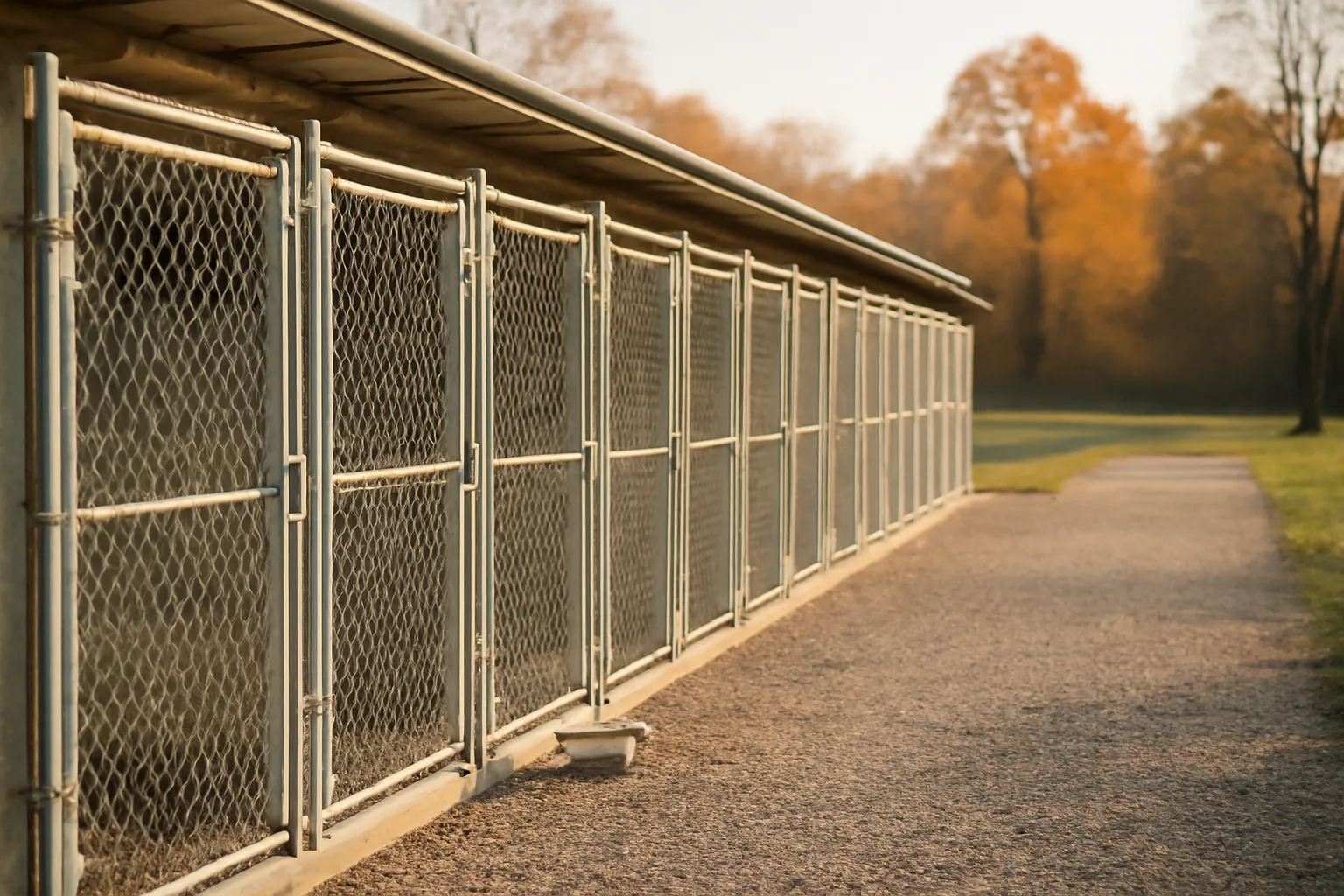
Michigan doesn't run a single statewide facility-standard code for boarding kennels the way it does for licensed animal shelters and pet shops under some administrative rules; a lot of the day-to-day facility standard is set locally through zoning conditions, health department input (especially around waste disposal and water supply), and your county's kennel license conditions. What you should expect to document regardless of county: adequate space per dog, sanitary waste removal, secure fencing or containment sufficient to prevent escape, a functioning ventilation and temperature control plan (especially relevant for Michigan's hot summers and cold winters), and a documented vaccination/rabies record requirement for every boarded dog. If you're also under USDA licensing as a breeder, APHIS's Animal Welfare Act regulations at 9 CFR Part 3, Subpart A set specific, detailed space, temperature, and sanitation requirements you must meet regardless of what your county asks for, since federal standards apply on top of, not instead of, state and local rules [5]. If you're planning a daycare-style operation rather than overnight boarding, look at how doggy day care facilities typically structure play-group sizes and staff ratios, since some counties fold daycare into the same kennel license category as boarding, and some treat it as a distinct use requiring its own zoning classification.
How much does dog boarding cost, and does that affect my license type
Dog boarding pricing itself doesn't change your license category (a boarding kennel is a boarding kennel whether you charge $25 or $75 a night), but it's a common search that lands here, so it's worth answering directly since operators researching licensing are often pricing out their business model at the same time. Nationally, boarding costs vary widely by region and service level, commonly running somewhere in the range of $25 to $85 per night for standard boarding, with luxury or suite-style options in some markets running higher. There's no single authoritative government price index for this since it's a private service market, so treat any number you see, including this range, as a rough market signal rather than a regulated figure. Michigan licensing offices don't set or cap boarding prices; that's a private business decision. What licensing does affect is your legal ability to operate at a given capacity. If your kennel license or zoning approval caps you at, say, 20 dogs on site at a time, that's the ceiling on your revenue model regardless of nightly rate, so get your capacity approved before you build a pricing sheet around a higher number. If you're comparing your local market, dog hotels near me style research and looking at competitors like Dogtopia can help you understand where premium suite-style pricing fits versus standard kennel-run boarding, but that's a business strategy question, separate from your license application.
What's the difference between a state license, a county license, and a USDA license
| County dog license (individual) | County treasurer | Every dog owner, 4+ months old | Michigan Dog Law of 1919, as amended [1] | |
|---|---|---|---|---|
| County kennel license | County treasurer | Anyone keeping multiple dogs commercially (breeding, boarding, sale); exact dog-count trigger set by county | Michigan Dog Law of 1919, as amended [1] | |
| Local zoning approval | Township/city/county planning or zoning office | Any commercial kennel, boarding, or breeding use on a given parcel | Local zoning ordinance (varies by jurisdiction) | |
| USDA/APHIS Animal Welfare Act license | USDA APHIS | Breeders selling wholesale, to brokers, or sight-unseen across state lines; certain research/exhibition uses | Animal Welfare Act, 7 U.S.C. §2131 et seq., implemented at 9 CFR 2.1 [2] | Notice that zoning approval sits in its own row with its own authority. It's easy to assume that once you have your county kennel license, you're cleared to operate, but the kennel license and the zoning permit are issued by different offices under different laws, and a county treasurer issuing your kennel license doesn't guarantee your parcel is zoned for the use. Confirm both, separately, before committing to a location. |
People searching "kennel license Michigan" often actually need one of three different things, so here's a direct comparison to sort it out fast. | License type | Who issues it | Who needs it | Governing authority |
What paperwork should I gather before applying
Getting organized before you walk into any office saves you multiple trips. Here's a realistic checklist based on the layers above: For the county kennel license: proof of rabies vaccination for each dog, your business or property address, possibly a facility floor plan or dog-count declaration, and (in most counties) evidence of zoning compliance or an approved special use permit. For zoning: your parcel's zoning designation (get this from the township/city zoning map or by calling the zoning office directly), a site plan showing dog housing, exercise areas, parking, and waste management, and if a public hearing is required, be ready to present noise, odor, and traffic mitigation plans to the zoning board. For USDA (if applicable): your breeding and sales records, facility plans meeting Animal Welfare Act space and sanitation standards under 9 CFR Part 3, and your application through APHIS's licensing process, which includes a facility inspection before a license is issued [5]. For individual dog licenses on top of all this: rabies certificates and spay/neuter documentation for each dog, since counties commonly offer reduced fees for altered dogs. This is exactly the kind of multi-office, multi-form process a Kennel License & Zoning Packet is designed to organize into one reference workflow, at a flat $149 one-time cost, though again, it functions as an organizing and prep tool, not a substitute for confirming your specific county's current fees and forms, and not a substitute for legal representation at a zoning hearing.
Frequently asked questions
How much does dog boarding cost in Michigan?
Boarding rates aren't set by the state; they're a private business decision. Nationally, standard boarding commonly runs $25 to $85 per night depending on region and amenities, with premium suite options higher in some markets. Licensing doesn't cap price, but your zoning-approved dog capacity does cap how many dogs you can legally board at once.
How do I register a dog in Michigan?
Take your dog to a licensed veterinarian for a rabies vaccination, then bring the certificate to your county treasurer's office (where you reside) to get a dog license, required for every dog four months or older under Michigan's Dog Law of 1919, as amended (MCL 287.262). Many counties offer reduced fees for spayed or neutered dogs.
How do you get papers for a dog?
"Papers" usually means either the government dog license (from your county treasurer, required for all dogs) or private breed registry papers, which comes from the breeder registering the litter at birth, not from any government office. There's no state agency that issues breed pedigree papers after the fact.
How can I get papers for my dog if the breeder never registered the litter?
If the litter was never registered with a breed registry, you generally can't get full pedigree papers after the fact without the breeder's cooperation and their own registered breeding stock. Contact the breeder first; if that's not possible, you likely can't obtain retroactive breed papers, though the dog can still get a standard county license.
How do I get a kennel license in Michigan?
Contact your county treasurer's office where the facility is located, confirm your dog count triggers the kennel license requirement, secure local zoning approval for the use, provide rabies vaccination records, and pay the county-set kennel license fee. Requirements and fees vary by county under Michigan's Dog Law of 1919, as amended.
How do I become a dog breeder in Michigan?
Get your county kennel license if you keep multiple dogs, confirm your property's zoning allows breeding or kennel use, and check whether you need a USDA APHIS license under the Animal Welfare Act, which generally applies if you sell dogs wholesale, to brokers, or sight unseen across state lines rather than through in-person sales.
Does Michigan require a USDA license for dog breeders?
Only in certain cases. USDA APHIS licenses are required for breeders selling wholesale, to pet stores or brokers, or selling dogs sight unseen (online or phone sales without the buyer meeting the dog or visiting the facility first), per the licensing definitions at 9 CFR 2.1. Small breeders selling locally with in-person visits are commonly exempt, but check current APHIS guidance directly.
How much does a kennel license cost in Michigan?
There's no single statewide fee. Michigan's Dog Law lets counties set their own kennel and dog license fees, so costs vary by county. Call your county treasurer's office for the current fee schedule, and check separately with your local zoning office for any additional permit fees.
What's the difference between a kennel license and a zoning permit?
A kennel license is issued by your county treasurer under Michigan's Dog Law and covers keeping multiple dogs legally. A zoning permit or special use approval is issued by your township, city, or county planning office and covers whether your specific parcel allows a commercial kennel use at all. You typically need both, from two different offices.
Do I need a kennel license just to board a few dogs occasionally?
It depends on your county's specific dog-count threshold and whether the activity is commercial. Occasional, non-commercial dog-sitting for friends may fall outside kennel license requirements in some counties, but running a paid boarding business almost always requires both a kennel license and zoning approval. Confirm your county's exact threshold before assuming you're exempt.
Can I operate a home-based dog daycare in a residential zone in Michigan?
Sometimes, but it depends entirely on your local zoning ordinance, not state law. Many residential zones prohibit or require a special use permit for commercial animal care businesses. Contact your township or city zoning office before advertising or accepting clients, since operating without proper zoning approval can lead to a shutdown even if your county kennel license is valid.
How long does it take to get a kennel license and zoning approval in Michigan?
The county kennel license itself is often quick, sometimes issued same-day once paperwork is complete. Zoning approval, especially if a special land use permit or public hearing is required, can take weeks to a few months depending on your local planning commission's meeting schedule and whether neighbors raise objections.
Sources
- Michigan Legislature, Michigan Compiled Laws 287.262 (Dog Law of 1919, licensing requirement): Michigan requires dog licensing through county treasurers and authorizes counties to set kennel and dog license fees
- Electronic Code of Federal Regulations, 9 CFR 2.1 (Animal Welfare Act licensing requirement): USDA licensing requirements for breeders/dealers selling wholesale, to brokers, or sight unseen
- Electronic Code of Federal Regulations, 9 CFR 2.6 (license fees): APHIS licensing fees are based on license class and operation scale under federal regulation
- Electronic Code of Federal Regulations, 9 CFR Part 3, Subpart A (dog facility space and sanitation standards): Animal Welfare Act facility standards for space, temperature, and sanitation apply to licensed dog breeders
- Federal Register, 78 FR 57227 (Amendments to definition of retail pet store, 2013 final rule): The 2013 rule change extended USDA licensing to breeders selling dogs sight unseen via internet or phone
- Cornell Law School, Legal Information Institute, 7 U.S.C. 2131 (Animal Welfare Act, congressional statement of policy): The Animal Welfare Act is the federal statute authorizing USDA regulation of animal dealers and breeders