Last updated 2026-07-25
TL;DR
Getting a kennel license means clearing three separate hurdles: county zoning approval, a state or county kennel/facility license (often $25 to $500+ depending on dog count), and, for breeders, possibly a USDA license if you sell 4+ breeding females through wholesale or online-without-in-person channels. Start with your county zoning office, then your state department of agriculture.
What exactly is a kennel license, and do you need one?
A kennel license is a permit, usually issued by a state department of agriculture or a county clerk, that lets you keep and operate with more dogs than a standard household pet limit allows. Most states cap household ownership at somewhere between 3 and 5 dogs before you cross into "kennel" territory, though the exact number varies a lot by state and even by township within a state. If you're opening a boarding facility, running dog daycare, or breeding litters regularly, you almost certainly need one. The license is separate from your business license and separate from your zoning approval, though all three usually have to line up before you can legally open your doors. Some states run kennel licensing at the state level (Pennsylvania is a well-known example, through its Bureau of Dog Law Enforcement). Others push it down to the county or even the municipality, which means the same business model can require a totally different application in the next county over. New York, for instance, requires municipalities to license dogs and requires kennels and pet dealers to register with the Department of Agriculture and Markets under Article 26 of the Agriculture and Markets Law [1]. Because the rules are this fragmented, the honest first move is to call your county zoning office and your state department of agriculture, in that order, before you sign a lease or buy equipment. If you want a structured way to organize what each agency asks for, a kennel license packet built for your state saves a lot of back-and-forth.
How do you get a kennel license, step by step?
The process looks broadly similar everywhere, even though the specific forms and fees differ. Here's the order that causes the fewest headaches. 1. Check local zoning first. Before anything else, confirm your property is zoned for a kennel, boarding facility, or animal care use. Many counties require a conditional use permit or special exception, which means a public hearing, more than a form. Zoning almost always outranks any state license: a state can approve your paperwork and your township can still say no to the location. 2. Apply for the state or county kennel license. This is usually a form through your state department of agriculture (or, in some states, the county treasurer or clerk) listing the address, number of dogs, and type of operation. Pennsylvania's kennel license fee schedule, for example, scales by the number of dogs kept, from under 26 dogs up through 50-plus, with fees that have run from roughly $50 up past $500 depending on the class and whether the kennel is for-profit or nonprofit [2]. 3. Pass a facility inspection. Most states or counties send an inspector to check things like enclosure size, sanitation, ventilation, fencing, and record-keeping before or shortly after issuing the license. Some states require this before approval; others do a post-licensing check within the first year. 4. Get your business license and any required insurance. This runs parallel to the kennel license and is usually handled by the county or city clerk's office. 5. Renew annually. Nearly every kennel license needs yearly renewal, and missed renewals can trigger fines separate from the base fee. If you're breeding and plan to sell dogs across state lines or wholesale, there's a sixth step: figure out whether you also need a USDA license, which is covered below.
How much does dog boarding cost to run legally (licensing and setup costs)?
For an operator, "cost" means two different things: what you charge customers, and what it costs you to get licensed and compliant. Both matter, so here's both. On the licensing side, kennel license fees vary enormously. Pennsylvania's kennel classes run roughly $50 to over $500 a year depending on dog count and whether the operation is commercial [2]. County-level dog licenses for individual pets are usually far cheaper, often $10 to $25 per dog per year, but a commercial kennel license covering the whole facility is a different, higher fee tier. Add to that: zoning application/hearing fees (often $100 to $1,000+ depending on the county and whether a variance or conditional use permit is required), inspection fees, and in some states a separate business license fee. On the customer-facing side, dog boarding typically runs $25 to $85 per night depending on region, with upscale "dog hotel" suites running higher. Daycare tends to run $20 to $40 per day. These numbers move a lot by metro area and by what's included (feeding, play groups, webcam access), and there's no single national number that's authoritative, so treat any flat figure you see quoted online as a rough regional average, not a rule. The real budgeting mistake operators make isn't underestimating the license fee itself, it's underestimating the buildout cost to meet facility standards (drainage, fencing height, ventilation, fire suppression in some jurisdictions) that inspectors check before they'll sign off. Check our facility standards resources before you finalize a floor plan, not after.
How do you register a dog (and is that different from a kennel license)?
Registering an individual pet dog and licensing a commercial kennel are two different processes, and mixing them up wastes time. Registering a dog usually means a simple county or municipal dog license: you show proof of rabies vaccination, pay a small annual fee, and get a tag. This is required almost everywhere in the U.S. at the county or city level, and fees are typically in the $10 to $25 range, sometimes less for spayed/neutered dogs and more for intact dogs. A kennel license is a business-level authorization to keep multiple dogs (often defined by state law as anything from 3 dogs and up) for boarding, breeding, training, or sale. If you're opening a facility, you need the kennel license (and zoning approval) regardless of whether every individual dog in your care is separately registered by its owner in their home county. One wrinkle for boarding and daycare operators: some states or counties require you to keep proof of each boarded dog's rabies vaccination and home registration on file as a condition of your kennel license, even though you didn't register those dogs yourself. Build that into your intake paperwork from day one; it's a common inspection finding when it's missing.
How do you get papers for a dog, and how is that different from a kennel license?
"Papers" almost always means breed registry paperwork, most commonly from the American Kennel Club (AKC), not a government license. This confuses a lot of new breeders because the word "kennel" appears in both. To get AKC papers for a litter, you register the litter with the AKC (which requires the parents to already be individually AKC-registered, or eligible through the AKC's limited registry paths), pay the AKC's litter registration fee, and then individual puppy registration applications go to the buyers. The AKC is a private nonprofit registry, not a government agency, so this process runs entirely separate from your state kennel license or any USDA licensing. If you're asking "how do I get papers for my dog" for a dog you already own that isn't registered, your options are narrower: some registries (AKC included) have limited paths for dogs with verifiable parentage but missing paperwork (AKC's Purebred Alternative Listing / PAL program, for example, registers dogs for companion events without full pedigree papers). There's no way to retroactively create full pedigree papers for a dog whose parentage can't be documented; any service claiming otherwise isn't a legitimate registry. For breeders, the practical sequence is: register your breeding stock with a recognized registry first, keep your litter records clean, and treat registry paperwork as entirely separate from your state kennel license, your county zoning approval, and any federal USDA license you might need.
How do you become a dog breeder legally?
Becoming a licensed breeder involves layers that stack depending on how big you get. There's no single "breeder license" that covers everything everywhere. First, check your state's definition of a commercial breeder. Many states have their own breeder or "pet dealer" licensing thresholds well below the federal USDA line. Missouri, for example, regulates commercial breeders under its Animal Care Facilities Act, and states like Ohio license "high volume breeders" (defined in Ohio law as anyone with more than 9 intact adult female dogs who sells more than 40 puppies a year) through the Ohio Department of Agriculture [3]. New York requires anyone who breeds more than 3 litters of more than one puppy in a calendar year for sale to register as a breeder with the Department of Agriculture and Markets [1]. These thresholds are all different, so you have to look up your own state's number, don't assume it matches a neighboring state. Second, check zoning. Breeding operations, especially anything with outdoor runs or multiple whelping areas, often trigger the same conditional-use zoning process as a boarding kennel. A hearing board wants to know about noise, waste management, and setback distances from property lines. Third, check the federal USDA threshold, covered in detail in the next section, because this is where a lot of breeders get caught off guard as they grow. Fourth, decide on a registry (AKC, UKC, or others) for pedigree documentation, which is a business decision, not a legal requirement, though many serious buyers expect it. If you're building out kennels, whelping rooms, or exercise yards, the same dog kennels facility guidance that applies to boarding operators mostly applies to you too, since inspectors are checking similar things: sanitation, drainage, temperature control, and safe enclosure design.
When do you need a USDA license as a breeder?
This is the threshold that trips up growing breeders the most, because it's federal, it's about how you sell, more than how many dogs you have, and the penalties for skipping it are real. Under the Animal Welfare Act, USDA APHIS requires a license from anyone who breeds and sells dogs at wholesale for resale (to pet stores, brokers, or research) or who sells dogs sight unseen, meaning the buyer never physically visits the breeder's premises before purchase, if that breeder maintains more than 4 breeding females. As APHIS explains in its program guidance: "Anyone who breeds and raises more than four female dogs, cats, or small exotic or wild mammals for wholesale trade or for resale to the public (over the internet, or through a pet store, or through an outlet other than the breeder's own residence) must be licensed under the AWA" [4]. The key phrase is "sight unseen." A breeder who sells every puppy to a buyer who visits the property in person before purchase, and who sells retail directly to the public rather than wholesale, is generally exempt regardless of how many breeding females she keeps, under the retail pet store exemption in the Animal Welfare Act regulations [5]. That exemption is exactly why so many home-based breeders never need a USDA license even with a decent-sized breeding program, while breeders who sell primarily online to buyers who never set foot on the property cross the line fast, sometimes with far fewer than 4 breeding females once they add any wholesale accounts. If you cross the threshold, you need an Animal Welfare Act license (Class A for breeders who sell directly, Class B historically covered brokers/dealers, though APHIS has phased down new Class B licensing for random-source animals in recent years). Fees are tiered by the number of animals and gross revenue and are set out in 9 CFR Part 2, Subpart A [6]. Inspections are unannounced and cover housing, veterinary care, recordkeeping, and transport conditions. A lot of breeders assume "USDA license" only applies to large commercial operations. That's not quite right; it applies based on sales method (wholesale or sight-unseen) combined with the 4-breeding-female count, and a small breeder who sells mostly through a website to out-of-state buyers can trip the requirement well before they'd call themselves "commercial."
How do you prepare for the zoning side of a kennel license?
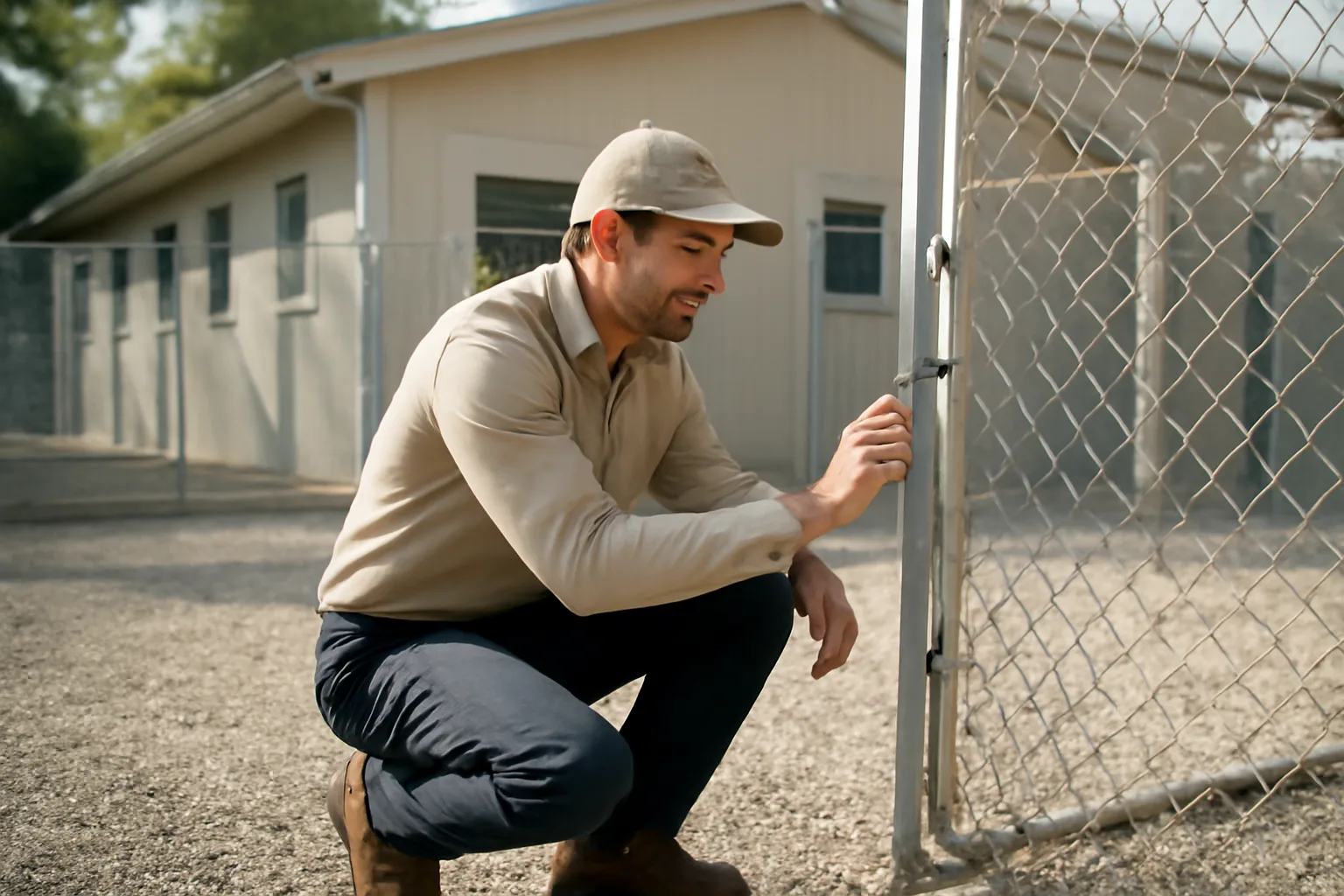
Zoning is where most kennel license applications actually stall, not the state paperwork. A state agriculture department form is usually straightforward; a zoning board hearing is not. Start by pulling your property's zoning classification from the county GIS or planning office website. Most residential and even a lot of agricultural zones don't automatically permit commercial kennels; you'll likely need a conditional use permit, special exception, or variance, which means a public hearing where neighbors can object. Common conditions boards attach: minimum lot size (sometimes 1 to 5 acres for outdoor kennels), setback distances from property lines and neighboring residences (commonly 50 to 200 feet, though this varies widely by county), sound mitigation plans, hours of outdoor dog access, and a cap on total dog count. Bring documentation to the hearing: a site plan, a noise mitigation plan if you have outdoor runs, waste management plan, and often letters of support or at least a clear explanation of traffic and parking impact. Boards that reject kennel applications most often cite noise complaints and traffic, not the dogs themselves. This is the part of the process we built our packet around: pulling together the zoning-hearing materials, the state license checklist, and the facility standards checklist into one document so you're not tracking three separate government websites while also trying to run a business. The $149 Kennel License & Zoning Packet Builder at /license-packet-builder organizes this by state, but it's a document-preparation tool, not legal representation, and it doesn't guarantee approval from any board. We're not a law firm and we don't represent anyone before a zoning board or state agency.
What does an inspector actually check before issuing the license?
Inspections vary by state, but most cover the same core categories, and knowing them ahead of time means fewer failed first visits. Sanitation and drainage: floors and runs need to be cleaned daily, waste disposed of properly, and surfaces need to drain rather than pool water. Enclosure size: many states set minimum square footage per dog based on the dog's size, often scaling with weight. Ventilation and temperature: indoor kennel areas typically need to stay within a defined range (commonly cited around 45°F to 85°F in various state kennel codes, though the exact range is state-specific) and have adequate air exchange. Fencing and containment: outdoor runs need secure fencing of adequate height with no gaps a dog could escape through. Recordkeeping: vaccination records, intake logs, and incident reports need to be current and accessible. For USDA-licensed breeders, the inspection standard is more detailed and codified in the Animal Welfare Act regulations at 9 CFR Part 3, covering everything from primary enclosure dimensions to exercise requirements for dogs housed with limited space [7]. Failing an inspection isn't usually fatal to your application; most agencies give you a correction window (commonly 30 to 60 days) to fix cited issues and request a re-inspection.
How is a kennel license different from a USDA license?
| State/County Kennel License | USDA APHIS License | ||
|---|---|---|---|
| Issued by | State dept. of agriculture or county | Federal, USDA APHIS | |
| Who needs it | Boarding, daycare, breeding operations above local dog-count threshold | Breeders with 4+ breeding females selling wholesale or sight-unseen; brokers | |
| Typical cost | Roughly $25 to $500+/year depending on state and dog count [2] | Tiered by animal count and revenue, set in 9 CFR Part 2 [6] | |
| Inspection standard | Set by state code, varies widely | 9 CFR Part 3, Animal Welfare Act [7] | |
| Covers boarding/daycare? | Yes, this is the primary license type for boarding kennels | No, USDA licensing under the AWA targets breeding/dealing, not boarding | The short version: almost every boarding or daycare operator needs a state/county kennel license and zoning approval. Almost no boarding or daycare operator needs a USDA license, since that program targets breeders and dealers, not facilities that board other people's pets. Breeders may need both, depending on their state's threshold and how they sell puppies. |
What's the honest timeline from application to open?
Plan for 3 to 6 months minimum if zoning requires a hearing, and that's an optimistic estimate in a lot of counties. Here's roughly how the time breaks down. Zoning application and hearing scheduling: 4 to 12 weeks, since many boards only meet monthly and have a submission deadline weeks before the hearing date. State kennel license application and review: often 2 to 6 weeks once zoning is settled, though some states process the license application in parallel with zoning if you disclose the pending zoning case. Facility inspection and any required corrections: 2 to 8 weeks, more if you fail the first inspection and need buildout changes. Business license and insurance: usually the fastest piece, often 1 to 3 weeks. The single biggest schedule killer is submitting a zoning application before your site plan and mitigation documents are complete; incomplete applications get bounced to the next hearing cycle, costing you a full month or more. Get your paperwork right the first time. If you're comparing whether to open a dog boarding facility versus a doggy day care model, note that daycare-only operations (no overnight stays) sometimes fall under a lighter zoning classification in some counties, since there's no overnight noise or 24-hour occupancy question, though this varies and you need to confirm it locally, not assume it.
Frequently asked questions
How much does dog boarding cost per night?
Dog boarding typically runs $25 to $85 per night in the U.S., depending on region, facility type, and whether it includes extras like playtime or webcam access. Upscale "dog hotel" suites in major metros can run higher. There's no single official national average; treat quoted figures as regional estimates, and check local competitors directly for accurate pricing in your market.
How do I register a dog with my county?
Bring proof of current rabies vaccination to your county clerk, animal control office, or the office designated by your local ordinance, pay the annual fee (commonly $10 to $25), and you'll get a license tag. Requirements and exact fees are set locally, so check your specific county or municipal website rather than assuming a flat national rule.
How do you get papers for a dog you already own?
If the dog's parents were registered with a breed registry like the AKC, you can often complete individual registration retroactively through that registry. If parentage can't be documented, full pedigree papers generally can't be created after the fact; some registries offer limited programs (like AKC's PAL) for companion-only registration without full pedigree history.
How do you become a dog breeder legally?
Check your state's breeder licensing threshold (varies by state; some start regulating at as few as 4 to 10 breeding females), confirm your property's zoning allows breeding/kennel use, register your breeding stock with a recognized registry if you want pedigree papers, and determine whether your sales method (wholesale or sight-unseen sales) triggers a federal USDA APHIS license requirement.
How do I get a dog license for my pet?
Contact your city or county clerk's office or animal control department; most require proof of rabies vaccination and a small annual fee, often $10 to $25. This individual pet license is separate from a commercial kennel license, which is what boarding, daycare, or breeding operators need for the facility itself.
How do I get papers for my dog if I don't know the breed?
You generally can't get full pedigree papers for a dog with unknown or undocumented parentage; registries require proof of lineage. Mixed-breed or unknown-parentage dogs can sometimes be registered with programs designed for companion dogs (not full pedigree status), such as AKC Canine Partners, which register dogs of any breed background for participation in some AKC activities.
Do I need a USDA license to board dogs?
No. USDA APHIS licensing under the Animal Welfare Act applies to breeders and dealers who sell wholesale or sight-unseen with more than 4 breeding females, not to boarding or daycare facilities. Boarding operators need a state or county kennel license and local zoning approval instead, not a federal license.
How many dogs can I have before I need a kennel license?
This varies by state and county, commonly somewhere between 3 and 6 dogs, though some jurisdictions set it higher or lower. There's no single national number. Check your specific county ordinance and state department of agriculture rules, since crossing the threshold without a license can result in fines even if you didn't know the limit existed.
What does a kennel license cost?
Costs vary widely by state and dog count. Pennsylvania's kennel license fees, for example, range from roughly $50 to over $500 a year depending on the number of dogs and whether the kennel is for-profit, based on the state's kennel classification schedule. Add potential zoning application fees, often $100 to $1,000+, on top.
How long does it take to get a kennel license?
Plan for 3 to 6 months from application to opening if your zoning requires a public hearing, since many boards meet only monthly. The state license and inspection piece alone often takes 4 to 10 weeks; zoning approval usually takes longer than the license itself.
What's the difference between an AKC breeder and a licensed breeder?
AKC registration is a private pedigree-tracking service, not a government license; anyone can register litters with the AKC if the parents are registered, regardless of state or federal licensing status. A "licensed breeder" refers to state or USDA licensing, which is a legal requirement based on dog count and sales method, separate from AKC paperwork.
Can I lose my kennel license after getting it?
Yes. Kennel licenses require annual renewal, and states or counties can suspend or revoke them for repeated inspection failures, animal welfare violations, or unpaid fees. Some states also allow revocation after substantiated complaints, following a review or hearing process defined in the state's kennel or animal welfare statute.
Sources
- New York State Senate, Agriculture and Markets Law Article 26: New York requires kennel and pet dealer registration with the Department of Agriculture and Markets, and breeders of more than 3 litters per year for sale must register
- Pennsylvania Department of Agriculture, Dog Law kennel license classifications and fees: Pennsylvania kennel license fees scale by dog count and for-profit status, ranging from roughly $50 to over $500 annually
- Ohio Revised Code 956.01, High Volume Breeder definitions: Ohio defines and licenses high volume breeders as those with more than 9 intact female dogs selling more than 40 puppies a year
- eCFR, Title 9, Section 2.1, Animal Welfare Act retail pet store exemption: The Animal Welfare Act includes a retail pet store exemption for breeders selling directly to buyers who view animals in person before purchase
- eCFR, Title 9, Section 2.6, Animal Welfare Act licensing fees: USDA Animal Welfare Act license fees are tiered based on the number of animals and gross revenue
- eCFR, Title 9 Part 3, Subpart A, Specifications for the Humane Handling, Care, Treatment, and Transportation of Dogs: Federal animal welfare standards for licensed dog facilities cover primary enclosure size, temperature, and exercise requirements
- eCFR, Title 9, Section 2.10, Licensing classes under the Animal Welfare Act: USDA distinguishes Class A breeder licenses from Class B dealer/broker licenses under the Animal Welfare Act