Last updated 2026-07-26
TL;DR
Oklahoma does not issue a standalone state dog breeding license. Breeders selling to brokers/pet stores or shipping sight-unseen may need a USDA Class A license once they exceed the federal threshold. Most Oklahoma breeders instead deal with city/county kennel permits, zoning approval, and Oklahoma's Commercial Pet Breeders Act licensing through the Department of Agriculture, Food and Forestry for larger operations.
Does Oklahoma require a state dog breeding license?
Not exactly, but it's close enough that most people get confused. Oklahoma doesn't have a simple statewide "dog breeder license" that every hobby breeder needs before selling a litter. What it does have is the Oklahoma Commercial Pet Breeders Act, which requires a license from the Oklahoma Department of Agriculture, Food, and Forestry (ODAFF) for anyone who keeps more breeding females and sells more animals than the law's thresholds allow. Under the Act, a "commercial breeder" is generally defined as someone who owns or keeps 11 or more adult female dogs or cats capable of breeding and sells or offers to sell any of their offspring, with some exemptions for hobby breeders and small operations. If you're under that number and selling a handful of puppies from one or two litters a year, you likely fall outside commercial breeder licensing. If you're running a larger operation, ODAFF licensing is not optional. Separately from state law, your city or county almost certainly has its own kennel or animal permit requirements that apply regardless of how many dogs you breed. A lot of Oklahoma breeders get tripped up because they check state law, see they're exempt from the Commercial Pet Breeders Act, and assume they're in the clear. Then code enforcement shows up because the county requires a kennel permit for any property keeping more than three or four adult dogs. Local rules are enforced separately from state licensing, and they don't care about your breeding female count.
Who actually needs an Oklahoma commercial breeder license?
You need one if you meet the Commercial Pet Breeders Act definition and don't qualify for an exemption. The trigger is generally 11 or more intact adult female dogs or cats kept for breeding purposes, combined with selling offspring. ODAFF administers this program and can inspect facilities, require record-keeping, and set standards of care for licensed breeders. The Act exempts certain hobby breeders, people who only sell to licensed dealers under other regulatory schemes in specific ways, and a handful of other narrow categories, so read the actual statutory language or call ODAFF's Consumer Protection Services (the division responsible for pet breeder licensing) before assuming you're covered. Statutes get amended, and exemption language is exactly the kind of detail that changes without much fanfare. If you do need a license, expect ODAFF to require an application, a facility inspection, proof you meet space and sanitation standards set in state rules, and an annual renewal. Fees and exact inspection cadence come from ODAFF's current fee schedule and administrative rules, so confirm the current numbers directly with the department rather than relying on older blog posts (including this one, six months from now).
When does USDA licensing kick in for Oklahoma breeders?
This is the part Oklahoma breeders miss most often, because it's federal, not state, and it applies no matter what county you're in. If you sell puppies wholesale, sell to pet stores, sell through brokers, or sell to buyers sight-unseen (meaning the buyer never physically meets the puppy and person before the sale, including most online and shipped sales), you may need a USDA Class A (breeder) license from the Animal and Plant Health Inspection Service (APHIS) [1]. The federal threshold that trips up a lot of small breeders: if you have more than four breeding female dogs and you sell puppies sight unseen (including over the internet) to the public, you generally need a USDA license under the Animal Welfare Act regulations, unless you qualify for a specific exemption [1] [2]. Breeders who sell every puppy through an in-person, face-to-face transaction at their own home or facility, where the buyer sees the dog and the parents before buying, are typically exempt regardless of how many females they have, under the "retail pet store" exemption carved out in USDA regulations [2]. The regulation itself defines a retail pet store as a place where buyers can physically view the animal prior to purchasing it. That physical, in-person viewing is the whole ballgame. The moment you start selling through a broker, shipping puppies unseen, or wholesaling to a pet store, that exemption disappears and USDA licensing requirements apply regardless of your Oklahoma state status. This matters a lot for Oklahoma breeders specifically because the state has a real concentration of larger-scale breeding operations, and the combination of state exemption plus federal licensing catches people off guard. You can be completely exempt from Oklahoma's Commercial Pet Breeders Act and still need a federal USDA license because of how you sell your puppies, not how many you own.
How much does a USDA breeder license cost and how do you apply?
APHIS charges an application fee plus an annual license fee, both based on your gross dollar amount from animal sales the prior year, and the fee schedule is published in the Code of Federal Regulations [3]. As of the current APHIS fee table, annual license fees for Class A dealers range roughly from a few hundred dollars for smaller operations up to a few thousand dollars for the highest sales tiers, plus a separate one-time application fee [3]. Because these figures are adjusted periodically, treat any number you read (including here) as a starting estimate and confirm the current tier on APHIS's own licensing fee page before budgeting. The application process itself: submit APHIS Form 7002, pass a pre-license inspection of your facility against the Animal Welfare Act's housing, sanitation, veterinary care, and record-keeping standards found in 9 CFR Part 3, and then maintain compliance through unannounced inspections after licensing [1] [3]. Expect the pre-license inspection to look closely at primary enclosure size (calculated by dog size), temperature control, flooring, and your written veterinary care program. Budget real time for this. Most breeders report the inspection-to-license process taking anywhere from a few weeks to a couple of months, depending on APHIS inspector availability in your region and whether your facility passes on the first visit.
What are Oklahoma's local kennel license and zoning requirements?
This is where almost every Oklahoma breeder actually spends their time and money, because city and county rules apply no matter what your state or federal status is. Oklahoma counties and municipalities set their own kennel permit thresholds, typically triggered by keeping more than three or four adult dogs on one property, regardless of whether you're breeding them or just own a lot of dogs. County zoning matters just as much as licensing. Rural agricultural zoning often allows kennels and breeding operations outright or with a simple permit. Residential zoning in incorporated cities usually does not, and running an unpermitted commercial kennel in a residential zone is one of the most common reasons Oklahoma breeders end up in a zoning board hearing they didn't see coming. Before you commit to a property or scale up litters, call your specific county zoning office and your city planning department (if you're inside city limits) and ask three things directly: what zoning classification your parcel currently has, whether kennels or animal breeding are a permitted use or a conditional use in that zone, and what the maximum dog count is before you trip a kennel license requirement. Get the answer in writing or a case number if you can, because verbal answers from a front desk don't hold up later if there's a dispute. If you're already facing a zoning hearing or expect to need a conditional use permit, prepping documentation ahead of time (site plan, noise mitigation, waste management plan, neighbor notification records) makes a real difference in how the hearing goes. A kennel licensing and zoning packet built around your specific jurisdiction's requirements is a lot cheaper than a continuance or a denial.
How do you become a dog breeder in Oklahoma, step by step?
Start with the county, not the state. Call your county zoning or planning office and confirm your property allows kennel use or dog breeding under current zoning. This single call saves more headaches than any other step, because a state or federal license doesn't override a local zoning violation. Second, count your breeding females honestly. If you have 11 or more adult female dogs or cats kept for breeding and you sell offspring, contact ODAFF about Commercial Pet Breeders Act licensing. If you're under that threshold, you likely skip state-level breeder licensing but still need to check local permits. Third, figure out how you'll sell puppies. Face-to-face sales where the buyer meets the dog in person before purchase generally keep you out of USDA licensing under the retail exemption [2]. Selling through brokers, wholesalers, pet stores, or shipping sight unseen (including most online sales) puts you into APHIS Class A licensing territory once you're over the four-breeding-female threshold [1] [2]. Fourth, get your facility compliant before you apply for anything. Whichever license applies to you, inspectors check for adequate space per dog, clean water, sanitation, temperature control, and a veterinary care plan. Fix these before scheduling an inspection, not after a failed one. Fifth, register for a premises ID and keep sales, health, and vaccination records from day one. Buyers increasingly expect proof of health testing and vet records, and it's a lot easier to build good record-keeping habits with your first litter than to retrofit them for your fifth.
How to get papers for a dog: AKC, registration, and what "papers" actually mean
"Getting papers" for a dog means registering the dog's parentage with a registry like the American Kennel Club (AKC), not getting a government license. These are two completely separate things, and a lot of new breeders mix them up. To register a litter with AKC, the breeder needs the sire and dam both already registered with AKC, then submits a litter registration application, which generates individual registration certificates (the actual "papers") for each puppy that buyers then transfer into their own name [4]. AKC also requires the breeder to be in good standing and, for breeders producing multiple litters a year, may involve inspection under AKC's own kennel inspection program, which is separate from any state or federal inspection. If your dog isn't AKC registered and you want papers now, options include registering with AKC if one parent is registered and you can document the other, using AKC's Purebred Alternative Listing / Indefinite Listing Privilege (PAL/ILP) program if the dog is purebred but unregistered, or registering with an alternative registry (UKC, CKC, or others) that has its own separate rules. None of these registries replace your state, county, or USDA licensing obligations. Papers prove pedigree to a buyer; they don't satisfy a zoning board or ODAFF inspector.
How do you register a dog (not for breeding, just as a pet)?
Registering a pet dog in Oklahoma usually means a city or county dog license, not a breed registry. Most Oklahoma municipalities require an annual dog license or tag, often tied to proof of rabies vaccination, and administered by the city clerk, animal control office, or county treasurer depending on where you live. Typical process: bring proof of current rabies vaccination to your city or county's designated office, pay the license fee (amounts vary widely by city, commonly in the range of $5 to $25 a year, though you should confirm your specific city's current fee), and get a tag to attach to the dog's collar. Some Oklahoma cities also require microchip registration or a spay/neuter certificate for a reduced fee. This pet dog license is a completely different requirement from a breeder license or a kennel permit. If you own one or two pets, you likely only need this basic city registration. If you're keeping multiple breeding dogs on one property, you may need both the individual dog licenses and a separate kennel permit once you cross your city or county's dog-count threshold.
How much does dog boarding cost and how is that different from breeding licenses?
Dog boarding costs in the U.S. commonly run somewhere between $25 and $85 a night depending on region, facility type, and add-ons like daycare or grooming, though luxury boarding in larger metro areas can run higher. There's no single authoritative federal price survey for boarding rates, so treat any number (including this range) as a market estimate rather than a regulated figure, since boarding pricing isn't set by any government agency. The reason this comes up in a breeding license article: boarding, daycare, and breeding are regulated completely differently in Oklahoma. A boarding kennel (dogs staying temporarily, not being bred or sold) typically needs a local kennel or commercial animal establishment permit and possibly a state inspection depending on your county, but it does not trigger ODAFF's Commercial Pet Breeders Act or USDA dealer licensing, because you're not selling animals. If you're planning to both breed and board dogs on the same property (a common combination for Oklahoma operators trying to diversify revenue), you likely need to satisfy both regulatory tracks separately: breeder-related requirements for the dogs you sell, and boarding/kennel facility requirements for dogs you house temporarily for other owners. Check out our guides on dog boarding and pet boarding licensing requirements if you're planning that combination.
What facility standards does Oklahoma (or USDA) require for breeding kennels?
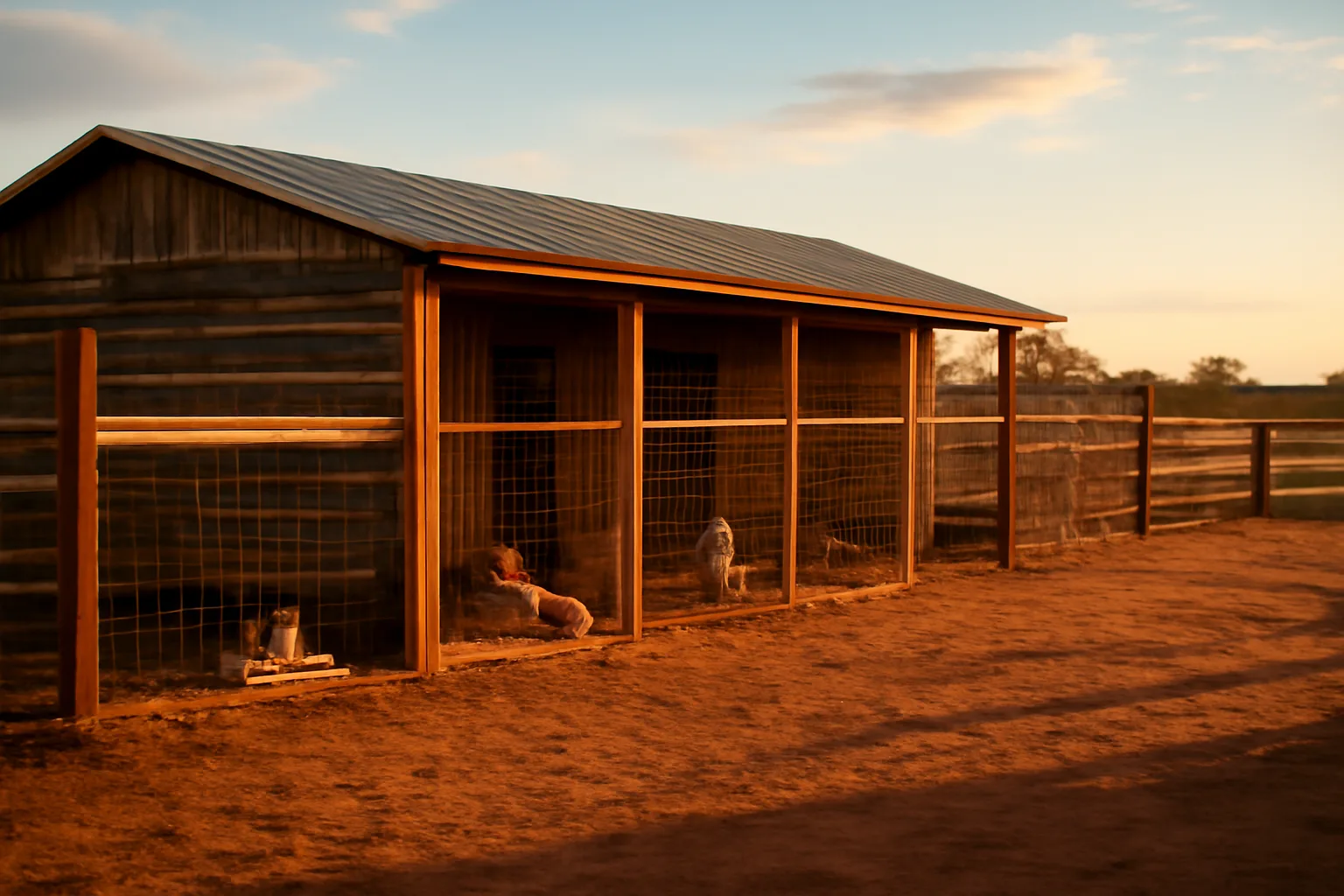
If you're USDA licensed, facility standards come from 9 CFR Part 3, which sets specific minimum requirements: primary enclosures must give each dog enough space to stand, sit, lie down, and turn around normally, with exact square footage calculated by a formula based on the dog's length [1]. Temperature inside housing facilities generally can't go below 50°F for more than four consecutive hours or above 85°F for more than four consecutive hours for dogs not acclimated to extremes, though exact numbers depend on breed and acclimation status under the regulation [1]. If you're licensed under Oklahoma's Commercial Pet Breeders Act instead of (or in addition to) USDA, ODAFF's own administrative rules set space, sanitation, and veterinary care requirements that closely track the federal standards but are enforced by state inspectors rather than APHIS. Ask ODAFF directly for their current inspection checklist. It changes less often than fees do, but it's still worth confirming you have the current version before you build or renovate a kennel building. Either way, plan your kennel construction around inspection standards before you pour concrete or install fencing. Retrofitting a kennel that fails on flooring drainage or enclosure size costs a lot more than designing it correctly the first time. Our guide on dog kennels walks through space planning that satisfies both USDA and typical state standards.
How does Oklahoma zoning treat breeding kennels versus other pet businesses?
Oklahoma zoning classifications vary by county and city, but the general pattern statewide is: agricultural and rural zoning tends to allow kennels and breeding operations as a permitted or accessory use, while residential zoning inside incorporated cities usually requires a conditional use permit or prohibits commercial breeding entirely. A lot of Oklahoma breeders operate on acreage just outside city limits specifically because county zoning is more permissive than municipal zoning. That's a reasonable strategy, but it doesn't remove the requirement to check your specific county's zoning map and code before assuming a rural address means no rules apply. Counties still regulate nuisance issues like noise, odor, and setback distances from property lines and neighboring residences, even in agricultural zones. If your property is annexed into a city later, or a neighbor files a nuisance complaint, you can end up in a zoning hearing regardless of how long you've operated. Preparing a clear site plan, documented waste management practices, and a noise mitigation plan ahead of any hearing puts you in a much stronger position than showing up with nothing but good intentions. This is exactly the kind of prep work a kennel license and zoning packet is built to organize, though it's not a substitute for a local land use attorney if your case gets contested.
Frequently asked questions
Do you need a license to breed dogs in Oklahoma?
Not a single statewide breeder license for everyone. Oklahoma's Commercial Pet Breeders Act requires licensing through ODAFF only if you keep 11 or more breeding-capable adult females and sell offspring [1]. Smaller breeders often still need a city or county kennel permit and, depending on how they sell puppies, may need a federal USDA Class A license [2][3].
How much does a USDA dog breeding license cost?
APHIS charges an application fee plus an annual license fee based on your prior year's gross sales from animals, with amounts set in the fee schedule under the Animal Welfare Act regulations [4]. Fees range from roughly a few hundred dollars for small operations to a few thousand for the highest sales tiers. Confirm the current tier directly on APHIS's licensing fee page before budgeting [4].
How many dogs can you have before you need a license in Oklahoma?
For Oklahoma's state Commercial Pet Breeders Act, the trigger is generally 11 or more adult breeding-capable females combined with selling offspring [1]. For USDA licensing, the trigger is more than four breeding females combined with selling sight-unseen (including online). Local county kennel permits often require licensing at 3 to 5 total dogs, regardless of breeding status, so check your specific county.
How do you get papers for a dog?
"Papers" means registration with a breed registry like AKC, not a government license. If both parents are AKC registered, the breeder files an AKC litter registration application, which produces individual certificates for each puppy [5]. If a parent isn't registered, options include AKC's Purebred Alternative Listing program or another registry like UKC, but none of these satisfy state or local licensing requirements.
How do you register a dog in Oklahoma?
Most Oklahoma cities and counties require an annual dog license or tag, obtained through the city clerk, animal control office, or county treasurer, usually requiring proof of current rabies vaccination. Fees commonly run in the $5 to $25 range annually depending on the city, though you should confirm your specific municipality's current fee and process.
How much does dog boarding cost?
Typical U.S. dog boarding runs roughly $25 to $85 a night depending on region, facility type, and add-ons like daycare or grooming, with no single government price survey setting these rates since boarding pricing is market-driven, not regulated. Boarding requires separate local kennel permits from breeding licenses because no animals are being sold.
How do you become a dog breeder in Oklahoma?
Start by confirming county zoning allows kennels or breeding on your property, then count your breeding females against Oklahoma's Commercial Pet Breeders Act threshold (11+ females plus sales triggers ODAFF licensing) [1], determine whether your sales method triggers USDA licensing [2][3], build a compliant facility, and set up record-keeping and health testing before your first litter.
Do you need a USDA license to sell puppies online in Oklahoma?
Likely yes, if you have more than four breeding females and sell sight unseen, meaning the buyer never physically inspects the puppy before purchase. APHIS's retail exemption only covers sales where the buyer sees the animal in person before buying [3]. Most online, shipped puppy sales don't qualify for that exemption once you're over the threshold.
What's the difference between a kennel license and a breeder license in Oklahoma?
A kennel license (usually issued by a city or county) covers keeping multiple dogs on one property, whether or not you breed them, and typically addresses noise, sanitation, and dog count. A breeder license (state ODAFF or federal USDA) specifically covers selling offspring and applies based on breeding female count and sales method, more than total dogs owned.
Can you breed dogs on residential property in Oklahoma?
It depends entirely on your specific city or county zoning code, not state law. Many Oklahoma residential zones prohibit commercial kennels or require a conditional use permit, while agricultural and rural zoning is usually more permissive. Call your county zoning office or city planning department directly and ask about your parcel's specific classification before assuming you're allowed to breed there.
How long does it take to get a USDA breeder license?
Most breeders report the process, from submitting APHIS Form 7002 through passing a pre-license inspection, taking anywhere from a few weeks to a couple of months, depending on inspector availability in your region and whether your facility passes on the first visit [2][4]. Facilities that aren't fully compliant before scheduling inspection often see significant delays.
What happens if you breed dogs without a required license in Oklahoma?
Consequences vary by which requirement you skipped. Operating without required ODAFF commercial breeder licensing can bring state enforcement action and fines under the Commercial Pet Breeders Act [1]. Selling without a required USDA license can bring federal penalties under the Animal Welfare Act [2]. Operating without local kennel permits or in violation of zoning can bring city/county citations, fines, or a forced shutdown.
Sources
- Animal Welfare Act Regulations, 9 CFR Part 3 Subpart A: USDA facility standards for licensed dog breeders, including enclosure size and temperature requirements
- Animal Welfare Act Regulations, 9 CFR 1.1 Definitions (retail pet store): Retail pet store exemption requires buyer to physically inspect the animal before purchase to avoid USDA licensing
- Code of Federal Regulations, 9 CFR 2.6 Licensing Fees: APHIS license and application fees are set by regulation based on gross animal sales tiers
- American Kennel Club, Litter Registration Application (Form): AKC litter registration process requires both parents registered and produces individual puppy registration certificates
- Electronic Code of Federal Regulations (eCFR): USDA requires certain dog breeders who sell to the public sight unseen or exceed threshold numbers of breeding females to obtain a USDA license under 9 CFR 2.1.