Last updated 2026-07-26
TL;DR
Dog breeding license costs typically run $25 to $300 for a basic state or county kennel permit, but USDA Class A licenses (for breeders selling wholesale or online sight-unseen) start around $40 in application fees plus annual fees scaled to revenue, often $750 to $10,000+. Zoning permits, inspections, and per-dog fees add more.
How much does a dog breeding license actually cost
There's no single number, and anyone who quotes you a flat national fee is guessing. Dog breeding license costs depend on three separate layers of government that might all apply to you at once: your state department of agriculture, your county or city (zoning and local kennel permits), and the federal government through USDA APHIS if you sell animals wholesale or sight unseen. At the state level, breeder license fees commonly range from about $25 to $300 a year for a basic commercial breeder or kennel license, though several states scale the fee by the number of dogs kept for breeding. Pennsylvania, for example, charges kennel license fees based on how many dogs you keep, with fees increasing in tiers as dog count rises, and it requires a separate kennel license distinct from a dog license [1]. At the county level, fees are usually smaller, often $25 to $150 for a kennel or breeder permit, but the real cost driver here isn't the fee, it's the zoning process. A zoning hearing, site plan review, or conditional use permit can cost you far more in time and consultant fees than the license itself ever does. Then there's USDA. If you meet the federal threshold (more on that below), you need an APHIS Animal Welfare Act license, and those fees are structured completely differently, based on your gross revenue from animal sales, not a flat rate [2]. Budget realistically: a small hobby breeder operating under state exemption thresholds might pay under $50 a year total. A commercial breeder crossing into USDA licensing territory should budget four figures annually once you add state fees, county fees, USDA fees, and inspection-related costs like fencing or facility upgrades to meet standards.
What does a USDA breeding license cost
USDA Class A (breeder) licenses are priced on a tiered annual fee schedule tied to your gross annual revenue from the sale of animals regulated under the Animal Welfare Act, not the number of litters or dogs. As of the current APHIS fee structure, the application fee for a new license is $40, and then annual license fees are added on top based on which revenue tier you fall into [3]. APHIS publishes the tiers directly. Lower revenue breeders pay less, and the fee schedule climbs as gross sales climb, topping out well over a thousand dollars a year for breeders with the highest sales volume. Because these numbers get updated periodically in the Federal Register, don't rely on a number you saw two years ago; check the current fee schedule on APHIS's licensing page before you budget [3]. Here's the threshold question everyone actually wants answered: do you even need a USDA license? Under the Animal Welfare Act regulations, a breeder who sells more than 4 female breeding dogs' offspring at wholesale, or sells dogs sight unseen (internet, phone, mail order) without a face-to-face meeting between buyer and dog before the sale completes, generally needs a USDA license, unless a specific exemption applies [2]. Breeders who sell every puppy through an in-person meeting at their own home or facility, and who fall under the numeric threshold, are commonly exempt under what people call the 'retail pet store' exemption, but the exact language and edge cases matter, so read the regulation text yourself or call your local APHIS Animal Care office rather than assume.
How much does dog boarding cost (and why breeders ask this too)
If you're researching breeding license costs, you've probably also looked at boarding, because a lot of breeding operations expand into boarding or daycare, and the licensing questions overlap. Dog boarding costs for consumers typically run $25 to $85 a night depending on region, facility type, and add-ons like grooming or extra playtime, with upscale 'dog hotel' facilities in major metro areas charging more. That's the consumer price, though. If you're the one opening a boarding operation alongside your breeding kennel, your licensing cost picture looks a lot like the breeding side: a state kennel license, a county zoning or conditional use permit, and possibly a separate USDA license if you're boarding animals you don't own for compensation in a way that triggers Animal Welfare Act coverage (this mostly hits commercial boarding-for-third-parties operations, not straightforward pet boarding of client-owned pets, but definitions vary and it's worth confirming with APHIS directly). If boarding or daycare is part of your expansion plan, read our breakdowns on dog boarding licensing and pet boarding requirements before you commit to a facility layout, because retrofitting a building after a failed inspection costs far more than designing it right the first time.
How do you register a dog (and is that the same as a breeding license)
No, and this trips people up constantly. Registering an individual dog is a completely different process from licensing a breeding kennel. Dog registration usually means one of three things: a municipal dog license (a tag proving rabies vaccination and local registration, typically $10 to $25 a year per dog), a breed registry enrollment (AKC, UKC, or similar, which is a private pedigree record, not a government license), or a state pet dealer/kennel registration if you're operating commercially. How do you register a dog with your city or county? Most municipalities require proof of current rabies vaccination, a small fee, and sometimes proof of spay/neuter status (unaltered dogs often pay a higher license fee in cities that use tiered pricing to encourage spay/neuter). Check your city or county clerk's website; this is separate from anything USDA or your state ag department handles. A breeding kennel license is a business-level authorization to operate a breeding operation, and it usually requires facility inspection, recordkeeping, and sometimes a cap on the number of intact females you can keep. Don't confuse the $15 tag on your dog's collar with the kennel license that lets you legally breed and sell litters commercially, they solve different problems for different regulators.
How do you get papers for a dog (AKC, UKC, and what 'papers' really means)
'Papers' means registration with a breed pedigree registry, most commonly the American Kennel Club (AKC) or United Kennel Club (UKC). This has nothing to do with your state or county breeding license; it's a private organization's paperwork proving lineage, not a government permit. How do you get papers for your dog if the parents were already registered? You register the litter with the registry (AKC has a Litter Registration process breeders complete after whelping, then individual puppy buyers complete registration transfer), pay the registry's fee, and submit required information about the sire, dam, and litter [4]. AKC litter registration fees are modest, generally in the range of $25 to $40 for the litter application plus a small per-puppy fee, though exact current pricing is on AKC's own fee schedule and changes periodically, so check AKC's site directly rather than trust a cached number. Can I get papers for my dog if I don't know the parents' registration status? Generally, no, not through AKC or UKC in the standard way. If the dog's parents weren't registered, you're looking at either a DNA-based parentage program (some registries offer limited paths for this) or accepting that the dog won't carry full pedigree papers. This is unrelated to your legal right to breed and sell the dog; an unregistered dog is perfectly legal to breed in most places (subject to your state and local breeder licensing rules), it just won't carry AKC/UKC pedigree documentation, which matters to some buyers and not to others. Worth saying plainly: papers are a marketing and pedigree-tracking tool, not a legal requirement to breed dogs. Your state breeder license and any county permit are the legal requirements. Don't let a puppy buyer or a breed club convince you that 'papers' substitute for actual licensing compliance; they're unrelated systems.
How do you get a dog license (for pet owners vs. breeders)
For an individual pet owner, getting a dog license means visiting your city or county clerk's office (often online now), providing proof of current rabies vaccination from a licensed veterinarian, and paying a small annual or multi-year fee, commonly $10 to $25, sometimes less for spayed/neutered dogs and more for intact ones in cities that use fee tiers as a spay/neuter incentive. For a breeder, 'getting a dog license' usually really means getting a kennel or breeder license, which is a different application entirely. You'll typically need: proof of your facility address and zoning compliance, a facility inspection (sometimes pre-inspection, sometimes only after initial approval), current rabies and health records for your breeding dogs, and the state or county application fee. Some states also require a criminal background check or proof you haven't had prior animal welfare violations. The order matters. Handle zoning first. A lot of breeders apply for a state kennel license, get approved, then discover their property isn't zoned for a commercial kennel use and they need a conditional use permit or variance, which can take months and involve a public hearing. Check your county zoning office's use table for your parcel before you spend a dime on state licensing paperwork.
How to become a dog breeder legally, step by step
There's no single national process, so treat this as a sequence, not a checklist you finish in a week. 1. Check your county zoning first. Call or check your county zoning office's website to confirm your property is zoned for kennel use, animal breeding, or 'agricultural' use covering dog breeding, before anything else. Zoning denial is the single most common reason breeder plans fall apart. 2. Check your state's breeder license threshold. Most states with breeder-specific laws set a numeric trigger, commonly tied to number of females kept for breeding or number of litters sold per year. Ohio, for instance, defines a 'high volume breeder' subject to state licensing as anyone with 9 or more intact female dogs who sells or transfers 40 or more puppies in a calendar year [5]. Your state's threshold, if it has one, will be different; check your state department of agriculture's page directly. 3. Determine if you cross the USDA threshold. If you sell wholesale or sight-unseen and exceed the 4-female threshold discussed above, plan for a federal Class A license application through APHIS [2]. 4. Budget for facility standards. USDA and most state programs require specific caging, sanitation, temperature control, exercise access, and veterinary care documentation. These facility standards regulations (9 CFR Part 3 for USDA-licensed dog breeders) are detailed and specific, covering everything from enclosure size formulas to primary enclosure construction [6]. 5. Apply, inspect, renew. Expect an initial facility inspection before or shortly after licensing, then annual or periodic re-inspections. Keep records: breeding dates, veterinary care, sales records, buyer information. Inspectors will ask for these. If you're weighing whether breeding is even the right business model versus boarding or daycare, it's worth reading how doggy day care licensing differs, since the facility standards and cost structure diverge quite a bit from breeding kennels.
What's the difference between a state license, a county permit, and a USDA license
| Municipal dog license | City/county clerk | Individual pet registration, rabies proof | $10 to $25/dog/year | Owning any dog past a certain age | |
|---|---|---|---|---|---|
| County/city kennel or breeder permit | County or city government | Local zoning compliance, facility use approval | $25 to $150+ | Operating a commercial kennel or breeding multiple dogs | |
| State breeder/kennel license | State department of agriculture | Facility standards, recordkeeping, sometimes numeric breeder thresholds | $25 to $300+, often tiered by dog count | Meeting state-defined commercial breeder criteria | |
| USDA Class A license | APHIS (federal) | Animal Welfare Act facility standards, wholesale/sight-unseen sales | $40 application + tiered annual fee (often $750-$10,000+) [3] | Selling wholesale or sight-unseen above the 4-female threshold [2] | You can owe fees at all four levels simultaneously if you're a commercial breeder selling both retail (in person) and wholesale/online. Nobody bundles these into one application; you'll be dealing with four separate agencies, four separate renewal calendars, and four separate inspection or documentation regimes. |
People conflate these constantly, so here's the plain breakdown. | Layer | Who issues it | What it covers | Typical cost range | Triggers |
What facility standards drive the real cost (beyond the license fee itself)
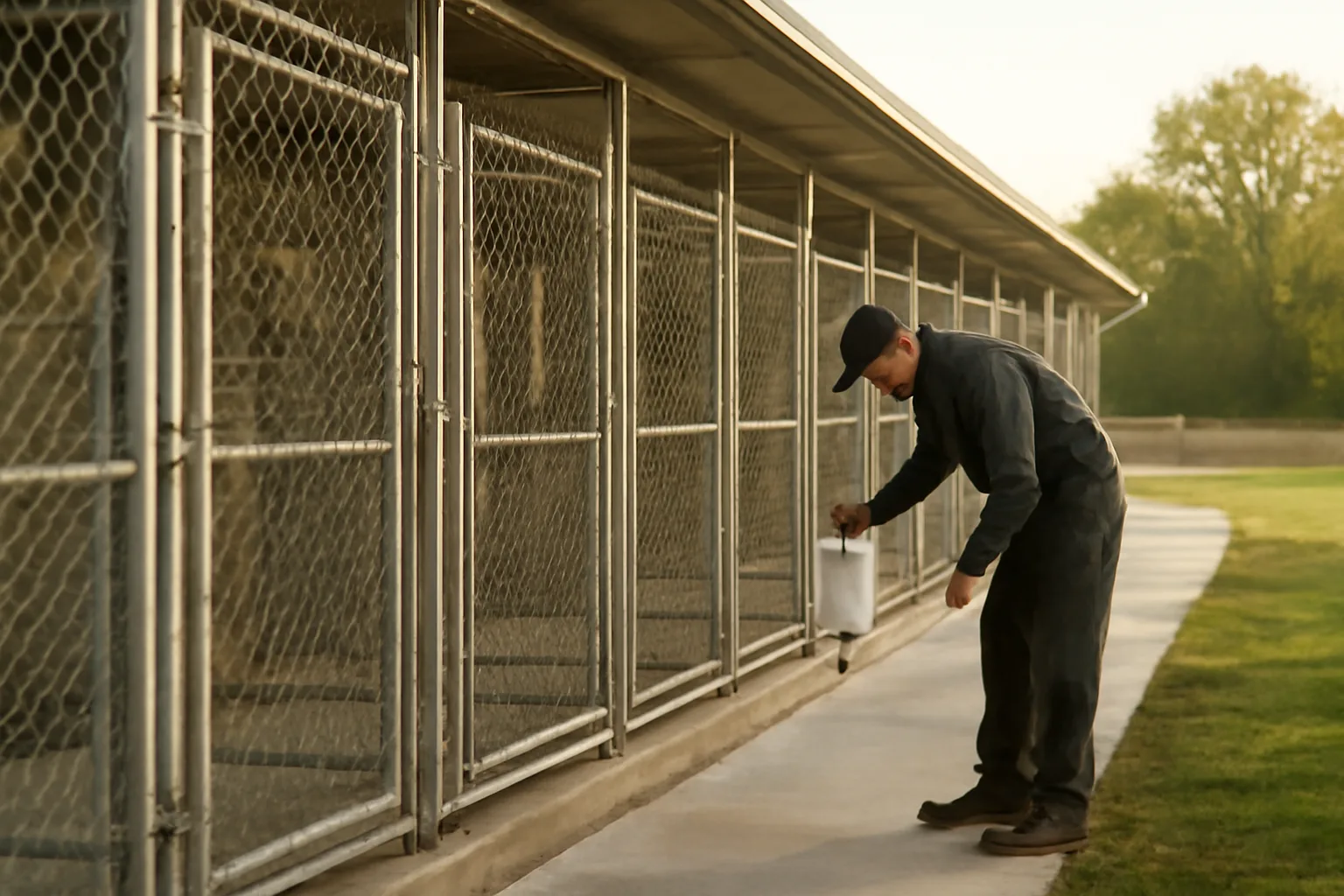
The license application fee is often the cheapest part of becoming a licensed breeder. The bigger cost is retrofitting your property to meet facility standards, and this is where budgets balloon from a few hundred dollars to five figures. USDA's facility standards under 9 CFR Part 3 specify minimum enclosure sizes calculated by a formula based on the dog's length, require solid resting surfaces, specify sheltered areas protecting from weather extremes, mandate a written veterinary care program, and require specific sanitation and pest control practices [6]. States with their own commercial breeder laws frequently mirror or reference similar standards, sometimes with added requirements like ambient temperature limits or minimum exercise time. What this means practically: if your current kennel setup is a converted barn or a hobby operation, expect to spend on climate control, drainage and sanitation upgrades, fencing that meets containment standards, and possibly a dedicated whelping area meeting size and cleanliness requirements. This isn't part of the 'license cost' most articles quote you, but it's the real number that determines whether becoming licensed is financially viable for your operation.
How do zoning hearings affect your total cost and timeline
Zoning is the wildcard that license-fee comparisons never capture, and it's often the single biggest cost and delay in the entire process. A straightforward zoning permit application might cost $50 to $200 in county fees. A conditional use permit requiring a public hearing, neighbor notification, and a planning commission vote can run into thousands of dollars once you add surveyor fees, site plan drafting, and possibly a land use attorney, plus months of calendar time waiting for a hearing date. County zoning offices publish their own fee schedules and use tables; check yours directly rather than assume a number from a different county applies to you, because zoning is hyperlocal in a way state licensing usually isn't. Some counties classify dog breeding under agricultural use (cheap, fast, sometimes no hearing needed at all), others classify it as a commercial kennel use requiring a full conditional use process (slow, expensive, sometimes contested by neighbors at a public hearing). This is genuinely the part of the process where operators get blindsided. We built a $149 one-time Kennel License & Zoning Packet at KennelPermit specifically because breeders and boarding operators kept discovering their zoning problem after they'd already sunk money into state licensing applications; the packet walks through the zoning-hearing prep and license paperwork sequencing so you're not paying a consultant to tell you what's actually a documentable checklist. It's not a substitute for your county's own requirements or legal advice, but it saves the guesswork on sequencing.
How much should you actually budget, all in
Pulling the layers together into a realistic range: Small-scale breeder under state exemption thresholds, retail-only sales, simple zoning: roughly $100 to $500 total for municipal dog licenses, a basic county permit, and no USDA involvement. Mid-size commercial breeder crossing state licensing thresholds but not USDA thresholds: roughly $500 to $2,000, factoring state license fees, county permit fees, a zoning permit (not a full hearing), and facility upgrades to meet state standards. Commercial breeder crossing the USDA threshold (wholesale or sight-unseen sales above 4 breeding females): roughly $2,000 to $15,000+ in year one, once you add the USDA application and tiered annual fee [3], state and county fees, a formal zoning conditional use process if required, and facility retrofits to meet 9 CFR Part 3 standards [6]. These are planning ranges, not quotes, because your state, county, and dog count change every number. Call your state department of agriculture's licensing division and your county zoning office directly before you finalize a budget; they're the only two sources with your actual current fee schedule.
Frequently asked questions
How much does dog boarding cost?
Consumer dog boarding typically costs $25 to $85 per night depending on region and facility type, with upscale metro-area 'dog hotels' charging more for suites, extra playtime, or grooming add-ons. If you're opening a boarding facility rather than paying for boarding, your costs are licensing and facility fees instead, which follow a completely different structure than nightly boarding rates.
How do I register a dog with my city or county?
Visit your city or county clerk's office or website, provide proof of current rabies vaccination from a licensed veterinarian, and pay the annual or multi-year fee, typically $10 to $25. Some cities charge less for spayed/neutered dogs. This municipal registration is separate from any state breeder license or AKC/UKC pedigree registration.
How do you get papers for a dog?
'Papers' means registering with a breed pedigree registry like AKC or UKC, which requires the litter's parents to already be registered. The breeder completes litter registration after whelping, pays a modest fee (commonly $25 to $40 plus a per-puppy charge, per AKC's current fee schedule), and buyers complete individual registration transfer. This is unrelated to any government breeding license.
Can I get papers for my dog if the parents weren't registered?
Generally no, not through standard AKC or UKC registration, since litter registration requires registered parents. Some registries offer limited DNA-based parentage programs, but there's no universal path to add papers retroactively. An unregistered dog remains legal to breed under most state and local rules; it simply won't carry pedigree documentation.
How do I get a dog license as a breeder rather than a pet owner?
As a breeder you typically need a state kennel or breeder license (through your state department of agriculture) and a county zoning or kennel permit, more than the municipal pet dog license. Requirements usually include proof of zoning compliance, facility inspection, health and vaccination records, and an application fee that varies by state, often $25 to $300 or tiered by dog count.
How to become a dog breeder legally?
Check county zoning first, then your state's breeder licensing threshold (often based on number of intact females or annual litters), then determine if you cross the USDA threshold for wholesale or sight-unseen sales. Apply for each required license, prepare your facility to meet applicable standards (state and/or 9 CFR Part 3 for USDA-licensed breeders), and pass the initial inspection before selling puppies commercially.
What is the USDA threshold that requires a breeding license?
Under Animal Welfare Act regulations, breeders who sell more than 4 female breeding dogs' offspring at wholesale, or sell dogs sight unseen without an in-person meeting before the sale, generally need a USDA Class A license, absent a specific exemption. Check the current regulation text and talk to your local APHIS Animal Care office, since exemption details and edge cases matter.
How much does a USDA breeder license cost?
APHIS charges a $40 application fee for a new Class A license, then an annual license fee scaled to your gross revenue from animal sales, with tiers that can range from under $1,000 to well over that for higher-revenue breeders. Fee tiers change periodically, so check APHIS's current licensing fee page rather than an older cited number.
Do I need both a state license and a USDA license?
Possibly. State licenses and USDA licenses are separate systems that don't replace each other. A breeder can be state-licensed only (if selling retail, in-person, under USDA thresholds), USDA-licensed only in rare structures, or both simultaneously if state law and federal wholesale/sight-unseen thresholds both apply to the operation.
Does a county zoning permit cost more than the state breeder license?
Often yes, especially if your property requires a conditional use permit with a public hearing rather than a simple administrative zoning permit. Simple permits might cost $50 to $200, but a contested conditional use process with surveyor fees, site plans, and possible legal help can run into the thousands, well above most state license fees.
What's the difference between a dog license and AKC papers?
A dog license is a government registration (municipal, county, or state) tied to legal compliance, rabies proof, and sometimes breeding regulation. AKC or UKC 'papers' are a private registry's pedigree documentation with no legal authority. You can have papers without any government license, or a government license without papers; they solve unrelated problems.
How many dogs can I breed before I need a license?
It depends entirely on your state and whether you sell wholesale or sight-unseen. Some states have no numeric threshold and require licensing for any commercial breeding; others set specific triggers, like Ohio's rule covering breeders with 9 or more intact females who sell 40+ puppies a year. Federally, the USDA wholesale/sight-unseen threshold is tied to more than 4 breeding females.
Sources
- Pennsylvania Department of Agriculture, Dog Law Enforcement kennel licensing: Pennsylvania kennel license fees scale by number of dogs kept, separate from individual dog licenses
- USDA APHIS, Animal Welfare Act licensing overview: USDA APHIS issues Animal Welfare Act licenses for commercial animal breeders and sets fee structures separate from state licensing
- USDA APHIS, Animal Welfare licensing fees: USDA Class A license application fee is $40 with annual fees tiered by gross revenue from animal sales
- American Kennel Club, Litter Registration: AKC litter registration process and fee structure for registering puppies from already-registered parents
- Ohio Department of Agriculture, Dangerous Wild Animal and High Volume Breeder Program: Ohio defines a high volume breeder as one with 9+ intact females selling 40+ puppies per year for state licensing purposes
- Code of Federal Regulations, 9 CFR Part 3, Subpart A (dog facility standards): USDA facility standards for licensed dog breeders specify enclosure size formulas, sanitation, and veterinary care requirements