Last updated 2026-07-25
TL;DR
There's no single national dog breeding license. You may need a USDA license if you sell more than 4 female breeding dogs a year without the buyer meeting the dog in person, plus a state breeder license (varies by state) and a county kennel or zoning permit. Check all three levels before your first litter.
Do I actually need a license to breed dogs?
Probably at some level, yes, though which one depends on how many dogs you have and how you sell them. There is no single federal "dog breeder license" that covers everyone. Instead you're dealing with three separate systems that can all apply at once: a federal USDA license if you cross a specific threshold, a state breeder or kennel license (about half the states have one), and a county or city permit tied to zoning and animal control. The USDA's own rule is the cleanest bright line, so start there. Under the Animal Welfare Act regulations, a "retail pet store" (which doesn't need a USDA license) includes anyone who sells animals only face-to-face, where the buyer can see the animal in person before buying it. If you sell dogs sight-unseen, meaning the buyer never sees the dog or the facility before purchase, and you have more than four female breeding dogs producing puppies for that kind of sale, you generally need a USDA Class A (breeder) license [1]. Below that threshold, you're usually in state and local territory only. That's where most small and mid-size breeders actually live, and it's also where the rules vary the most, because states write their own definitions of "commercial breeder" and set their own litter or dog-count triggers.
What is the USDA breeding license threshold, exactly?
The number that matters most is four. Under 9 CFR 2.1(a)(3)(iii), a person who keeps four or fewer breeding female dogs, cats, or small exotic or wild mammals, and sells only the offspring born and raised on their own premises for pets or exhibition, is exempt from the definition of "dealer" requiring a USDA license, so long as sales happen at retail (buyer sees the animal in person) or otherwise fit within the exemption [1]. Once you exceed four breeding females and you sell any puppies sight-unseen (internet sales, shipping a puppy to a buyer who never visited, sales through a broker), USDA generally expects you to hold a USDA Class A breeder license. There's also a Class B license for dealers who buy and resell animals from other breeders, which is a different category with its own scrutiny. The regulation text itself defines who counts as a dealer needing a license, and the exemption for small retail breeders exists specifically because Congress directed USDA to close the sight-unseen sales loophole. APHIS's 2013 rule change extended licensing to "any person who breeds and raises more than four female breeding dogs...and sells any offspring...sight unseen," as described in the Federal Register notice finalizing that rule [2]. If you're near that four-female line, don't guess. APHIS Animal Care has a licensing division you can contact directly, and getting a written determination before you expand is far cheaper than a compliance letter after the fact.
How to become a dog breeder, step by step
There's no universal checklist that works in all 50 states, but the sequence is roughly the same everywhere. Here's the order that avoids the most rework. 1. Figure out your scale first. How many breeding females will you keep, and will you sell sight-unseen (online, shipped, out-of-state) or only face-to-face? This answer decides whether USDA applies at all. 2. Check your state's breeder licensing law. States including Ohio, Pennsylvania, Missouri, Virginia, Illinois, and others have their own commercial breeder or kennel license laws with their own dog-count thresholds, often lower than USDA's. Pennsylvania, for instance, requires a kennel license for anyone keeping 26 or more dogs over six months old for breeding or sale, under its Dog Law [3]. 3. Contact your county or city zoning and animal control office. Even if your state has no breeder law, your county almost certainly regulates kennels through zoning (agricultural vs. residential land use) and through a local animal control ordinance, often with its own per-dog kennel license fee. 4. Meet facility standards before you apply, not after. USDA and most state programs require primary enclosures of specific minimum size, temperature control, sanitation schedules, and veterinary care plans in place before they'll issue a license [4]. 5. Schedule your pre-license inspection. USDA requires a facility to pass inspection confirming compliance with the standards in 9 CFR Part 3 before a license is issued [4]. 6. Get your USDA license (if you're over threshold), file for state registration, and pull your county kennel permit, roughly in that order, since some counties ask for your state license number on the local application. If you're planning to also run boarding or daycare alongside breeding, treat that as a separate license track. Read our breakdown of dog boarding licensing to see how those requirements differ from breeder rules.
How do I register a dog (and is that the same as a breeding license)?
No, and this is one of the most common mix-ups new breeders run into. Registering a dog with the AKC, UKC, or another registry has nothing to do with your legal right to breed. Registration is a private paperwork system that tracks a dog's pedigree and litter history so buyers know the dog's lineage. It carries zero government authority. To register a litter with the American Kennel Club, both parents generally need to be individually AKC-registered already, the mating has to meet AKC's rules (including limits on the sire's age and, for some breeds, restrictions tied to natural versus artificial insemination), and you file the litter application with AKC directly, not with any government agency [5]. Separately, most cities and counties require you to register or license each individual dog you own, breeding or not, through local animal control, usually annually, with proof of rabies vaccination. That local dog license (the tag on the collar) is a completely different thing from a breeder's license or kennel permit. You need both if you're breeding commercially: the individual dog licenses for every adult dog you own, plus the business-level breeder or kennel license for the operation itself.
How do you get papers for a dog (AKC or other registry)?
"Papers" means registration documents from a breed registry, most commonly AKC or UKC, and you get them by registering the litter, not by applying to a government office. If both of a puppy's parents are registered with the same organization and the litter is registered by the breeder, each puppy in that litter is eligible for individual registration, which the breeder typically initiates and then transfers to the buyer at sale [5]. If you're asking "how can I get papers for my dog" as a buyer, and the breeder never registered the litter, you generally cannot get AKC papers after the fact unless you go through a DNA-based parentage verification process the registry offers in limited cases. This is exactly why serious buyers ask for papers before they pay, not after. If you're the breeder and want to offer papers as a selling point, you need every parent dog individually registered first, accurate breeding and whelping records, and (for AKC specifically) compliance with their kennel inspection program if you produce enough litters to trigger a courtesy or mandatory inspection [5]. None of this substitutes for your state or county breeder license. A dog can have full AKC papers and you can still be operating illegally under your local kennel ordinance if you never got a permit.
What does a state dog breeder license actually require?
Requirements vary enough by state that you have to check your own, but the pattern usually includes: an application fee, a facility inspection, proof of veterinary care arrangements, recordkeeping on each dog and litter, and a cap or reporting requirement tied to the number of adult dogs you keep. Pennsylvania's Dog Law is a useful real example because it's specific and public. It requires a kennel license for commercial kennels, defines different kennel license classes by the number of dogs kept, and sets its own facility standards for things like exercise area and enclosure construction, enforced by the state's Bureau of Dog Law Enforcement [3]. Other states regulate breeders under their general animal welfare or agriculture statutes rather than a dedicated "kennel law," which means the rules can be thinner or scattered across multiple sections. Some states (a minority) have no state-level breeder license at all, which pushes essentially all the oversight down to the county or city level. That's not a loophole you want to lean on: local ordinances can be just as strict, and zoning boards can and do shut down operations that grew without a permit. Before you assume your state has no requirement, check your state Department of Agriculture's site directly. Departments update fee schedules and thresholds periodically, and a number you find on a forum from three years ago may already be wrong.
How much does a dog breeding license cost?
| USDA Class A breeder license | Roughly $40 to several hundred dollars per year, set by a tiered fee schedule based on gross annual dog sales | Total annual revenue from dog sales | |
|---|---|---|---|
| State breeder/kennel license | Commonly $50 to $500+ annually | Number of dogs kept, kennel class, state | |
| County/city kennel permit or per-dog license | Often $10 to $50 per dog, or a flat kennel fee of $100 to $300+ | Local ordinance, dog count | |
| Zoning or land-use permit (if required) | Can run several hundred dollars, sometimes more with a public hearing | Whether a conditional use permit or variance is needed | USDA sets its license fees on a tiered structure defined in 9 CFR 2.6, tied to how much money you made from dog sales in the prior year, more than how many dogs you have, so a small hobby-level breeder just over the four-female threshold pays much less than a large commercial operation. Always pull the current fee table from USDA directly before budgeting, since these figures get revised. On top of license fees, budget for the facility work itself: fencing, whelping areas, climate control, and often a septic or drainage upgrade if your county's zoning code requires it for a kennel classification. That part of the budget usually dwarfs the license fee itself. |
This is genuinely a range, not a number, because you're stacking up to three separate fees. Here's the honest breakdown of what each layer tends to cost, described in ranges since every state and county sets its own schedule. | License layer | Typical range | What sets the price |
Do I need a zoning permit to breed dogs from home?
Very likely, yes, if you're keeping more than a handful of dogs or you're breeding as a business rather than a one-off litter from a family pet. Zoning is a county or city function, separate from both USDA and your state's breeder license, and it's the layer that trips up the most first-time breeders because they never think to check it. Most residential zones cap the number of dogs allowed per household (commonly 3 to 5, though this varies a lot by jurisdiction) before you're legally considered a "kennel" use requiring a conditional use permit or rezoning. Cross that number and keep breeding anyway, and you're exposed to a neighbor complaint, a zoning enforcement notice, or a forced shutdown, even if your USDA and state paperwork is perfect. Call your county planning or zoning office before you sign a lease, buy property, or expand your dog count. Ask specifically: what's the maximum number of dogs allowed in my zone without a special permit, and what's the process (conditional use permit, variance, special exception) to exceed it? Get the answer in writing or note the name of who told you, since verbal guidance from a front-desk clerk isn't binding if a zoning board disagrees later. If you're weighing home-based breeding against a standalone commercial kennel building, our guide to dog kennels zoning considerations covers the tradeoffs in more depth, and our pet boarding piece is useful if you're planning to combine breeding with a boarding or daycare business on the same property.
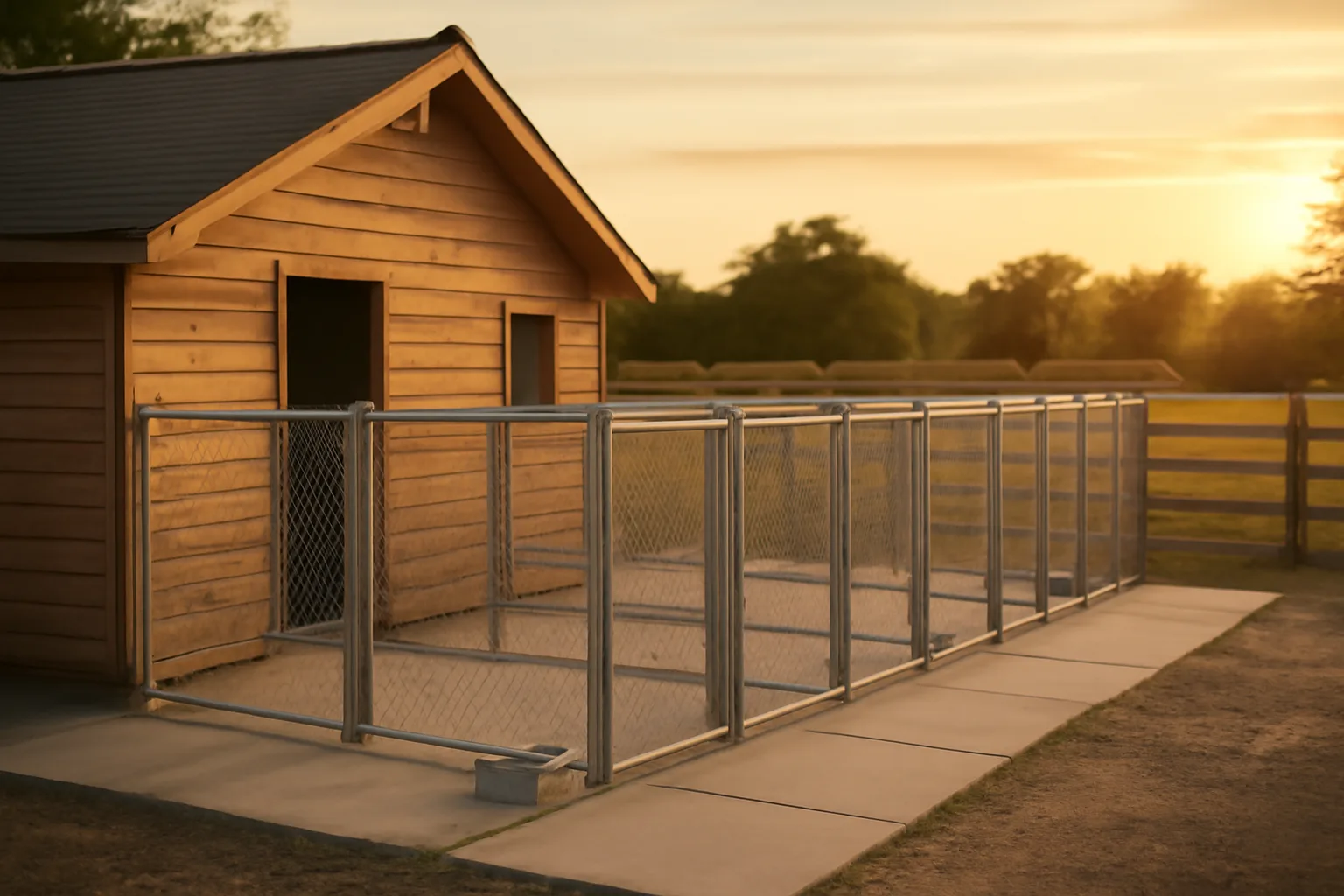
What facility standards do I need to meet before I apply?
USDA's Animal Welfare Act regulations spell out concrete, checkable standards, and most state programs mirror them closely or adopt them by reference. If you're going for a USDA license, expect inspectors to check things like: primary enclosures large enough for the dog to stand, sit, lie down, and turn freely with normal body movement; a solid resting surface; ambient temperature control (not colder than 50°F for more than four consecutive hours, per the federal standard, with breed and age exceptions); a written program of veterinary care; and daily sanitation of enclosures with a documented cleaning schedule, all set out in 9 CFR Part 3, Subpart A [4]. The regulations also require an attending veterinarian relationship, either through a staff vet or a written program of veterinary care with a consulting vet, before your first inspection [4]. Get that relationship set up early. Inspectors will ask for the paperwork, more than a verbal assurance that you "have a vet." States that run their own kennel license programs, like Pennsylvania's, often set their own space-per-dog formulas and exercise requirements that can be stricter than the federal minimum, so check your state's specific numbers rather than assuming USDA's floor is enough [3]. If your operation includes boarding other people's dogs in addition to breeding your own, note that boarding facility standards are usually a separate regulatory track from breeder standards, even in the same state. Our doggy day care and dog hotels near me articles cover that side specifically.
How long does it take to get a dog breeding license?
Budget for months, not weeks, especially your first time through. A realistic USDA timeline runs from application submission through a pre-license inspection, which USDA schedules after reviewing your paperwork; processing and scheduling alone commonly takes several weeks to a few months depending on the regional office's inspection backlog. State timelines vary just as much. Some states process a kennel license application in a few weeks if your facility is already compliant; others require a public notice period or a site visit that's scheduled around inspector availability, which can push things out two to three months. County zoning is usually the slowest link if you need a conditional use permit or variance, because it often requires a public hearing before a zoning board, and those meet monthly or even less often. Add mailing notice periods to neighbors (commonly 10 to 30 days depending on the jurisdiction) and you can be looking at three to six months from filing to approval for the zoning piece alone. The practical move: start your zoning inquiry first, since it's the slowest, then run your state and USDA applications in parallel once you know your property is zoned correctly.
What happens if I breed dogs without a license?
Consequences scale with how far out of compliance you are and which agency notices first. At the federal level, operating as an unlicensed dealer when you're required to be licensed exposes you to civil penalties under the Animal Welfare Act. The statute itself, 7 U.S.C. 2149, authorizes USDA to assess civil penalties of up to $10,000 per violation (adjusted periodically for inflation) against anyone who violates the Act or its regulations, including operating without a required license [6]. At the state level, penalties depend entirely on your state's law. Pennsylvania's Dog Law, for example, builds in specific violation and penalty provisions enforced through its Bureau of Dog Law Enforcement, separate from any federal action [3]. Locally, an unpermitted kennel operating in violation of zoning can be hit with a stop-work or cease-operation order, fines that accrue daily until you're compliant, or in some cases forced removal of excess animals if your county deems the property a nuisance or health hazard. None of these three tracks (federal, state, county) protects you from the other two. Being fully USDA compliant does not shield you from a county zoning violation, and vice versa. If you're already breeding without having checked all three levels, the fix isn't to panic and hide it. Call your county zoning office and your state department of agriculture, ask what's required, and get on a compliance plan. Voluntary correction is treated very differently from an enforcement action triggered by a complaint.
Where do I even start gathering all this paperwork?
Pull three documents before you do anything else: your county's zoning map and kennel ordinance, your state department of agriculture's breeder/kennel license application, and the USDA Animal Welfare Act regulations in 9 CFR Parts 1 through 3 if you're anywhere near the four-female threshold. Read all three before you spend money on facility upgrades, because requirements can conflict (a facility that satisfies USDA space minimums might still violate a stricter county setback rule). This is genuinely the part that eats the most time for new breeders: not the actual dog care standards, which most serious breeders already meet, but tracking down which of three separate government offices wants which form, in what order, with which supporting documents. We built the $149 one-time Kennel License & Zoning Packet at KennelPermit specifically for this problem: it walks you through the state and county-specific fill-ins so you're not guessing which office to call first or what your zoning board's hearing packet needs to include. It doesn't replace legal advice and it doesn't represent you before any board (nobody can guarantee a zoning approval), but it does save you the weeks of dead-end phone calls most new breeders describe as the worst part of the process. Whatever tool or checklist you use, the sequence stays the same: confirm your zoning, confirm your state requirement, confirm your USDA status, then apply to all three in that order.
Frequently asked questions
How much does dog boarding cost?
Dog boarding typically runs $25 to $85 per night depending on region, facility type, and amenities, with luxury "dog hotel" suites sometimes exceeding $100/night. Rates vary widely by city and by whether the facility offers daycare-style group play versus private kennel runs. Check local providers directly, since national averages don't reflect regional cost-of-living differences well.
How do I register a dog with my city or county?
Contact your local animal control or county clerk's office, which issues an annual dog license (the tag) after you provide proof of current rabies vaccination and pay a small fee, often $10 to $30. This local registration is separate from breed registry papers (AKC/UKC) and separate from any commercial breeder or kennel license.
How do you get papers for a dog?
You get registry "papers" (AKC, UKC, etc.) by having both parent dogs individually registered with that organization, then having the breeder register the litter after whelping. Buyers should confirm papers exist before purchase; a registry generally cannot issue papers retroactively for an unregistered litter except through limited DNA-based parentage programs.
How can I get papers for my dog if the breeder didn't register it?
Options are limited. Contact the registry (AKC or UKC) directly to ask about DNA-based parentage verification programs, which some offer in specific cases. If the breeder never registered the litter or the parents weren't registered themselves, standard retroactive registration usually isn't possible, which is why confirming papers before you buy matters.
How do I become a dog breeder legally?
Check your county zoning rules for kennel/dog-count limits, check your state's breeder or kennel license requirements (roughly half of states have one), and determine if you cross the USDA's threshold of more than 4 breeding females sold sight-unseen. Apply to whichever of the three levels applies, in that order, before your first litter.
How do I get a dog license (the local tag, not a breeder license)?
Visit your city or county animal control office or its website, bring proof of current rabies vaccination, and pay the annual fee (commonly $10 to $30, sometimes discounted for spayed/neutered dogs). This individual dog license is required in most jurisdictions for every dog you own, regardless of whether you also hold a breeder or kennel license.
What's the USDA threshold for needing a breeder license?
Generally, more than 4 female dogs used for breeding, combined with selling puppies sight-unseen (buyer never sees the dog or facility in person before purchase), triggers the need for a USDA Class A dealer license under the Animal Welfare Act and 9 CFR 2.1(a)(3)(iii). Below that, most sellers qualify for the retail pet store exemption. Confirm your specific situation with USDA APHIS directly.
Is an AKC breeder license the same as a state license?
No. AKC registration and its breeder programs are private, run by a registry organization with no government authority. A state breeder or kennel license is a legal requirement issued by a state agency (often the Department of Agriculture), and you can hold one without the other, or need both simultaneously.
Do I need a USDA license if I only sell puppies locally, in person?
Usually not. USDA's retail pet store exemption generally covers sellers whose buyers see the animal in person before purchase, regardless of how many dogs you have. The federal licensing requirement is aimed specifically at sight-unseen sales (shipped puppies, internet sales, broker sales) above the 4-female threshold.
How much does a state breeder or kennel license cost?
It varies by state and by kennel class (usually based on how many dogs you keep), but commonly falls between $50 and $500 or more per year. Some states also charge per-dog fees on top of a base kennel license fee. Check your state Department of Agriculture's current fee schedule directly, since these change.
Can I breed dogs in a residential zone?
Sometimes, but most residential zones cap the number of dogs allowed (often 3 to 5) before you're classified as a kennel use requiring a conditional use permit or rezoning. Call your county planning/zoning office before committing to a location; enforcement usually starts from a neighbor complaint, not a proactive inspection.
What happens if I skip the zoning permit but get my USDA and state licenses?
You're still non-compliant and exposed. Zoning, state licensing, and USDA licensing are three independent systems, and being approved by one doesn't protect you from enforcement by another. A county can issue a stop-operation order for a zoning violation even if your USDA paperwork is perfect.
Sources
- Animal Welfare Act Regulations, definition of exempt breeders: Retail pet store exemption and the 4-female breeding threshold for sight-unseen sales, defined at 9 CFR 2.1(a)(3)(iii) and the dealer/retail pet store definitions at 9 CFR 1.1
- Animal Welfare Act, civil penalties provision: Civil penalties of up to $10,000 per violation under 7 U.S.C. 2149 for operating without a required USDA dealer license
- Federal Register, Retail Pet Stores and Licensing Requirements Final Rule (2013): 2013 rule change bringing internet/sight-unseen sellers with more than 4 breeding females under federal licensing
- Pennsylvania Dog Law, 3 Pa.C.S. Chapter 5: Pennsylvania kennel license classes, dog-count thresholds, and enforcement via Bureau of Dog Law Enforcement
- Animal Welfare Act Regulations, Specifications for Humane Handling, Care, Treatment (9 CFR Part 3, Subpart A): Facility standards including enclosure size, temperature limits, sanitation, and veterinary care program requirements
- Animal Welfare Act Regulations, licensing procedures (9 CFR 2.1-2.11): Pre-license inspection required before a USDA license is issued
- American Kennel Club, Rules Applying to Registration and Discipline: Requirements for registering parent dogs and litters, and AKC's role as a private registry
- Animal Welfare Act Regulations, license fees (9 CFR 2.6): USDA license fees are tiered based on gross annual dog sales revenue